
The psychology of hurting only family members is familiar. Some people are kind and polite outside, but rough at home. They watch their words with colleagues yet speak carelessly to parents, spouses, or children. The issue is not always lack of love. It is that boundaries blur the moment we believe someone is “too close” to leave.
The Knowledge Inside interview with Buddhist monk Boman explains this through everyday language and Buddhist mind practice. The core is simple: in close relationships, we may become comfortable, but we do not earn the right to be careless.

At the beginning, Boman says even monks feel hurt, sulk, and argue over small things. That matters. Shaken feelings do not belong only to “bad” people; they arise whenever people meet.
True harmony is not everyone thinking the same. A mountain is not made only of tall pines; thorns, grass, and insects also belong. Relationships are similar. If we remove every uncomfortable trait and keep only what we like, the relationship becomes narrower, not cleaner.
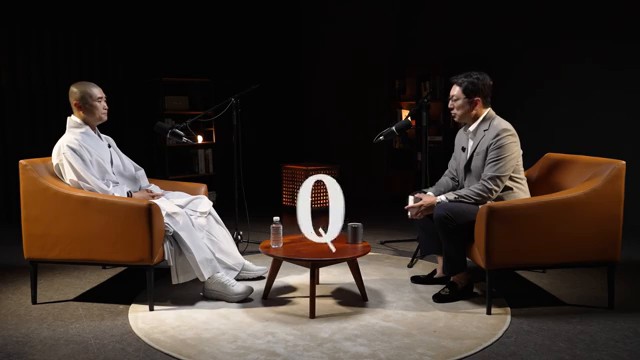
The intro includes a confession about rating people from 0 to 100. If we constantly measure who is acceptable, who is lacking, and who fails our standards, judgment becomes quick but relationships become poor.
This also happens in families. Thoughts such as “Why can’t they even do that?” weaken our ability to see the other person as they are. What is needed is not blind endurance, but a pause in evaluation and a return to observation.
## Why people become rude only to familyPeople who hurt family often carry two illusions: that family will ultimately understand, and that closeness makes certain words acceptable.
Outside the home, there is tension because relationships can break. We choose words, manage expressions, and regulate emotion. At home, that tension relaxes. The problem begins when relaxation becomes neglect, and emotions suppressed outside spill onto the safest person.
Saying that close people deserve more courtesy is not stiff moralism. It is a practical skill for preserving a relationship over time. The word “family” does not automatically heal wounds.
## An apology is not a phrase for reducing guiltThe section on parenting is worth considering. Saying “I’m sorry” to a child is not bad. But an apology that transfers the adult’s guilt to the child must be handled carefully.
If a parent explodes and then repeatedly asks for forgiveness, the child may be pushed into comforting the parent. The purpose of apology is not to make the speaker feel better, but to help the other person feel safe again.
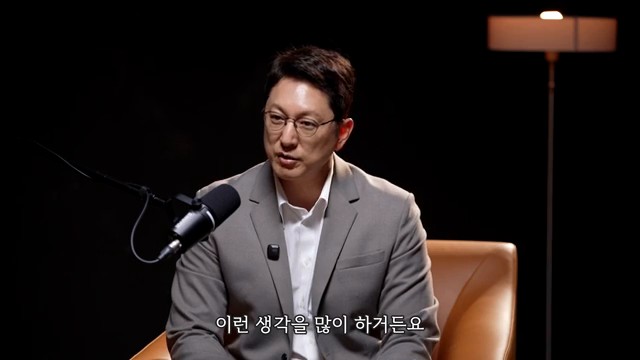
A good family apology is short and specific: “I’m sorry I shouted earlier. That was wrong. Next time I will pause before speaking.” Repeated behavior matters more than lengthy explanation.
## Five-point checklist for protecting close relationships- Would I say this in the same tone to someone outside the family?
- Am I reacting to the other person’s action or to my unmet expectation?
- Did I apologize to restore safety, or to reduce my guilt?
- Do I treat closeness as permission to cross boundaries?
- What repeated behavior, not words, will show change?
This checklist is not a tool for fixing the other person. It is a mirror for my own tone and reactions.
## Taking relationships too seriously can make them easier to woundBoman also says that living too seriously can cost us. This does not mean treating relationships lightly. It means that if we attach excessive meaning to every word and expression, the mind tires quickly.
Misunderstandings and hurt feelings occur. If every mistake becomes “that person disrespects me,” the relationship cannot endure. We need the habit of delaying judgment by one beat.
Family is the closest relationship, but not a relationship where boundaries disappear. A boundary is not a wall; it is the minimum line that protects both people over time.
The psychology of hurting family can be summarized as mistaking closeness for permission. Once we notice that mistake, the relationship can change: not speaking less, but choosing words; not apologizing more, but repeating the same wound less.
## Related reading- Metacognition in the AI era
- Fun is not accidental
- Creative thinking in the AI era
- Movie and drama MBTI analysis series
Image source: Captured images used in this article are stills from the original YouTube video. They are used for review, commentary, and educational explanation, and copyright remains with the original rights holders and the channel.