
[태그:] Future Technology

  • How Quantum Computers May Change the Next 10 Years: Reading the Next Technology Race After AI

    How Quantum Computers May Change the Next 10 Years: Reading the Next Technology Race After AI

    # How Quantum Computers May Change the Next 10 Years: Reading the Next Technology Race After AI

    After AI became an everyday tool, quantum computing is often named as the next candidate for technological power. The name is familiar, but the question “what changes in my work or industry?” remains vague.

    The video from “This Science, That Science” addresses that point well. A quantum computer is not a faster laptop. It is a technology that handles certain calculation problems in a fundamentally different way.

    The key is balance between hype and indifference. Not every encryption system collapses tomorrow, but quantum computing is not pure science fiction either.

    ## Why look at quantum computing again now?

    Video scene explaining quantum computing research and lab environments
    Scene explaining quantum computing research and experimental environments

    Quantum computing is drawing attention for the same broad reason AI did: infrastructure, investment, talent, and national strategy move together around the technology.

    Professor Kim Beom-jun describes it as a computer based on quantum mechanics. Ordinary computers calculate with bits, 0 and 1; quantum computers handle qubits. But this does not mean they are always faster. They may open new paths for certain problems, not replace everyday document work or web browsing.

    ## What do qubits change?
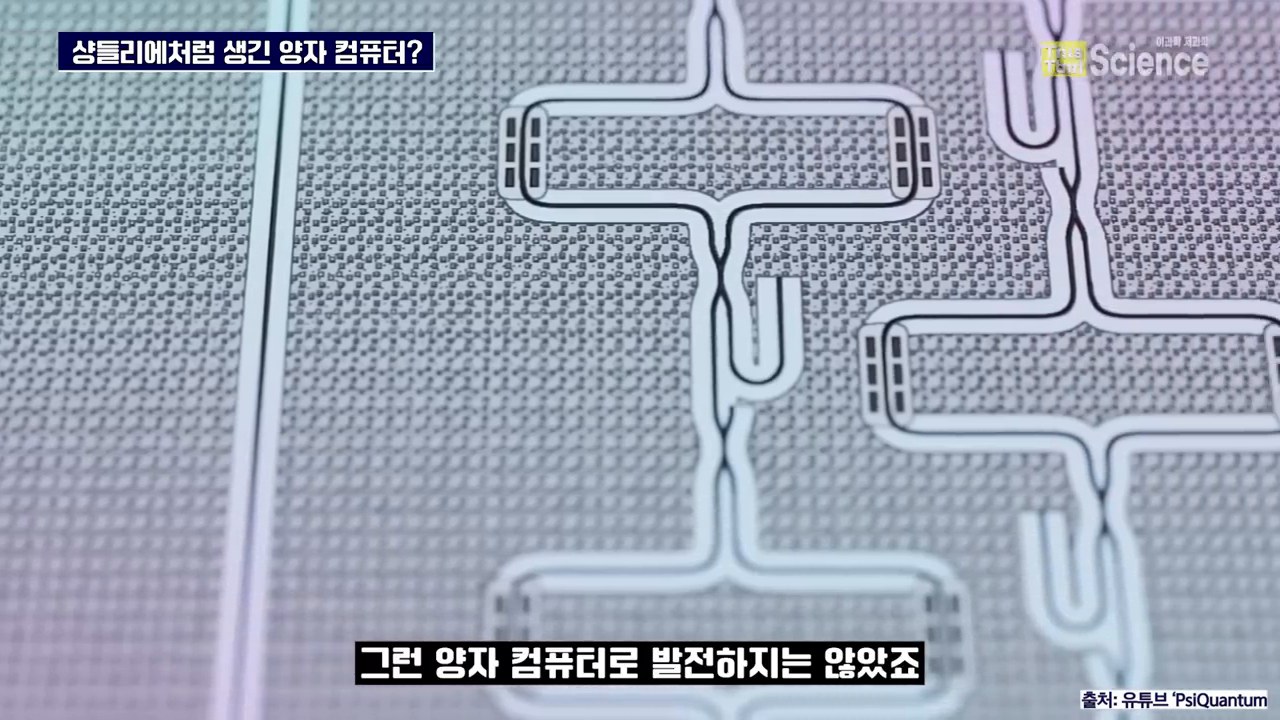
    Video scene showing a quantum chip and circuit implementation
    Scene showing quantum chip and circuit implementation

    Qubits are the starting point. The video explains superposition and interference in accessible language: instead of following only one path, quantum computation handles many possibilities and draws out meaningful results at the end.

    But a mysterious process does not guarantee perfect output. Quantum states are fragile and sensitive to error. Qubit count, error correction, and control technology all matter. The competition is not only “how many qubits,” but who can control them stably and connect them to useful algorithms and software.

    ## The first area to shake is cryptography and security

    Video scene explaining quantum computers and cryptographic security
    Scene discussing quantum computers and encryption/security risk

    Security may be the first area the public feels. The video raises questions about Bitcoin, encryption, and certificate systems.

    The issue is preparation, not panic. If sufficiently powerful quantum computers appear, some existing public-key cryptography could become vulnerable. NIST has already released post-quantum cryptography standards to prepare for that transition.

    For companies, the realistic question is not “Will a quantum computer break my system today?” but “When should we change long-term data protection and authentication systems?”

    ## Commercialization bottlenecks: equipment, cost, and ecosystem

    Video scene showing cryogenic quantum-computing equipment
    Cryogenic quantum computer equipment that looks like a chandelier

    Quantum computers look like chandeliers because of physical requirements: cryogenic environments, control lines, and noise suppression.

    For some time, quantum computing will likely remain cloud-based research and industrial infrastructure rather than a personal device. Like high-end GPUs, it may spread through access rights and usage capability rather than direct ownership.

    Korea’s preparation should be judged the same way: not by whether it owns one machine, but by whether researchers, software, industrial problems, security transition, and education move together.

    ## The next technology after AI, or a technology that goes with AI?

    Video scene discussing Quantum 2.0 and future technology power
    Scene discussing Quantum 2.0 and future technology competition

    The video title asks whether quantum is “after AI.” More precisely, AI and quantum computing meet at different layers. AI changes judgment and generation through data and models. Quantum computing tries to handle difficult calculations in drug discovery, materials, optimization, cryptography, and simulation.

    The key question for the next decade is not who first makes a consumer product. It is who first connects quantum computing to real industrial usefulness.

    ## What individuals and organizations should do now

    Most people do not need to learn quantum computing immediately. But they should understand the questions it will change. Security teams should review post-quantum roadmaps. Strategy teams should identify calculation-heavy areas such as drug discovery, materials, logistics, and financial optimization. Educators should prepare simple language for bits versus qubits, probabilistic computation, error correction, and limits of application.

    ## Related reading ## FAQ ### Are quantum computers always faster than ordinary computers? No. They are expected to have advantages for specific calculation problems, not ordinary office or web use. ### Will encryption collapse immediately when quantum computers arrive? No. But data and authentication that require long-term security should prepare for post-quantum transition. ### Is quantum computing really the next technology after AI? It is better seen as strategic infrastructure after AI, not just the next trend. It addresses different problems and may connect with AI in industry. ### What should Korean companies prepare first? Security transition, industrial problem discovery, talent and partnerships, and cloud-based experimental access before buying hardware. ## References

    Original Korean article

    Image source: Captured images used in this article are stills from the original YouTube video. They are used for review, commentary, and educational explanation, and copyright remains with the original rights holders and the channel.

  • How Quantum Computers Could Change the Next 10 Years: Reading the Next Technology Power Shift After AI

    How Quantum Computers Could Change the Next 10 Years: Reading the Next Technology Power Shift After AI

    After AI has already become an everyday tool, quantum computers are often mentioned as the next candidate for technological dominance. The name is familiar, but the answer to “So what will actually change in my work and industry?” still feels vague.

    The video from This Science, That Science captures that point well. A quantum computer is not simply a faster laptop. It is a technology that handles certain computational problems in a completely different way.

    The key is to keep a balance between hype and indifference. It is not true that every encryption system will collapse immediately. But it is also not just science fiction from a distant future.

    Why We Need to Look Again at Quantum Computers Now

    Video scene explaining quantum-computer research and laboratory environments
    A scene explaining quantum-computer research and laboratory environments

    The reason quantum computers are drawing attention again is similar to AI. It is not only the technology itself that matters; the infrastructure, investment, talent. National strategies around it are moving together.

    In the video, Professor Kim Beom-jun explains quantum computers as computers based on quantum mechanics. If ordinary computers calculate with bits of 0 and 1, quantum computers work with qubits.

    The problem is that this explanation does not mean they are “always faster.” Quantum computers can open new paths for specific problems. But they are not computers that will replace everyday document work or web browsing.

    What Do Qubits Change?

    Video scene showing a quantum chip and circuit implementation methods
    A scene showing how quantum chips and circuits are implemented

    Qubits are the starting point for understanding quantum computers. The video explains superposition and interference in accessible terms. Instead of following only one computational path, quantum computing handles multiple possibilities and draws out a meaningful result at the end.

    However, a mysterious calculation process does not automatically make the result perfect. Quantum states are extremely fragile and sensitive to errors. That is why the number of qubits, error correction, and control technologies all matter together.

    Ultimately, the race in quantum computing is not only a fight over “how many qubits have been built.” It is a fight over the ability to control them reliably and connect them to useful algorithms and software.

    The First Area to Be Shaken Will Be Cryptography and Security

    Video scene explaining quantum computers and cryptographic security issues
    A scene covering quantum computers and encryption-security risks

    Security is likely to be the first area where the public feels the impact of quantum computers. The video also raises questions about Bitcoin, encryption, and public certificate systems.

    The key is not fear, but preparation for transition. If sufficiently powerful quantum computers appear, some existing public-key cryptography could become vulnerable. That is why NIST has already released post-quantum cryptography standards and is preparing for the transition.

    For companies, the more realistic question is not “Will a quantum computer break into my system today?” but “When should we begin changing long-term stored data and authentication systems?”

    The Bottlenecks to Commercialization Are Equipment, Cost, and Ecosystem

    Video scene showing a quantum computer in the form of cryogenic equipment
    Cryogenic quantum-computer equipment that looks like a chandelier

    Quantum-computer equipment looks like a chandelier not for style. But because it requires physical conditions such as cryogenic environments, control lines, and noise suppression.

    For that reason, quantum computers will remain closer to cloud-based research and industrial infrastructure than to personal devices for some time. Like high-performance GPUs, they are likely to spread not because everyone owns one directly. But because organizations that need them secure access and the ability to use them.

    Korea’s preparation should be viewed from the same perspective. More important than whether the country owns a single piece of equipment is whether researchers, software, industrial problems, security transition. Education systems are moving together.

    Is It the Technology After AI, or a Technology That Will Advance With AI?

    Video scene explaining Quantum 2.0 and future technology leadership
    A scene discussing Quantum 2.0 and future technology leadership

    The video title asks whether this is what comes “after AI.” More precisely, however, the picture is closer to AI and quantum computing meeting at different layers.

    AI changes the way we make judgments and generate outputs through data and models. Quantum computing tries to handle problems where computation itself is difficult—such as drug discovery, materials, optimization, cryptography, and simulation—in a new way.

    So there is one key point to watch over the next 10 years. Not who will first turn quantum computers into a “product used by ordinary people,” but who will first connect them to industrial problems and create real usefulness.

    What Individuals and Organizations Should Do Now

    Not many people need to learn quantum computers immediately. But it is worth understanding in advance the questions that quantum computers may change.

    First, security teams should check their roadmap for post-quantum transition. Second, technology and strategy teams should separately identify tasks with high computational difficulty, such as drug discovery, materials, logistics, and financial optimization.

    Third, education teams should prepare language that clearly explains “the difference between bits and qubits,” “probabilistic computation,” “error correction,” and “the limits of industrial application,” rather than trying to teach every quantum-mechanics formula.

    Recommended Reading

    FAQ

    Q. Are quantum computers always faster than ordinary computers?
    A. No. They are expected to have advantages for specific computational problems. It is a major misunderstanding to think of them as computers that make document work or ordinary web use faster.

    Q. Will encryption collapse immediately when quantum computers arrive?
    A. It is hard to say that all encryption will collapse right away. However, data and authentication systems that require long-term security should prepare for a post-quantum transition.

    Q. Is quantum computing really what comes after AI?
    A. It is more accurate to see it as a candidate for strategic infrastructure after AI, rather than simply “the next trend.” AI and quantum computing deal with different problems. But they can be connected in industrial applications.

    Q. What should Korean companies prepare first?
    A. Before introducing quantum-computer equipment, it is more realistic to review security transition, the discovery of industrial problems, specialized talent and partnerships, and access to cloud-based experimentation.

    References

    Image source: Captured images used in this article are stills from the original YouTube video. They are used for review, commentary, and educational explanation, and copyright remains with the original rights holders and the channel.