
# Korean Behaviors Foreigners Struggle to Understand: The Relationship Grammar Behind Ppalli-Ppalli
There are behaviors that can still feel unfamiliar to foreigners even after they have lived in Korea for a long time: opening an umbrella indoors to dry it, pressing the elevator close button as soon as they get in, beginning a sentence with “ani” (“no”), and asking whether someone has eaten as casually as a greeting.
Awesome Korea’s video presents these behaviors as humorous material, but the more interesting point lies elsewhere. If we follow Professor Kim Kyung-il’s explanation, these distinctive Korean behaviors are less about “national character” and closer to a social grammar of preparing for the next state within relationships, being aware of one another, and checking on people through food and care.
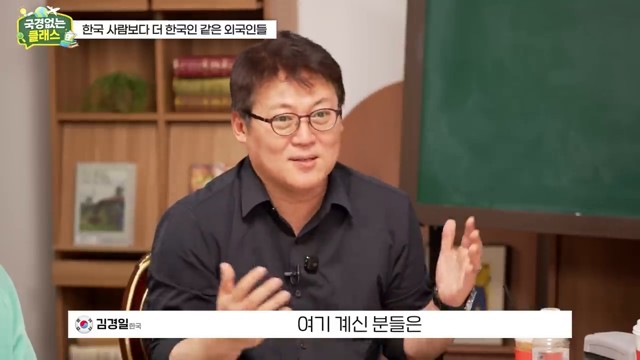
Korean behavior is closer to the grammar of daily environments than to innate nature
It is easy to say, “Koreans are just like that,” but it is not accurate. Cultural behavior is less an inborn personality trait than a response naturally learned through repeated environments.
For example, washing your hands and feet after coming home is not only about cleanliness. The same is true of drying an umbrella right away or wiping a dog’s paws. These actions combine preparation for the next use with an awareness of the people who share the indoor space.
So the important question in this article is not “Why do Koreans behave strangely?” A better question is: “What function does that behavior serve in Korean society?”
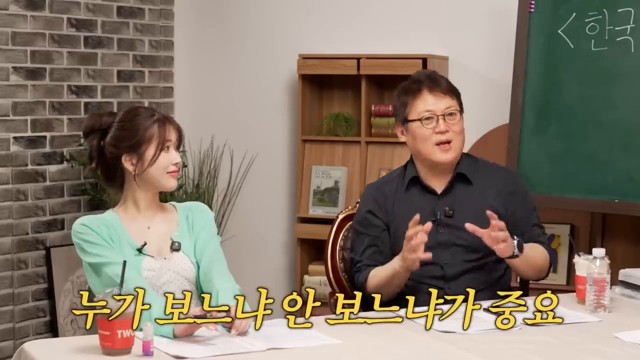
1. Ppalli-ppalli may be preparation for the next state, not mere impatience
Korea’s ppalli-ppalli, or “hurry-hurry,” culture is often criticized. Pressing the elevator close button immediately or opening the microwave door one second before it finishes can look impatient to foreigners.
But if we read this behavior, as the video does, as an attitude of “setting up the next state in advance,” it looks a little different. Drying an umbrella is also less about immediate efficiency and more about preparing it so it will not still be wet the next time it is used.
Of course, not every fast action is good. Ppalli-ppalli can increase efficiency, but it can also create haste and pressure. The key point is that Korean speed contains not only impatience, but also readiness.
2. Nunchi and mutual observation are part of the background of Korean-style trust
Leaving a laptop or bag at a cafe table to hold a seat can feel especially unfamiliar to foreigners. In some countries, it would be considered dangerous behavior.
In Korea, the relative possibility of doing this is supported by CCTV, public safety, and the subtle sense that people in the same space are watching one another. The idea that “whether someone is watching matters” works not merely as surveillance, but also as a form of social restraint.
Still, this should never be mistaken for absolute safety. Leaving valuables unattended is still risky. Cultural trust and personal safety management are separate issues.
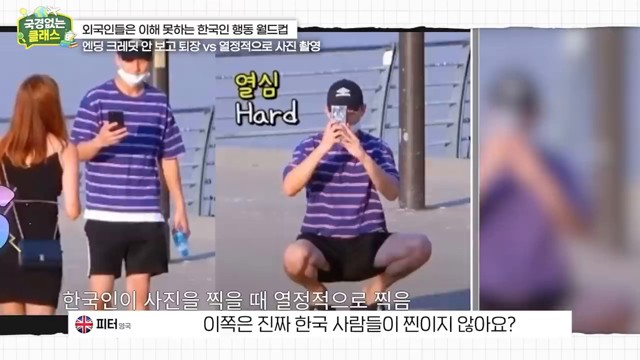
3. Relationship-centeredness also appears in how Koreans take photos for others
When Koreans take photos for someone else, they often lower their body, search for the right angle, and take multiple shots. The people in the video also strongly identify with this behavior.
This is not simply because they want to take a good picture. It is a reaction that helps the other person look better in the photo, and a relational behavior that places that person at the center of the scene.
Korean-style consideration is often expressed as doing “a little extra,” not only doing exactly what is needed. Giving two or three tissues when someone asks for one fits this pattern.
4. “Ani” is not always opposition; it can be a conversational signal
In Korean conversation, “ani” can sound aggressive to foreigners. In practice, however, it is often used less to reject what the other person said than as an attention signal meaning, “Wait, listen to what I’m saying.”
Of course, “ani” can also be a real rebuttal. That is why, in Korean conversation, you have to read intonation, facial expression, and the surrounding context together rather than relying on a single word.
This point matters for learners of Korean. Natural Korean conversation is often shaped more by discourse markers and relational nuance than by sentences in grammar textbooks.
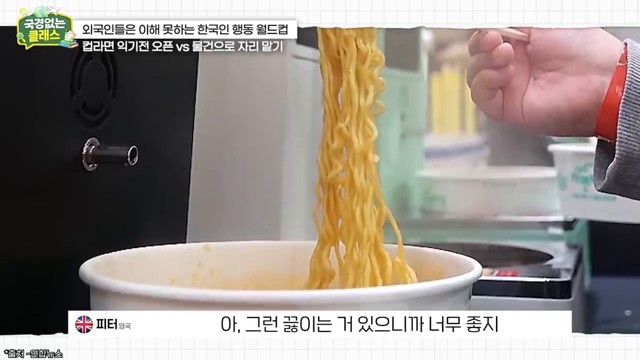
5. “Have you eaten?” may be a check-in, not a meal inspection
In Korean culture, bap is not merely food. “Have you eaten?” or “Are you eating well?” can ask about the actual meal. At the same time, they check on someone’s health, daily life, and well-being.
The Korean word sikgu, meaning “family” or “household,” sits in the same context: literally, it points to people who eat together. People who share meals are not just cohabitants; they are people inside the circle of relationship.
So if foreigners understand this phrase only literally, it can feel strange. But if Korea’s food greeting is read as an emotional expression blending “Are you doing well?” and “You’re not having a hard time, are you?”, it becomes much more natural.
The balance needed when looking at behaviors foreigners find unfamiliar
The video title describes these as behaviors “foreigners cannot imitate no matter how hard they try.” For a blog article, however, it is better to read them a little differently. More precisely, they are “Korean social grammar whose function is hard to understand before you become used to it.”
When explaining cultural differences, three cautions are necessary.
1. Do not say all Koreans are the same. 2. Do not say all foreigners react the same way. 3. Do not judge one culture as superior to another.
Culture can explain average tendencies, but it cannot stand in for the individual. Behavior can vary greatly by generation, region, personality, occupation, and living environment.
Five observation criteria for understanding Korean behavior
- Look for whether fast behavior contains a sense of preparing for the next state.
- Remember that excessive consideration can feel like interference to the other person.
- Interpret words such as “ani” and “Have you eaten?” through context rather than literal wording.
- Nunchi and mutual observation can create both trust and pressure.
- See cultural differences not as ranks of superiority, but as different social rules.
Recommended reading
- Korea’s Potential Through Professor Mark Peterson’s Eyes
- Movie and Drama MBTI Analysis Series: Understanding Personality Types Through Characters
- Metacognition in the AI Era: A “Check Your Thinking” Method More Important Than Smart Answers
FAQ
Q1. Why do Koreans often add “ani” when they speak?
It does not always mean they are disagreeing. At the beginning of a sentence, “ani” can be used less as a denial of the other person’s words and more as a request for attention: “Wait, listen to me too.” Depending on intonation and context, however, it can also be an actual rebuttal.
Q2. Did Korea’s ppalli-ppalli culture arise simply because Koreans are impatient?
It is hard to see it only that way. As the video suggests, behaviors such as drying an umbrella, pressing the elevator close button, or opening the microwave just before it ends can be connected to a sense of preparing for the next situation in advance.
Q3. Why do people in Korea leave belongings at cafe tables to hold seats?
It can be seen as the result of public safety, CCTV, and a culture in which people in the same space subtly notice one another. But leaving valuables unattended is still risky, so a cultural practice should not be treated as a guarantee of safety.
Q4. Does “Have you eaten?” really mean asking whether someone ate?
It depends on the situation. It can ask about the actual meal, but in many cases it is an expression that checks health and well-being. It also carries the meaning of “Are you doing well?” and “You’re not having a hard time, are you?”
Q5. Are all Korean behaviors that surprise foreigners caused by Korean culture?
No. Cultural tendencies are only one axis of explanation. Behavior varies by individual personality, generation, region, and living environment. We therefore need an attitude that avoids treating Koreans and foreigners as fixed single groups.