
[태그:] organizational culture

  • When a Kind Leader Starts Hurting the Team: Team-Control Lessons from Takmin Oh

    When a Kind Leader Starts Hurting the Team: Team-Control Lessons from Takmin Oh

    Does a good leader always have to be kind? This question is more difficult than you think in the workplace. A kind tone is clearly necessary, but if a leader cannot express uncomfortable standards, team members will actually become more anxious.

    In the Career Day video, author Takmin Oh explains this issue with the idea that “having a bad personality does not make someone a bad leader.” The key is not personality, but standards. If team members do not know what the leader wants, what they reward, or what behavior they want to repeat, the team will not move.

    An interview scene explaining the meaning of leadership that helps the team
    Leadership is closer to creating standards that allow the team to move than to using kind language.

    The moment a kind leader becomes dangerous

    Being a kind leader is not always bad. The problem arises when kindness becomes conflict avoidance. If a leader cannot say what needs to be said, blurs performance standards, and makes team members guess, kindness is closer to neglect than leadership.

    Team members want predictable standards rather than a leader’s mood. They want to know what to do first, how much to do, and what behavior is good. If the leader does not express those standards, team members will continue to guess.

    Author Ohtakmin talking about leadership that treats members kindly
    Kindness is necessary, but without standards, team members may actually feel anxious about the leader.

    The problem is not personality, but the “absence of one’s own thoughts”

    One impressive point in the video is the criticism that many leaders do not know their own thoughts well. If a leader does not know what they want, feedback will also be unclear. Saying “let’s do well” is gentle, but it is not an execution standard.

    Therefore, leaders must first organize their thoughts into sentences. They must be able to say what results are important in this team, what behaviors create those results, and what habits they should stop now.

    The state of the leaderWhat team members feelThe result that occurs in the organization
    Kind but has no standardsIt’s hard to know what’s done wellGuessing and speculation increase
    Strict but lacks explanationOnly the reason for scolding remainsA defensive atmosphere is created
    Speak the standards and act on themIt’s clear what to repeatThe team’s learning speed accelerates

    The 3 layers of a leader: thought, speech, action

    Leadership is not determined by a single tone of speech. Thoughts, words, and actions must be consistent. If you have high standards in your mind but don’t express them, your team won’t know. On the other hand, if your words are great but the actual rewards are different, the team will follow the rewards, not the words.
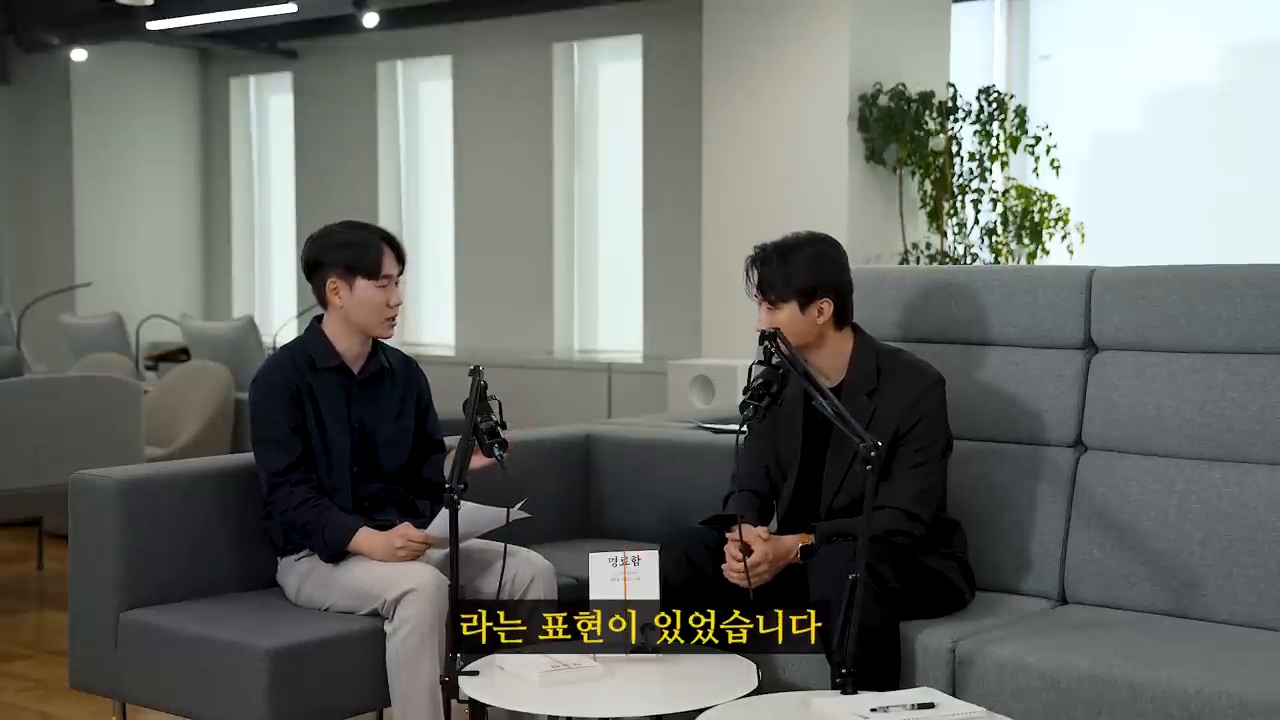
    Interview scene explaining what leaders should say and the standards they should have
    A good leader expresses their thoughts and standards in words so that team members do not have to guess.
    • Thoughts: What results does our team truly value?
    • Words: Were those standards conveyed to team members in understandable sentences?
    • Actions: Were those standards consistently applied in actual meetings, feedback, and rewards?

    If these three are inconsistent, a leader’s reputation can be easily shaken. A reputation for being a good person can remain, but it’s difficult to earn trust as a leader who grows the team.

    Why behavior should be rewarded, not results

    Results are important. However, if only results are rewarded, luck, market conditions, and differences in existing resources are mixed in. It’s difficult for team members to learn what they should repeat. Therefore, author Ok-tak Min emphasizes that behavior should be rewarded.

    Focusing on behavior does not mean ignoring results. It means finding the process that creates good results and converting that process into repeatable language. For example, ‘We increased sales’ is less learnable feedback than ‘We recorded customer questions and reflected them in the next proposal.’

    An interview scene in the context that behavior, not results, should be rewarded
    When an organization focuses on repeatable behavior rather than results, it grows more stably.
    Reward CriteriaLeader’s QuestionTeam’s Remaining Learning
    Performance-BasedWere this month’s numbers good?Interpreted as a mix of luck and skill
    Action-BasedWhat actions contributed to the performance?Can be repeated next time
    Learning-BasedWhat was changed from the failure?Attempts and improvements accumulate

    5 Checklists That Team Leaders Can Apply Immediately

    • This week, I will tell you the top priority that team members must know in one sentence.
    • Instead of saying “let’s do our best”, I suggest observable behavioral standards.
    • For those who have achieved good results, I ask not only about the outcome but also about repeatable behaviors.
    • I don’t delay feedback, and I deliver it in short, small units of behavior.
    • I bring both kind tone and clear standards together, without choosing just one.

    A growing organization moves based on standards, not a leader’s personal preference.

    A team member liking their leader and a team growing are different things. Of course, if the relationship is bad, work becomes difficult. However, if the relationship is good but there are no standards, the team can become complacent and stagnant.

    A good leader is not someone who pushes people, but someone who prevents team members from having to guess. A good leader tells team members what to do, observes good behavior, and creates a structure that allows for retrying. Therefore, leadership is closer to a design problem than a personality problem.
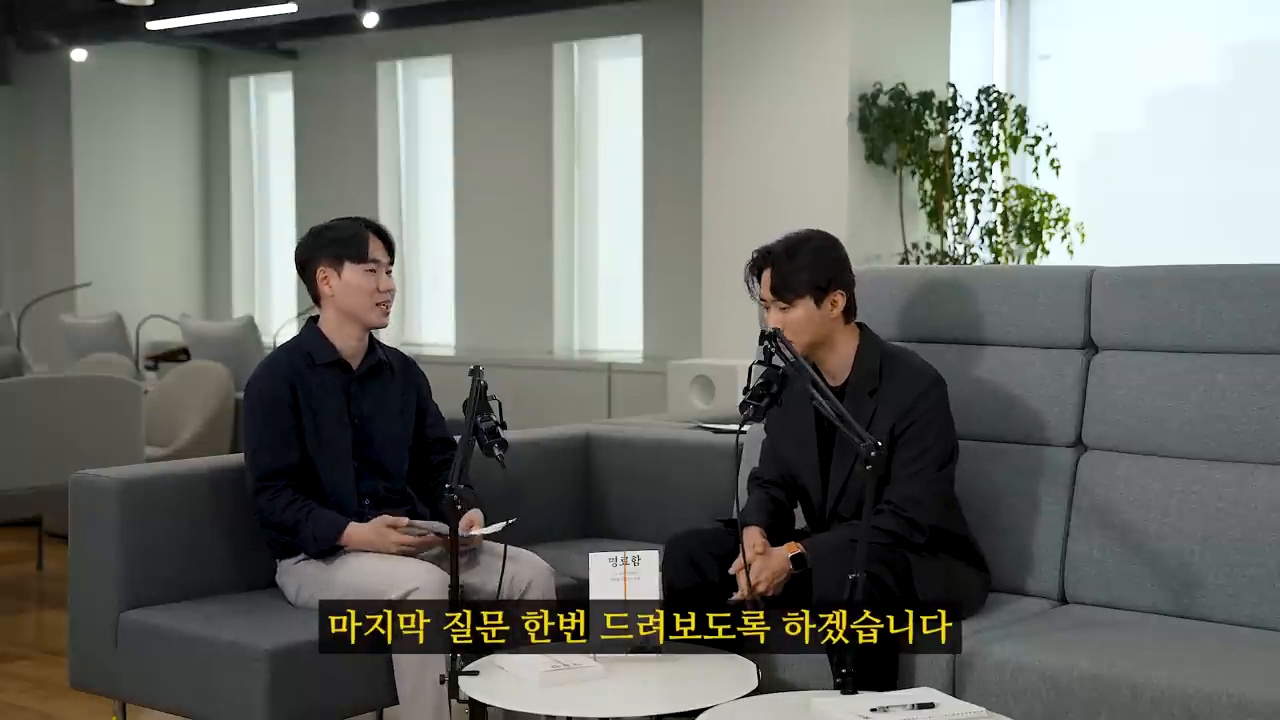
    A scene of an interview explaining the role of growing organizations and leaders
    The leadership that moves a team is the power to design structures and repeatable behaviors, rather than personal preference.

    Recommended reading

    FAQ

    Are Nice Leaders Really Bad Leaders?

    No, being nice is not the problem. However, if niceness is used as a way to avoid conflict and fail to set standards, it can confuse team members even more.

    What should the team leader change first?

    Organizing their thoughts into clear sentences. We must be able to articulate the important results and actions that produce those results in our team.

    Does saying to reward behavior rather than performance mean to ignore performance?

    No, it means to find the repeatable behaviors that produce the performance. That way, team members can improve in the same way next time.

    What is more important, kindness or strictness?

    It’s not a matter of choosing one over the other. Both a kind attitude and clear standards are necessary for team members to challenge themselves safely.

    Where can I watch the original video of this article?

    The Career Day YouTube video “Having a bad personality doesn’t make you a bad leader”can be found in

    Reference

    Image source: The capture image used in the text is from the original YouTube videoand was used as a quoted image for review, commentary, and educational purposes. The image copyright belongs to the original author and the channel.

    Original Korean article: https://www.thinknote.co.kr/leadership-kind-leader-team-management/

  • The Decisive Difference Between Companies That Collapse and Companies That Grow Again in the AI Era

    Corporate innovation in the AI era is not about attaching an impressive name to a new business. More precisely, nothing changes just because a company says, “We should do AI too.”

    In an SBS “Please Take Care of Liberal Arts” video, former KT vice president Sujeong Shin gives a realistic diagnosis of why companies collapse. Old companies do not collapse only because they fail to find new businesses. They collapse when they fail to reread the meaning of their existing business and when internal rules become larger than customers.

    This article summarizes what companies must change to grow again in the era of AI transformation.

    ## If you do not prepare the next S-curve, even strong companies stop

    A business usually follows an S-curve. It starts slowly, grows rapidly at some point, enters maturity, and eventually declines.

    The problem is that many companies try to survive maturity and decline with the methods created during the growth phase. Past success feels familiar and safe. But that familiarity blocks the next growth.

    Companies must therefore always prepare the next S-curve. This does not mean abandoning the existing business and doing something completely unfamiliar. The starting point is to reinterpret the existing business.

    ## New business is not abandoning the old business; it is reinterpreting it

    A striking point in the video is the view of new business. When an existing business becomes difficult, many companies search for something entirely different. Meanwhile, someone else reinterprets gaps in the existing market.

    While telecom companies did not fully reread the essence of text messaging and communication, Kakao grew messenger services. While financial companies kept transfers and investments heavy, Toss created a lighter, easier financial experience.

    Microsoft is similar. Old Microsoft was closer to a PC software company. After Satya Nadella, the company redefined itself as a company that improves enterprise productivity. Then word processors, cloud, collaboration tools, and AI all connected in one direction.

    Walmart also reinterpreted itself not simply as an offline retailer but as a life platform closest to customers. It expanded from a place that sells goods into logistics, daily-life services, and a data-based retail platform.

    The point is simple: new business does not start by looking somewhere random. It starts by asking again what the essence of the work you already do is.

    ## Every company must now become an AI company and a technology company

    In the AI era, “we are a traditional industry, so AI is far from us” is becoming less persuasive. Manufacturing, shipbuilding, retail, cosmetics, education, and logistics are no exceptions. The key is not to view AI separately, but to combine it with the existing business.

    Companies with existing industries may actually have an advantage because they already have data, customer touchpoints, field experience, and physical assets. AI does not create business in the air. It becomes powerful when connected to real problems.

    Shipbuilding can attach AI to design, maintenance, safety, and process optimization. Retail can attach AI to demand forecasting, logistics, and personalized recommendations. Cosmetics can attach AI to skin data, preference analysis, and product-development speed.

    The question of AI transformation is not “Should we create a new AI business?” Better questions are:

    – What is the essence of our business?
    – Where do customers actually feel inconvenience?
    – Can AI and technology solve that inconvenience faster and more accurately?
    – Are our existing organizational processes blocking that change?

    ## Zero-to-one takes time, which is why large companies struggle to endure it

    New businesses pass through two broad stages. The first is zero-to-one: finding the product or service customers truly want. The second is one-to-ten: scaling the model already found.

    One-to-ten is close to operations and management. Zero-to-one is different. There is no right answer, and timing and luck matter. It requires repeated attempts, discards, and rebuilds.

    That is why zero-to-one often fits startups better. Startups can try quickly and pivot when they fail. Large companies are slower and often cannot wait long for small results.

    Early revenue from a new business is small. In a company with a one-trillion-won core business, a 100-million-won experiment looks shabby. But if the company cannot endure that small sprout, the next business cannot grow.

    This is why an ecosystem in which large companies invest in startups, then acquire or partner with them when growth becomes visible, is important.

    ## Startups should be awls, not hammers

    If a startup fights a large company head-on, it is at a disadvantage in capital, people, brand, and distribution. Early startups should therefore be awls, not hammers.

    The awl strategy means digging into a small but sharp market. Start in a niche that large companies do not care about, understand customers deeply there, create loyal customers, and then expand sideways.

    Toss did not start as a giant comprehensive financial platform. It started with the small, specific inconvenience of simple money transfers. Coupang also did not dominate all retail from the beginning; it obsessively improved customer experience and created lock-in.

    Early startups should ask not “How large a market can we claim?” but:

    – What small, sharp problem can we solve best?
    – What customer pain are large companies not yet taking seriously?
    – If we solve this problem, will customers have a reason to stay?
    – Can we become number one in this narrow area?

    ## Bureaucracy is not only bad, but it becomes dangerous when hardened

    As companies grow, some bureaucracy naturally appears. Responsibility increases and risk management becomes necessary. Approval procedures and systems are needed. When there are many customers, roughly moving fast can be dangerous.

    The problem begins when bureaucracy swallows the organization’s purpose. Reports become more important than customers, and approval lines become more important than the field. Members say “the rule does not allow it” before judging for customers.

    Three things are needed to revive such an organization.

    ### 1. Make the sense of crisis clear

    Organizations do not change unless they feel real danger. Repeating “Let’s innovate” is not enough. People must share the reality that the current way may lose customers, lose markets, and eventually shake jobs.

    ### 2. Go back down to customers and the field

    Desk strategy alone cannot revive an organization. Executives and leaders must meet customers, listen to field problems, and directly confirm what customers are tolerating and why they leave.

    ### 3. People who innovate must actually be recognized

    Organizational culture is not a poster slogan; it is a way of survival. Members watch rewards more than words. If people who try innovation are pushed out after failure while people who protect old methods are promoted, nobody believes in innovation.

    To change for real, the signal that people who execute innovation are recognized and promoted must appear repeatedly. It must become a steady reward system, not a short-term event.

    ## Systems must work with mission, not become 100% of the organization

    Growing companies need systems. As people and work become complex, standards and processes are necessary. Without systems, quality and responsibility become unclear.

    But when systems become too large, people forget the essence of the work. Marketers see only marketing systems; HR people see only HR rules. Following internal procedures becomes bigger than understanding customers’ inconvenience.

    The video mentions Disney. Disney is a highly systemized organization, but it leaves room to move by mission. The purpose of delighting and satisfying customers enables judgment beyond written rules.

    Not every company can use the same ratio. Aviation, manufacturing, and healthcare require more system because safety is crucial. Content, IT services, and software can allow more room for experimentation.

    The important thing is balance between system and mission. Systems make work stable; mission restores customer context that systems miss.

    ## Do not copy success cases; learn failure conditions

    Companies love success cases: Netflix’s “no rules,” Silicon Valley autonomy, famous HR systems, and specific CEOs’ leadership.

    But success formulas are not universal. Some methods work only in a specific industry, time, talent density, or founder philosophy. If you import the system without the context, side effects appear.

    When studying success, ask not “Should we do the same?” but “Under what conditions did it work?” More importantly, learn failure conditions.

    Accounting fraud, ignoring customer churn, internal-rule-first thinking, a culture that kills small experiments, and innovation rewards that exist only in words clearly damage organizations. Success is hard to copy, but the probability of failure can be reduced.

    ## Five questions for corporate innovation in the AI era

    To check whether an organization is really changing, ask:

    – How are we redefining our existing business?
    – Are AI and technology actually connected to solving customer problems?
    – Do we have a structure that can endure small results from new businesses for at least three years?
    – Does the voice of customers and the field reach decision-makers directly?
    – Are people who execute innovation, not merely talk about it, being recognized?

    If these questions cannot be answered, AI transformation is likely to remain a slogan.

    ## Conclusion: innovation is not a new business name but a change in survival style

    Corporate innovation in the AI era does not end with a list of technologies to adopt. The more fundamental question is: what makes our company meaningful to customers, and how will we remake that meaning amid today’s technology and market changes?

    Companies rarely collapse because they do not know change is coming. They collapse because they know but cannot change. When rules, reporting, approvals, and past success become larger than customers, organizations slowly harden.

    Companies that grow again are different. They reinterpret existing businesses, attach AI and technology to customer problems, endure small experiments, return to the field, and actually reward people who innovate.

    Ultimately, corporate culture is not words but a way of survival. That principle does not change in the AI era.

    ## Further reading

    – [Anthropic Mythos Shock: As AI Becomes a Strategic Asset, What Should Korea Prepare?](https://www.thinknote.co.kr/anthropic-mythos-ai-strategic-asset-korea/)
    – [AI Agent Evolution: What OpenClaw Shows About the Next Step Beyond Chatbots](https://www.thinknote.co.kr/ai-agent-evolution-openclaw-action-oriented-ai/)
    – [Innovative Small Business AI Support: Eligibility, Scale, and Checklist](https://www.thinknote.co.kr/innovative-small-business-ai-support-2026/)
    – [AI-Native Workflows: How to Rebuild Work Around a Digital Brain and AI Agents](https://www.thinknote.co.kr/ai-native-workflows-digital-brain-ai-agents/)

    ## References

    – Original video: [“We say innovation, but nothing actually changes” — SBS](https://www.youtube.com/watch?v=RfmKYC1t-hE)

    ## FAQ

    ### What is the starting point for corporate innovation in the AI era?

    It is not abandoning the existing business, but redefining its essence. Then AI and technology must be connected to solving customer problems.

    ### Why do large companies often fail at new businesses?

    They cannot wait long for small results in the zero-to-one stage. Early new businesses have small revenue and high uncertainty. Without a structure to endure that, the sprout disappears before it grows.

    ### How should startups compete with large companies?

    At first, solve a narrow and sharp problem rather than fighting broadly. Build customer loyalty in a niche that large companies pay less attention to, then expand.

    ### What matters most when reducing bureaucracy?

    Return decision-making to customers and the field, and build a reward system in which people who execute innovation are actually recognized.

    ### How should companies balance systems and autonomy?

    It depends on industry risk and customer touchpoints. Safety-critical industries need more system, while industries that need fast experiments can allow more mission-based autonomy.

    [Original Korean article](https://www.thinknote.co.kr/ai-era-business-innovation-system-mission/)