
The Korean source summarizes Kim Jung-woon’s ideas about creative thinking in the AI era. The main claim is that creativity is not simply inventing something from nothing. It is the ability to collect materials, edit them from one’s own perspective, ask different questions, and recover play, visual thinking, and context.
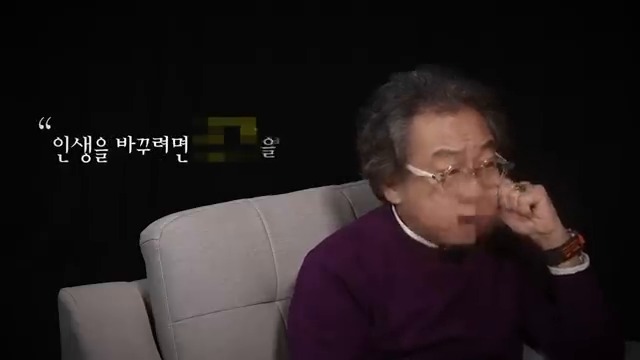
Original Korean article: AI 시대에 더 중요해진 창조적 사고, 김정운 박사가 말한 질문과 관점의 힘
Creation Is New Editing, Not Pure Invention
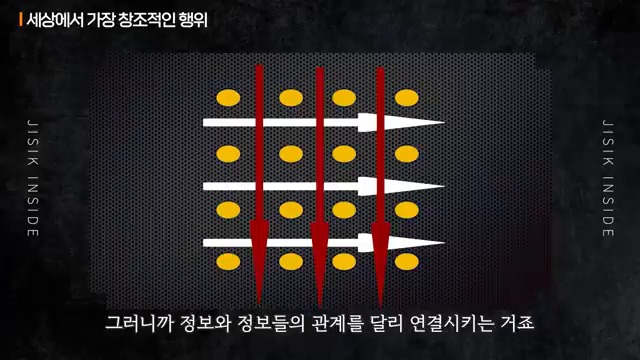
The source begins by reframing creativity as editing. New ideas often come from rearranging existing materials, references, experiences, images, and questions.
This is why use value matters before money. If we only chase price or market reward, we may miss the human question: what is this useful for, and from whose perspective does it matter?
Condition One: Accumulate Materials to Edit
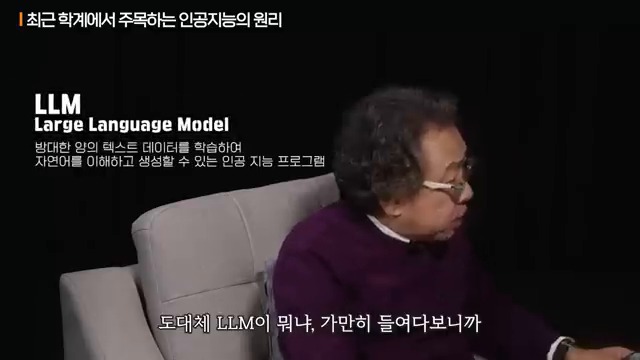
Creative thinking needs raw material. Reading, note-taking, travel, conversation, art, and observation all become ingredients. In an age of information abundance, the problem is not lack of data but lack of personal interpretation.
A practical tip from the source is to attach a one-line meta title to information. Instead of saving a link passively, name what it means. That small act turns information into a thinking asset.
Condition Two: Restore Visual Thinking
The article stresses visual thinking because humans do not think only in abstract text. Images, spatial relations, movement, and sensory memory help us notice patterns that linear language may miss.
Art education and travel are not luxuries in this view. They expose people to different compositions, rhythms, cultures, and frames. AI may generate images, but humans still need eyes trained to see why an image matters.
Creativity in the AI Era: Pattern Recognition and Human Editing
AI is strong at pattern recognition and recombination. That means human creativity must move upstream: better questions, sharper perspectives, and more meaningful selection.
If everyone can generate plausible drafts, the differentiator is not first output. It is the ability to decide what is worth making, what context is missing, and what viewpoint makes the result alive.
Condition Three: Recover Fun and Flow
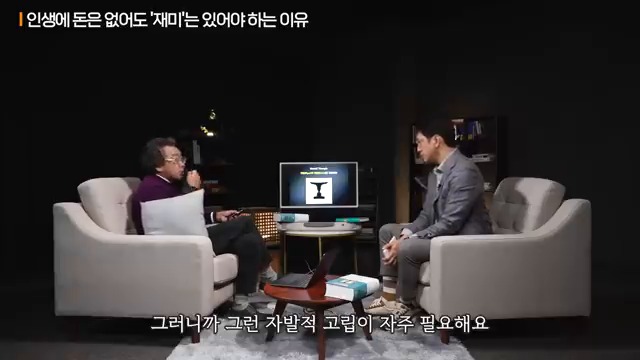
The source connects creativity with fun and immersion. Boredom and anxiety both damage thinking. When a task is too easy, attention disappears; when it is too hard, fear blocks action.
Creative work often begins when the challenge is adjusted to a level where curiosity returns. Play is not the opposite of work. It is a mode in which new connections become possible.
Rest as Reframing Context
Rest is not merely doing nothing. It gives the mind time to see context differently. When a question is stuck, changing the order of questions may change the answer itself.
This is especially important in AI work. Prompting is not just asking faster; it is reframing the problem so that the machine and the human look from a better angle.
Zettelkasten and Databases as Thinking Tools
The source mentions Zettelkasten and databases because ideas are easy to lose. A note system should not be a warehouse of copied text. It should be a flexible space where notes can be revised, connected, and reinterpreted.
Digital tools and AI can help organize information, but the user must still decide the link, title, and meaning. The value is not the note itself but the network of thought it supports.
Checklist and Conclusion
For immediate practice, collect materials deliberately, give each saved item a meta title, draw diagrams, ask the question differently, schedule playful exploration, and revise notes instead of merely storing them.
The conclusion is that creativity is the power to edit the world through one’s own perspective. In the AI era, that power becomes more important because production is easier and perspective is scarcer.
Practical Implications for Readers
For readers using this article as a working reference, the practical lesson is to move from abstract interest to a concrete audit. Identify where the topic touches your own work, which assumptions are already outdated, what data or tools are missing, and which decision could be tested on a small scale before a larger commitment. Write that test down, assign an owner, and review evidence rather than impressions.
The Korean source repeatedly treats technology, strategy, and human judgment together. That is why the safest next step is not blind adoption or passive worry. It is disciplined experimentation: define the problem, compare alternatives, verify results, protect sensitive information, and keep the human purpose visible while the tool or trend evolves.
Related Reading
FAQ
Is creative thinking innate?
Some tendencies differ by person, but creative thinking can be trained through materials, perspective, questioning, visual thinking, and playful practice.
Must Zettelkasten be done on paper cards?
No. The important principle is linkable, revisable notes, not a specific medium.
Does AI weaken creativity?
It can if used passively, but it can also strengthen creativity when used for exploration, comparison, and reframing.
What is the first practical step?
Save one useful idea each day and give it a one-line title that explains why it matters.