
The Korean source organizes Choi Tae-won’s comments around future talent, agentic AI, AI factories, and Korea’s AI nation strategy. Its key message is that the unit of production is shifting from goods to intelligence. Therefore, future talent must combine thinking power, adaptability, empathy, and body skills while Korea builds systems that let society actually use AI.

Original Korean article: 최태원이 말한 AI 시대 미래 인재: 생각하는 힘과 AI 네이션 전략
The Production Unit Changes From Products to Intelligence
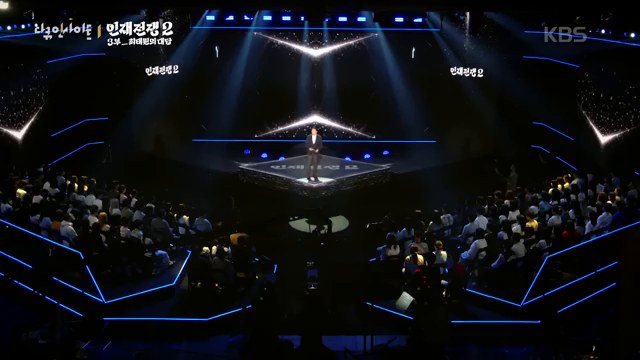
In the industrial era, production was measured through goods, factories, and physical output. In the AI era, intelligence itself becomes a production unit. Models, agents, data, and compute create decisions, services, and automation.
This is why AI factories matter. They are not only data centers; they are infrastructure for producing usable intelligence at scale.
Future Talent Becomes More Generalist
The source argues that future talent is not only a narrow specialist. AI can support specialized tasks, so people must connect fields, ask larger questions, and coordinate multiple capabilities.
A generalist in this sense is not shallow. It is someone who can combine domain knowledge, AI tools, human context, and strategic judgment across boundaries.
Four Capabilities Individuals Need
The first is thinking power: the ability to define problems, question assumptions, and decide what matters. The second is adaptability: learning new tools and changing methods without losing direction.
The third is empathy, because AI may handle information but humans still need trust, care, negotiation, and social understanding. The fourth is body skill: the ability to work in the physical world, sense context, and connect digital intelligence with real action.
Korea’s AI Strategy: Speed, Scale, and Safety

The source summarizes AI nation strategy through speed, scale, and safety. Speed matters because AI adoption compounds. Scale matters because data, compute, talent, and applications need national coordination.
Safety matters because uncontrolled adoption can create privacy, bias, security, and social risks. A serious AI nation strategy must move fast without treating safety as an afterthought.
The Missing Piece: A Social System That Uses AI
Korea should not focus only on owning models. The more important question is whether schools, companies, public agencies, small businesses, and individuals can use AI in daily systems.
That requires training, workflows, procurement, data standards, infrastructure, and trust. AI becomes national capability only when it changes how society solves problems.
What Individuals and Organizations Should Start With
Individuals can begin by using AI for summarizing, drafting, coding, research, and planning, but they should also practice verifying outputs and asking better questions.
Organizations should identify repeated work, redesign processes, prepare data, create internal rules, and train people. AI adoption is not installing a tool; it is changing the operating method.
Key Takeaway
Future talent is not defined by memorizing more than AI. It is defined by thinking with AI, adapting faster, understanding people, and connecting intelligence to real work.
Korea’s AI nation strategy should therefore combine infrastructure with education, safety, and practical use across industries.
Practical Implications for Readers
For readers using this article as a working reference, the practical lesson is to move from abstract interest to a concrete audit. Identify where the topic touches your own work, which assumptions are already outdated, what data or tools are missing, and which decision could be tested on a small scale before a larger commitment. Write that test down, assign an owner, and review evidence rather than impressions.
The Korean source repeatedly treats technology, strategy, and human judgment together. That is why the safest next step is not blind adoption or passive worry. It is disciplined experimentation: define the problem, compare alternatives, verify results, protect sensitive information, and keep the human purpose visible while the tool or trend evolves.
Related Reading
Continue with these related Thinknote English articles in the Digital Transformation cluster.
- Thinknote English article
- Thinknote English article
- Thinknote English article
- Thinknote English article
- Thinknote English article
- Thinknote English article
FAQ
What is this article about?
This article explains a digital transformation, platform, market-structure, or technology-adoption topic with Korea-specific context and global implications.
How should I use this guide?
Use it to understand market signals and strategic patterns. Combine it with current market data before making business or investment decisions.
Where can I read the original Korean article?
The original Korean article is available here: Future Talent in the AI Era: Thinking Power, AI Factories, and Korea’s AI Nation Strategy.