

Many people say their appetite decreases after they start taking Wegovy. At first, that can feel welcome. But when food intake drops too much, other concerns follow.
“Is it okay to eat this little?”
“Do I need to take vitamins separately?”
To start with the conclusion, not everyone who takes Wegovy needs to take the same vitamins. However, if your food intake has decreased and your food choices have become repetitive, you can consider supplements. The key is not to look for a “Wegovy-specific vitamin,” but to identify the nutrients that are actually likely to become insufficient.
Does Wegovy Directly Cause Nutrient Deficiencies?
The active ingredient in Wegovy is semaglutide. The U.S. FDA label and the manufacturer’s prescribing information describe Wegovy as a medication used together with a reduced-calorie diet and increased physical activity.
Wegovy can also delay gastric emptying. This can make fullness last longer and reduce appetite. Common adverse reactions include nausea, vomiting, diarrhea, constipation, abdominal pain and indigestion.
The way nutrition problems arise here is relatively simple. Rather than the medication directly taking vitamins away from the body, the issue is that the amount you eat and the variety of foods you eat may shrink.
For example, if days of getting by on coffee, a small piece of bread and one egg repeat over and over, weight may go down. But nutrients such as protein, fiber, iron, calcium, vitamin D and vitamin B12 may become insufficient.
UCLA Health also explains that people using GLP-1 weight-loss medications may find it difficult to maintain a balanced diet because appetite decreases. For that reason, it emphasizes regularly getting protein, fiber and fluids.
Three Things to Prioritize Before Vitamins
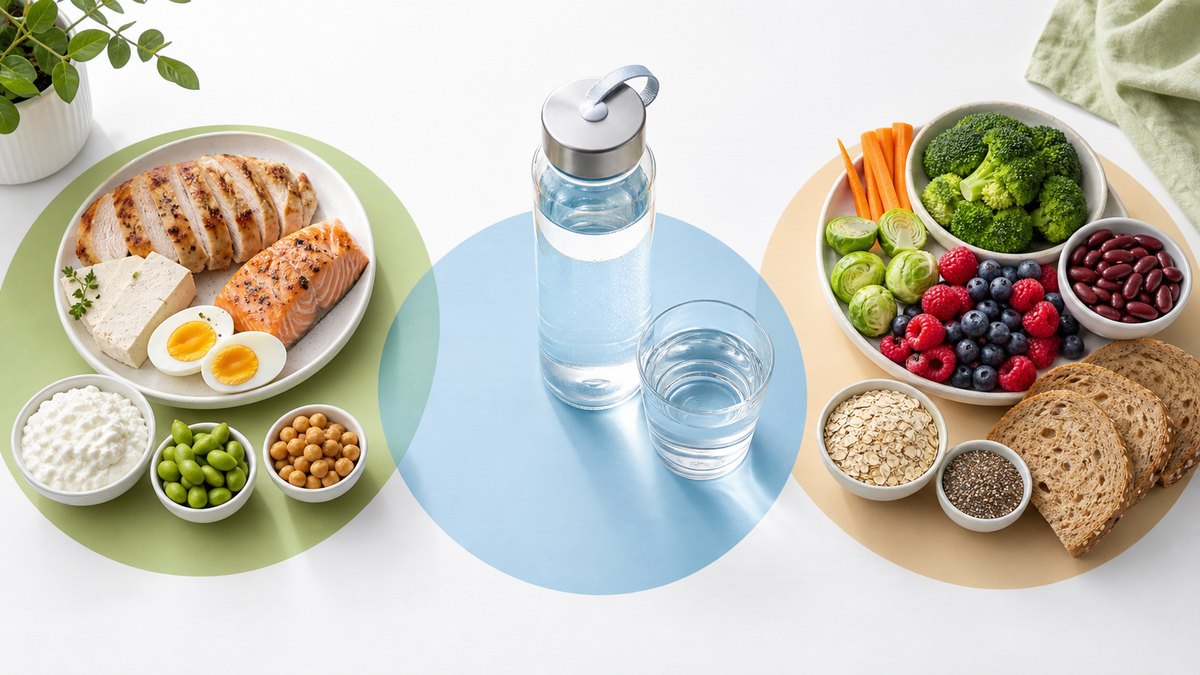
Before choosing vitamins, there are things you should look at first. Surprisingly, they are not pills.
1. Protein
When weight decreases, it would be ideal if only fat decreased, but reality is different. Muscle can decrease as well. Mass General Brigham explains that adequate protein intake and strength training remain important during GLP-1 medication treatment.
If protein is insufficient, you may tire easily, lose muscle mass and find it harder to manage your basal metabolic rate after weight loss. That is why, the more your food intake has decreased, the better it is to place protein first in each meal.
You can start with easier protein sources such as eggs, fish, chicken, tofu, Greek yogurt and legumes. On days when meat does not go down well, protein drinks or powders can be used as a supplement. However, if you have kidney disease, you should discuss this with your healthcare team.
2. Fluids
The Wegovy label warns that dehydration and kidney-related problems can occur when gastrointestinal symptoms such as nausea, vomiting and diarrhea are present. MedlinePlus also notes that vomiting, diarrhea or being unable to drink enough fluids while using semaglutide can lead to dehydration.
When food intake decreases, many people also drink less water. If constipation has developed in particular, you should check whether fluid intake is also insufficient.
If your urine becomes dark, you feel dizzy, your mouth is dry or your urine output decreases, it may not be a simple vitamin problem. In these cases, fluid replacement and medical consultation should come first.
3. Fiber
When food intake decreases, vegetable and whole-grain intake often decreases as well. Then constipation can worsen.
It is usually better to get fiber from food first rather than pills. Vegetables, fruits, legumes, oats, brown rice and whole grains are the basics. If you suddenly take a large amount of fiber supplements, bloating can occur, so you should increase fiber gradually.
If You Still Choose Supplements, Consider Priorities This Way
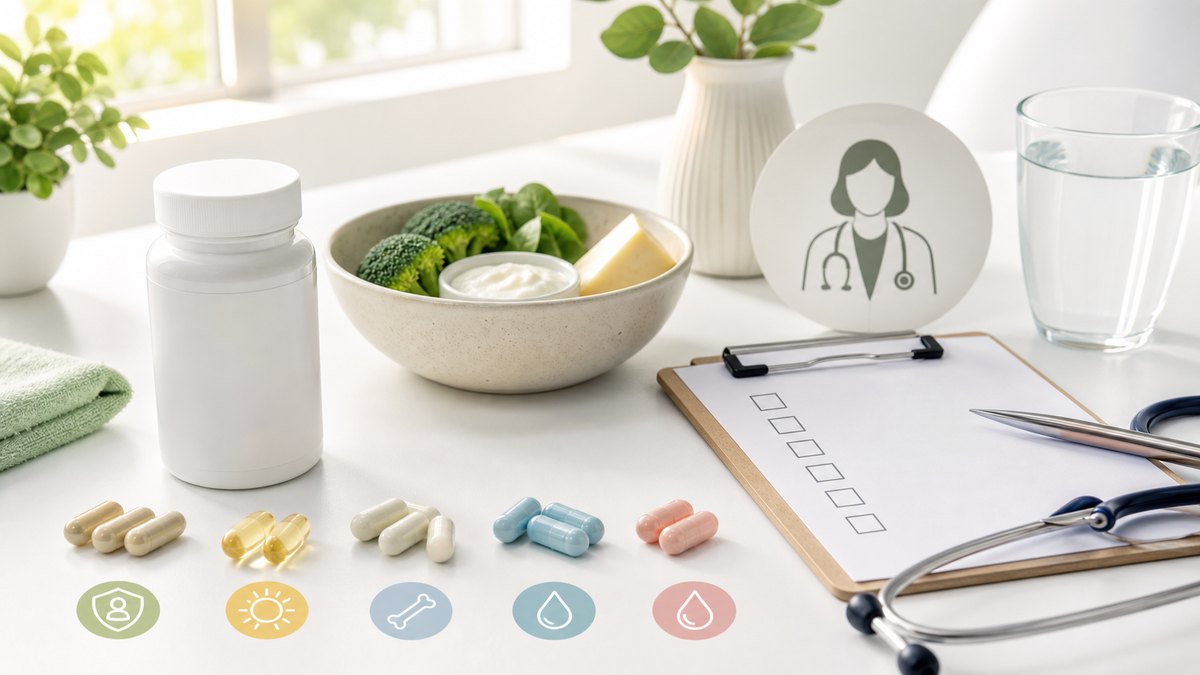
1. Basic Multivitamin: A Safety Net When Food Intake Has Dropped Sharply
The most reasonable choice is not a high-dose product, but a basic multivitamin. You can consider one if your food intake has decreased substantially, your daily meals are irregular, and vegetables, fruits and protein foods are often missing.
However, a multivitamin does not replace meals. You should also be careful about overlapping multiple products. Intake of fat-soluble vitamins such as vitamins A, D, E and K, or minerals such as iron and zinc, may become excessive.
Therefore, products close to the recommended daily amount are more realistic than products marketed as “high potency,” “megadose” or “specialized for fatigue recovery.”
2. Vitamin D: If Sun Exposure Is Low and Testing Has Shown Low Levels
Vitamin D can be difficult to get sufficiently from food alone. If you spend a lot of time indoors, have little sun exposure, or have previously had low levels on a blood test, you can consider supplementation.
But there is no need to start high-dose vitamin D just because you are taking Wegovy. It is safer to decide on high-dose products based on blood levels and a healthcare professional’s recommendation.
3. Calcium: If You Rarely Eat Dairy, Tofu or Fish Eaten with Bones
As food intake decreases, some people almost stop eating calcium-rich foods such as dairy products, tofu and anchovies. Middle-aged and older adults, women around menopause, and people concerned about low bone density in particular should look at calcium and vitamin D status together.
For calcium, it is better to calculate dietary intake first rather than simply taking a lot in pill form. If you have a history of kidney stones or kidney disease, consultation is needed before choosing a supplement.
4. Vitamin B12: If You Eat Mostly Plant-Based Foods or Have Taken Stomach Medication for a Long Time
Vitamin B12 is found mainly in animal foods. If your intake of meat, fish, eggs and dairy products has decreased substantially, your risk of insufficiency can rise.
If you eat a mostly plant-based diet, have long used stomach medications such as acid-suppressing drugs, or have a history of gastrointestinal surgery, you can consider B12 testing. If you have tingling in the hands or feet, severe fatigue or signs of anemia, medical care should come before simply shopping for supplements.
5. Iron: Decide After Testing Rather Than Taking It Immediately for Fatigue
Iron is a problem when it is insufficient, but it can also be a problem when it is excessive. For that reason, starting iron supplements simply because you feel tired is not recommended.
Women with heavy menstrual bleeding, people diagnosed with anemia and people whose meat intake has decreased greatly are better off supplementing after confirmation with blood tests. Iron supplements can worsen constipation and stomach discomfort. If you already have constipation from Wegovy, you need to be even more careful.
There Are Choices You Should Avoid, Too
First, it is risky to almost stop eating because you have no appetite and try to get by on supplements. The goal of Wegovy treatment is not starvation. Even if you eat less, the goal is closer to eating in a way that concentrates the nutrients you need.
Second, overlapping several multivitamin and mineral products is also not a good idea. The same ingredients can be duplicated.
Third, people who also use diabetes medications need to be more careful. The Wegovy label explains the risk of hypoglycemia when Wegovy is used with medications such as insulin or sulfonylureas. If food intake decreases, hypoglycemia risk management may also need to change.
Fourth, Wegovy can delay gastric emptying. The label explains that it may affect absorption of oral medications taken together with it. If you are taking medications with a narrow therapeutic range, such as thyroid medication, anticoagulants or anti-seizure medications, it is safer to check with a pharmacist or doctor.
In These Cases, Medical Care Should Come Before Supplements
In the following situations, you should consult a healthcare professional before choosing vitamins.
- Repeated vomiting or diarrhea makes it hard to drink enough water
- Urine output decreases, or you have severe dizziness or a feeling of dehydration
- Severe abdominal pain spreads to the back or is accompanied by vomiting
- You have jaundice, dark urine or pain in the upper right abdomen
- You are using diabetes medication and your food intake has decreased significantly
- You are pregnant or planning pregnancy
- You have a history of kidney disease, gallbladder disease or pancreatitis
Both MedlinePlus and the Wegovy label advise telling your healthcare team about the medicines, vitamins, supplements and herbal products you are taking while using semaglutide. Supplements can also interact with medications or mask symptoms.
A Practical Option: This Is a Reasonable Way to Start
For people worried because their food intake has decreased, the most realistic order is as follows.
- 1. Check how many times a day you eat protein foods.
- 2. See whether you are drinking enough water.
- 3. Check whether vegetables, fruits, whole grains and legumes are missing.
- 4. If meals remain consistently inadequate, consider a basic multivitamin.
- 5. Decide separately on vitamin D, B12, iron and calcium according to eating pattern and test results.
In short, there is no “this vitamin is mandatory” rule for people taking Wegovy. Instead, the foundation is taking care of protein, fluids and fiber first. A multivitamin can be viewed as a safety net for gaps in meals. Individual vitamins and minerals are better chosen according to the risk of deficiency.
Supplements can help. But during Wegovy treatment, it is even more important not to ignore signals from your body.
For a similar consumer health decision-making article, Does lutein help with presbyopia? is also worth reading. You can find life, economy and policy articles in the Life, Economy and Policy article collection.
FAQ
Do I Have to Take a Multivitamin When Taking Wegovy?
Not necessarily. If your food intake has decreased substantially and your food choices have become repetitive, you can consider a basic multivitamin. If your meals are well structured, it is hard to say that one is absolutely necessary.
What Nutrients Should I Prioritize First When Taking Wegovy?
Before vitamins, you should look at protein, fluids and fiber. If these three are insufficient, fatigue, constipation, muscle loss and dehydration problems are more likely to occur.
Is It Better to Take Vitamin D?
If you have little sun exposure or have had low vitamin D on a blood test, you can consider it. However, high-dose use is safer when based on test results and a healthcare professional’s recommendation.
Can I Take Iron Supplements When I Feel Tired?
Taking iron supplements right away simply because you are tired is not recommended. Too much iron can also be a problem, and iron may worsen constipation. It is better to decide after checking whether anemia is present.
Can I Take Wegovy and Supplements Together?
Many basic supplements are commonly used together with Wegovy, but it depends on each person’s medications and medical conditions. Wegovy can delay gastric emptying, which may affect absorption of some oral medications. You should tell your healthcare team about the medicines and supplements you are taking.
References
- FDA, Wegovy Prescribing Information
- Novo Nordisk, Wegovy Prescribing Information
- MedlinePlus, Semaglutide Injection
- UCLA Health, Patients taking weight loss medications require proper nutrition
- Mass General Brigham, Why Diet and Exercise Still Matter During Treatment with GLP-1 Medications