[태그:] AI Learning

  • Parenting in the AI Era: Five Abilities Children Need Before a Good University

    Parenting in the AI Era: Five Abilities Children Need Before a Good University

    When an era arrives in which AI can study on a child’s behalf, what should parents leave their children with? In an interview with Jisik Inside, Professor Jo Byeok raises this question quite directly. If parents hold only to good universities, high scores, and more private education, they may fall one step behind the changes of the AI era.

    The point is not “let’s stop studying.” Basic knowledge is still necessary. But using all of a child’s time to chase correct answers is becoming increasingly risky. In an age when AI can find correct answers quickly, the ability to ask questions, build relationships, and interpret one’s own experiences becomes more important.
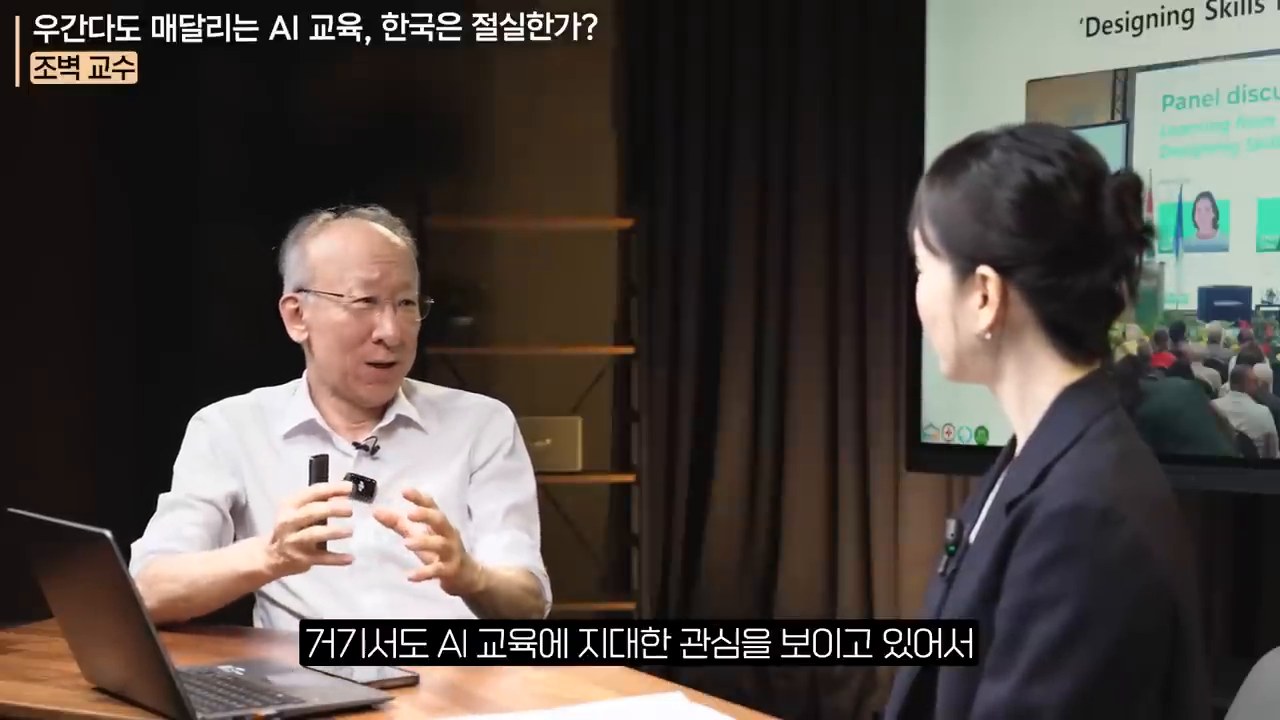
    Scene from an interview with Professor Jo Byeok
    Source: Screenshot from the Jisik Inside YouTube video

    Why a good-university strategy is no longer enough

    For Korean parents, the strategy for a child’s success has long been simple: get good grades, enter a good university, and secure a stable job. Professor Jo Byeok says this strategy was quite powerful in the past, but it may not work the same way in the AI era.

    The video includes a striking analogy. In a family photograph taken about 100 years ago, three brothers are in the same place at the same time, yet they look as if they are living in completely different eras. One is holding on to old symbols of success, while another has moved toward the education of a new age. The scene asks today’s parents the same question: Is the “good path” we are holding on to really the path our children will live on?
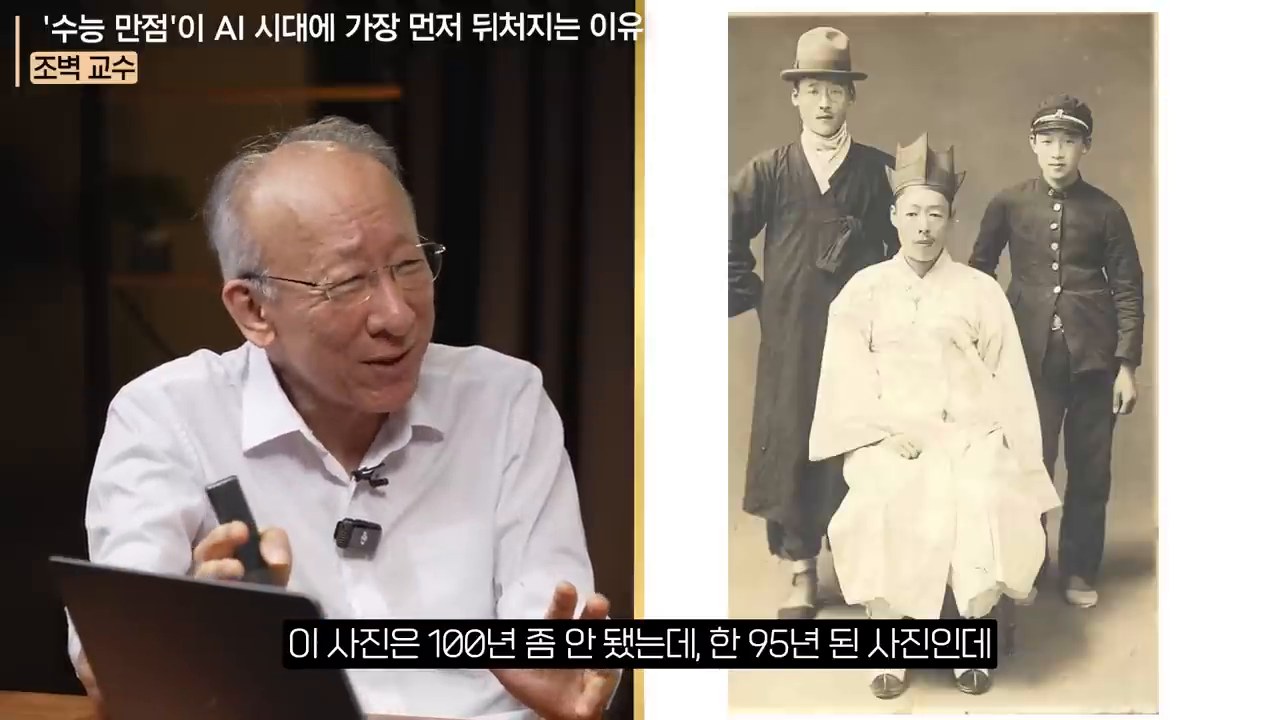
    Scene explaining changing times and educational choices
    Source: Screenshot from the Jisik Inside YouTube video

    1. Character is not etiquette; it is a capability in the AI era

    The first message in the video is that “character is also a capability.” Here, character does not simply mean being kind and polite. Professor Jo describes character as a uniquely human quality: communication, empathy, collaboration, and resilience, all human strengths that AI has difficulty replacing.

    In the past, when knowledge and skills came first, character was sometimes treated as an extra. But as AI increasingly handles knowledge processing and the search for correct answers, the situation changes. People still have to work with people and solve ambiguous problems together. That is why character is no longer merely “nice to have,” but a core competency that helps a child endure over the long term.

    2. The ability to ask questions is deeper than prompt technique

    As the AI era begins, many people say that we need to “ask good questions.” The ability to write good prompts is certainly necessary. But the questioning ability discussed in the video is broader than that. It is closer to a child taking ownership of their own learning.

    Children naturally ask many questions. But as they grow older, the number of questions decreases. That ability is suppressed by phrases such as “Don’t think about useless things; just study,” “Hurry up and do your homework,” and “Solve this problem first.” What parents need to do is not give children more answers, but restore an atmosphere in which it is safe to ask questions.

    Scene explaining questions and uniquely human abilities
    Source: Screenshot from the Jisik Inside YouTube video

    3. Future literacy is not the ability to predict the future

    Professor Jo does not describe “future literacy” as the ability to forecast the future. Instead, he describes it as the ability to create the future one wants to live in. This distinction is important.

    AI may be better at prediction. Reading data and patterns and calculating possible scenarios are AI strengths. But deciding what future we want, what life we will choose, and what relationships we will protect is the human role. That is why parents should help children become not “children who guess the right answer,” but “children who design their own future.”

    4. Unique matters more than best

    Admissions competition keeps children comparing themselves with others. The standards become who scored higher, who entered a better school, and who got ahead faster. But in the AI era, competitiveness does not have to come only from beating others.

    Professor Jo emphasizes “unique” over “best.” When a child has their own experiences, interests, questions, failures, and stories of recovery, they can become competitive without constantly competing. A person who quickly gives the same correct answer as everyone else will be compared with AI. But a person who sees problems from their own perspective and contributes through collaboration with others is not easily replaced.

    Scene explaining future literacy and questions
    Source: Screenshot from the Jisik Inside YouTube video

    5. A parent’s first question should be about feelings, not scores

    The final advice in the video is the most practical. When a child comes home from school, parents who ask “What did you learn today?” or “What score did you get?” may be moving against the AI era. A parent who instead asks “Did you have fun at school today?” connects with the child’s emotions.

    This does not mean giving up on study. It means restoring the child’s vitality and relationships first. The parent-child relationship is not a project that disappears once college admissions are over. It is a lifelong relationship. When that relationship feels safe, children ask more questions, explore farther, and stand up again even after failure.

    Interview scene explaining empathetic questions from parents
    Source: Screenshot from the Jisik Inside YouTube video

    Five questions parents can change today

    Parenting in the AI era is not something that has to wait for sweeping institutional reform. Parents can begin by changing the questions they use at home.

    1. Instead of “What score did you get today?” ask “What was the most interesting moment today?”
    2. Instead of “Why don’t you even know that?” ask “Where did it start to feel confusing?”
    3. Instead of “That dream is unrealistic,” ask “What experience would help you get closer to that dream?”
    4. Instead of “Everyone else is doing it, so why aren’t you?” ask “What would you like to try in your own way?”
    5. Instead of “Hurry up and say the correct answer,” ask “What would happen if we changed it into a different question?”

    When the question changes, the way a child brings out their own thoughts also begins to change little by little. It may feel awkward at first. As the video says, it is not so much difficult as unfamiliar.

    Recommended reading

    FAQ

    Will school study become less important in the AI era?

    Basic knowledge is still important. However, spending all available time only on score competition is risky. On top of basic learning, children also need to develop questioning ability, AI literacy, empathy, collaboration, and resilience.

    Does the character Professor Jo talks about mean only being nice?

    No. In the video, character is closer to a uniquely human quality. It includes abilities that AI has difficulty replacing, such as communication, empathy, collaboration, and resilience.

    How can parents support a child’s questions?

    Rather than giving the correct answer immediately, first listen to what kind of thinking led to the child’s question. If you create an atmosphere that welcomes questions without judging them, children can gradually regain ownership of their own learning.

    Is it wrong to aim for a good university?

    The goal itself is not wrong. The problem is treating a good university as the only strategy for success. In the AI era, what matters more than the name of the university is what questions a child can create, how they interpret their experiences, and what contribution they can make.

    References

    Original Korean article: Parenting and education in the AI era with Jo Byeok

    Image source: Captured images used in this article are stills from the original YouTube video. They are used for review, commentary, and educational explanation, and copyright remains with the original rights holders and the channel.

  • Metacognition in the AI Era: How to Check Your Own Thinking Before Trusting Smart Answers

    Metacognition in the AI Era: How to Check Your Own Thinking Before Trusting Smart Answers

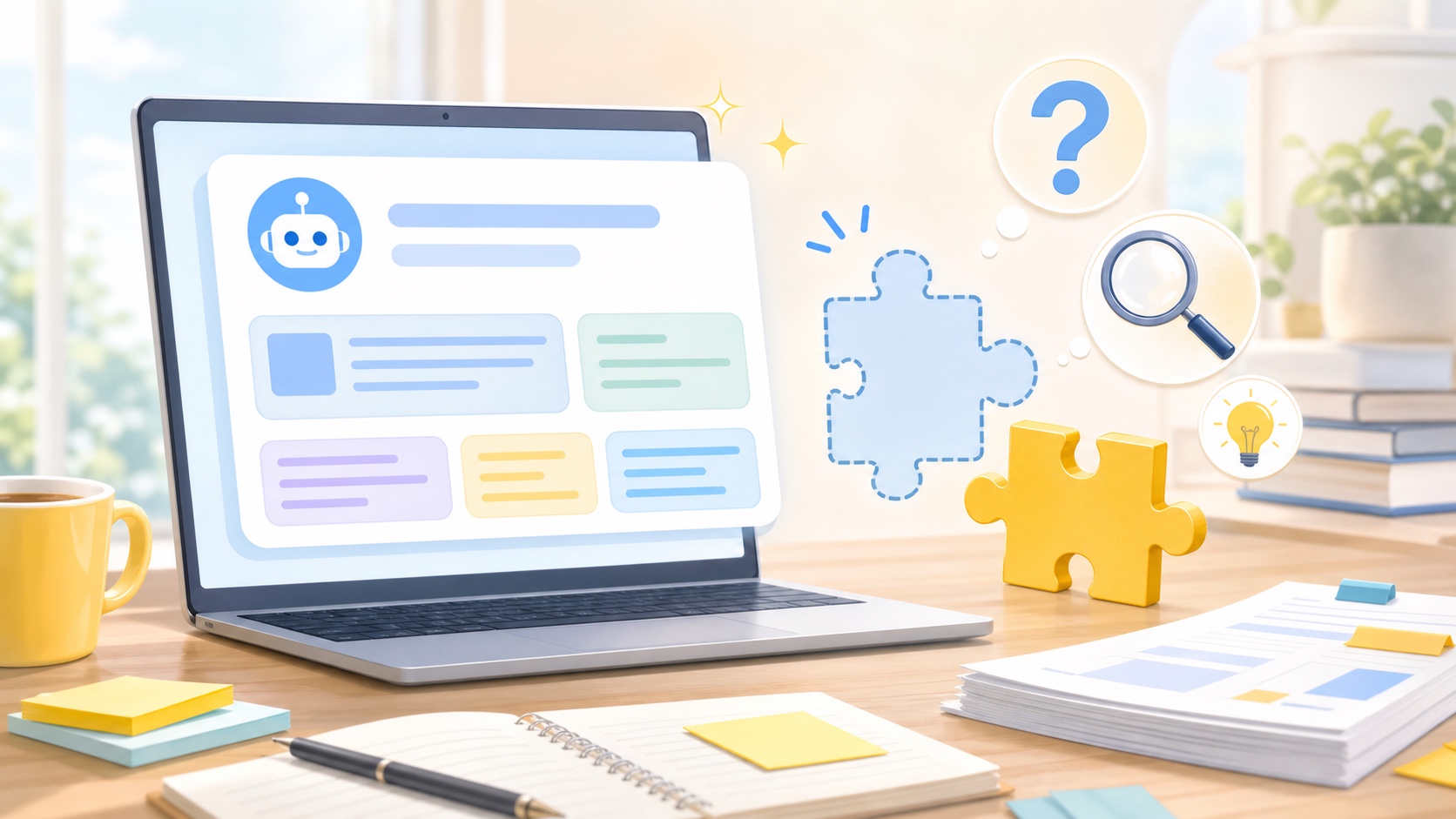
    A bright illustration of a person stepping back from an AI screen and notebook to review their own thinking
    Metacognition starts when you step back from the thought itself and look at the state of your thinking.

    Near the end of a workday, you ask ChatGPT to draft a report. The answer arrives quickly. The sentences are smooth. The structure looks useful. But something still feels slightly unfinished.

    “Is this actually right?”

    In the past, the important skill was often finding the answer. Now the situation is different. Answers are easy to get. The harder question is whether you really understand that answer, whether you should trust it, and whether you can adapt it to your own situation.

    That is where metacognition matters. In simple terms, metacognition is the ability to know what you know and what you do not know. It may sound like a study-skill concept for students, but today it has become a basic capability for workers, creators, educators, and anyone who uses AI.

    Metacognition means looking at your own thinking one step back

    Metacognition sounds like a technical psychology term. In everyday life, however, it is a familiar feeling.

    You may be solving a problem and suddenly realize, “I thought I understood this concept, but I cannot explain it.” In a meeting, you may pause and ask, “Am I stating a fact, or am I making an assumption?” While writing, you may notice, “The sentences are polished, but the logic is thin.”

    All of these moments are related to metacognition. The key is stepping back. Instead of being fully trapped inside your thoughts, you look at the condition of your thoughts.

    That is why metacognition is not just self-reflection. More precisely, it is a skill for adjusting judgment. It helps you distinguish what you know from what you do not know, check the gap between confidence and evidence, and change your strategy when needed.

    Why metacognition matters again now

    Metacognition is not a new idea. But it is becoming important again because generative AI is changing the way we think.

    In a 2025 CHI paper, researchers from Microsoft Research and Carnegie Mellon University analyzed 936 examples of generative AI use reported by 319 knowledge workers. One result was especially interesting. Higher confidence in AI was associated with less critical-thinking enactment, while higher task-specific self-confidence was associated with more critical-thinking enactment.

    This should not be read too simply as “AI makes people think less.” The more useful message is different. People who use AI well do not automatically reject AI answers. They also do not accept them blindly. Instead, they verify the answer, integrate it into their own context, and keep final responsibility for the decision.

    UNESCO also released AI competency frameworks for students and teachers in 2024. These frameworks do not treat AI literacy as simple tool operation. They connect AI use with human-centered judgment, responsibility, and educational competence. In other words, the direction of learning is shifting from “Can you use AI?” to “Can you think with AI while checking your own judgment?”

    A bright illustration of a polished AI answer with a missing puzzle piece and magnifying glass for verification
    A polished answer can support understanding, but it can also create the feeling that you understood more than you actually did.

    The illusion that grows as AI becomes smarter

    The biggest risk in the AI era is not only a wrong answer. A more subtle risk is the feeling that you have understood something when you have not.

    When you read an AI-generated summary, your mind can feel clearer. The structure looks neat. The examples are there. But when you try to explain the idea to someone else, your words may suddenly stop.

    At that moment, you may have information. But you may not yet have understanding.

    Recent arXiv preprints discuss a similar concern. One line of research argues that AI may improve individual creative output while reducing the diversity of ideas at the group level. Another study suggests that long reasoning traces from large language models can increase trust and enjoyment, but do not always improve actual task performance.

    These are still emerging research discussions, so they should be read carefully. Even so, the direction is clear. AI explanations can help understanding. They can also create the feeling that understanding is already complete.

    That is why metacognition is necessary. Do not ask only, “Is this answer good?” Ask also, “How well do I actually understand this answer?”

    A bright checklist illustration with five icons for observation, evidence, counterpoint, pause, and experiment
    Good questions help you test the evidence, limits, and blind spots behind your own judgment.

    Five questions that build metacognition

    Metacognition is not simply an inborn trait. It is closer to a habit. If you use the following five questions often, the quality of your thinking changes.

    1. What am I assuming I understand right now?

    The first thing to check is illusion. When a word feels familiar, we often feel that we understand it. But familiarity and understanding are not the same.

    A good method is the one-sentence explanation test. After reading a concept, try to explain it in one sentence as if you were speaking to a beginner. If you cannot explain it, it is not yet your own knowledge.

    The same applies to AI answers. Do not just copy the output. Ask, “How would I say this in my own words?”

    2. Does my confidence come from evidence or from style?

    People tend to trust content more when the writing is smooth. AI answers make this especially easy. Confident wording, organized lists, and technical terms can quickly create a feeling of reliability.

    Metacognition asks where that confidence comes from. Are you confident because of data, experience, a credible source, or just because the sentences sound convincing?

    If you are writing a work report, check the sources. If the topic involves investment, policy, health, or any high-risk decision, this matters even more.

    3. Could counterevidence change my judgment?

    When metacognition is weak, people protect their ideas. When metacognition is strong, people test their ideas.

    The same attitude is needed when using AI. Ask questions such as, “What is the strongest counterargument to this claim?”, “Under what conditions would this conclusion be wrong?”, and “How would another perspective interpret this?” These prompts often improve the quality of the answer.

    But the point is not to add counterarguments as decoration. Your judgment must actually be open to revision.

    4. Am I looking for an answer, or am I trying to stop thinking?

    When we are busy, we want answers. More precisely, we often want to end the thinking process. AI satisfies that desire very well.

    The problem is that important judgments are rarely finished with one quick answer. Hiring, strategy, education design, writing, and business planning all involve context, purpose, and stakeholders.

    At that point, the metacognitive question is simple. “Do I need a conclusion now, or do I need more exploration?” It is important to distinguish moments that require a decision from moments that require more thinking.

    5. Can I verify this with a next action?

    Good thinking eventually becomes a testable action. Metacognition becomes weak if it remains only an internal reflection.

    If you wrote an article, ask one person to read it. If you created a lecture outline, test it as a five-minute explanation. If AI suggested a strategy, run a small experiment before turning it into a full plan.

    When you move from “This seems right” to “Let me test it in a small way,” thinking becomes a real capability.

    A bright workflow illustration showing drafting, AI review, source checking, and final human judgment
    A strong AI thinking routine includes not only fast answers, but also verification, reconstruction, and final responsibility.

    A practical metacognition routine for work and learning

    You do not need to train metacognition in a grand way. You can put it into your day as a short routine.

    Before starting a task, write down three things: what you know, what you do not know, and what you need to verify. Before a meeting, write down your assumptions. After the meeting, leave one sentence about how your thinking changed.

    When using AI, the routine needs to be even clearer.

    1. Write a short first draft yourself.
    2. Ask AI to improve or challenge it.
    3. Separate facts, interpretations, and suggestions in the AI answer.
    4. Mark the parts that need sources.
    5. Rewrite the final sentence in your own judgment.

    The order matters. If you begin by outsourcing everything to AI, you lose your own reference point. If you write your first draft first, AI becomes a reviewer rather than a replacement.

    Metacognition is the human speed we need in the AI era

    AI is fast. Because of that, we often feel that we must become faster too. But not every kind of thinking should speed up.

    Important work still needs slower intervals. We need time to pause, doubt, explain again, and test ideas through small experiments.

    Metacognition is the ability to protect that slower interval. It is not lazy hesitation. It is an intentional pause for better judgment.

    In the future, people who use AI well will not simply be those who know many prompts. More important will be the person who can observe the state of their own thinking. That person knows what they know, what they do not know, when to trust AI, and when to check again.

    That is metacognition. And today, it is no longer just a study technique. It is becoming a core skill for how we work and learn.

    Related Reading

    FAQ

    What is metacognition?

    Metacognition is the ability to notice what you know and what you do not know, then adjust your learning or judgment strategy accordingly. In simple terms, it means looking at your own thinking one step back.

    Does stronger metacognition improve learning?

    In many cases, yes. People with stronger metacognition can identify what they do not understand and change their learning strategy. Knowing what to check can matter more than simply studying for a long time.

    Why is metacognition important in the AI era?

    AI can produce fast and convincing answers. Because of that, users may feel that they understand something even when they have not tested their understanding. Metacognition helps you verify AI answers and adapt them to your own context.

    How can I train metacognition?

    The easiest method is to build a questioning habit. Ask: “What do I know?”, “What do I not know?”, “What is the evidence?”, “What is the counterargument?”, and “How can I test this in a small way?”

    Does using AI weaken metacognition?

    Not always. If you use AI only as an answer machine, it may reduce your own thinking. But if you use AI to review drafts, generate counterarguments, check sources, and design small experiments, it can strengthen metacognition.

    References

  • What Should Humans Learn When AI Knows Every Answer?

    What Should Humans Learn When AI Knows Every Answer?

    This fuller English adaptation follows the Korean source’s reflection on Ken Ono, deep intelligence, and learning in the AI era. If AI can produce answers instantly, human learning cannot remain a contest of memorized information. The question becomes: what kind of intelligence should humans cultivate?

    human learning in the AI era
    human learning in the AI era.

    Original Korean article: AI가 모든 답을 아는 시대, 인간은 무엇을 배워야 하나

    Why Learning in the AI Era Is No Longer a Knowledge Competition

    For a long time, school and career success rewarded people who could absorb information, recall it quickly, and apply standard methods. AI changes that environment. A student can ask for a summary, a worker can ask for a draft, and a researcher can ask for references. The value of simply “knowing the answer” declines when answers are everywhere.

    The source article does not say knowledge is useless. It says the purpose of knowledge changes. Knowledge becomes the material for asking better questions, recognizing false answers, connecting ideas, and pursuing problems that matter personally.

    Ken Ono’s Idea of Deep Intelligence

    The article introduces Ken Ono’s message as a challenge to shallow learning. Deep intelligence is not the ability to repeat correct answers. It is the ability to stay with a question, sense patterns, connect fields, and develop an inner reason to learn. It includes curiosity, persistence, and identity.

    In mathematics, music, art, research, or work, the deepest learning often begins when a person finds a question that will not let go. AI can help explore that question, but it cannot replace the human decision to care about it.

    Education Is Not a Checklist; It Is the Recovery of Curiosity

    The Korean source criticizes checklist-style education. When learning becomes only grades, certificates, rankings, and completed assignments, curiosity weakens. Students may become efficient at passing tasks but lose the ability to wonder.

    AI makes this problem more urgent. If homework can be outsourced to a model, schools must design learning that brings students back into ownership. Discussion, projects, exploration, explanation, and personal reflection become more important than worksheets that measure only output.

    What Students and Workers Should Learn Again

    deep intelligence and curiosity
    deep intelligence and curiosity.

    Students should practice asking original questions, explaining reasoning, comparing sources, building projects, and revising their own work. Workers should learn to turn experience into reusable knowledge, use AI as a thought partner, and make decisions under uncertainty. Both groups need literacy in AI’s strengths and limits.

    The article’s practical message is that people should build a relationship with learning rather than only collect facts. A person who knows how to investigate, verify, and persist will use AI better than a person who only copies AI output.

    For students, the output is less important than the process

    If an AI system can produce a polished paragraph, the student’s value appears in the process: choosing the question, checking the evidence, explaining why one answer is better than another, and connecting the result to personal experience. Teachers can therefore ask students to show drafts, reasoning notes, oral explanations, and revisions.

    For workers, learning becomes a way to redesign work

    Workers should not only ask AI to finish tasks faster. They should ask which parts of the task are repeated, which decisions require expertise, and which knowledge should be saved for reuse. In that sense, learning becomes a way to improve the work system itself.

    Persistence Matters More Than Perfectionism

    Perfectionism often stops learning before it begins. A person waits until the plan is perfect, the tool is perfect, or the answer is guaranteed. Deep intelligence grows differently. It grows through staying with a personal problem long enough to make progress, even when the path is unclear.

    AI can reduce friction by explaining basics, generating examples, and offering feedback. But the human must decide what problem is worth returning to. The source article highlights this power of holding onto one’s own question.

    Conclusion: The Direction of Learning in the AI Era

    questions and identity beyond AI
    questions and identity beyond AI.

    The article concludes that human learning should move from answer collection to question ownership. AI can know many answers, but humans still choose meaning, purpose, responsibility, and direction. The most important skill may be the ability to ask, “What do I want to understand deeply enough that I will keep learning?”

    Related Reading

    Continue with these related Thinknote English articles in the Digital Transformation cluster.

    FAQ

    What is this article about?

    This article explains a digital transformation, platform, market-structure, or technology-adoption topic with Korea-specific context and global implications.

    How should I use this guide?

    Use it to understand market signals and strategic patterns. Combine it with current market data before making business or investment decisions.

    Where can I read the original Korean article?

    The original Korean article is available here: What Should Humans Learn When AI Knows Every Answer?.

  • Six Habits of People Who Get Smarter While Using AI

    Six Habits of People Who Get Smarter While Using AI

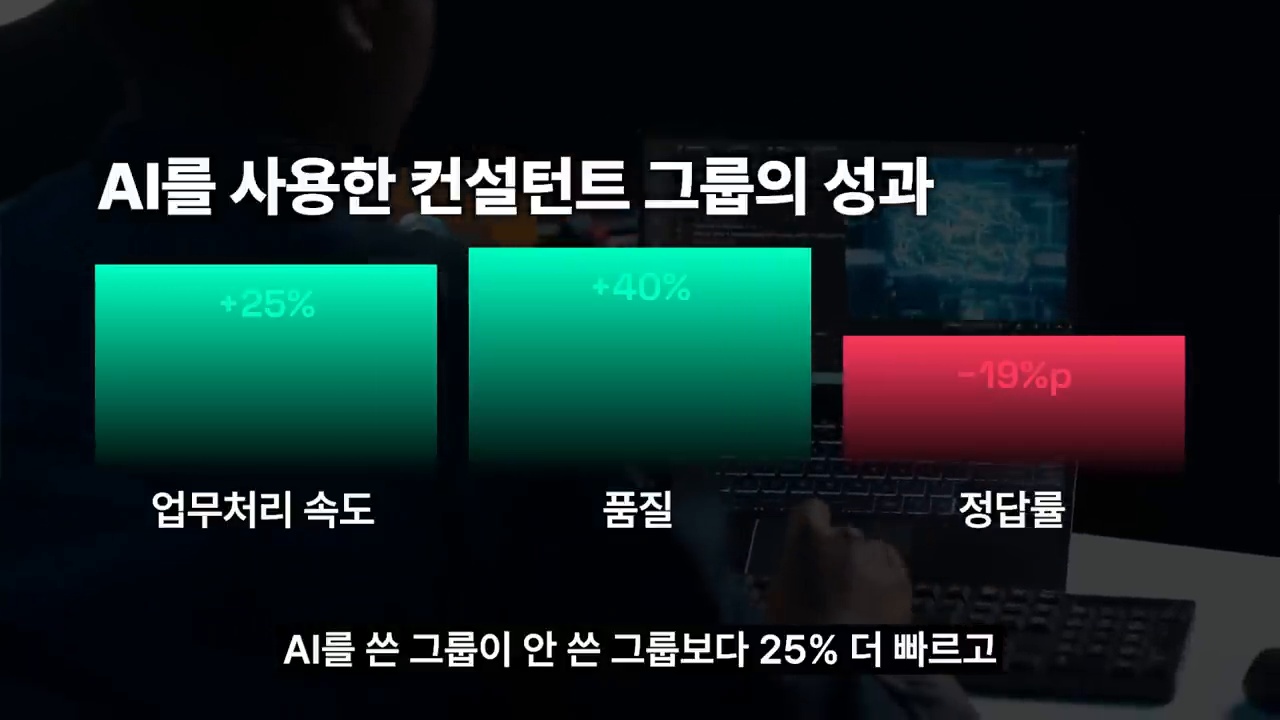
    This English version is a fuller translation and adaptation of the original Korean article, AI를 쓸수록 똑똑해지는 사람의 6가지 습관, for global readers. The question of whether using AI makes our thinking faster or weaker depends on how we use it. A video by the Research Institute of Reading and Learning connects experiments by MIT Media Lab, Microsoft Research, Harvard Business School, and BCG to explore this question.

    six habits for smarter AI use
    six habits for smarter AI use.

    Original Korean article: AI를 쓸수록 똑똑해지는 사람의 6가지 습관

    AI Use Crossroads: Cognitive Crutch or Thought Expansion

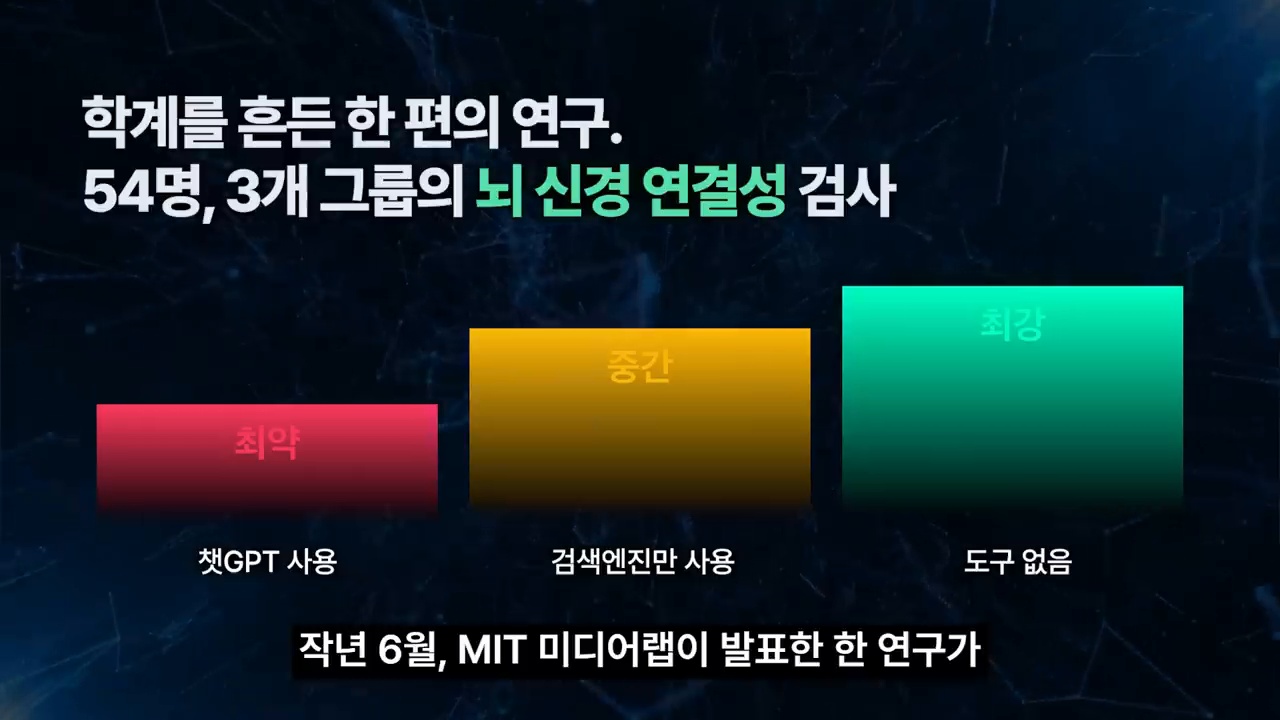
    The video begins with a research case from MIT Media Lab, comparing groups that used GPT to write essays, those who used search engines, and those who wrote without any tools. The results showed that the group using GPT had weaker brain neural connections, which the video describes as “cognitive crutch.” However, the key point is that using AI itself is not the problem; the difference lies in the user’s thinking habits.

    1. People with Expertise in Their Field

    To judge the accuracy of AI-provided answers, one needs a standard, which comes from expertise in their field. People with expertise do not simply copy AI answers; they verify the facts, adjust them according to context, and connect them with their own experiences. On the other hand, those lacking field knowledge may not notice AI errors, making AI a substitute for judgment rather than an assistant.

    AI cognitive debt and thinking expansion
    AI cognitive debt and thinking expansion.

    2. People Who Understand How AI Works

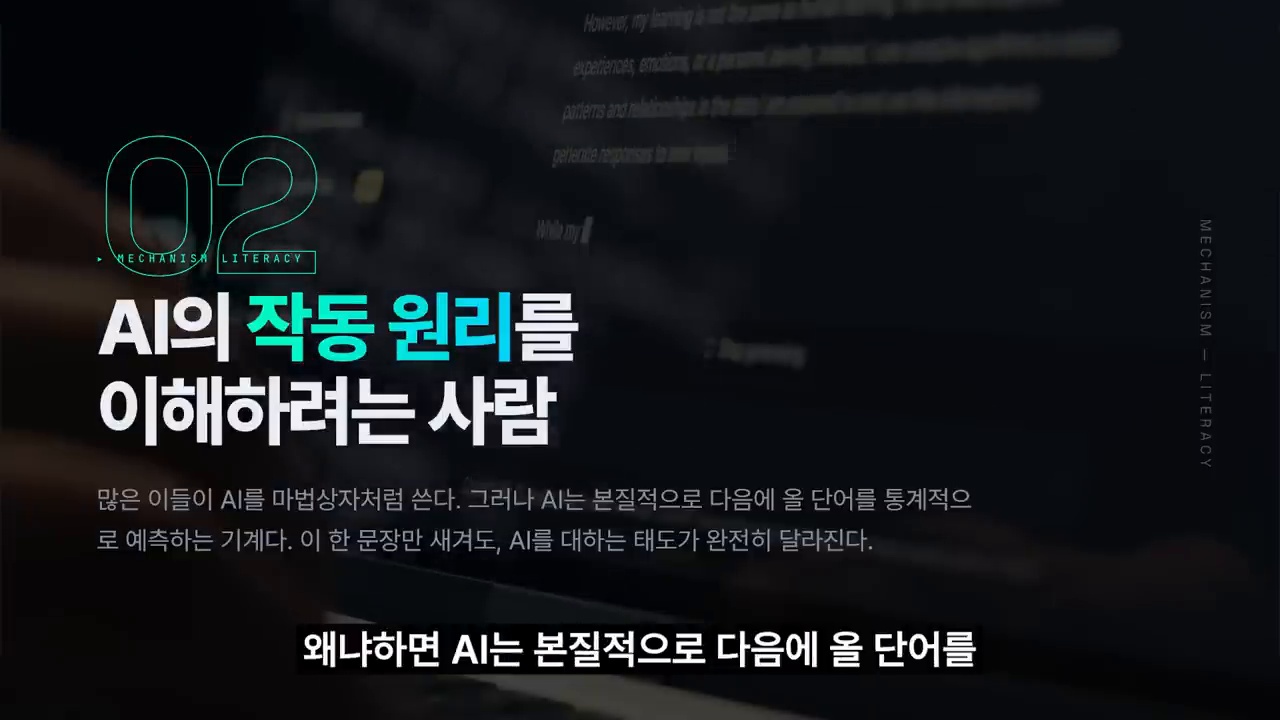
    Using AI like a magic box is dangerous. While it provides answers, these are based on predicting the next word, not understanding the truth. Knowing this principle changes one’s attitude towards AI answers, distinguishing between “plausible sentences” and “verified facts.” Assuming AI can be wrong makes the results safer.

    3. People with High Metacognition

    Metacognition is the ability to know what one knows and what one does not. In the AI era, this ability is more crucial. Those who are unaware of their knowledge gaps may accept AI answers without question. In contrast, people with high metacognition place AI in its correct position, asking questions and rephrasing answers in their own words, leading to actual learning rather than mere consumption of answers.

    metacognition when using AI
    metacognition when using AI.

    4. People Who Design Questions Precisely

    The quality of AI answers largely depends on the quality of the questions. A good question is not just a lengthy prompt but involves clarifying goals, context, constraints, and desired outcomes. For example, instead of asking “Tell me about study methods in the AI era,” it’s better to ask:

    • Explain from the perspective of a working professional, not a high school student.
    • Distinguish between work productivity and learning capabilities.
    • Provide practical, achievable standards rather than exaggerated forecasts.
    • Include a checklist for immediate action.

    The process of designing questions itself is a thought-training exercise. Those who ask good questions to AI first organize their own thoughts.

    5. People Who Do Not Blindly Believe AI Answers

    The video strongly emphasizes critical thinking. The more one relies on AI, the less one verifies. Especially with high-performance AI, the risk increases because the answers seem natural and persuasive. Therefore, AI results should be considered drafts. Always check numbers, sources, legal, medical, or policy information, and important decision-making aspects. People who use AI well do not verify to distrust AI but to achieve better results.

    question design for AI learning
    question design for AI learning.

    6. People Who Intentionally Secure Time Without AI

    The video’s final point is the importance of “AI-free time.” Time for reading, reflection, direct experience, and deep conversation is necessary. While AI quickly generates drafts, relying on it for the initial stages of thought can weaken one’s thinking muscles. Those who think with their own minds first use AI better. In contrast, relying on AI from the start confines one within the framework AI creates.

    Practical Checklist for Using AI in Real Work

    To become smarter while using AI, make the following steps a habit:

    • First, write down your thoughts, even briefly.
    • Clearly inform AI of your goals and context.
    • Divide answers into facts, interpretations, and suggestions.
    • Re-check important content for sources and numbers.
    • Do not use AI answers as is; reconstruct them in your own words.
    • Allocate some time each day or week for reading and thinking without AI.

    This checklist applies not only to studying but also to writing reports, planning, content creation, and decision-making.

    intentional time without AI
    intentional time without AI.

    Conclusion: What Matters More Than AI is the Depth of the Person Using It

    AI can either replace thought or expand it; the difference lies in the user’s attitude. Expertise, understanding of AI’s working principle, metacognition, precise question design, critical verification, and AI-free time are crucial. When these six elements are present, AI becomes a tool for growth, not dependence. As tools become more powerful, human depth is more necessary. The core competency in the AI era is not the ability to use AI extensively but the ability to maintain one’s judgment and thought while using AI.

    Related Reading

    Continue with these related Thinknote English articles in the Digital Transformation cluster.

    FAQ

    What is this article about?

    This article explains a digital transformation, platform, market-structure, or technology-adoption topic with Korea-specific context and global implications.

    How should I use this guide?

    Use it to understand market signals and strategic patterns. Combine it with current market data before making business or investment decisions.

    Where can I read the original Korean article?

    The original Korean article is available here: Six Habits of People Who Get Smarter While Using AI.