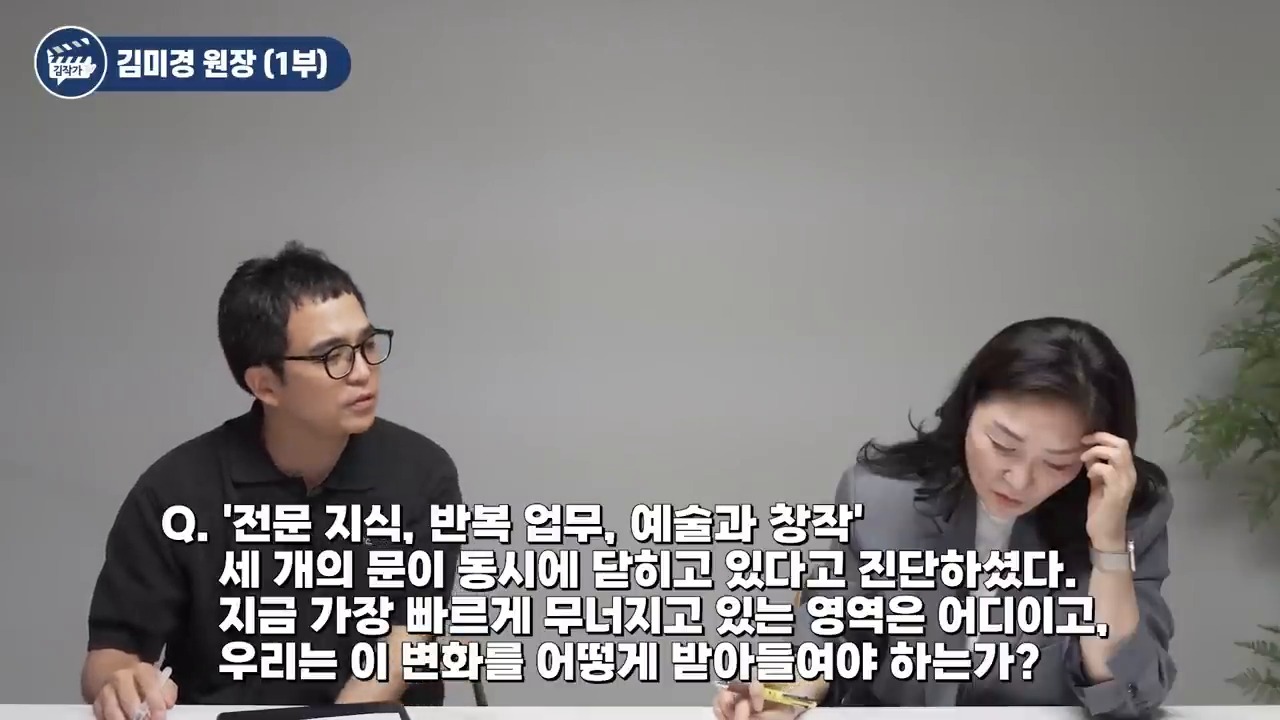
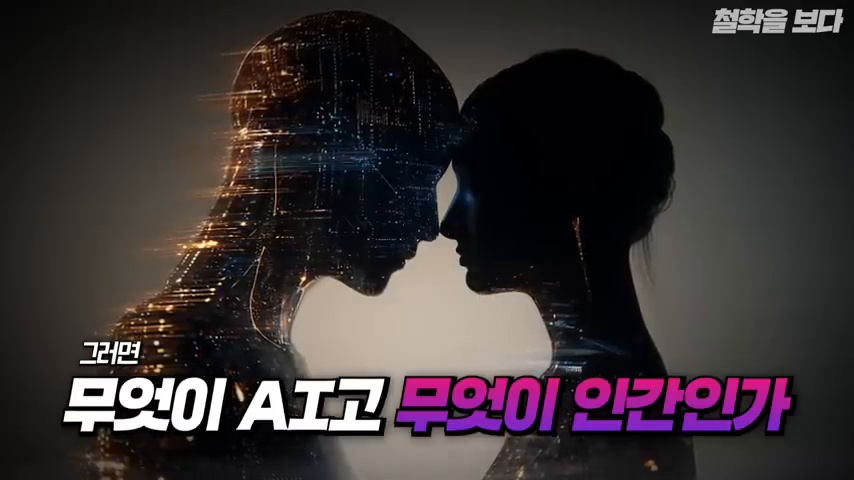
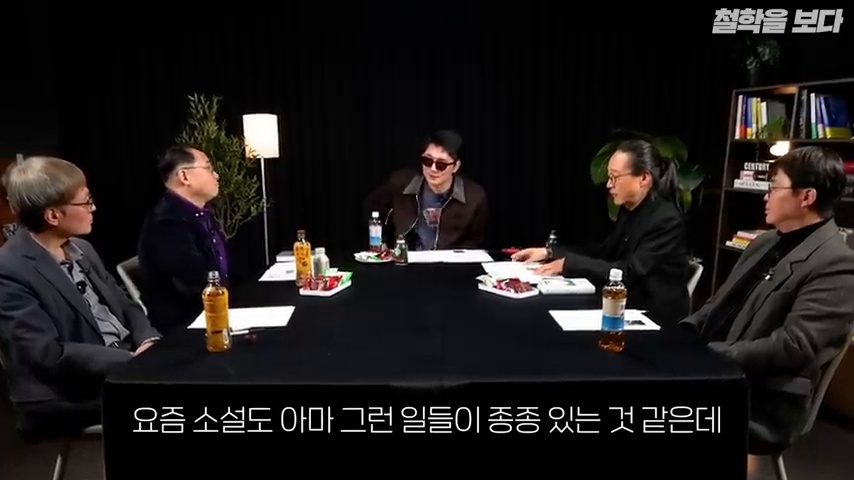
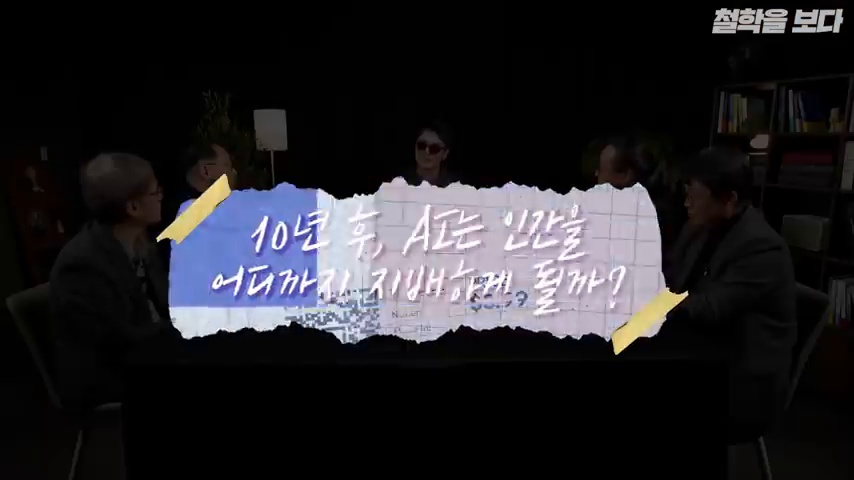
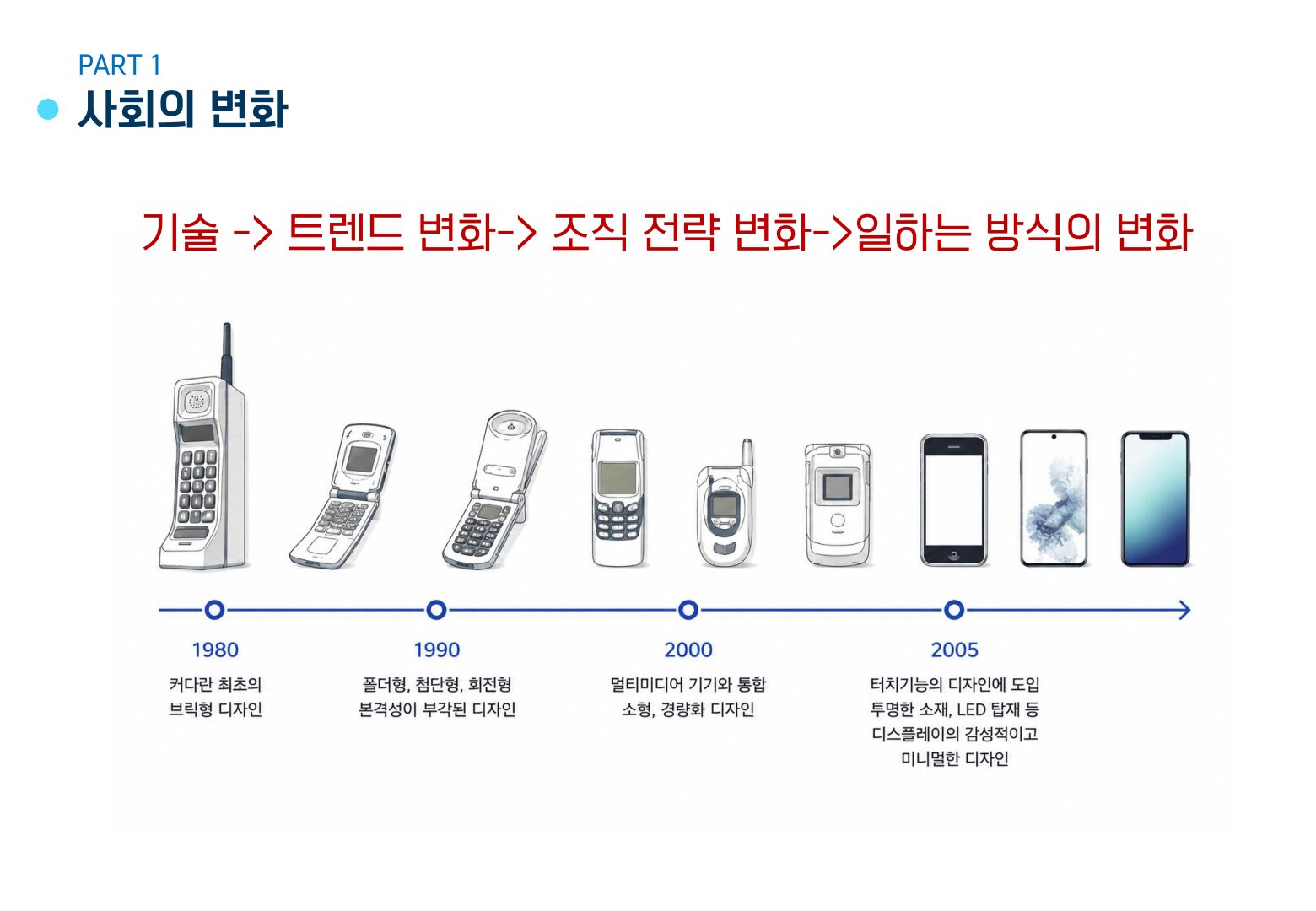
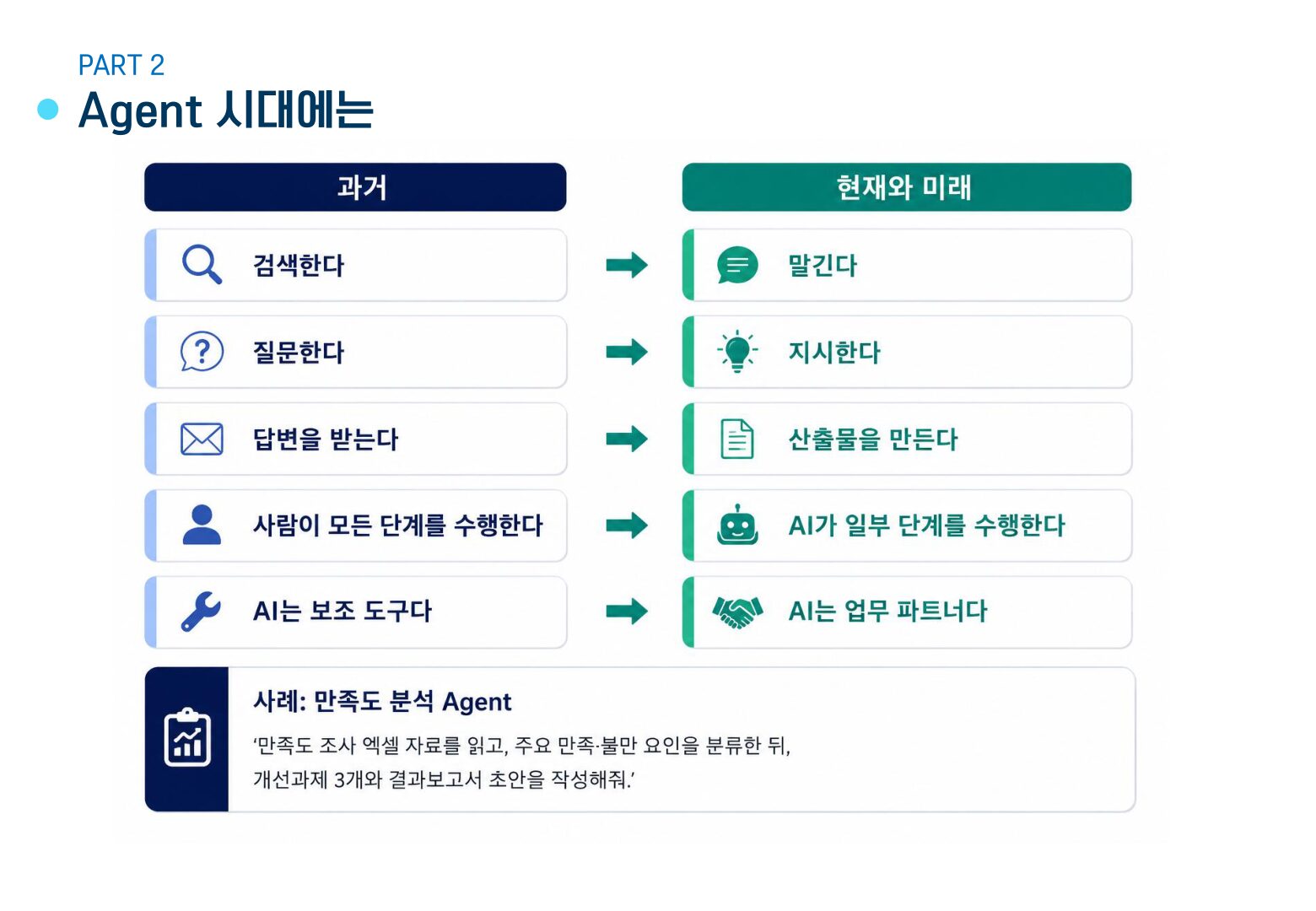
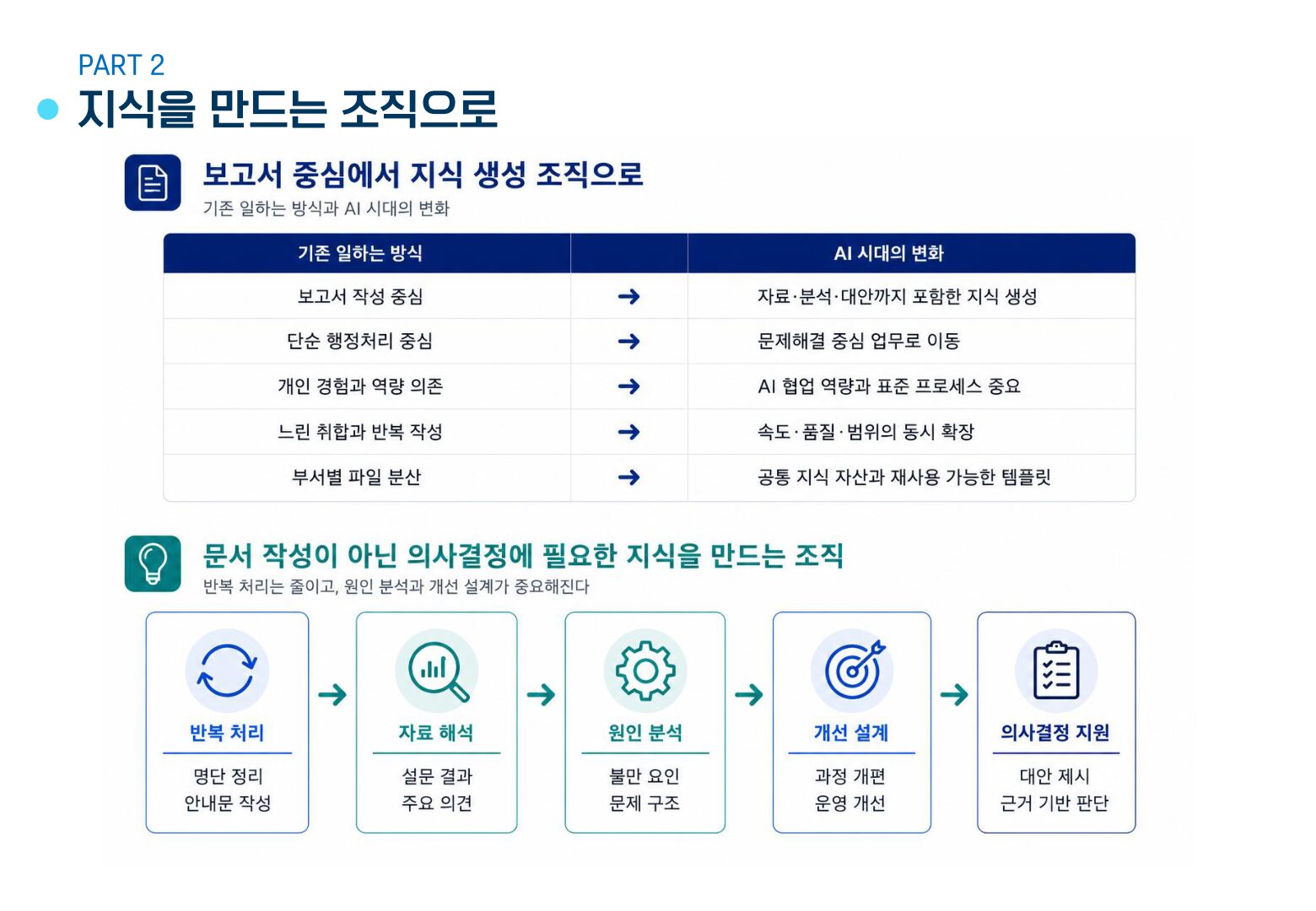
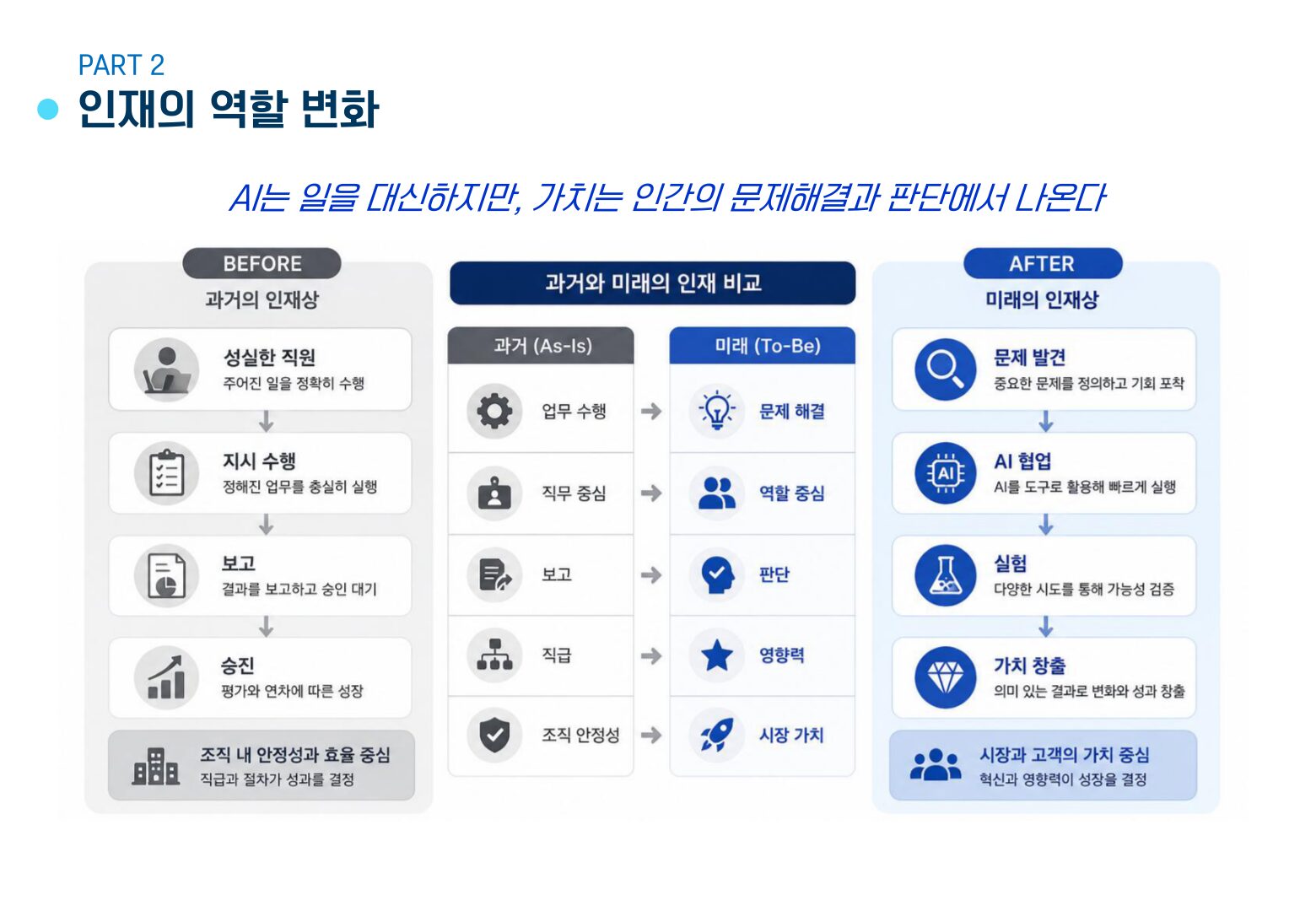
The Korean source interprets AI not as a temporary tool trend but as a civilization-level shift. In the Plus Human framing, people are not simply replaced by AI; they are pushed to combine with it. Work changes because knowledge becomes cheaper, understanding becomes more valuable, and tasks inside jobs are reorganized one by one.
AI is compared to electricity because it can enter every industry and everyday routine. It is not one app or one device. It becomes a general-purpose capability that changes how work is produced.
This framing helps explain why people feel both excitement and fear. When a technology becomes infrastructure, every job must ask how it will connect to that infrastructure.
Different From the Internet and SNS
understanding becomes more valuable than knowledge.
The internet changed information access and SNS changed communication. AI enters the way people earn money more directly because it can draft, analyze, translate, code, design, summarize, and serve customers.
That means adoption is not optional for many workers. Even if a person does not love AI, their workplace may begin measuring speed, quality, and cost with AI-assisted workflows in mind.
AI lowers the cost of obtaining information and producing first drafts. But understanding the user, context, emotion, risk, and business situation becomes more valuable.
The source distinguishes thinking from understanding. Mere thinking can become mechanical problem-solving; understanding includes context, empathy, motive, and judgment.
Job Risk Arrives by Task, Not All at Once
plus human working with AI.
The article avoids a simplistic “all jobs disappear” claim. Work is made of tasks, and AI enters tasks unevenly. Repetitive writing, summary, search, reporting, and analysis may change quickly; human-facing judgment may change differently.
Therefore the practical question is: which parts of my job can AI do, which parts require human review, and which parts become more important because AI handles the rest?
Look at Opening Doors, Not Only Closing Doors
Some doors will close, but new roles appear around AI operation, review, integration, data preparation, training, content strategy, and human-centered service.
The Plus Human attitude is to search for combinations. A person who knows a domain and learns AI can often create more value than either pure technology knowledge or old experience alone.
Immediate AI Adaptation Checklist
Find repetitive organizing tasks. Design questions instead of only searching. Reduce first-draft time and increase review time. List the tasks you can delegate to AI. Train understanding that only humans can provide.
This checklist turns anxiety into action. The goal is not to become an AI engineer overnight; it is to redesign one’s own work with AI as a partner.
Plus Human Means Combining With AI
A Plus Human is not someone who passively waits to be replaced. It is a person who adds AI to their thinking, production, communication, and learning while keeping human judgment.
This requires humility and agency at the same time: humility to learn new tools, agency to decide how those tools serve real human goals.
Conclusion: Learn AI for Possibility, Not Only Fear
The source concludes that learning AI should not be driven only by anxiety. It can also expand what individuals can create, learn, and offer.
The better question is not “Will AI take my job?” but “Which part of my work can be amplified, and what human understanding should I strengthen because AI is here?”
Practical Implications for Readers
For readers using this article as a working reference, the practical lesson is to move from abstract interest to a concrete audit. Identify where the topic touches your own work, which assumptions are already outdated, what data or tools are missing, and which decision could be tested on a small scale before a larger commitment. Write that test down, assign an owner, and review evidence rather than impressions.
The Korean source repeatedly treats technology, strategy, and human judgment together. That is why the safest next step is not blind adoption or passive worry. It is disciplined experimentation: define the problem, compare alternatives, verify results, protect sensitive information, and keep the human purpose visible while the tool or trend evolves.
Related Reading
Continue with these related Thinknote English articles in the Digital Transformation cluster.
This article explains a digital transformation, platform, market-structure, or technology-adoption topic with Korea-specific context and global implications.
How should I use this guide?
Use it to understand market signals and strategic patterns. Combine it with current market data before making business or investment decisions.
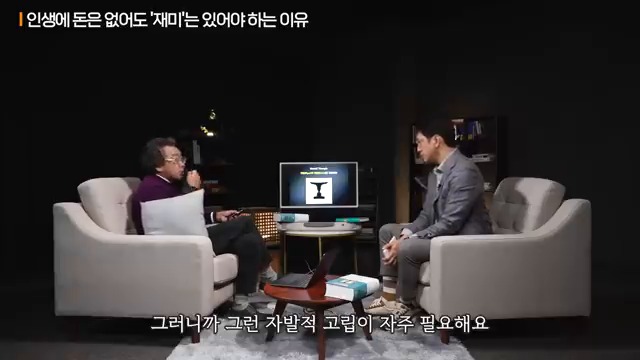
The Korean source summarizes Kim Jung-woon’s ideas about creative thinking in the AI era. The main claim is that creativity is not simply inventing something from nothing. It is the ability to collect materials, edit them from one’s own perspective, ask different questions, and recover play, visual thinking, and context.
The source begins by reframing creativity as editing. New ideas often come from rearranging existing materials, references, experiences, images, and questions.
This is why use value matters before money. If we only chase price or market reward, we may miss the human question: what is this useful for, and from whose perspective does it matter?
Condition One: Accumulate Materials to Edit
visual thinking and creativity.
Creative thinking needs raw material. Reading, note-taking, travel, conversation, art, and observation all become ingredients. In an age of information abundance, the problem is not lack of data but lack of personal interpretation.
A practical tip from the source is to attach a one-line meta title to information. Instead of saving a link passively, name what it means. That small act turns information into a thinking asset.
Condition Two: Restore Visual Thinking
AI and human questioning skills.
The article stresses visual thinking because humans do not think only in abstract text. Images, spatial relations, movement, and sensory memory help us notice patterns that linear language may miss.
Art education and travel are not luxuries in this view. They expose people to different compositions, rhythms, cultures, and frames. AI may generate images, but humans still need eyes trained to see why an image matters.
Creativity in the AI Era: Pattern Recognition and Human Editing
flow and creative learning habits.
AI is strong at pattern recognition and recombination. That means human creativity must move upstream: better questions, sharper perspectives, and more meaningful selection.
If everyone can generate plausible drafts, the differentiator is not first output. It is the ability to decide what is worth making, what context is missing, and what viewpoint makes the result alive.
Condition Three: Recover Fun and Flow
The source connects creativity with fun and immersion. Boredom and anxiety both damage thinking. When a task is too easy, attention disappears; when it is too hard, fear blocks action.
Creative work often begins when the challenge is adjusted to a level where curiosity returns. Play is not the opposite of work. It is a mode in which new connections become possible.
Rest as Reframing Context
Rest is not merely doing nothing. It gives the mind time to see context differently. When a question is stuck, changing the order of questions may change the answer itself.
This is especially important in AI work. Prompting is not just asking faster; it is reframing the problem so that the machine and the human look from a better angle.
Zettelkasten and Databases as Thinking Tools
The source mentions Zettelkasten and databases because ideas are easy to lose. A note system should not be a warehouse of copied text. It should be a flexible space where notes can be revised, connected, and reinterpreted.
Digital tools and AI can help organize information, but the user must still decide the link, title, and meaning. The value is not the note itself but the network of thought it supports.
Checklist and Conclusion
For immediate practice, collect materials deliberately, give each saved item a meta title, draw diagrams, ask the question differently, schedule playful exploration, and revise notes instead of merely storing them.
The conclusion is that creativity is the power to edit the world through one’s own perspective. In the AI era, that power becomes more important because production is easier and perspective is scarcer.
Practical Implications for Readers
For readers using this article as a working reference, the practical lesson is to move from abstract interest to a concrete audit. Identify where the topic touches your own work, which assumptions are already outdated, what data or tools are missing, and which decision could be tested on a small scale before a larger commitment. Write that test down, assign an owner, and review evidence rather than impressions.
The Korean source repeatedly treats technology, strategy, and human judgment together. That is why the safest next step is not blind adoption or passive worry. It is disciplined experimentation: define the problem, compare alternatives, verify results, protect sensitive information, and keep the human purpose visible while the tool or trend evolves.
Related Reading
Continue with these related Thinknote English articles in the Digital Transformation cluster.
This article explains a digital transformation, platform, market-structure, or technology-adoption topic with Korea-specific context and global implications.
How should I use this guide?
Use it to understand market signals and strategic patterns. Combine it with current market data before making business or investment decisions.
This English version of the article is a fuller translation and adaptation of the original Korean article, AI와 일의 미래: 사라지는 직업보다 먼저 봐야 할 ‘일의 의미’, for global readers. The original article explores the impact of AI on the future of work, emphasizing that the focus should be on the meaning of work rather than just job loss predictions. As we delve into the discussion of AI and the future of work, many people’s initial concern is, “Will my job disappear?” However, the SK YouTube series (AI 이후 우리는) EP.1 “AI와 일” poses a different question, highlighting that the crucial aspect is not just about which jobs will remain or disappear, but rather what meaning work holds for humans and how that meaning will change in the AI era.
AI and the future of work is about redefining roles, careers, and meaning.
AI and the Future of Work: Redefining Rather Than Replacing
The video features a publisher marketer, HR specialist, writer, and a creator who combines cleaning and art. Although their experiences differ, the common message is clear: the changes brought about by the AI era are not just about simple job replacement, but also about how we work, the structure of organizations, and the criteria for careers. The article will cover the main arguments, including how AI changes the structure of work, the evolving roles of administrators and team leaders, the required talent and career strategies for the future, human strengths that AI cannot replicate, and the checklist for individuals and organizations to prepare for the AI-driven work environment.
What This Article Will Cover
The main points to be discussed include the fact that AI changes the structure of work, not just job titles; the shifting roles of administrators and team leaders; the necessary talent and career strategies for the future; human strengths that AI cannot replicate; and the checklist for individuals and organizations to prepare for the AI-driven work environment. The article will also explore how AI is redefining work, making it more about solving problems and creating value rather than just performing tasks.
AI Redefines Work: From Job Titles to Problem-Solving
In the video, the panelists ask, “What is work?” rather than “Which jobs will disappear?” HR specialist Professor Hwang Seong-hyun explains that work is about solving specific problems in one’s position. This perspective is especially important in the AI era. Job titles may change, but organizations and markets still have problems that need to be solved. Ultimately, the focus shifts from “What is my job title?” to “What problems can I solve?”
AI can increase productivity while also creating new expectations and burdens.
Logic and Analysis: No Longer Exclusive to Humans
Traditionally, companies have valued logic, analysis, and diligence when hiring and training employees. However, the video points out that AI is rapidly replacing humans in the front end of logic and analysis. AI can already handle tasks such as drafting reports, market research, coding feedback, and data summarization. This does not mean that human roles become obsolete; instead, the questions become more challenging. Humans need to determine how to connect AI-analyzed results to specific goals and contexts, make responsible decisions, and create new value.
AI Can Increase Work, Not Just Reduce It
An interesting point is that while AI may seem to reduce work, it can also lead to an increase in work. The publisher marketer in the video uses AI as a personal assistant and notes that “I end up doing more work because I can do things I previously put off.” In the past, many tasks were abandoned due to lack of resources, manpower, or technology. Now, with AI tools, non-developers can automate simple tasks or conduct experimental planning. Marketers can analyze data, planners can create prototypes, and one-person teams can work with multiple agents, making these scenarios a reality.
AI may flatten organizations and change the role of managers.
The Hidden Burden Behind Increased Productivity
AI saves time but also raises expectations. When people say, “Now that we have AI, can’t you do that?” an individual’s workload expands. Therefore, preparing for the future of work with AI is not just about learning how to use tools; it’s about redefining what needs to be done and what doesn’t. This requires the ability to distinguish between tasks that are necessary and those that are not, in the context of AI-driven work environments.
Organizations Become Flatter, and Administrators’ Roles Change
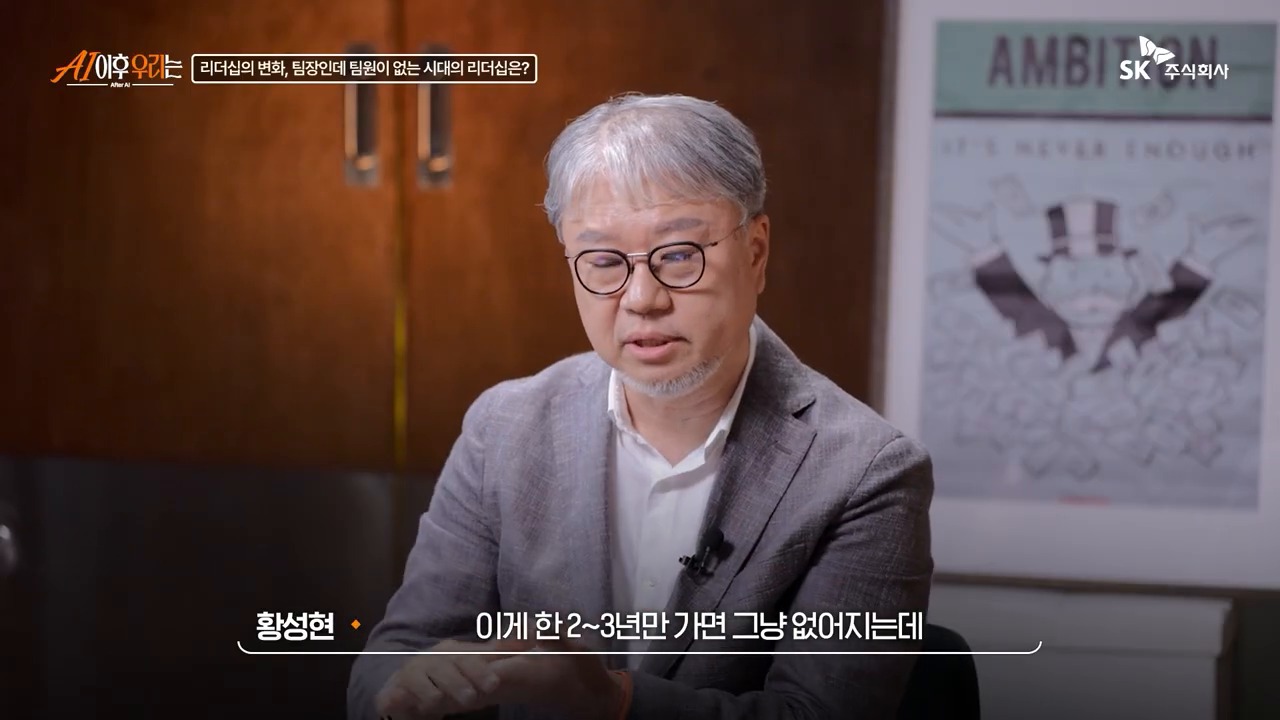
One of the most impressive topics in the video is the change in organizational structure. In the past, organizations operated with frontline workers creating data, middle managers reviewing it, and executives making decisions. However, as AI takes over data investigation, organization, feedback, and part of goal setting, the significance of the middle layer weakens. This change is not just about reducing the number of team leaders; it’s about administrators’ roles shifting from being transmitters and reviewers to becoming value designers, context providers, and responsible decision-makers.
Career strategy moves from fixed jobs to creating valuable work.
Team Leaders Without Team Members, Managers Without Subordinates
The video mentions expressions like “team leaders without team members” and “managers without subordinates.” As organizations downsize and structures that work with AI agents increase, having many people under one’s management may no longer be the core indicator of leadership. Future leaders will be evaluated not by how many people they manage, but by their ability to define problems, combine AI, people, and processes to achieve results, and demonstrate the value they add.
What Makes a Person Excel in the AI Era?
In the past, individuals who diligently performed their assigned tasks received good evaluations. While diligence is still important, the video suggests that the era where one can survive with diligence alone is coming to an end. The person who excels in the AI era is someone who, even in situations without clear answers, maintains curiosity, creates their own manual, and takes responsibility for projects from start to finish. In simpler terms, having a “sense of ownership” is becoming crucial again.
Those Who Can Leave Are More Likely to Stay
A phrase that strongly resonates from the video is, “Those who can leave are likely to stay, and those who want to stay may find it difficult.” The ability to leave does not mean taking the company lightly; it means having problem-solving skills that are valued in the market and having one’s unique work. The security that relies solely on organizational protection may weaken. In contrast, individuals who can create value anywhere are more likely to be needed within organizations for a longer period.
From Entrepreneurship to Creating One’s Own Job
The video takes the notion of “finding one’s work” a step further, suggesting that one must “create their own job.” Creating one’s job means defining one’s unique work. For example, instead of simply saying, “I’m a marketer,” one could define themselves as “a person who uses AI tools to quickly design content experiments and customer response analysis for small brands.” Similarly, instead of saying, “I’m an HR person,” one could say, “I’m a person who redesigns roles in the AI era and creates talent growth systems.”
Meaning becomes important when AI changes what work looks like.
Companies Become Learning Platforms
The publisher marketer in the video describes a company as a place where individuals can experiment with small projects. The company’s resources are utilized to try new things, and those experiences become part of the individual’s capabilities. This perspective is important. In the AI era, the workplace may become more like a project space where people come together to solve bigger problems rather than a lifelong enclosure. Organizations should tell individuals, “Grow here, and become strong enough to leave,” rather than “Stay with us forever.”
What Can Humans Do Better Than AI?
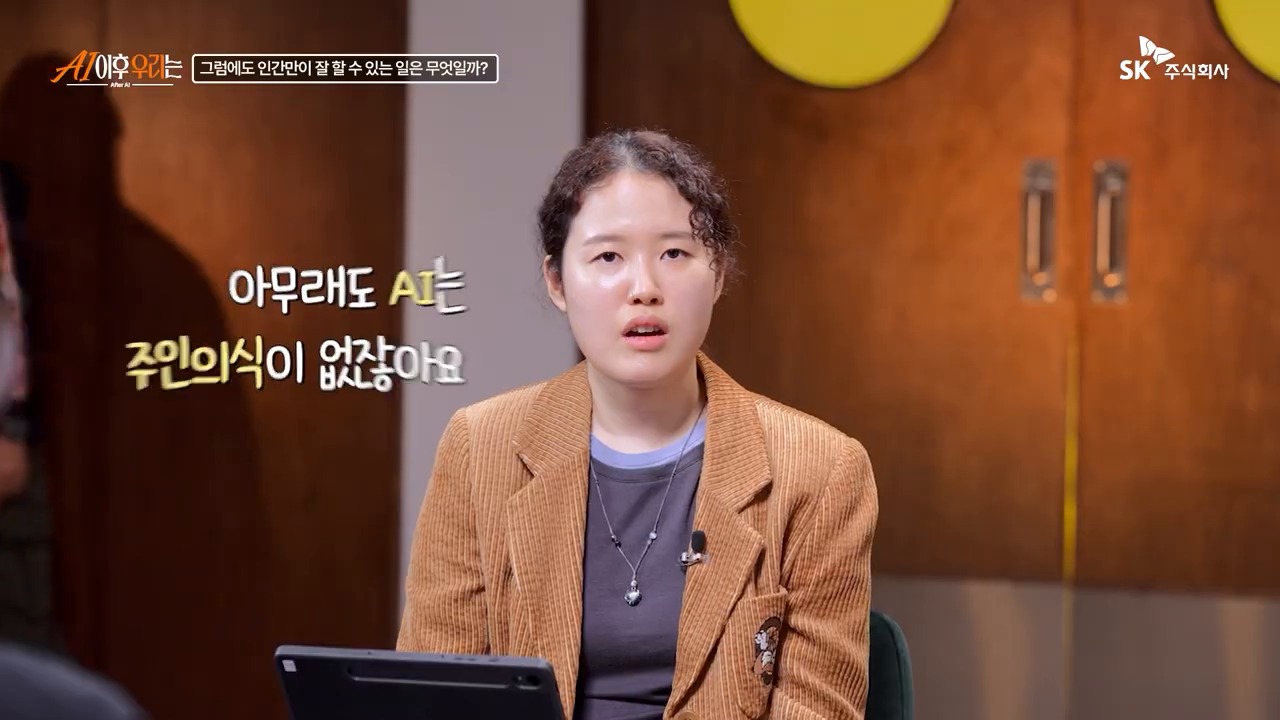
In the final part of the video, author Kim Ye-ji explains human strengths as “a sense of ownership” and “the ability to go beyond prompts.” AI performs well on tasks it is given, but humans can identify problems that were not asked. For instance, while cleaning, a human might notice and remove a spider web that the customer didn’t mention. This illustrates the human role in the AI era: not just as executors, but as individuals who read context, look beyond requests, and propose better outcomes responsibly.
Ask What You Can Take Responsibility For, Not What AI Can’t Do
Many people seek to find tasks that AI can never do. However, following the video’s narrative, this question may not be sustainable. Today, creative work might seem safe, but tomorrow, AI for generating art might emerge. Blue-collar jobs might seem secure, but then humanoid robots could appear. A more realistic question is, “What can I take responsibility for on top of what AI does?” Individuals who can answer this question will be better prepared for the future of work with AI.
Checklist for Individuals and Organizations
Accepting the future of work with AI with vague anxiety can lead to delayed responses. Using the following checklist, one can examine their current work and organization. This preparation is crucial for navigating the changes brought about by AI in the workplace.
FAQ: Frequently Asked Questions About AI and the Future of Work
Will AI Really Replace All Jobs?
It’s unlikely that all jobs will disappear at once. The key point is that repetitive, analytical, and review tasks within jobs are likely to change rapidly. It’s more realistic to look at changes in terms of task units rather than job titles.
Is It Still Meaningful to Join a Company in the AI Era?
Yes, it is. The important point is that the meaning of joining a company may shift from lifelong security to project experiences, resource utilization, and collaborative learning. A good company should be a place where individuals can solve bigger problems and grow.
What Are the Most Important Skills for the Future?
Based on the video’s core message, problem definition, sense of ownership, curiosity, responsible decision-making, and AI utilization skills are crucial. Especially, the ability to create one’s own criteria and take responsibility for outcomes in situations without clear answers is essential.
Will Administrators Become Obsolete?
It’s not that the role of administrators will completely disappear, but their roles are likely to change. Administrators focused on data transmission, simple review, and schedule management may become less important, while leaders who design goals, combine people and AI to achieve results, and make responsible decisions will become more crucial.
Conclusion: The Future of Work with AI is About Working Differently, Not Less
The final message of the video is neither simplistic optimism nor fear. AI will undoubtedly change many aspects of work. However, for humans, work is not likely to disappear completely; instead, its form and meaning will change. The best way to prepare for the future of work with AI is not to focus solely on the question, “Will AI take my job?” but to redefine the problems one solves, embrace AI as a tool, and create one’s unique value within and outside organizations.
The crucial question is, “What judgments and responsibilities can I add on top of what AI can do?” Individuals who can answer this question will be better prepared to thrive in the future work environment and the market beyond their current organizations.
References
– (SK YouTube – “AI will earn your salary, you just play” 5 years later, a world where you don’t have to work to eat has arrived? | AI 이후 우리는) EP.1 “AI와 일”
Related Reading
Continue with these related Thinknote English articles in the Digital Transformation cluster.
This article explains a digital transformation, platform, market-structure, or technology-adoption topic with Korea-specific context and global implications.
How should I use this guide?
Use it to understand market signals and strategic patterns. Combine it with current market data before making business or investment decisions.
Image source: Captured images used in this article are stills from the original YouTube video. They are used for review, commentary, and educational explanation, and copyright remains with the original rights holders and the channel.
The Korean article argues that human value in the age of AI cannot be explained only as a competition of skills. AI is changing from a tool into a collaborator and, through physical AI, into systems that can affect the material world. In that setting, what remains valuable is not merely usefulness but judgment, meaning, desire, relationship, and interpretation of life.
Human value in the age of AI depends on judgment, creativity, and meaning.
Human judgment remains essential when AI produces fast outputs.
AI now writes, codes, analyzes, draws, speaks, and plans. The anxiety comes from the sense that many abilities once considered uniquely human are becoming available through machines.
The source adds that physical AI expands the change into reality. Robots, vehicles, devices, and embodied systems may make AI visible in workplaces, homes, factories, and care settings, not only on screens.
What Separates Humans and AI
AI-generated content changes creative work but does not remove human meaning.
Intelligence alone cannot fully explain humans. AI may imitate language, reasoning, and style, but the source points to selfhood, consciousness, desire, embodiment, and life as deeper boundaries.
A system may say “I want,” but human desire is tied to body, memory, vulnerability, mortality, and relationships. That does not make humans superior in every task, but it does make human life more than output production.
AI Creation and Human Creation
Relationships and responsibility are difficult to automate.
AI-generated work forces us to ask what creativity means. If we judge only the final image, paragraph, or song, AI can appear to replace much of creation.
The source argues that this sees only half the process. Human creation includes why something was made, what pain or question it responded to, how it connects to a life, and what responsibility the creator takes for it. The standard of creativity may shift from “what was produced” to “why it was made.”
Human Value Moves From Labor to Meaning
People need to prepare skills that are hard to replace with automation.
If AI reduces some forms of labor, the remaining question is not simply what job humans will do. It is what kind of life humans will interpret and design.
Even if productivity rises, boredom, loneliness, purpose, play, and meaning remain human problems. The source suggests that the AI age makes these questions more visible rather than less important.
Conditions of People Who Are Hard to Replace
The first condition is the ability to change the question. AI can answer many prompts, but people decide which problem matters and what frame should be used.
The second is connecting meaning. People who link technology, emotion, context, ethics, and community create value that is not captured by task execution alone. The third is reflecting on desire: knowing what should be wanted, not only how to get it. The fourth is knowing how to play and cooperate with others.
Education Must Be More Than Job Training
The source warns that education focused only on technical job training is insufficient. We should learn technology, but we should not forget language, humanities, art, ethics, and relationships.
People may increasingly work alone with AI tools, but they cannot live alone. Communication, empathy, interpretation, and shared play are not decorative extras; they are part of how humans remain human.
Practical Preparation Now
Individuals can practice better questions, read beyond their field, use AI as a thinking partner, keep a notebook of interpretations, and deliberately build projects that connect personal interest with social meaning.
They should also examine their desires. Do I want speed because it serves a purpose, or because I am afraid of being left behind? This kind of reflection becomes a practical survival skill in the AI age.
Conclusion: Human Value Is Life Interpretation
The source’s conclusion is that human value is not reducible to usefulness. If AI performs more useful tasks, humans must not define themselves only by tasks.
The more important human capability is interpreting life: choosing questions, giving meaning, caring for others, creating reasons, and deciding how technology should enter human life.
Practical Implications for Readers
For readers using this article as a working reference, the practical lesson is to move from abstract interest to a concrete audit. Identify where the topic touches your own work, which assumptions are already outdated, what data or tools are missing, and which decision could be tested on a small scale before a larger commitment. Write that test down, assign an owner, and review evidence rather than impressions.
The Korean source repeatedly treats technology, strategy, and human judgment together. That is why the safest next step is not blind adoption or passive worry. It is disciplined experimentation: define the problem, compare alternatives, verify results, protect sensitive information, and keep the human purpose visible while the tool or trend evolves.
Related Reading
Continue with these related Thinknote English articles in the Digital Transformation cluster.
This article explains a digital transformation, platform, market-structure, or technology-adoption topic with Korea-specific context and global implications.
How should I use this guide?
Use it to understand market signals and strategic patterns. Combine it with current market data before making business or investment decisions.
This English version is a fuller translation and adaptation of the original Korean article, “AI Agent 시대, 지식근로자는 어떻게 달라져야 할까,” for global readers. The article explores the changing role of knowledge workers in the AI agent era and how education should adapt to these changes. As AI becomes an integral part of our daily work, the question is no longer about how to use AI, but about how to connect AI to the work context and create valuable results.
Knowledge workers need new skills when AI agents become part of everyday work.
The Competition Between AI Users and Non-Users is Already Over
When generative AI first emerged, there was a significant difference between those who used AI and those who did not. However, the situation has changed. AI utilization has become a natural choice in many tasks, such as search, summarization, translation, report drafting, meeting minutes, and image generation. Therefore, the criteria for competition have also changed. It is no longer about whether one uses AI or not, but about how well one uses AI, what tools one uses, how well one formulates questions, how accurately one provides work context, how well one reviews and judges results, and how well one connects with the organization’s work style.
Context is More Important than Prompts
When discussing AI utilization, prompts often come to mind first. A good question is indeed crucial, and the more clearly one defines the desired output, role, format, and conditions, the better the result will be. However, prompts alone are not enough. For AI to produce a good answer, it needs to know the purpose of the task, the current situation of the organization, the reference materials, the applicable standards, the intended user of the output, the constraints to be considered, and the final form of the output. The same question can have different answers depending on the context. In tasks where context is crucial, such as curriculum design, policy document review, report writing, and performance management, this is especially true. Prompt engineering is the art of crafting good questions, while context engineering is the process of constructing the necessary context and materials for AI to work. In the AI agent era, an additional step is required: designing the work flow itself so that AI can understand the goal, perform the necessary procedures, and produce the output.
AI education should connect tools with real work context and judgment.
The Role of Knowledge Workers Shifts from Content Producers to Judgment Designers
Knowledge workers are responsible for creating documents, finding and analyzing data, reporting, and supporting decision-making. AI can quickly process a significant part of this work. It can draft reports, summarize long documents, compare data, summarize meeting minutes, and structure ideas. However, this does not mean that the value of knowledge workers disappears. Instead, their role changes. The more important roles that knowledge workers will play in the future include defining problems, providing context, reviewing results, making judgments and choices, and improving work flows. As AI takes over routine tasks, humans must focus on higher-level problem-solving and deeper understanding.
From Knowledge-Consuming to Knowledge-Creating Organizations
In the AI era, organizations should not stop at simply acquiring external knowledge. They must accumulate internal experiences, standards, cases, and judgment processes. Educational organizations are no exception. Operating educational programs is not just about managing schedules or recruiting instructors. For education to be connected to actual work performance, knowledge must remain within the organization. This includes materials such as educational program design criteria, course-specific learning objectives, frequently encountered problems in the field, questions and difficulties faced by learners, post-lecture application cases, performance indicators, and areas for improvement in the next education session. AI is strong in organizing and connecting such materials, but it is up to humans to decide what materials are important, how to interpret them, and in which direction to improve.
Human judgment becomes more important as AI agents produce drafts and decisions.
Education Becomes a Process of Developing Problem-Solving Capabilities
If AI education focuses only on tool usage, it will soon reach its limits. The buttons and functions of tools are constantly changing, and models, pricing plans, and platform strengths also change. Therefore, the center of AI education should shift from explaining functions to problem-solving. Questions that should be addressed in education include what tasks AI can take over, what tasks require human judgment, what materials should be provided to AI for better results, what standards should be used to verify AI results, how to automate repetitive tasks, and what kind of knowledge database should be created at the organizational level. By dealing with these questions, education can go beyond simple “AI utilization” and help learners re-examine their work. Organizations can begin to change their way of working through education.
Distinguishing Between Tasks that AI Can Replace and Human Value
AI is fast and strong in reading and creating drafts, comparing and summarizing data, and generating images. However, the results produced by AI are not always valuable. Value comes from human problem awareness, purpose, interpretation, and choice. Tasks that AI can do well can be entrusted to AI, such as drafting, data summarization, table organization, repetitive investigation, sentence refinement, idea expansion, and format conversion. However, tasks that humans should focus on are different, including determining why a task is being done, judging who needs the results, reflecting field context, reviewing risks and responsibilities, selecting the final direction, and converting the results into meaningful experiences for humans.
Organizations need learning systems that turn AI use into shared capability.
Without Organizational Change, AI Education Alone Has Limited Effect
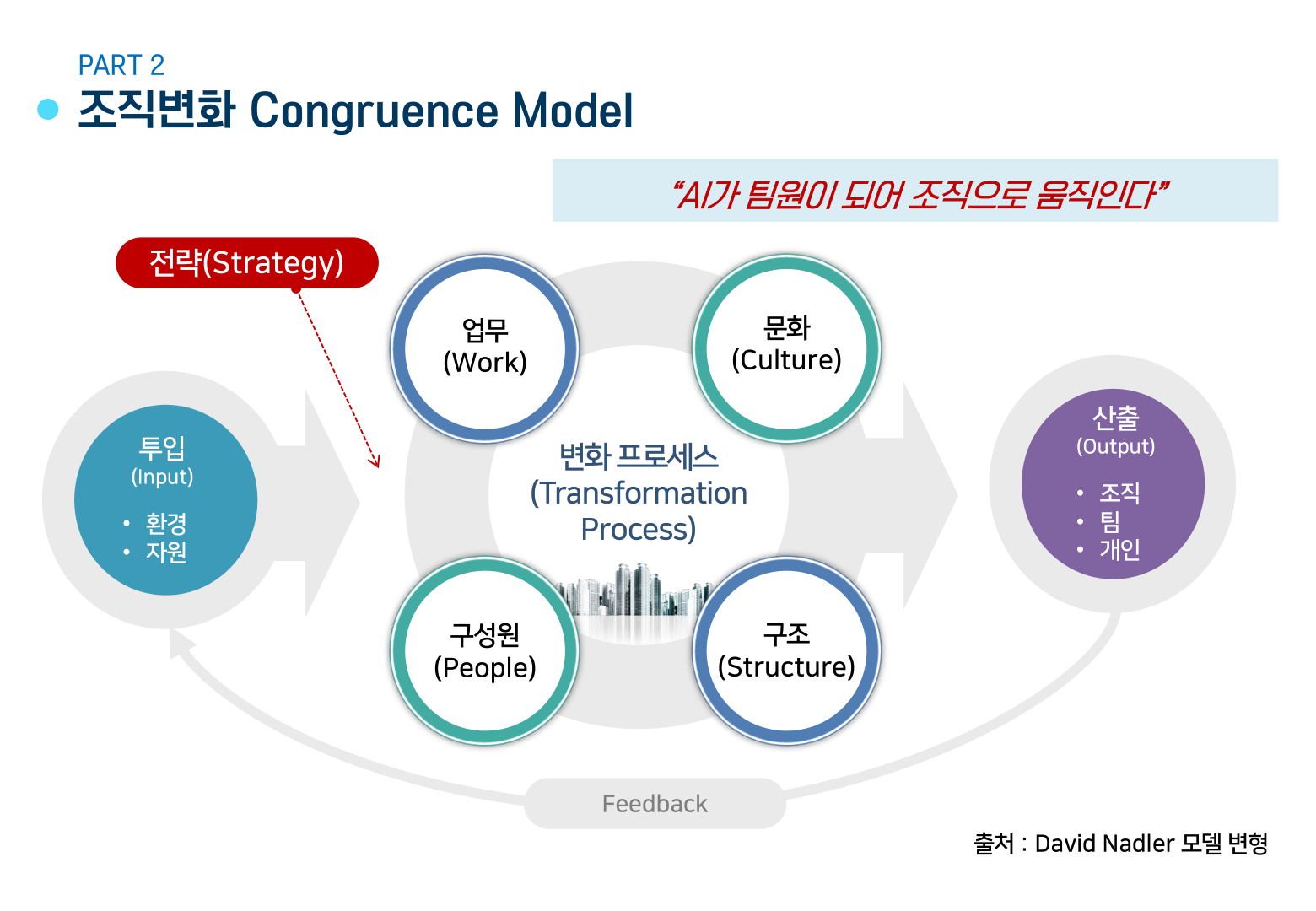
Even if AI education is increased, if the organization’s work style remains the same, the effect will be small. This is because individuals will find it difficult to apply what they have learned in actual work. AI utilization is not completed by individual skills alone; work, members, culture, structure, and strategy must move together. Organizations should check the following questions together: what tasks to redesign with AI, what materials to manage as common knowledge, what authority and security standards are needed for AI use, who will take responsibility for reviewing results, how to connect educational outcomes with field application, and how to expand individual experiments into organizational processes. In an era where AI becomes a team member, the organization must also move like a team. The structure of organizational learning and work must change together, beyond individual productivity improvement.
Efficient Education and Valuable Education Must Go Together
AI can increase the efficiency of education. Investigation time can be reduced, educational program drafts can be created quickly, and learning materials can be diversified. However, efficiency alone is not enough. The purpose of education is not just to save time but to enable better judgment, deeper understanding, and more practical problem-solving. Efficient education is about operating education quickly, while valuable education is about helping learners behave differently in their actual work. In the AI agent era, these two must be designed together: reducing repetitive tasks with AI, systematically collecting materials, reflecting the learner’s work context, designing problem-solving tasks, connecting results with field application, and accumulating knowledge that remains after education as an organizational asset.
Education for the AI agent era should redesign work, not only teach prompts.
Conclusion: The Role of Educators in the AI Era
In the AI agent era, the role of educators also expands. They move from being operators of education to designers of the organization’s work style. Future education must ask new questions, not stopping at “what AI tools to teach” but going further to “how this organization can create better results with AI.” AI processes tasks quickly, but humans create meaning and judge. Education connects these two. Efficient and valuable education in the AI agent era starts with designing this connection.
Related Reading
Continue with these related Thinknote English articles in the Digital Transformation cluster.
This article explains a digital transformation, platform, market-structure, or technology-adoption topic with Korea-specific context and global implications.
How should I use this guide?
Use it to understand market signals and strategic patterns. Combine it with current market data before making business or investment decisions.