When searching for Worker Sunshine Loan, many loan advertisements with similar names appear. Therefore, it is necessary to distinguish them first. The Worker Sunshine Loan referred to here is a policy-based financial product for the underprivileged guided by the Korea Inclusive Finance Agency. Sunshine Loan Youth a policy-based financial product for the underprivileged.
The key point is simple. It is a guaranteed loan that helps workers who have difficulty using institutional finance due to income or credit to use it for living expenses. However, it is not a product that is unconditionally approved just because it meets the target criteria. Financial company screening and inclusive finance credit evaluation work together.
Worker Sunshine Loan at a glance
Classification
Official guide criteria
Checkpoints before application
Support targets
Annual income of 35 million won or less, or annual income of 45 million won or less and a credit score in the lower 20%
Income, employment, and credit information verification required
Guarantee limit
Up to 15 million won
Individual limit varies depending on the review result
Interest rate
Within 10% per annum, varies by financial company
Check the average interest rate including the guarantee fee
Guarantee fee
Within 2.5%
Can be reduced for socially disadvantaged people, etc.
Loan period
Within 5 years, applied in units of 1 year
No prepayment penalty
Repayment method
Equal Principal and Interest Repayment
The amount to be repaid each month must be calculated first
The above information is based on the official guide page of the Korea Inclusive Finance Agency as of July 22, 2026. Policy finance products may change in terms of limit, interest rate, handling institution, and screening criteria. Before applying, please check the official page and the handling financial company's guide again.
Who will be eligible to apply
The Worker Sunshine Loan is a product for low-income and low-credit workers. According to the official guide, there are two categories.
First, if the annual income is 35 million won or less, you can be within the target range regardless of your credit score. Second, if the annual income is 45 million won or less and you are in the lower 20% of the credit score, you can also be eligible.
Here, the important expression is "can be". The eligibility requirements are the starting line. The actual loan availability will be determined after passing the guarantee screening of the Korea Inclusive Finance Agency and the financial company's own screening.
How to look at the limit and interest rate
The guarantee limit is up to 15 million won. However, the maximum limit is not the amount that is automatically applied to all applicants. It may vary depending on income, existing loans, repayment ability, credit status, and submitted documents.
The interest rate is guided to be within 10% per annum. It varies by financial company. The Korea Inclusive Finance Agency also discloses the average interest rate by industry, so before applying, you should check the interest rate and guarantee fee inclusion criteria by handling institution.
You should also check if you are eligible for a guarantee fee reduction
The general Sunshine Loan has a guarantee fee of 2.5% or less. However, some targets can receive a guarantee fee reduction.
Social consideration targets: 0.5%p reduction
Financial education completion at the Korea Inclusive Finance Institute: 0.1%p reduction
Success in the national employment support system: 0.1%p reduction
Welfare membership subscribers: 0.1%p reduction
Note that there are precautions to be taken. The guarantee fee reduction can only be applied if the necessary documents are submitted or education is completed before the loan application. It may be difficult to apply for a guarantee fee reduction after the contract, so it is safer to check first.
7 checklists to review before applying
1. Check the official product name first
Expressions like ‘Worker’s Peace of Mind Loan’ or ‘Government Support Loan for Employees’ may be advertising phrases. It is safer to check officially on the Korea Inclusive Finance Institute’s Sunshine Loan General page.
2. Consider my income standards first
Check if the annual income is 35 million won or less, or if it is 45 million won or less and meets the lower 20% credit score standard. The method of income verification may also vary by financial company.
3. Do not overlook the maximum limit of 15 million won
The official guarantee limit is up to 1.5 million won. However, the actual limit is determined by the review result. If there are many existing loans or it is difficult to judge the repayment ability, the limit may be reduced.
4. Look at the interest rate and guarantee fee together
If you only look at the interest rate, you may miss the actual burden. This is because a guarantee fee is added. You need to calculate the interest rate, guarantee fee, and monthly repayment amount together for each financial company.
5. Understand the principal and interest equal repayment structure
The repayment method is principal and interest equal installment repayment. It is a structure where you pay back the principal and interest together every month. Don’t just look at the urgent funds, but first check the monthly cash flow.
6. Distinguish between preliminary review approval and final approval
Even if the preliminary review at the Korea Inclusive Finance Institute shows a possibility of approval, it may be rejected in the review by the financial company. The official guide also clearly states this point.
7. Be suspicious of requests for advance deposits
There are many illegal loan advertisements that impersonate policy-based inclusive finance. If you are asked to deposit a specific account in the name of a guarantee fee, commission, or repayment of existing loans, you should stop. If you are suspicious, check the Inclusive Finance Call Center 1397 or the Financial Supervisory Service’s illegal private lending reporting channel.
Don’t get confused with similar products to the worker sunshine loan
There is not just one product with the name ‘sunshine loan’. There are products with different purposes and targets, such as youth sunshine loan, sunshine loan card, special sunshine loan, and sunshine loan 119.
If the purpose is a worker’s living fund, you should first look at the general sunshine loan. If you are a young person or a university student, the youth sunshine loan may be suitable. If you need alternative funds for high-interest rates, you should check the sunshine loan 15 or related products separately.
Is the Worker Sunshine Loan a product where the government lends money directly?
It’s not a government subsidy that pays cash directly. It’s a policy-based financial product for low-income households that provides loans through a financial institution based on the guarantee of the Korea Inclusive Finance Agency.
Is approval guaranteed if annual income is 35 million won or less?
No, it’s not. The annual income standard is one of the eligibility requirements. Final approval is determined after a guarantee review and a financial institution’s review.
Can I receive up to 15 million won in full?
The maximum limit is 15 million won. The actual limit varies depending on individual review results, and existing debt and repayment ability also have an impact.
Is there an early repayment fee?
According to the official guidelines of the Korea Inclusive Finance Agency, there is no early repayment fee. However, it is recommended to reconfirm with the financial institution handling the loan before signing the agreement.
Where can I check and apply safely?
First, check the official website of the Korea Inclusive Finance Agency and the Inclusive Finance Call Center (1397). Avoid places that require advance deposits through KakaoTalk or text message links.
Conclusion
The Worker Sunshine Loan can be a helpful system for workers who need urgent living expenses. However, it is not a product that is “approved unconditionally if you are a target”. Before applying, you need to check the income criteria, actual limit, interest rate and guarantee fee, monthly repayment amount, and whether you are eligible for a guarantee fee reduction, in that order.
The safest starting point is the official page. It is recommended to check the official guidelines first, rather than the advertisement, and finally confirm your conditions through the financial institution handling the loan and the Inclusive Finance Call Center, in that order.
As of August 2026, the government’s real estate policy direction can be summarized in one sentence as “reduce the burden of housing costs and more strictly manage the flow of excessive loan funds into the real estate market”.[1][6][8] However, as of mid-August, not all contents are confirmed laws, and especially the tax reform plan may change in detail or implementation schedule during the legislative notice and National Assembly deliberation process.[1]
Key Summary
Division
Direction of Change as of August 2026
Points for Readers to Check
Housing Costs for Young People and Low-Income Families
Inclusion of preferential treatment for young people’s rent tax credits and expansion of tax credit limits in the government’s plan
Age of the individual, total salary and comprehensive income, proof of rent contract and payment
Real Estate Taxation
Tax reform plans such as real estate and productive financial ISA are still at the government proposal stage
Actual application year and detailed requirements after National Assembly passage
Mortgage Loan
Checking the increase in mortgage loans and managing the growth rate of household loans at a low level
Loan possible amount vs. repayment ability and interest rate risk
DSR
Strengthening management centered on repayment ability assessment, such as stress DSR
Reflecting future interest rate risks of floating-rate and hybrid loans
Market interpretation
Neither ‘easing’ nor ‘regulation’ alone
Tax support and financial management work simultaneously
1. Tax direction: Relief of housing costs for young people and low-income households comes to the fore
The tax reform plan announced by the government on August 3, 2026, includes measures to reduce the burden of housing costs and retirement preparation for young people and low-income households.[1] The most notable item is the tax deduction for young people’s rent.[1] According to the policy briefing, the current rent tax deduction rate for workers with a total salary of 80 million won or less is 15%, and 17% for those with a total salary of 55 million won or less. However, the reform plan includes applying 17% to young people aged 15-34, regardless of income level.[1] Additionally, the annual limit for rent tax deductions is proposed to be expanded from 10 million won to 12 million won.[1]
This change is not a policy that directly lowers housing prices, but rather a policy that reduces the cash flow burden of young renters through tax refunds and deductions.[1] Therefore, if you are a young person paying rent, you should first check if you are eligible for the deduction and if you have the necessary documents, such as a contract, account transfer records, and resident registration requirements.
2. The tax reform plan is still a ‘government proposal’
The important point is that the tax reform plan does not mean that it will be immediately confirmed as a system.[1] The policy briefing explained that this reform plan will go through a legislative notice period until August 20 and will be submitted to the National Assembly by September 3.[1] In other words, even if it is expressed as ‘confirmed’ in blogs or news, the actual application will require deliberation and resolution by the National Assembly, as well as revision of enforcement decrees and regulations.[1]
From the reader’s point of view, the following three should be distinguished.
Expression
Meaning
Action guide
Government proposal
The direction of reorganization proposed by the government
Mark items of interest and check if they pass the National Assembly
Legislative notice
Procedure for listening to public and stakeholders’ opinions
Check for possible changes to the detailed wording and enforcement date
Confirmed law
Final institution that has gone through the National Assembly and government procedures
Actually applied to year-end settlement, reporting, and application
3. Financial direction: Weakening the link between the real estate market and loans
The Financial Services Commission’s 2026 household debt management plan has set ‘separation of real estate market and finance’ as its title.[6] The Financial Services Commission aims to manage the growth rate of household loans subject to management in 2026 at 1.5% and reduce the household debt/GDP ratio to 80% by 2030.[6] It also announced a plan to prohibit the extension of apartment mortgage loans for multiple homeowners and landlords in the metropolitan area and regulated areas, except in unavoidable cases such as when there are tenants.[6]
This message means that the loan environment felt by real estate demanders will continue to be operated conservatively.[6] Even if interest rates fall or some taxes are eased, loan limits, maturity, and repayment ability tests will remain as a separate management axis.[6][7] Therefore, when looking at the real estate market in the second half of 2026, we need to look at not only the ‘price forecast’ but also how much financial institutions can actually lend and the risk of future interest rate hikes.[7]
4. DSR direction: Whether you can repay with your current income becomes more important
The stress DSR is a system that reflects the risk of future interest rate changes in loan screenings in advance.[7] The Financial Services Commission has confirmed that it will implement a three-stage stress DSR from July 1, 2025, and build a management system that reflects the risk of future interest rate changes in all household loans across all industries.[7] However, it explained that the stress interest rate will only be applied to credit loans with a balance exceeding 100 million won.[7]
This trend is also important in 2026. For people who want to buy a house, the key is not ‘what percentage of the house price can I borrow’ but ‘can I afford the principal and interest with my current income, including the stress interest rate?'[7] In particular, if you are considering variable-rate, mixed-rate, or periodic loans, you need to calculate not only the current interest rate but also the scenario of future interest rate hikes.[7]
5. Actual loan flow: Mortgage loans remain a subject for review
According to the Financial Services Commission’s June 2026 household loan trend, the total household loans of all financial institutions in June increased by 8.3 trillion won, a decrease from the 9.3 trillion won increase in the previous month.[8] However, mortgage loans increased by 4.5 trillion won, an expansion from the 4 trillion won increase in the previous month.[8] Bank mortgage loans also increased from 3.2 trillion won in May to 4.3 trillion won in June.[8]
This number is important because when the government judges the overheating of the real estate market, it looks at not only house prices but also the growth rate of loans.[8] If the increase in mortgage loans expands again, it is likely that the review of regulations on multiple homeowners, landlords, business loans, loan extensions, and DSR application methods will be strengthened.[6][8]
6. Supply and system aspects: August has a stronger system improvement character than large-scale national measures
As of mid-August 2026, the government’s announcement is not a separate large-scale national housing supply measure, but rather a continuation of the existing land transport policy direction, tax reform plan, and individual law revision.[1][2][5] In terms of finance, a separate household debt management plan serves as an axis for managing the real estate loan flow.[6] For example, the Ministry of Land, Infrastructure, and Transport’s amendment to the Enforcement Decree of the Real Estate Investment Company Act is also being proceeded with, which is a detailed law revision related to real estate investment and operation systems.[5] However, some original pages of the Ministry of Land, Infrastructure, and Transport may have restricted access and search paths, so it is safer to check the actual application of the system along with the Ministry of Land, Infrastructure, and Transport’s announcements, legislative notices, and press releases, as well as the Ministry of Government Legislation’s announcements.[5]
7. What should non-homeowners and real demanders look at?
Non-homeowners and real demanders should divide policies into three categories.
First, there are tax benefits. Items that can be directly felt according to one’s age, income, and contract type, such as rent tax deductions, are connected to year-end tax settlement preparations.[1]
Second, there is the possible loan amount. Housing mortgage loans vary depending on income, existing debt, interest rates, DSR, regional regulations, and the number of houses.[6][7] Even if the house price is the same, if the possible loan amount decreases, the actual purchase price will be lower.[7]
Third, there is market risk. The government has announced that it will manage the increase in household debt at a low level in 2026 and is separately checking the increase in housing mortgage loans.[6][8] Therefore, rather than just believing in the surrounding cases that ‘the loan will be possible,’ one should check the bank’s pre-examination and whether the area is regulated before signing the contract.[6][7]
8. Multiple homeowners and rental business operators must check the extension of the maturity and loan inspection
In the financial regulator’s management plan, the items related to multiple homeowners and rental business operators are especially important.[6] The principle of not allowing the extension of the maturity of apartment mortgage loans in the metropolitan area and regulated areas, and the direction of allowing exceptions, may also affect those who already have existing loans.[6] It also includes contents that will thoroughly inspect all business loans handled after 2021 and strengthen the standards for checking the use of loans for other purposes and the level of punishment.[6]
This means that the government will continue to monitor cases where business loans were used for housing purchases or real estate investments.[6] Therefore, rental business operators or corporations and individual business owners need to re-examine the actual use of loan funds, documentation, maturity conditions, and the region and purpose of the mortgaged house.[6]
9. If we summarize the policy direction in August 2026 in one sentence
The direction of change in real estate policy in August 2026 is a structure that ‘reduces the burden of housing costs for the general public and young people through taxes and support, and manages loans flowing into the real estate market more strictly based on repayment ability.'[1][6][7] This direction appears as an expansion of rent tax deductions, strengthening of loan reviews, and checking the increase in housing mortgage loans in the short term.[1][7][8] In the mid-to-long term, the focus is on reducing the household debt/GDP ratio and preventing changes in real estate prices from spreading to the financial system as a risk.[6]
Checklist before application and contract
If you expect rent tax deductions, check your age, income, rental contract, and rent payment documents.[1]
If you’re considering purchasing a house, you should first receive a bank pre-approval that reflects the DSR before signing the contract.[7]
Multiple homeowners and landlords should check the conditions for the maturity of collateral loans in the metropolitan area and regulated regions.[6]
If you have a business loan, organize the use of funds and supporting documents.[6]
The government plan announced as of August may differ from the final legislation, so it’s necessary to reconfirm the passage through the National Assembly and the enforcement date.[1]
FAQ
Is the real estate policy in August 2026 relaxed or regulated?
It’s difficult to look at it from only one side. While there are measures to alleviate the burden of housing costs, such as the youth rent tax deduction, the direction is to manage household debt and housing mortgage loans more tightly.[1][6]
Is the expansion of the youth rent tax deduction confirmed?
As of mid-August 2026, it is included in the government’s tax reform plan.[1] However, the actual application requirements and timing must be confirmed through the final legislation after going through the legislative notice and National Assembly deliberation and decision.[1]
Will it become more difficult to get a housing mortgage loan in the future?
It varies depending on the individual’s income, debt, region, and number of houses. However, since the government is managing the growth rate of household loans at a low level and checking the increase in housing mortgage loans, the importance of repayment capacity-based screening is likely to continue.[6][8]
Does the DSR also affect actual demanders?
Yes, it does. The DSR is a standard for evaluating the repayment capacity of not only investors but also individuals who take out housing mortgage loans, so if the burden of principal and interest is high compared to income, the loan limit may be reduced even for actual demanders.[7]
Is it okay to buy a house now?
This article is not an investment recommendation. In terms of policy, tax support and loan management are moving simultaneously, so it is safe to check the actual transaction price, entry volume, interest rate, DSR pre-examination, and your own cash flow together before purchasing.[6][7][8]
If you are searching for the 2026 fall semester National Scholarship, first check the dates. According to the Korea Student Aid Foundation (KOSAF) official notice, the first-round application period for the 2026 fall semester was from 9:00 on May 22, 2026 to 18:00 on June 22, 2026, and the deadline for document submission and household-member consent was 18:00 on June 29. This guide was checked on 2026-07-17 KST and summarizes what students who already completed the first-round application should check now, as well as what to prepare before any second-round notice.
The three essentials are: confirm whether your application was received, check for missing documents or household-member consent, and remember that enrolled students are, in principle, expected to apply in the first round.
2026 Fall National Scholarship First-Round Schedule
Category
Official schedule
What to check
Application period
2026. 5. 22. (Fri.) 9:00 ~ 6. 22. (Mon.) 18:00
The deadline day closes at 18:00. During the rest of the application period, applications are available 24 hours a day, including weekends and public holidays, but the deadline day is an exception.
Document submission
2026. 5. 22. (Fri.) 9:00 ~ 6. 29. (Mon.) 18:00
Submitting the application alone is not the end. Applicants selected for document submission must check their submission status.
Household-member consent
2026. 5. 22. (Fri.) 9:00 ~ 6. 29. (Mon.) 18:00
Consent to provide household-member information must be completed before the student-aid income bracket can be calculated.
KOSAF’s notice lists all academic-status categories as first-round applicants, including new students, transfer students, readmitted students, returning students, and currently enrolled students. In particular, enrolled students are, in principle, required to apply during the first-round application period. KOSAF also states that for enrolled students applying in the second round, a relief application may be automatically applied up to two times during enrollment and support may be possible after review. Students should also note that this relief-application application is not a structure in which the student chooses whether to apply it.
Who Is Covered: Type I, Type II, Multiple-Child, and Regional Talent Scholarships Are Applied for Together
The National Scholarship uses an integrated application method. KOSAF explains that National Scholarship Type I, Type II, Multiple-Child National Scholarship, and Regional Talent Scholarship are applied for in one batch; if a student satisfies the benefit requirements for a given scholarship, that scholarship may be awarded.
National Scholarship Type I: The basic target group is students with Korean nationality enrolled at domestic universities who are in student-aid income bracket 9 or below and meet the academic-performance criteria.
National Scholarship Type II: This is for students at universities participating in Type II who meet each university’s selection criteria. In principle, it targets students in student-aid income brackets 1 through 9, but the notice states that students in bracket 10 may also receive support if the university recognizes urgent financial circumstances or similar needs.
Multiple-Child National Scholarship: This is for unmarried university students with Korean nationality enrolled at domestic universities, in student-aid income bracket 9 or below, and from a multiple-child household. A multiple-child household means a household with three or more children of Korean nationality.
Regional Talent Scholarship: The main targets are new students who graduated from a non-capital-region high school and entered a non-capital-region university in 2026, or existing students already confirmed for continued support.
Type I Support Amounts: Differentiated by Student-Aid Income Bracket
Type I support is provided by student-aid income bracket within the limit of mandatory tuition-related expenses for the semester. The official amount table is as follows.
Student-aid income bracket
Maximum support per semester
Maximum annual support
Basic livelihood recipient / near-poverty class
Full amount*
Full amount*
Brackets 1~3
KRW 3,000,000
KRW 6,000,000
Brackets 4~6
KRW 2,200,000
KRW 4,400,000
Brackets 7~8
KRW 1,800,000
KRW 3,600,000
Bracket 9
KRW 500,000
KRW 1,000,000
* Based on mandatory expenses within the tuition amount.
Multiple-Child National Scholarship Support Amounts
If the Multiple-Child National Scholarship overlaps with Type I, the Multiple-Child National Scholarship is supported first, and duplicate receipt is not allowed. When applying, entering sibling information, including information about the applicant, is required.
Student-aid income bracket
Maximum support for first and second child
Maximum support for third child and beyond
Basic livelihood recipient / near-poverty class
Full amount*
Full amount*
Brackets 1~3
KRW 3,050,000 per semester / KRW 6,100,000 per year
Full amount*
Brackets 4~6
KRW 2,525,000 per semester / KRW 5,050,000 per year
Full amount*
Brackets 7~8
KRW 2,325,000 per semester / KRW 4,650,000 per year
Full amount*
Bracket 9
KRW 675,000 per semester / KRW 1,350,000 per year
KRW 1,000,000 per semester / KRW 2,000,000 per year
* Based on mandatory expenses within the tuition amount.
Academic Criteria: Not Applied to New Students in the First Semester; Previous Semester Applies to Enrolled Students
According to the official Type I review criteria, academic-performance criteria are not applied to new students, transfer students, and readmitted students for their first semester only. Enrolled students are generally required to have completed at least 12 credits in the previous semester and achieved at least 80 points on a 100-point scale.
For basic livelihood recipient and near-poverty students, the standard is completion of 12 credits in the previous semester and at least 70 points.
For students with disabilities, the completed-credit and percentile-score academic criteria are not applied.
For youth preparing for independent living, the percentile-score criterion is not applied, but the completed-credit criterion does apply.
For brackets 1~3, KOSAF states that students with at least 70 but less than 80 points in the previous semester may receive support after the C-grade warning system is applied, up to two times.
For students graduating or in extra semesters, the completed-credit criterion is not applied.
Checklist to Review Now
Application status: Log in to KOSAF and confirm in the National Scholarship application status menu that your application was properly received.
Document-submission status: Check whether you are required to submit additional documents, such as family relationship, marriage, or basic/near-poverty documents.
Household-member consent: If consent from a parent or spouse is required, confirm whether it has been completed.
Student-aid income bracket calculation: Wait for the result of the recognized-income calculation, which reflects income, property, financial assets, liabilities, and other factors.
Duplicate support: If there was duplicate support in a past semester, support may be restricted, so check whether it has been resolved.
Number of benefit receipts: Support may be restricted if the maximum number of benefit receipts by academic program or by student has been exceeded.
How Should You View a Second-Round Application?
As checked on 2026-07-17, this article is organized based on the first-round schedule confirmed on KOSAF’s official 2026 fall semester notice page. The second-round application schedule must be confirmed through a separate notice, and you should not plan your application based on estimated dates. In particular, because enrolled students are, in principle, expected to apply in the first round, anyone waiting for a second round should also check their remaining relief-application opportunities and their university’s registration and scholarship schedule.
Official Application Channel
Applications and status checks are handled through the Korea Student Aid Foundation website or mobile app. Treat summaries on blogs, online communities, or social media as references only, and always confirm actual application availability and schedules on KOSAF’s official pages.
When was the first-round application for the 2026 fall National Scholarship?
According to KOSAF’s official notice, it was from 9:00 on May 22, 2026 to 18:00 on June 22, 2026.
When were document submission and household-member consent due?
They were due from 9:00 on May 22, 2026 to 18:00 on June 29, 2026. If an application was completed but documents or household-member consent were missing, the review process may be affected.
Can enrolled students also apply in the second round?
KOSAF states that enrolled students are, in principle, required to apply during the first-round application period. For enrolled students who apply in the second round, a relief application may be automatically applied up to two times during enrollment, and support may be possible after review.
Up to which income bracket does National Scholarship Type I provide support?
Based on KOSAF’s 2026 fall semester notice, Type I targets university students in student-aid income bracket 9 or below, while also reviewing academic criteria and completion of application procedures.
This article was prepared after checking KOSAF’s official pages as of 2026-07-17 KST. Scholarship schedules and detailed criteria may change, so actual application, review, and payment decisions should always be confirmed through KOSAF’s official notices and your university’s scholarship office announcements.
Reference time: July 17, 2026, 16:00 KST. Policy schedules may change due to budget exhaustion, system maintenance, or additional notices. The items below focus only on programs whose official websites show July application, use, intake, or confirmation needs.
The key is to distinguish between “programs you can apply for right now” and “programs for which you need to check an official July notice.” Application funds, subsidies, and loan-type funds are often targeted by fake text messages and proxy sites, so the final application should always be confirmed through an official website, community service center, or bank app.
Summary of Government Support Programs to Check First in July
Financial Services Commission, Korea Inclusive Finance Agency, and participating-bank notices
Before official application dates and banks are confirmed, beware of signup reservation or proxy links.
1. Energy Voucher: In July, Check Both Application and Summer Bill Deduction
The Energy Voucher is a program that helps energy-vulnerable households use electricity, city gas, district heating, kerosene, LPG, and coal briquettes. According to the official notice, the application period is June 15 to December 31, 2026, and the summer usage period is July 1 to September 30, 2026.
Item to check
Official guidance standard
Eligible applicants
Households that receive livelihood, medical, housing, or education benefits under the National Basic Livelihood Security Act and meet household-member characteristic criteria, such as elderly persons, infants and young children, persons with disabilities, pregnant women, persons with severe, rare, or severe intractable diseases, single-parent families, child-headed households, or multiple-child households.
Support amount
One-person household: KRW 295,200; two-person household: KRW 407,500; three-person household: KRW 532,700; four-or-more-person household: KRW 701,300. These are total support amounts for 2026, not monthly amounts.
How to apply
Visit the eup/myeon/dong administrative welfare center for your registered residence, apply through an authorized application by the responsible public official, or apply online through Bokjiro.
July check
In summer, support is mainly through electricity bill deduction. Check your recent electricity bill and whether there have been any household-member changes.
2. Culture Nuri Card: Issuance Is Still Possible in July, but Watch Budget Exhaustion
The Culture Nuri Card supports cultural arts, travel, and sports activities for basic livelihood recipients and near-poverty class members aged 6 or older. The official 2026 issuance period is from February 2 to November 30, and the use period runs until December 31.
Item
Details
Eligible recipients
Basic livelihood recipients and near-poverty class members aged 6 or older, born on or before December 31, 2020.
Support amount
The official issuance notice shows a 2026 support amount of KRW 150,000 and a life-cycle additional support amount of KRW 10,000.
Where to apply
Community service centers nationwide, the Culture Nuri Card website, mobile app, and telephone ARS recharge.
Caution
Because budgets are allocated by region, issuance may close early when the current-year budget is exhausted.
3. Earned Income and Child Tax Credits: If You Missed Regular Filing, Check Late-Application Availability
The Earned Income Tax Credit and Child Tax Credit are National Tax Service programs paid after review of household, income, and asset requirements. In July, people who already missed the regular application should check on Hometax whether late application is available. However, receiving an individual notice or seeing an estimated amount does not by itself confirm payment.
After identity verification on Hometax or Sontax, check whether you can apply.
Even if you did not receive a notice, if you believe you meet the requirements, you can check whether direct application is possible.
Late applications may differ from regular applications in payment timing and reduction standards, so follow the wording on the official National Tax Service screen first.
Avoid text-message links, fee-charging proxies, or requests for account numbers and passwords disguised as tax-credit applications.
4. Small Business Policy Funds: Check Q3 Agency Loans and July Direct-Loan Intake
The Korea Small Business Market Promotion Corporation’s policy-fund website shows funds currently open for intake as of July 2026. In particular, Q3 policy funds through agency loans are listed as open from July 6, 2026 until funds are exhausted, and some direct loans, including temporary management-difficulty funds, are also shown as July intake items.
Category
Official display as of July
What to check before applying
Q3 policy funds through agency loans
2026-07-06 ~ until funds are exhausted
Eligible industries, guarantee or collateral conditions, required documents, and whether a financial institution handles the product
Temporary management-difficulty funds
Some items shown as 2026-07-15 ~ until funds are exhausted, etc.
Detailed requirements such as damage type, region, and supporting documents
Repayment extension, etc.
Some items are continuously open
Requirements for existing loan users and whether additional application is possible
5. Youth Future Savings: In July, Check Official Launch and Participating-Bank Notices
Youth Future Savings is a youth asset-building policy that attracts heavy search demand. However, as of July, readers should be more cautious about first confirming whether the official launch schedule, participating banks, eligibility requirements, and conversion procedure from the Youth Leap Account have been finalized, rather than simply asking whether an application link is open.
Prioritize official notices from the Financial Services Commission, Korea Inclusive Finance Agency, and participating banks’ apps.
The Youth Leap Account and Youth Future Savings are not the same program, so do not make your own assumptions about duplicate participation or conversion conditions.
Before an official application date is confirmed, avoid links advertising “advance reservation by proxy,” “paid signup,” or “advance payment of government support funds.”
Five-Minute Checklist Before Applying
Check whether the page you are viewing is a government, public-agency, or official operating-organization domain.
Recheck the application period, usage period, and whether funds have been exhausted on the same page.
For income, assets, household members, and business-owner requirements, rely on official system checks or confirmation from the responsible agency, not estimates.
The maximum support amount is not the amount everyone receives. Check household size, income bracket, and fund-specific limits.
Instead of entering through text-message links, type in and access the official Hometax, Bokjiro, Culture Nuri Card, Energy Voucher, and Small Business Policy Fund websites directly.
Are these government subsidies that everyone can apply for in July?
No. The Energy Voucher and Culture Nuri Card have eligibility requirements such as recipient or near-poverty status, and the tax credits are reviewed based on household, income, and asset requirements. Small Business Policy Funds also differ by fund requirements and budget exhaustion status.
Can I apply for the Energy Voucher in July?
The official application period is from June 15 to December 31, 2026. July is the month when summer use begins, so it is advisable to check the application, bill-deduction method, and whether you need to prepare an electricity bill.
Can the Culture Nuri Card still be issued in July?
The official issuance period is from February 2 to November 30, 2026. However, issuance may close early if regional budgets are exhausted, so if you are eligible in July, it is safer not to delay checking.
Are Small Business Policy Funds first-come, first-served?
Application periods, budgets, reviews, guarantees, and financial-institution procedures differ by fund. Items shown on the official site as “until funds are exhausted” can change quickly in terms of whether applications are still available, so recheck notices and the fund list before applying.
Should I click a Youth Future Savings signup link right now?
First check official notices confirming the launch date, participating banks, and detailed eligibility requirements. Avoid advance-reservation, proxy, or fee-request links that impersonate government-supported financial products, and rely on notices from the Financial Services Commission, Korea Inclusive Finance Agency, and bank apps.
This article was prepared based on public guidance checked on official websites as of the reference time. Additional regional support, local-government notices, and budget exhaustion status should be confirmed separately with the agency responsible for your residence or business location.
Platform deregulation: Possibility of formal institutionalization and legislation of comparative recommendation services
MyData 2.0: Allows combining public health data and private insurance data
Commission rate cap system: Introducing commission guidelines as platform influence expands
Strengthening non-benefit management: standardizing new medical technology coverage and increasing comparability
Economic
Medical inflation: Increasing burden of expensive anti-cancer treatment costs such as intermediate treatment
Polarization of consumption: Explosion of demand for cost-effective comparisons such as ‘mini cancer insurance’
IFRS17 & K-ICS: Intensifying competition in sales of cancer insurance with high profitability (CSM) for insurance companies
Demand for sophisticated comparison: Need to find the ‘true lowest price’ due to widening price gap
Social
Entering the super-aging market: mainstreaming of the 5060 active seniors and people with medical conditions market
Increase in single-person households: Emphasis on care services such as ‘nursing/housework support’ in addition to diagnosis fees
Cancer becomes a chronic disease: Preference for ‘living expenses/recurrence’ coverage rather than death coverage
Healthy Pleasure: Discounted insurance premiums for health care (health promotion type) trend
Technological
AI underwriting: Real-time subscription review and approval through health data linkage
Hyper-personalized recommendation: Generative AI interprets terms and conditions and curates customized special contracts
Consultation automation: 100% AI-complete signup process without human agents
Dynamic Pricing: Insurance Premium Calculation Model Based on Wearable Biometric Data
Insight Summary
In 2026, the cancer insurance comparison market will evolve from “simple price comparison” to “hyper-personalized recommendations combined with healthcare data.” The combination of deregulation and AI technology expands the market to include the sick and the elderly. ‘Curation capability’ will be the platform’s core competitiveness.
Article image 1
📋 Executive Summary: Beyond price comparison to ‘data curation’
In 2026, Korea’s cancer insurance comparison and brokerage market will go beyond simply ‘finding the lowest price’ and evolve into a ‘hyper-personalized recommendation market combining healthcare data’**. The structural reorganization of the industry is expected due to the huge wave of financial authorities’ platform deregulation, the full-scale entry of big tech, and the entry into a super-aging society. This report excludes emotional predictions and closely analyzes the 2026 market environment using the PEST technique based on current policy trends and data.
1. ⚖️ Political (political/institutional environment): Balance between regulatory sandbox and platform fairness
Government policy is the most powerful variable that determines the ‘fee structure’ and ‘data accessibility’ of cancer insurance comparison services. 2026 will be the first year in which the current pilot operation phase becomes formal legislation.
📌 Key analysis and status
Institutionalization of platform insurance comparison and recommendation services: Services such as Naver Pay, Kakao Pay, and Toss, which are currently operating as innovative financial services (regulatory sandbox) of the Financial Services Commission, will secure legal stability by 2026. However, it is expected that the ‘commission rate upper limit guideline’ for coexistence with the existing insurance industry will become clearer.
Strengthening the management of non-covered medical expenses: The government is strengthening the management of manual therapy and non-covered anticancer drugs to ensure financial soundness of health insurance. This leads to the standardization of cancer insurance product structure (special provisions), resulting in increased **’ease of comparison between products’** within the platform.
🔮 2026 Scenario (Checklist)
✅ [Data Sovereignty] Comprehensive expansion of My Data 2.0: The ‘right to request transmission’ is activated, and the barrier to combining public medical data (National Health Insurance Service examination results) and private insurance company data is lowered. Rather than simply entering age/gender, the process of “being screened directly based on my examination results” is institutionally permitted.
✅ [Sales responsibility] Reinforcement of platform explanation obligations: Brokerage platforms may also be subject to some responsibility for incomplete sales, which will accelerate the introduction of AI terms and conditions analysis technology.
💡 Insight: Regulations are moving in the direction of lowering the entry barrier for platforms and strengthening ‘responsibility’ at the same time. Compliance capabilities become the competitive edge of the platform.
2. 📉 Economy: Medical cost inflation and the paradox of cost-effectiveness
Economic factors provide the fundamental motivation for consumers as to why they compare on platforms. The economic environment of 2026 will explode the need to maximize **’cost efficiency’**.
📌 Key analysis and status
Medical Inflation: The rising rate of medical costs remains higher than the general inflation rate. In particular, the emergence of expensive new medical technologies such as ion therapy and cancer immunotherapy drugs increases the cost of cancer treatment from tens of millions of won to billions of won, stimulating demand for high-coverage cancer insurance.
IFRS17 and insurance companies’ strategies: Under the new accounting standard (IFRS17), insurance companies are putting their lives on the line by selling protection insurance (cancer insurance) with high profitability (CSM, contractual service margin) instead of savings insurance that is held as liabilities. This increases price competition between providers within the platform.
🔮 2026 Scenario (Checklist)
✅ [Consumption polarization] Premium vs. mini insurance: Due to concerns about a prolonged economic downturn, the market is divided into **’DIY mini cancer insurance’**, which excludes unnecessary special provisions, and **’all-in-one premium insurance’**, which completely covers high treatment costs. It is essential for the platform to have a UI/UX that clearly distinguishes between these two needs.
✅ [Price sensitivity] Focus on direct (CM) channels: Preference for direct products without designer fees will peak in 2026, and the proportion of subscriptions through platforms will grow to a level that threatens offline channels.
3. 👥 Social (social and cultural environment): Combination of super-aging and ‘nursing care’ trends
Social changes change the very nature of cancer insurance products. By 2026, South Korea will be deep into a super-aging society (more than 20% of the population over 65 years old), which will completely change the target users of the comparative market.
📌 Key analysis and status
Mainstreaming the market for the sick/elderly: If cancer insurance comparisons were the exclusive domain of the 3040 generation in the past, the 5060 generation (active seniors) who are familiar with smartphones will become the key users in 2026. The comparative search volume for ‘simple screening (3-2-5, etc.)’ products will increase rapidly.
Single-person households and ‘care’ needs: The increase in single-person households, where it is difficult to expect care from family, makes not only cancer diagnosis fees, but also additional services (Care) such as ‘cancer outpatient treatment costs’, ‘caregiver support’, and ‘housekeeper support’ as key measures of comparison.
🔮 2026 Scenario (Checklist)
✅ [Perception shift] From treatment to ‘management’: With improved cancer survival rates, cancer is recognized from a ‘deadly disease’ to a ‘chronic disease that can be managed.’ Consumers focus on comparing special contracts for **‘recurrence/metastasis coverage’** or ‘living expenses after treatment’ rather than death insurance benefits.
✅ [Healthy Pleasure] Health-promoting products: Products that provide discounts on insurance premiums based on the amount of daily exercise (walking, etc.) will become common, and the platform will be equipped with a wearable device data linkage function as standard.
4. 🤖 Technological: AI underwriting and hyper-personalization
Technology revolutionizes the ‘accuracy’ and ‘speed’ of comparison services. The technological environment of 2026 will elevate services to the level of AI-based consulting, rather than simply listing databases.
📌 Key analysis and status
AI-based pre-underwriting: The moment a consumer accesses the comparison platform, AI analyzes health data and pre-calculates the ‘probability of subscription refusal’**. Technology eliminates the negative experience of “applying to sign up and then being rejected.”
Generative AI agent: A service where a chatbot interprets difficult phrases in terms and conditions in 3 seconds and recommends a special contract that is perfect for the user will be commercialized.
🔮 2026 Scenario (Checklist)
✅ [Process Innovation] 100% non-face-to-face completion: By 2026, the process of completing registration through AI consultation alone without a call to an agent will be established. This dramatically lowers platform operating costs, creating room for additional premium discounts.
✅ [Dynamic Pricing] Dynamic Pricing: A technical foundation has been established in which an individual’s real-time health status (blood pressure, activity level, etc.) is immediately reflected in the insurance premium, allowing the platform to check monthly changing insurance premiums.
📝 Comprehensive conclusion and suggestions
In 2026, the cancer insurance comparison market will enter a phase where it is “opened by regulation, expanded by population structure, and completed by AI technology”**.
🚀 Key suggestions from industry consultants
Simple listing is a failure: simply showing insurance premiums in order is no longer competitive. **’Subscription approval probability-based recommendation’** linked to health examination data will be the winning decision.
Senior UX Optimization: As the 5060 generation emerges as the main consumer group, an interface with **’Aging Tech’** such as large text, intuitive voice search, and easy terminology is essential.
Discovering non-price competitive factors: The ability to curate products that include services that care for life after cancer, such as ‘nursing hospital matching’ and ‘psychological counseling’ in addition to price, will determine the reliability of the platform.
Good article to read together
🚀 [2026 Forecast] In the era of 400 trillion won in retirement pension, who will win the ‘return war’?
2024-2025 E-Commerce Industry Outlook
[HRD Trend] HRD Consulting Industry PEST Analysis: Beyond Education to Tech Solutions
🏛️ How to survive in Jeju’s tourism industry in 2026
Related Reading
Continue with these related Thinknote English articles in the Korea Policy & Economy cluster.
This article explains a Korean policy, economy, finance, election, media, job-market, or industry trend for readers who need broader context on Korea.
How should I use this guide?
Use it as contextual analysis rather than personal financial, legal, or administrative advice. Check official notices and current data before making decisions.
Stabilization/falling of interest rates: ‘Performance dividend-type’ money move due to decreasing attractiveness of deposits
Global asset allocation: increasing investment in developed/emerging countries and increasing importance of exchange rate strategy (H/UH)
Inflation hedge: Seeking real returns to protect against decline in cash value
Entering a super-aging society: ‘Withdrawal (TIF)’ strategy beyond simple accumulation and explosion of pension receipt needs
Emergence of smart ants: Subscribers with high financial literacy prefer low-cost, high-efficiency products (ETFs, etc.)
Personalization of retirement preparation: Increase in single-person households and active asset management through IRP
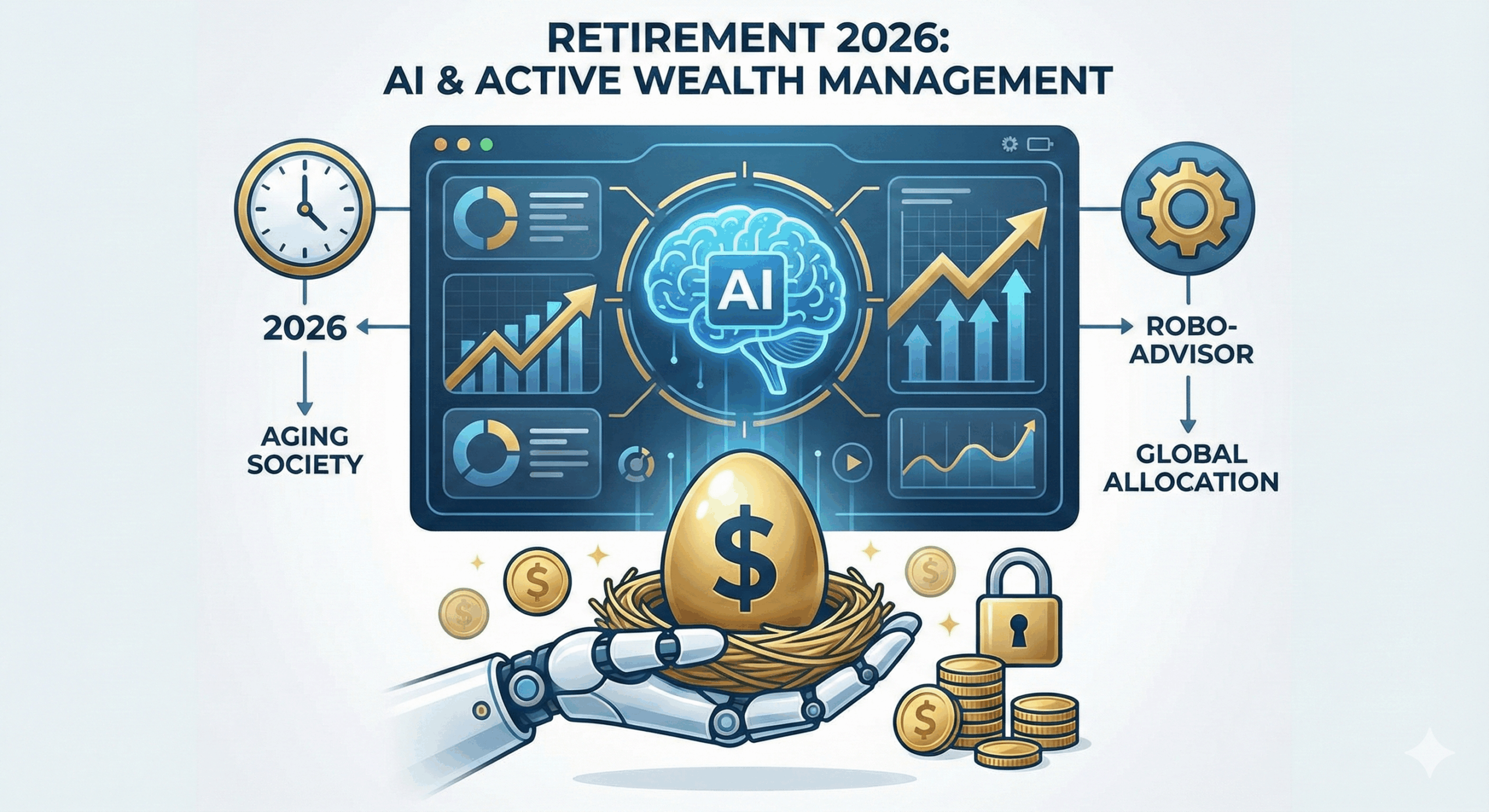
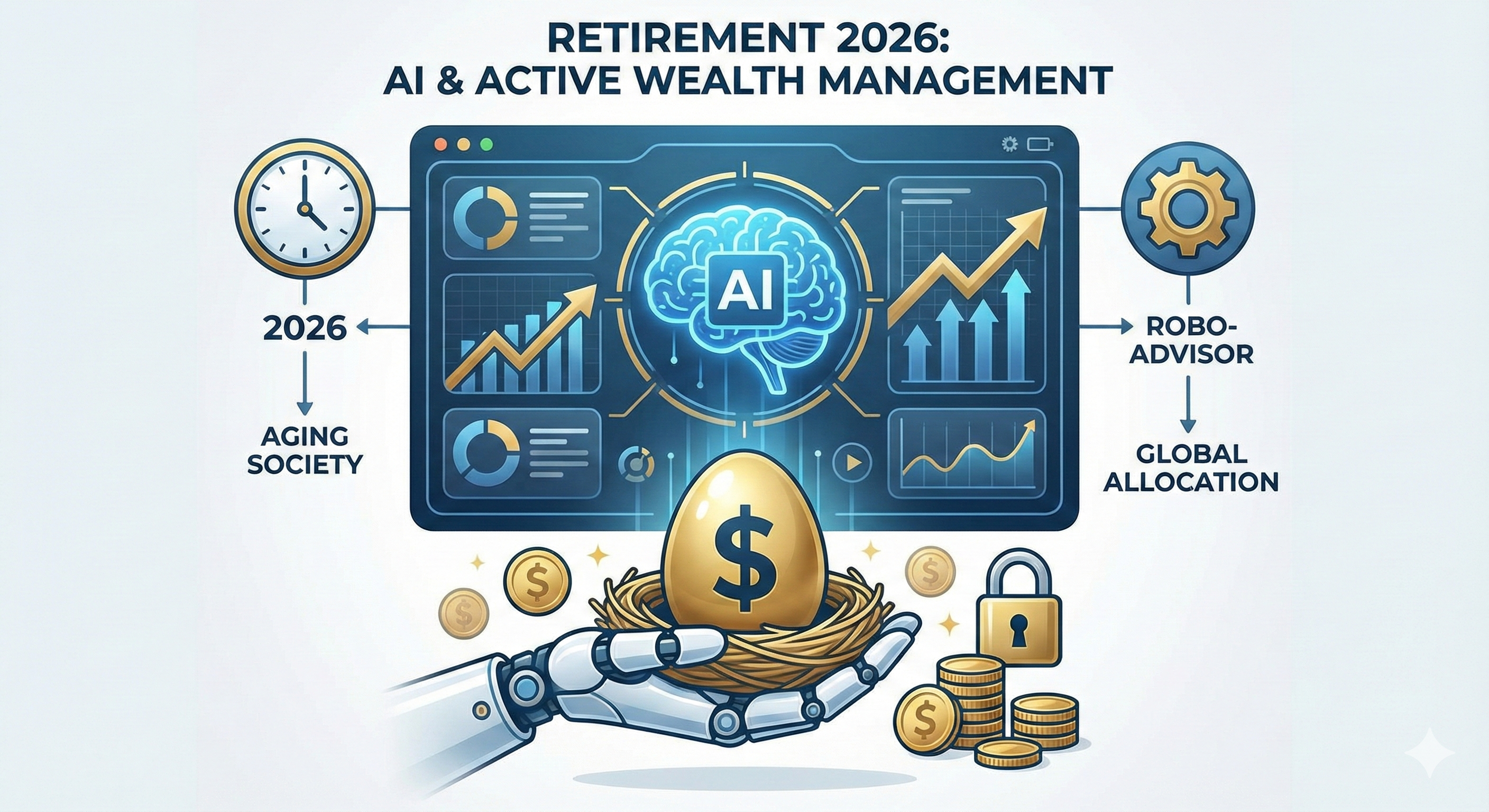
Robo-advisor (RA) discretion: Popularization of AI-based automatic rebalancing and personalized management
Activation of platform transfer: One-click ‘retirement pension transfer’ through open banking/my data
Hyper-personalized service: Provides AI coaching based on specific goals through big data analysis
Article image 1
The Korean retirement pension market has now passed the era of ‘accumulation’ and entered the era of ‘operation’ and ‘withdrawal’. The size of reserves, which was 382 trillion won in 2023, is expected to reach 500 trillion won in 2026. However, the proportion of products with guaranteed principal and interest, which still remains in the 1-2% range, is the biggest risk in our retirement. Today, in preparation for 2026, I would like to analyze the opportunities and threats in the retirement pension market from a macroscopic perspective (PEST) and share without hesitation the flow of change that I personally felt in the field.
🏛️ 1. Political (Political·Regulatory Environment): “There is no sleeping money” Forced increase in rate of return
The first aspect of government policy is clear. **”We will not leave people’s retirement funds sitting in bank deposits”**. This policy drive is expected to become even stronger in 2026.
✅ Upgrading and strengthening the evaluation of default options (pre-designated management system)
Status: The default option introduced in 2023 will reach maturity in 2026.
2026 Forecast: Beyond the stage of simply introducing a system, the ‘profit rate disclosure’ and ‘product withdrawal’ systems will work strongly. Default option products with low returns are likely to have their approval revoked or be banned from sale.
👨💼 Consultant’s Insight: “What I felt during a recent meeting with people in charge of financial companies is that the pressure from the financial authorities is beyond imagination. In the past, only ‘stability’ had to be emphasized, but now there is an atmosphere in which managers who cannot make ‘profits above the inflation rate’ are virtually kicked out of the market. Even corporate human resources (HR) managers are asking ‘yield defense strategy’ as the number one question when selecting managers.”
✅ Full establishment of the ‘retirement pension in-kind transfer system’
Contents: The physical transfer (moving to another financial company without canceling existing products) system, which was implemented at the end of 2024, will be fully established in 2026.
Implications: Barriers between financial companies are breaking down. ‘Money Move’, where funds flow out to places where the rate of return is even 0.1% higher and the fees are lower, has become routine.
📉 2. Economy (economic environment): Fear of interest rate cuts and ‘real rates of return’
It is highly likely that the economic situation in 2026 will see a break in the high interest rate trend and a return to medium or low interest rates. This is fatal to products with guaranteed principal and interest.
✅ Declining interest rate cycle and decreasing attractiveness of bonds/deposits
Analysis: If the deposit interest rate falls from the 3-4% range to the 2% range, the rate of return on retirement pensions cannot keep up with the inflation rate, causing the real value to fall.
Response: The transition from fixed interest rate (DB) to performance dividend type (DC, IRP) is bound to accelerate.
✅ Global Asset Allocation becomes essential
Trend: Domestic stock market (KOSPI) breaking out of box range Due to uncertainty, investment in overseas ETFs such as the US S&P 500, NASDAQ, and Indian markets become the core of retirement pension portfolios.
👨💼 Consultant’s Insight: “Looking at actual consulting cases, the IRP account portfolios of office workers in their 30s and 40s are changing rapidly. Customers who had 70% of their deposits just two years ago are currently rebalancing their share of US tech ETFs and TDFs (Target Date Funds) to over 60%. The perception that ‘the director has no answers’ has penetrated deep into the pension market.”
👥 3. Social (social and cultural environment): The birth of ‘pension ants’ and hyper-aging
The social atmosphere has changed 180 degrees from ‘passive subscription’ to ‘active investment’.
✅ Entry into a super-aging society (population over 65 years old increases by 20%) and emergence of withdrawal strategies (Decumulation)
Change: 2025-2026 is the first year that Korea enters a super-aging society. Now, rather than ‘how can I collect it?’, **’how can I subtract it and spend it?’** is more important to look at.
Product: The TIF (Target Income Fund) market, which manages assets after retirement and withdraws them like a salary, will grow explosively.
✅ Increase in ‘smart pensioners’ with high financial literacy
Phenomenon: Individuals who learn through YouTube and investment communities have become more knowledgeable than financial company employees.
👨💼 Consultant’s Insight: “When conducting corporate retirement pension training in the field, there are many times when you are surprised. In the past, employees who used to ask, ‘Which is the safest?’ are now asking sharp questions such as ‘How much is the total compensation (TER) of this product?’ and ‘Is it a currency hedging (H) type or an exposure type (UH)?’ ** The ‘good times’ when financial companies only collected fees are over.”
🤖 4. Technological (technological environment): My retirement assets driven by AI
Technology is evolving to solve complex pension investments with ‘one click’.
✅ Popularization of robo-advisor (RA) discretionary services
Innovation: The ‘Retirement Pension Robo-Advisor Delegation’ service, which went through the sandbox in 2024-2025, will become a universal service in 2026.
Function: AI analyzes market conditions in real time, adjusts stock/bond proportions, and even performs rebalancing automatically.
Outlook: AI operation will become a necessity, not an option, for office workers who have difficulty investing time and effort.
✅ UI/UX is competitiveness
Platform competition: An intuitive UI that allows you to view your pension assets at a glance, simulate expected receipts, and change products on the fly in a mobile app determines the survival of a financial company.
💡 [Conclusion and Recommendations] In 2026, only those who are prepared will smile
The keywords for the retirement pension market in 2026 are **’Active Movement’** and **’AI-based management’**. The key strategies I recommend as an industry expert can be seen as follows:
Individual investor: If your retirement pension account is still 100% in the ‘principal and interest guaranteed type’, start asset allocation using TDF or ETF right now. Prices won’t wait for your retirement savings.
Corporate managers: Rather than insisting on only the defined benefit plan (DB), a systematic financial education program should be introduced so that executives and employees can increase their own returns by switching to the DC plan.
Financial companies: You must keep in mind that the only way to retain customers is not ‘friendly counter staff’, but ‘overwhelming returns’ and ‘convenient AI platform’**.
“Pension is not a story of the distant future. Only those who read and prepare for the changes of 2026 in advance can enjoy a comfortable retirement.”
Good article to read together
[2026 Industry Outlook] Future of Cancer Insurance Comparison Platform Market
2024-2025 E-Commerce Industry Outlook
[HRD Trend] HRD Consulting Industry PEST Analysis: Beyond Education to Tech Solutions
🏛️ How to survive in Jeju’s tourism industry in 2026
Related Reading
Continue with these related Thinknote English articles in the Korea Policy & Economy cluster.
This article explains a Korean policy, economy, finance, election, media, job-market, or industry trend for readers who need broader context on Korea.
How should I use this guide?
Use it as contextual analysis rather than personal financial, legal, or administrative advice. Check official notices and current data before making decisions.
Image source: Captured images used in this article are stills from the original YouTube video. They are used for review, commentary, and educational explanation, and copyright remains with the original rights holders and the channel.
If you are looking for how to apply for high oil price subsidies, it is best to check the official name first. The name of the system used in the government’s official guidance is High Oil Price Damage Subsidy. When searching, the expressions high oil price livelihood support fund, high oil price support fund, and high oil price damage support fund are used together, but actual application and use must follow the official guidance standards.
This article is based on official guidance from the Ministry of the Interior and Safety and focuses on who can receive it, when to apply, where to apply, and where it can be used. In particular, it is easy to miss the application period and expiration date. Before applying, please check your eligibility and payment method at the official app, community center, bank branch, or call center.
Policy Information Confirmation Guide This article was written based on the official guidance confirmed on May 20, 2026. Policy details are subject to change. Before actually applying, check the latest information at the official Ministry of the Interior and Safety information, credit card company app, local love gift certificate app, community center, bank branch, or dedicated call center.
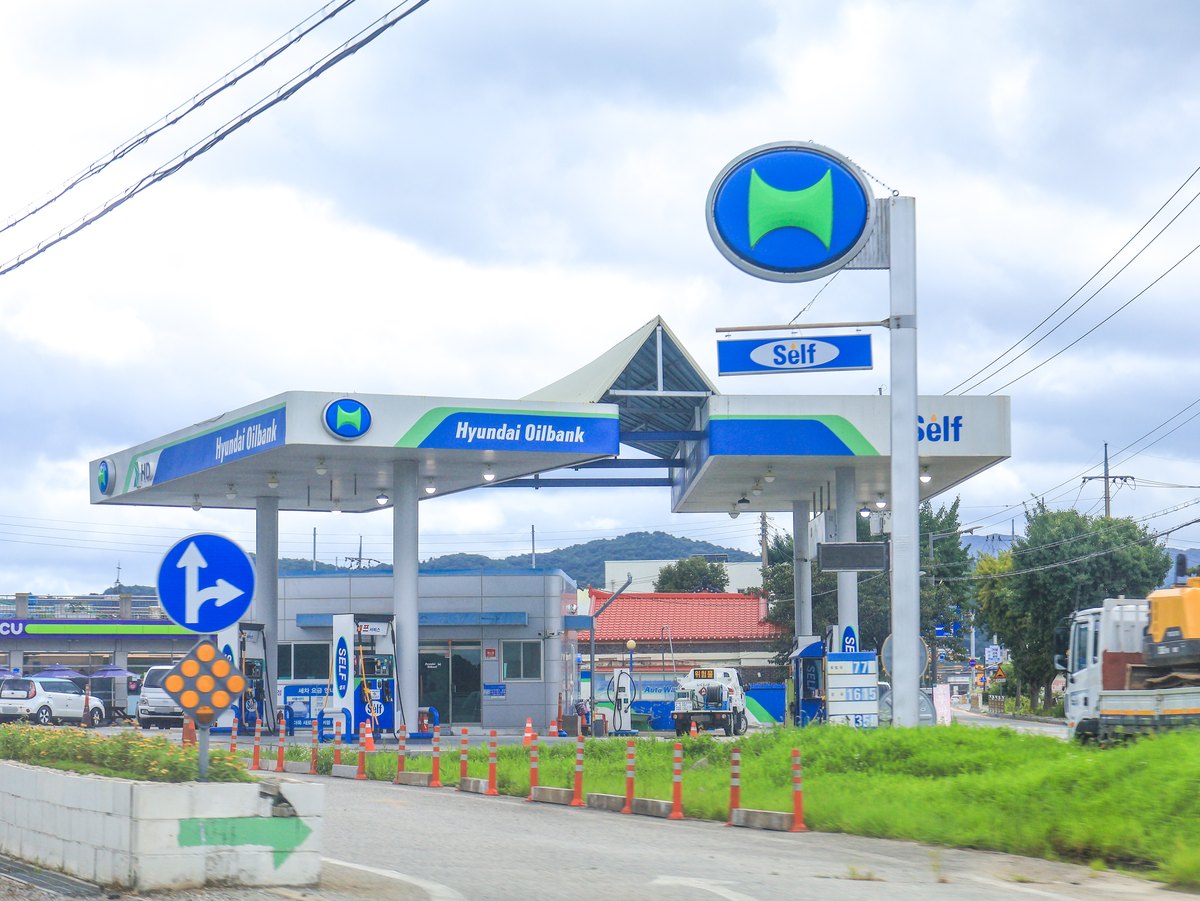
Image of a domestic gas station to provide guidance on how to apply for subsidies for high oil prices in Korea
Key summary of high oil price subsidies
Confirmation items Official information standard Key contents Official system name High oil price damage support fund Search expression High oil price livelihood support fund, high oil price support fund, High oil price damage support fund Support targets Official guide standard 70% of citizens Support amount KRW 100,000 to 600,000 per person, differential application method by target and region Online or offline application Online application Card company app/homepage, local love gift certificate App/homepage offline application Community center, bank branch Payment method Local love gift certificate, credit/check card, Choose between prepaid cards. Expiration date: Until August 31, 2026. Contact: High oil price damage relief fund dedicated call center 1670-2626
The first thing to look at is simple. Confirm the target → Confirm the application period → Select payment method → Confirm where it will be used. You should not judge your amount just by looking at the expression “up to 600,000 won.” The amount of support varies depending on target category and region.
index
What is high oil price damage subsidy?
Eligibility for application for high oil price subsidies
How much is the support amount?
When is the application period?
How to apply for high oil price subsidies
How to choose a payment method
Where high oil price subsidies are used
Pre-Application Checklist
Frequently Asked Questions
Beware of smishing and fake application sites
Official References
What is high oil price damage subsidy?
The high oil price damage subsidy is a policy subsidy introduced to reduce the burden of living caused by high oil prices, high exchange rates, and high inflation. The official guidance from the Ministry of Public Administration and Security uses the name high oil price damage support fund. “High oil price livelihood support fund,” which readers often search for, can be understood as an expression to find this system.
This system is not a way for cash to be deposited freely. Payment is made through designated payment methods such as local love gift certificates, credit/debit cards, and prepaid cards. There are also criteria for available regions and industries.
Distinguish it from other oil price support systems
There are several systems with similar names. For example, the targets and application routes for the truck fuel price subsidy and the agricultural duty-free oil price-linked subsidy are different. This article explains the high oil price damage relief funds for the general public.
Category Check whether this article is subject to explanation Points Subsidy for damage to high oil prices Yes Based on official guidance from the Ministry of the Interior and Safety Fuel price subsidy for trucks No Separate system related to transportation business operators and vehicles Oil price-linked subsidies for agricultural duty-free oil No Separate system related to agricultural businesses and duty-free oil
Eligibility for application for high oil price subsidies
Based on official information, 70% of the population is eligible to apply for high oil price subsidies. One thing to be careful of is that it is difficult for an individual to arbitrarily calculate and determine income and qualifications. It is safe to check whether you are actually eligible through official application channels such as credit card company apps, local love gift certificate apps, community centers, and bank branches.
Target classification
The main divisions that can be found in the official guide are as follows.
Basic beneficiary
Second lower class, single parent family
Those in the bottom 70% of income bracket
Preferential support by region
Principles for applying for adults and minors
Category Application/receipt principle Application/payment for each individual adult Minor householder application/receipt principle Check at the application office whether the minor householder can apply directly
Adults can understand by applying on their own. In principle, for minors, the head of the household must apply and receive it. One thing to be careful of is that household composition or whether a representative can apply may vary depending on the region and place of application.
How much is the support amount?
The amount of high oil price subsidies varies depending on the target category and region. You should not think that everyone receives the same amount just by looking at the phrase “up to 600,000 won.”
Category Metropolitan area Non-metropolitan area Remarks Basic recipient 550,000 won 600,000 won Official guide standard Second highest income/single parent 450,000 won 500,000 won Official guide standard Bottom 70% income 100,000 won 150,000 won Official guide standard Area with declining population Preferential support area 200,000 won 200,000 won Separate preference Special support area 250,000 won 250,000 won Separate preference
For example, basic beneficiaries are advised to receive 550,000 won in metropolitan areas and 600,000 won in non-metropolitan areas. On the other hand, those in the bottom 70% income bracket are advised to receive 100,000 won in metropolitan areas and 150,000 won in non-metropolitan areas. Please check your amount on the application screen or through the official consultation channel.
When is the application period?
The application period for high oil price subsidies varies depending on the target category. In particular, a distinction must be made between the first application for basic and second-level applications and the second application for 70% of the population.
Category Application/Payment Period Remarks Basic/Next-highest 1st round 2026.4.27.(Mon) ~ 2026.5.8.(Fri) Priority payment to vulnerable groups Basic/Next-highest 2nd 2026.5.18.(Mon) ~ 2026.7.3.(Fri) 1st Non-applicant, etc. Need to be confirmed 70% of citizens 2nd Application period for general applicants: 2026.5.18. (Mon) ~ 2026.7.3. (Fri)
If you have already applied and received payment in the first period, you are informed that duplicate applications and payments cannot be made in the second period. If you are confused about which period you are eligible for, check first whether you are eligible on the application screen.
Check the day schedule for the first week of application
There may be a lot of connections and visits in the early stages of application. In some guides, a day system is based on the last digit of the year of birth. Check the information on the card company app, local love gift certificate app, community center, and bank branch before applying.
How to apply for high oil price subsidies
Image of a domestic card terminal to provide information on payment methods for Korea’s high oil price subsidies.
Application methods for high oil price subsidies are largely divided into online and offline. If you are familiar with using the smartphone app, applying online is easy. If you need to check in person or have difficulty using the app, you can use a community center or bank branch.
How to apply online
Online application can be made through the following route:
Card company app or card company website
Local Love Gift Certificate app or website
Call center/ARS information for some application channels
The general flow can be seen like this.
Access card company app or local love gift certificate app
Identity verification
Check whether you are eligible for oil price damage subsidies
Select payment method
Check application details
Application completed
Confirm payment or recharge
Menu names may vary depending on the credit card company. Check out “High Oil Price Damage Subsidy,” “High Oil Price Subsidy,” and “People’s Livelihood Support Fund” in the search box. It’s safest to look for it within the official app.
How to apply offline
Offline applications can be made at the following locations:
Community center with jurisdiction over address
Affiliated Bank Branch
Please have your ID ready before your visit. It is a good idea to check in advance the operating hours, whether the day of the week system applies, and whether proxy applications are possible. The counter may be crowded, especially on closing days, so please allow plenty of time.
How to choose a payment method
High oil price damage subsidies are received by selecting a payment method. The official guide informs you that you can choose between local love gift certificates, credit/check cards, and prepaid cards.
Advantages of payment methods Points to check Local Love Gift Certificates Good to use at local merchants Need to check available merchants Credit/debit cards Can be used with cards you normally use Need to check if card company can apply Useful if using prepaid card app is difficult Need to check pickup location and stores that can be used
Which method is best depends on your lifestyle. If you use cards a lot on a regular basis, credit or check cards may be convenient. If you frequently use local stores, a local love gift certificate is a good choice.
Where high oil price subsidies are used
An image of a domestic traditional market that can be seen as an example of how Korea’s high oil price subsidy funds can be used
The confirmation method for the use of high oil price livelihood support funds is slightly different depending on the payment method. This is a structure commonly used in the jurisdiction of the applicant’s address. Check the standards for special/metropolitan cities and city/county levels.
Basic usage criteria
Item Content Expiration date Until August 31, 2026 (Monday) Area of use Applicant’s jurisdiction Special/metropolitan city and city/county Local Love Gift Certificate Local Love Gift Certificate Credit, check, and prepaid cards cannot be used at affiliated stores Focused on small business stores with sales of KRW 3 billion or less, excluding businesses
Where use may be restricted
The official guidance explains that industries that cannot be used, such as entertainment and gambling industries, are excluded. In general, department stores, hypermarkets, corporate supermarkets, and online shopping malls may be restricted. One thing to note is that detailed standards may vary depending on region and payment method.
Before use, check whether the merchant is affiliated with the card company app or local love gift certificate app. You can also receive guidance on how to use it at community centers or call centers.
Be sure to check the expiration date
The expiration date is until August 31, 2026. After the period expires, the remaining amount may not be available or refunds may be limited. If you have received a subsidy, it is recommended that you use it within the deadline according to your living expenses spending plan.
Pre-Application Checklist
Please check the items below in order before applying.
[ ] It was confirmed that the official name of the system is High Oil Price Damage Support Fund.
[ ] I checked whether I was a basic recipient, second-lowest income/single parent, or bottom 70% of income earner.
[ ] I confirmed the application period.
[ ] Checked whether the day system applies in the first week of application.
[ ] I decided whether to apply online or offline.
[ ] The payment method was decided among cards, local love gift certificates, and prepaid cards.
[ ] We confirmed the area and place of use.
[ ] It was confirmed that the expiration date is August 31, 2026.
[ ] Instead of using a text link, I accessed the official app or official website directly.
[ ] If you have any questions, please contact the dedicated call center at 1670-2626 or the community center.
Frequently Asked Questions
Will all citizens receive subsidies for high oil prices?
no. Based on official guidance, 70% of the population is eligible. Please check whether you are actually eligible through official channels such as the application screen or community center.
Is the official name of the high oil price livelihood support fund?
The name of the system in the government’s official information is High Oil Price Damage Subsidy. One thing to watch out for is that in searches, the expressions “high oil price support fund” and “high oil price support fund” are also used.
If I get it in the first round, can I also get it in the second round?
According to the official information, if you applied and received payment in the first period, you cannot apply or receive payment twice in the second period.
Where do I apply online?
You can apply through the card company app/homepage or the Local Love Gift Certificate app/homepage. Some channels also provide call center or ARS guidance.
Can I apply at a community center?
yes. Offline applications can be made at community centers and bank branches. Please check operating hours and required documents before visiting.
Is the subsidy paid in cash?
Based on the official guide, you can choose between local love gift certificates, credit/check cards, and prepaid cards. It should not be understood as a regular cash deposit.
Where can I use it?
It can be used mainly at local love gift certificate affiliated stores in the jurisdiction of the address or small business stores with sales of 3 billion won or less, excluding businesses where use is not allowed. Please check the app or official instructions for actual availability.
When is the expiration date?
According to official information, the expiration date is August 31, 2026.
Beware of smishing and fake application sites
During the subsidy application period, the number of impersonated text messages and fake application sites may increase. Do not immediately click on the link included in the text. It is safer to access directly through trusted channels such as the credit card company’s official app, local love gift certificate official app, official information from the Ministry of Public Administration and Security, and community centers.
We recommend that you avoid the following actions:
Click on text link from unknown source
Accessing unofficial sites that request personal and account information
Install the Local Love Gift Certificate app from a location other than the App Store
The act of providing an authentication number or password over the phone
Responding to SNS messages impersonating official organizations
If you receive any suspicious information during the application process, please contact the dedicated call center or community center first.
finish
The method of applying for high oil price subsidies may seem complicated, but it is not difficult if you break down the steps. First, check if you are eligible and check the application period. Then, select the online or offline application route and confirm the payment method and usage.
The first thing to look at is using the official route. Please apply at card company apps, local love gift certificate apps, community centers, bank branches, etc. Before use, be sure to check with the affiliated store and the expiration date.
Policy-related articles can also be found in the policy information category.
Official References
Ministry of the Interior and Safety — Official information on high oil price damage subsidies
Busan Metropolitan City — Example of high oil price damage subsidy information
Kookmin Shinmungo — Link to objection information
image source
Wikimedia Commons — Hyundai Oilbank Songak Gas Station 20240729.jpg , CC0
Wikimedia Commons — YeongchunBus-Cardreader.jpg , Public Domain
Wikimedia Commons — Gukje Market Busan South Korea 01.jpg , CC0
Good article to read together
Summary of festivals in Korea in May 2026: Schedule by region and theme
Top 10 Hydrangea Spots in Korea, from flowering time to parking check
Top 10 Korea travel destination recommendations for June, from hydrangeas to festivals, all in one place
Summary of festivals in Korea in June 2026: Schedule by region and theme
Related Reading
Continue with these related Thinknote English articles in the Korea Policy & Economy cluster.
This article explains a Korean policy, economy, finance, election, media, job-market, or industry trend for readers who need broader context on Korea.
How should I use this guide?
Use it as contextual analysis rather than personal financial, legal, or administrative advice. Check official notices and current data before making decisions.
This is an article about the same Samsung Electronics union, but in some media it looks like Samsung Electronics is trying to talk, while in other media it looks like the union is rejecting the mediation plan. Facts are one thing, but your title and word choice make a different first impression on the reader.
This article is not intended to judge whether the labor-management conflict itself at Samsung Electronics is right or wrong. The first thing to look at is the Samsung Electronics union report frame. Let's compare what titles and keywords Chosun Biz, Dong-A Ilbo, Yonhap News, Kyunghyang Shinmun, and Korea Economy reports presented on the same issue.
The positive and negative nuances mentioned in this article do not refer to the overall tendency of the media company, but rather the impression that the title of the article and the first part of the text may give to readers.
1. Same incident, different first impressions
The first aspect of the labor-management conflict at Samsung Electronics is the institutionalization and payment standards for performance bonuses. The union requested the institutionalization of performance bonus resources and the abolition of the upper limit, and Samsung Electronics management was reported to be maintaining the existing performance bonus operation principles but suggesting the possibility of additional compensation. The Central Labor Relations Commission requested the resumption of follow-up mediation, and Samsung Electronics also proposed additional talks to the union.
However, the titles of each media company create slightly different impressions.
Samsung Electronics is expressed as ‘let’s talk’, sending official documents, and suggesting further dialogue.
The union is associated with statements such as “there is no reason for dialogue,” “rejecting the mediation plan,” and “forcing a strike.”
The Central Labor Relations Commission appears as a mediator requesting resumption of negotiations and substantive negotiations.
This difference is the sidewalk frame.
2. Analysis criteria: title, verb, keyword, information placement
When looking at the nuances of an article, it is good to check four things.
1. The reader's perspective changes depending on who the subject of the title is: Samsung Electronics, the labor union, or the government and the Central Labor Relations Commission.
2. Key verbs such as proposed, requested, refused, and forced something all have different emotional values.
3. To whom are negative keywords attached? If refusal, force, confrontation, and impossible are repeatedly attached to the union, the union appears to be hard-line.
4. Where are counterarguments and backgrounds placed? The reader's first impression varies depending on which position appears first in the text.
Let’s look at the reports by media companies based on this standard.
3. Chosun Biz: Samsung Electronics is a “proponent of dialogue,” and the union is a “conditional rejecter.”
Article link: Chosun Biz article
Representative title: Samsung Electronics “Let’s talk directly”… Send an official letter to the union
Nuance Keywords: Let’s talk directly, send an official document, no reason for conversation, institutionalization of performance bonuses
The central subject of the Chosun Biz title is Samsung Electronics. Samsung Electronics appears as the entity that proposed “let’s talk directly.” Just looking at this title, it looks like Samsung Electronics is moving to solve the problem.
On the other hand, the union's position is presented in the text as a conditional rejection: “There is no reason for dialogue unless performance-based pay is institutionalized and made transparent.” In this structure, it seems as if Samsung Electronics is opening the door to dialogue and the union is not responding by putting forward conditions.
In other words, the Chosun Biz report places Samsung Electronics' willingness to negotiate at the forefront while making the union's position appear to be presenting strong conditions.
4. Dong-A Ilbo: The union criticism frame created by “rejecting the arbitration plan”
Article link: Donga Ilbo article
Representative title: Samsung union rejects ‘12% operating profit’ arbitration proposal
Nuance Keywords: Rejecting arbitration proposal, maintaining 15% operating profit, going ahead with strike, unprecedented in history
The word that feels most strongly in the Dong-A Ilbo report is rejected. In particular, we need to look more closely at the expression “arbitration plan.” It gives the impression that they did not simply reject the company's proposal, but did not even accept the compromise proposed by the government or arbitration organization.
Additionally, expressions such as maintaining 15% operating profit, going on strike, and unprecedented semiconductor strike make it seem like the union is focusing on meeting demands rather than negotiation. In this case, readers may naturally get the impression, “Aren’t the union’s demands excessive?”
The Dong-A Ilbo report is read as a frame that highlights the union's intransigence more strongly than Samsung Electronics' management.
5. Yonhap News: The format is balanced, the title structure is confrontational.
Article link: Yonhap News article
Representative title: Government, Samsung Electronics, proposal for additional dialogue… Union: “There is no reason for dialogue”
Nuance Keywords: additional conversation suggestion, no reason for conversation, confrontation, parallel line
As a news agency, Yonhap News conveys both sides' positions relatively in parallel. The government, Samsung Electronics, and labor unions also appear in the title.
However, if you look at the title structure alone, the impression may be one-sided. In the first part, there is a proposal for additional dialogue between the government and Samsung Electronics, and in the latter part, the union says, “There is no reason for dialogue.” This arrangement gives the impression that although the government and Samsung Electronics have offered talks, the union is being shut out.
So, the Yonhap News report is formally balanced, but just looking at the placement of the verbs in the title, it can be read as one in which the union maintains a confrontational structure.
6. Kyunghyang Shinmun: Focus on resumption of negotiations and industrial impact rather than criticism of union
Article link: Kyunghyang Shinmun article
Representative title: [Breaking News] Central Labor Relations Commission requests Samsung Electronics labor and management to resume negotiations on the 16th
The central subject of the Kyunghyang Shinmun title is neither Samsung Electronics nor the labor union. This is the Central Labor Committee. The title itself focuses on calls to resume negotiations rather than criticism of specific parties.
The text can also be seen as explaining why the Central Labor Relations Commission requested post-adjustment again and what kind of ripple effect it could have on the entire industry if the Samsung Electronics labor-management conflict is prolonged.
Rather than directly criticizing the union, this report emphasizes the situation in which negotiations have stalled and its social and economic impact. So it gives a relatively more neutral impression than other articles.
7. Korean Economy: Burden of institutionalizing performance bonuses from an economic magazine perspective
Article link: Korea Economy article
Representative title: Samsung Electronics “Let’s talk”… Union: “It is impossible without performance-based pay systemization”
Nuance Keywords: Let’s talk, institutionalization of performance bonus, transparency, impossible
The Korean Economic title juxtaposes Samsung Electronics and labor unions. Samsung Electronics is expressed in terms of “let’s talk,” and the union is expressed in terms of putting forward the condition that it cannot be done without the institutionalization of performance bonuses.
From a business magazine's perspective, institutionalization of performance-based pay, the possibility of strikes, and the burden of corporate management naturally become important issues. So, even if the background to the union's demands is explained, the reader is also reminded of the burden on the operational side of the company.
The Korean economic report is close to a frame that reads Samsung Electronics as a requester for dialogue and the labor union as a conditional rejecter.
8. Frame comparison table by media company
Media company's title's central subject Impression attached to the union Impression attached to Samsung Electronics and the government Key keywords Chosun Biz Samsung Electronics Conditional rejection Proposal for dialogue Direct dialogue, official document, no reason for dialogue Dong-A Ilbo Union hard-line and non-compromising Possibility of accepting mediation and compromise proposal Rejects arbitration plan, sticks to it, goes ahead with strike Yonhap News Government-Samsung Electronics vs. labor union Proposal for additional dialogue Proposal for dialogue, no reason for dialogue, parallel line Kyunghyang Shinmun Central Labor Relations Commission Relatively neutral mediation necessary Resumption of negotiations, substantive negotiations, industrial impact Korea Economy Samsung Electronics vs. Union's conditional rejection Request for dialogue Let's talk, impossible without institutionalization
Looking at the table, the differences are clearer. In many articles, Samsung Electronics and the government are linked to dialogue, proposals, and arbitration. On the other hand, unions are often associated with refusal, impossibility, and enforcement.
9. Positive/negative keyword mapping
Expression Mainly connected target Impression that can be given to the reader Let's talk Willingness to resolve the Samsung Electronics issue Proposal for further dialogue Government-Samsung Electronics negotiation efforts Request for resumption of negotiations Role as mediator of the Central Labor Relations Commission No reason for dialogue Union's hard-line attitude Rejecting mediation proposals Union's intransigent attitude Going on strike Expansion of industrial risks of union Impossible without institutionalization of performance bonus Union's conditional negotiation attitude
What is important here is who the word is attached to rather than the word itself. If dialogue is attached to Samsung Electronics and refusal is attached to the union, readers are naturally more likely to perceive Samsung Electronics as the negotiating party and the union as the opposing party.
10. Readers should read the news with this in mind
When reading the Samsung Electronics union report frame, it is necessary to ask the following questions.
Who is the subject of the title?
What is the strongest verb? Is it an offer, a rejection, or a push?
On which side are negative words repeatedly attached?
Is the rebuttal included in the title or placed at the end of the main text?
Can you tell whether the article conveys facts or is an expression mixed with interpretation?
News conveys facts, but it also conveys a framework for interpreting those facts. So, rather than drawing conclusions by looking at just one article, you should get into the habit of comparing titles and keywords from different media outlets.
11. Conclusion: News conveys not only facts but also frames
Reports on the Samsung Electronics labor-management conflict were generally structured so that Samsung Electronics and the government were read as proponents of dialogue, and the labor union was read as a proponent of hard-line conditions or a rejecter. In particular, the contrast between Let's Talk and I Rejected makes it easy for readers to perceive Samsung Electronics and the government as negotiating entities and the union as non-compromising entities.
Of course, this does not mean that union demands are necessarily unreasonable. On the other hand, this does not mean that Samsung Electronics management is always rational. The first part of this article is to check how the article title and keywords affect the reader's judgment.
Comparing multiple articles covering the same event makes the news appear more three-dimensional. In particular, when it comes to issues with complex interests such as economic and labor issues, we must read not only the facts but also the frame.
Yonhap News, government, Samsung Electronics propose additional dialogue… Union: “There is no reason for dialogue”
Kyunghyang Shinmun, [Breaking News] Central Labor Relations Commission requests Samsung Electronics labor and management to resume negotiations on the 16th
Korea Economy, Samsung Electronics “Let’s talk”… Union: “It is impossible without performance-based pay systemization”
Good article to read together
[HRD Trend] HRD Consulting Industry PEST Analysis: Beyond Education to Tech Solutions
2024-2025 E-Commerce Industry Outlook
🚀 [2026 Forecast] In the era of 400 trillion won in retirement pension, who will win the ‘return war’?
[2026 Industry Outlook] Future of Cancer Insurance Comparison Platform Market
Related Reading
Continue with these related Thinknote English articles in the Korea Policy & Economy cluster.
This article explains a Korean policy, economy, finance, election, media, job-market, or industry trend for readers who need broader context on Korea.
How should I use this guide?
Use it as contextual analysis rather than personal financial, legal, or administrative advice. Check official notices and current data before making decisions.
The June 2026 election cannot be viewed simply as a competition between political parties. Over the past five years, South Korea has experienced extensive changes in terms of economy, population, industry, political system, and social trust. Post-pandemic recovery, high inflation and interest rate burden, real estate and household debt have shaken Korean society. Low birth rates, aging populations, reorganization of the export industry, and political upheaval also occurred simultaneously.
In particular, the 9th National Simultaneous Local Election to be held on June 3, 2026 is a nationwide election to newly form local powers according to the official election schedule guided by the National Election Commission. Local elections may seem smaller than presidential or general elections, but policies that meet the actual lives of people are often implemented through local governments. Transportation, housing, welfare, education, regional development, licensing, youth policy, welfare for the elderly, and regional industrial policy are all connected to the capabilities of local administration.
So the key question in this election is not only “who will win?” The more important question is, “By what standards should the Republic of Korea be operated in the future?” This should not be a politics that makes conflicts bigger, but an election that confirms whether politics that transparently exposes and fairly adjusts conflicts is possible.
What has changed in Korea in the past five years?
To understand the changes over the past five years, we must first look at the economy and population structure together. Based on the World Bank’s published indicators, Korea’s real GDP growth rate was 2.314% in 2019. It fell to -0.7% in 2020, then rebounded to 4.613% in 2021, and reached 2.004% in 2024. Although we have escaped the shock of the pandemic, it is difficult to say that we have returned to a high growth phase.
The price trend was more direct to the public’s perception. According to the same World Bank indicator, Korea’s consumer price inflation rate was 0.383% in 2019. It rose to 5.09% in 2022 and hit 2.322% in 2024. Looking at the numbers alone, it may seem stable, but the already high cost of living and loan burden remain for a long time in the perceived economy of households.
Demographic change is also an important background for elections. Korea’s total fertility rate decreased from 0.918 in 2019 to 0.748 in 2024. The proportion of the population aged 65 or older increased from 15.063% in 2019 to 19.274% in 2024. If we look at the birth and population data from Statistics Korea and e-National Index together, the trend is clear. Low birth rate and aging are no longer a long-term outlook, but are now becoming core conditions for local administration.
The export-oriented economic structure is also important. Based on the World Bank, Korea’s export/GDP ratio increased from 37.041% in 2019 to 44.358% in 2024. Semiconductor and manufacturing competitiveness remain the core of the Korean economy. At the same time, it also means that we have become more sensitive to external economic conditions, the US-China conflict, supply chain, exchange rates, and competition for technological hegemony. The Bank of Korea’s economic outlook and the KDI’s economic outlook are also reference materials that show that the semiconductor economy, prices, interest rates, and external conditions must be checked together when looking at the 2026 economy.
In the end, the past five years in Korea were a time of both recovery and anxiety. Although there was a recovery on the surface, the reality felt by the people was more complex due to issues of prices, housing, loans, jobs, old age, and regional disparities.
How are political changes connected to people’s lives?
Political changes were also very significant. After the 2022 presidential election, Korean politics moved amid strong opposition between the ruling and opposition parties. The 2024 general election reaffirmed the power structure of the National Assembly, and subsequent clashes between the executive and legislative branches increased political fatigue.
In particular, the martial law, impeachment, and early presidential election phase that lasted from the end of 2024 to 2025 simultaneously revealed the institutional resilience and vulnerability of South Korean democracy. Reuters reported the dismissal of former President Yoon Seok-yeol and the early presidential election, and AP News described the 2025 early presidential election as an election that will end political upheaval. The BBC covered the background of the presidential election held on June 3 following the impeachment situation. The Guardian also reported the Constitutional Court’s impeachment and presidential removal as major international news.
The common interest of overseas media was in how Korean democracy functioned in a crisis rather than the victory or defeat of one person or one party. This will also be an important standard when looking at the 2026 elections. Democracy is not a system that only works in times of crisis; it must also create trust in daily administration, budget execution, and policy-making processes.
Tasks remain even after the new government is launched in 2025. The great tasks of restoration of democracy, national unity, economic recovery, foreign relations, and stabilization of people’s livelihoods were faced simultaneously. In this trend, the June 2026 election will be an extension of central politics and a practical evaluation of local administration.
What the public feels is not political news, but the economy.
Politics is consumed as news, but people evaluate politics based on the economy. What is more direct than political party approval ratings or politicians’ statements are shopping cart prices, loan interest, housing prices, rent instability, jobs, retirement preparation, and children’s education expenses.
This is why the perceived economy does not improve immediately even if economic indicators improve. Even if the growth rate recovers, if the recovery is centered on specific industries and large corporations, the temperature felt by regions and households may be different. Even if the unemployment rate is low, the public’s evaluation is inevitably cold. This is because the quality jobs that young people want, stable employment for the middle-aged and the elderly, and recovery in sales for the self-employed must all be achieved.
Korea Research’s economic security indicators, national indicator survey, and Gallup Korea’s regular surveys are useful references when checking these differences in perception. In particular, economic awareness, evaluation of government management, political party support, and outlook for living conditions should be viewed in combination with trends and questions rather than single figures. When citing opinion polls in election reports, you should not only look at which political party is ahead. We must read together to understand why the people are anxious and what issues they see as priorities.
Household debt and real estate issues have particularly great political significance. The interests of those who have a home and those who do not, those who have received a loan and those who have not, those in the metropolitan area and those in non-metropolitan areas, and the youth and the older generation are different. If one side is solely responsible for this problem, the conflict will increase but resolution will be further away.
Therefore, the economic agenda in the 2026 election should not be limited to the abstract slogan of “growth.” It must come down to items such as price stability, housing stability, household debt management, and local jobs. Youth opportunities, retirement safety net, and local industrial base are also standards that people actually feel.
Articles to read together
How to apply for high oil price subsidies: Target, period, and usage at a glance: You can refer to the connection between the burden of living expenses and policy support.
In the 2026 retirement pension era of 400 trillion won, who will be the winner in the competition for returns? Preparation for retirement and changes in the financial market are in line with the 2026 economic agenda.
Frame analysis of the Samsung Electronics union article: Between “Let’s talk” and “I refused”: You can see the connection between labor, corporate, and media frames and social conflict.
The brain science of hate: Why can’t we understand each other to the end? Problems of conflict and fair coordination can be viewed from a social psychological perspective.
The criteria for the 2026 elections should be transparency and fairness rather than conflict.
Conflict does not easily disappear in Korean politics. As society becomes more complex, interests become more diverse, and differences in generations, regions, classes, and ideologies continue to appear. The important thing is not to say that we will eliminate the conflict itself. It’s how you deal with conflict.
The criterion for the 2026 election should not be “who fights stronger.” “Who explains more transparently, adjusts fairly, and takes responsibility for the results” should be the standard.
Transparency begins with the funding and schedule of the pledge. Even if a pledge is packaged in good words, it is difficult to regard it as a responsible promise if the budget, legal basis, implementation agent, and priorities are unclear. Local government development projects, permits, welfare expansion, youth support, and transportation network expansion are all policies that require money and time. Voters must look not only at the direction of the pledge but also at its feasibility.
Fairness is more important when there are conflicts of interest. Regional development may be beneficial to some, but it may alienate or burden others. Expanding welfare is necessary, but fiscal sustainability must also be considered. Expanding opportunities for young people is important, but we should not ignore the anxieties of middle-aged and old age. Fair politics does not mean satisfying everyone, but politics that discloses and explains the standards for coordination.
The questions voters ask when looking at candidates and political parties are clear.
Are the financial resources and implementation schedule of the pledge disclosed?
Are regional development and budget commitments explained in terms of publicness rather than the interests of specific groups?
Is there a principle of coordination when the interests of young people, middle-aged people, old people, self-employed people, workers, and companies conflict?
Are there any plans to persuade and compromise within the system rather than defining the opposing side only as the enemy?
When talking about economic recovery, do we also address prices, housing, jobs, and regional disparities?
An election that fails to answer this question is likely to repeat conflict. Conversely, an election that answers this question could change South Korea’s political culture one step further.
Why this election is important for the future of Korea
The June 2026 election should not end with an election that confirms the anger of the past. This election should be one that answers the questions left by the changes of the past five years. Is the economy recovering? Are the people feeling the recovery? Is politics restoring institutional trust? Is the region preparing for the future? Are conflicts resolved fairly?
South Korea is already a country with a globally significant economy and democratic system. However, the more mature a country is, the more important it is to trust rather than speed. The direction of policy must be explained transparently. Budgets and authority must be administered fairly. When responsibility for results is clear, people can trust politics again.
This is why the 2026 election is important. This election is not just about which party wins or loses. We ask whether the future Republic of Korea will become a country that repeats conflicts or a country that adjusts issues based on transparency and fairness.
If voters look at the basis of policy rather than the color of the party, the criteria for elections change. If we look at feasibility over slogans, and accountability over anger, the 2026 elections could be a turning point that changes the next five years of our country.
Related Reading
Continue with these related Thinknote English articles in the Korea Policy & Economy cluster.
This article explains a Korean policy, economy, finance, election, media, job-market, or industry trend for readers who need broader context on Korea.
How should I use this guide?
Use it as contextual analysis rather than personal financial, legal, or administrative advice. Check official notices and current data before making decisions.
We analyzed the job market based on 7,426 job postings as of May 29, 2026. The recruitment market analysis is conducted based on advertisements registered on Employment24, and has the purpose of identifying the required manpower by region, the structure of the manpower desired by the company, and wages and employment types by occupation through the distribution of wages, companies/institutions, regions, and occupations in the announcements. In addition, we separately counted the announcements that confirmed the company type and industry classification and looked at which organizations and industries were showing recruitment demand.
Of the total number of 7,426 announcements, 7,159 were analyzed, excluding duplicate announcements, based on company/institution and occupation.
By region, Gyeonggi-do accounted for the largest share at 23.8% and Seoul Metropolitan City at 22.1%. This was followed by Busan Metropolitan City at 6.7%, Incheon Metropolitan City at 5.3%, Daegu Metropolitan City at 4.4%, Jeonbuk Special Self-Governing Province at 4.3%, and Gwangju Metropolitan City at 4.1%. Although the metropolitan area has a high proportion, when interpreting the job market, we need to look more at what occupations appear together in each region rather than just the total amount.
The most common wage type was unstated at 33.0%, followed by monthly wage at 21.6%, negotiated wage at 19.0%, hourly wage at 18.0%, annual salary at 8.1%, and daily wage at 0.3%. The average wage was 10,785 won per hour, 2.41 million won per month, and 35.23 million won per year. Since the wage units are different, it is appropriate to separate hourly wages, monthly wages, and annual salaries rather than grouping them into one overall average.
By occupation, production/manufacturing was the highest at 24.4%, followed by care/nursing at 15.7%, sales/service at 14.2%, office/administration at 10.7%, facility management/cleaning at 7.8%, driving/logistics at 5.7%, and medical/healthcare at 5.0%. Production/manufacturing, care/nursing, and sales/service formed the main occupation groups posted on this day.
Based on the type of company that can be confirmed in the original text, general companies were high at 39.5% and small and medium-sized companies were high at 22.7%. Public institutions and mid-sized companies were 1.7%, associations 1.3%, organizations 0.9%, and large corporations 0.7%, respectively. One thing to be careful about is that there are 30.6% of announcements where the company type cannot be clearly identified, so this item should be interpreted as a distribution within a verifiable range.
In the announcements confirming industry classification, the elderly care welfare facility operation industry was ranked at 7.8%, the home-visit welfare service provider industry at 5.0%, the sales industry at 2.3%, the social welfare consulting service provider industry at 2.1%, machinery, equipment, and automobiles at 1.6%, and the health industry at 1.5%. In the industrial distribution, industries related to care/welfare, sales/service, and manufacturing are also identified. The number of announcements with unconfirmed industry classification was 16.1%.
Major recruitment occupations by region
As a result of analyzing regional recruitment announcements in 17 cities and provinces, the proportion of announcements was highest in the following order: Gyeonggi-do at 24.8%, Seoul at 22.1%, Busan at 6.5%, Gyeongsangnam-do at 5.9%, Gyeongsangbuk-do at 5.3%, and Incheon at 5.0%. The metropolitan area has the largest hiring scale, accounting for approximately 51.9% of all vacancies, but the composition of occupations appears to be different. Gyeonggi-do can be seen as a region where production and manufacturing, care and nursing, and office and administration are relatively evenly distributed, so manufacturing-based jobs and demand for living services move together. On the other hand, Seoul Metropolitan City has the highest proportion of office work and administration at 39.9%, clearly showing the centrality of large city-type office work, management, and service jobs. Busan Metropolitan City and Daegu Metropolitan City are regions where care and nursing are ranked first, and aging and demand for daily care are strongly reflected in job postings. Gyeongsangnam-do, Gyeongsangbuk-do, Jeonbuk Special Self-Governing Province, Chungcheong region, and Gwangju Metropolitan City have a relatively strong manufacturing-based recruitment flow due to their high proportion of production and manufacturing. Although the total number of announcements in Sejong Special Self-Governing City and Jeju Special Self-Governing Province is small, production/manufacturing and sales/service are ranked first, respectively, confirming differences in regional industrial structures.
Looking at each region, hiring volume and job characteristics do not always move in the same direction. The metropolitan area, with its large number of postings, is the center of all employment opportunities, but Gyeonggi-do has both large production and manufacturing and care and nursing, and Seoul has a high concentration of office work and administration. In non-metropolitan areas, there are areas with a strong focus on care and nursing, such as Busan and Daegu, and areas with a clear focus on production and manufacturing, such as Gyeongnam, Gyeongbuk, Jeonbuk, North Chungcheong, South Chungcheong, and Gwangju. This shows that when job seekers choose a region, they should not just look at places with a large number of advertisements, but should also check whether their experience and qualifications match those of the occupations that appear repeatedly in the region.
Nationwide distribution by employment type
If you look at job postings by occupation based on the entire occupation group, you can see not only the wage type but also the region in which the occupation is most prevalent. Production/manufacturing was in the order of 495 cases in Gyeonggi-do, 190 cases in Gyeongsangnam-do, 148 cases in Gyeongsangbuk-do, 125 cases in Gwangju Metropolitan City, and 121 cases in Jeonbuk Special Self-Governing Province, with a large proportion of manufacturing-based regions in Gyeonggi-do, Yeongnam-do, and Chungcheong-do. Care and nursing appears strongly in the metropolitan and metropolitan areas, with 400 cases in Gyeonggi-do, 318 in Seoul, 122 in Busan, 122 in Daegu, and 113 in Incheon. The hourly and monthly salary notations are confirmed together. As for office work and administration, Seoul has the largest number of cases (655), highlighting the demand for office work and administration centered in Seoul.
By occupation, production and manufacturing are spread widely across Gyeonggi, Yeongnam, and Chungcheong regions, connecting them to the regional manufacturing base. Care and nursing are also strong in metropolitan areas such as Gyeonggi and Seoul, as well as Busan and Daegu, so it can be seen that aging and demand for daily care are reflected in the job market. The proportion of office work/administration and sales/service jobs in Seoul and Gyeonggi Province is high, confirming the concentration of office work and service jobs in big cities. On the other hand, relatively small occupations such as IT/development/data, construction/architecture/civil engineering, and education/childcare may appear to be more heavily concentrated in the top five regions. Therefore, at the actual application stage, it is necessary to check the number of announcements and wage types by region together.
Wage type by occupation
If you look at the wage type by occupation on the basis of the entire occupational group, the method of disclosing salary is clearly different for each occupation. Production and manufacturing make up a large axis with 38.9% of the negotiated type and 24.6% of the non-stated type, and there are many announcements that require confirmation of detailed salary conditions at the actual application stage. In care and nursing, hourly work is the highest (65.2%), showing a strong tendency to work by the hour, while in facility management and cleaning, the wage rate is high at 58.3%, showing a relatively clear fixed monthly work structure. Because office work and administration account for a high proportion of unstated positions (59.9%), the level of disclosure of conditions may vary greatly depending on the announcement.
Social insurance subscription according to wage type
As a result of re-parsing the collected original text, social insurance is not only viewed as “subscription specified/unspecified”, but it is also possible to distinguish and analyze the extent to which national pension, health insurance, employment insurance, and industrial accident insurance are each specified in the notice. In total, 4,469 cases of industrial accident insurance, 4,431 cases of employment insurance, 4,307 cases of health insurance, and 4,286 cases of national pension were confirmed, and the four types of insurance specifications were high in the monthly, hourly, and annual salary types with clear wage units. On the other hand, for the negotiated and unmarked types, not only salary conditions but also social insurance information tend to be less disclosed at the announcement stage, so you must check before applying.
This graph is not data that confirms actual subscription to the four major insurance policies, but rather shows how clearly each insurance item was disclosed in the original text of the announcement. Therefore, failure to specify does not mean non-enrollment, and in particular, for negotiated or unmarked announcements, it is safe to separately check whether national pension, health insurance, employment insurance, or industrial accident insurance is applied during the interview or application stage.
Industry and employment trends shown by job postings
The biggest axes in this job posting structure are production/manufacturing, care/nursing, and sales/service. Production and manufacturing appear repeatedly in several metropolitan areas, showing a wide distribution of manufacturing-based employment demand. Care and nursing have a strong hourly structure, showing that aging and demand for daily care are being reflected in the job market.
The distribution of companies and institutions is closer to the distribution of many companies and institutions rather than the concentration of specific top companies. Although the regional distribution has a large proportion in the metropolitan area, when reading employment trends, it is more meaningful to look at the composition of occupations and wage types within the region rather than the total amount in the metropolitan area.
The indication of subscription to the four major insurance policies according to wage type shows a difference in the transparency of employment conditions. While the monthly, hourly, and annual salary types have relatively clear social insurance information, the negotiated and unmarked types have limited information available at the announcement stage. Therefore, daily recruitment trends must look not only at the number of announcements, but also at wage units, company/institution dispersion, regional job composition, and the level of disclosure of information on the four major insurance policies.
Data basis: This report is based on a database collected on May 29, 2026. We simplified and analyzed the occupation, wage, and welfare items based on the original text of the announcement. Some items may be omitted or simplified depending on the original transcription.
Related Reading
Continue with these related Thinknote English articles in the Korea Policy & Economy cluster.
This article explains a Korean policy, economy, finance, election, media, job-market, or industry trend for readers who need broader context on Korea.
How should I use this guide?
Use it as contextual analysis rather than personal financial, legal, or administrative advice. Check official notices and current data before making decisions.
The 2026 driver’s license subsidy is not a “driver’s license subsidy paid to all citizens in one lump sum.” It is close to a regional project operated by various local governments to lower the burden of license acquisition costs for young people and those new to society.
So, you should not register for an academy based solely on the amount you see in the search bar. Residence, age, license acquisition date, employment status, income requirements, and application deadlines vary by region.
Illustration of a young man checking conditions and documents before applying for the 2026 driver’s license subsidy
Conclusion at a glance
Items to check Key contents Precautions before applying System nature Support project for young people and those new to society by local government Should not be viewed as a nationwide subsidy Support amount Varies depending on region, such as 100,000 won, 300,000 won, up to 500,000 won, etc. Maximum amount does not apply to all applicants Application method Online, town/myeon office, visit to administrative welfare center, etc. Reception location must be confirmed based on address Payment method Cash, local gift certificate, mobile gift certificate, etc. Usage and payment timing may vary Key documents It is important to have receipts in your name, such as a copy of your license, receipt, copy of bankbook, resident registration, income-related documents, etc.
Key criteria you need to know first
The driver’s license subsidy is not “money received by anyone who applies.” Most of these are youth support projects determined by the local government of residence. So, even for the same 2026 project, age, address, acquisition date, employment status, and income conditions will vary depending on the region.
The first thing to look at is not the amount of support, but your eligibility. Some regions only target those aged 18 to 20 who are new to the workforce. Some regions even include unemployed youth under 45 years of age. In other areas, there is a requirement for continuous residence of three years or more.
The second is the license acquisition date. Even for projects applied for in 2026, there are regions that recognize acquisitions made after 2025. On the other hand, there are some regions where only part of the acquisition is retroactive, with the principle being that it will be acquired in 2026.
The third is the actual cost. The expression of up to 500,000 won is only a limit. You need to look at the support ratio, actual cost recognition range, whether local gift certificates are provided, and changes in academy discounts to know how much you can actually save.
Comparison of official announcement standards by region
Uiryeong-gun: Up to 500,000 won, mobile Uiryeong Love gift certificate
Uiryeong-gun supports the cost of obtaining a driver’s license for young people whose address on their resident registration is Uiryeong-gun. Based on official guidance, this applies to young people who newly acquired a Class 1 Ordinary or Class 2 Ordinary license after July 1, 2025.
The scope of support includes writing, skills, road driving test fees, and academy tuition. The support amount is within 500,000 won, and the payment method is the Uiryeong Love Gift Certificate mobile type.
The application period is from January 12 to December 18, 2026. You can apply at the Uiryeong-gun Online Youth Center, the Youth Policy Team of the Extinction Crisis Response Promotion Team, or the town/myeon office with jurisdiction over your address.
Gimhae City: Unemployed youth, 60% of expenses, up to 500,000 won
Gimhae City targets unemployed youth aged 18 to 45. Applicants must have a resident registration address in Gimhae City from the date of license acquisition to the date of application.
The official guidance states that people who newly acquired a Class 1 Ordinary or Class 2 Ordinary license after January 1, 2025 are eligible. Your household income must be less than 180% of the standard median income, and you must be unemployed as of the date of application.
The support covers 60% of the costs required to obtain a driver’s license, including the driver’s license test and academy tuition. The limit is up to 500,000 won. You cannot apply while attending an academy or are scheduled to register. You must apply after newly acquiring it.
Hongcheon-gun: Under 20 years old, 50% off after registering at a local academy
Hongcheon-gun will continue to operate a driver’s license school fee support project for those under 20 years of age in 2026. Based on official search results and press releases, the application period runs from January 19 to November 30, 2026.
Those eligible for support are young people between the ages of 18 and 20 who have been registered as residents in Hongcheon-gun for more than 3 years as of the date of announcement and have been residing in Hongcheon-gun until the application date. You must register at a local driving school and obtain a license.
The amount of support is 50% of the academy fee. Applications are made in person at the administrative welfare center in your town or township or by registered mail.
Jinju City: 18-19 years old, new to society, mobile Jinju Love gift certificate 100,000 won
Jinju City will operate a project to support the cost of obtaining a driver’s license for those new to society in 2026. Based on the official youth online platform, 100,000 won per person will be supported in the form of mobile Jinju Love gift certificates.
The target is anyone who has acquired a Class 1 or 2 ordinary car driver’s license after January 1, 2026. Considering the first implementation, Jinju City informs that it will provide retroactive support for acquisitions after November 13, 2025 if certain conditions are met.
If the license acquisition cost is less than 100,000 won, actual cost support is provided in increments of less than 5,000 won. Please also check that this is a once-in-a-lifetime support.
Yeonggwang-gun: For those just starting out in society, early termination when budget is exhausted
Yeonggwang-gun is recruiting applicants for the 2026 driver’s license acquisition cost support project for those new to society. Based on the official announcement, the recruitment period is from January 12 to December 11, 2026.
Applicants are those who are registered as residents in Yeonggwang-gun as of the application date. Age ranges from 18 to 20 years old as of the date of obtaining a driver’s license. The criteria for acquisition is the person who first acquired a car driver’s license after January 1, 2025.
The support includes partial support of tuition fees when registering at a driving school and obtaining a license. The reception location is the town/myeon office with jurisdiction over your address. The notice states that it may end early if the budget is exhausted.
Pre-Application Checklist
Checklist to check receipt of date of residence acquisition before applying for 2026 driver’s license subsidy
Check to see if there is a notice to support driver’s license acquisition costs in your area.
We distinguish whether the support target is young people, newbies to society, or unemployed.
Check whether the license acquisition date is 2025 or 2026.
Check whether only Type 1 and Type 2 ordinary licenses are available, or whether other licenses are also available.
Check whether it is possible to apply before registering at the academy, or whether only post-application is possible after acquisition.
Check if you need a card slip or cash receipt in your name.
Check whether the payment is in cash or a local gift certificate.
Make sure it is on a first-come, first-served basis before the budget is exhausted.
What documents do I need to submit?
It varies by region, but basically, a copy of your driver’s license, application confirmation or passing certificate, academy fee receipt, and a copy of your name’s bankbook are often required.
Areas with income requirements may require documents such as health insurance premium amount, health insurance qualification certificate, and income amount certificate. In areas where address requirements are important, a copy of resident registration may be required.
The first thing to look at is the receipt. Receipts for school fees must be credit card slips or cash receipts issued in your name to be safe. It is recommended that you inquire in advance whether payments made in the name of a family member or simple receipts will be accepted.
Why it’s dangerous to apply based only on search results
First, “up to 500,000 won” is a limit in some regions. Not all regions give the same amount.
Second, most of the subsidies are post-support. There are some regions where you cannot apply if you are planning to register for an academy or are currently taking classes.
Third, there is a budget exhaustion condition. Even if the notice period remains, it may close early when the budget ends.
Fourth, support projects can affect market prices. Existing academy discounts, subsidies, and out-of-pocket expenses must be calculated together to determine the actual savings.
Where should I check?
First, search for “support for driver’s license acquisition costs,” “youth driver’s license,” or “qualification test fee support” on the website of your city/county/district office.
You can also search with similar keywords on Subsidy 24 and Welfare Road. Please note that the final application conditions are based on the relevant local government notice.
The youth policy integrated search service or local youth center pages can also be helpful. However, please check the local government notice for application deadlines, budget exhaustion, and document forms.
Good article to read together
How to apply for high oil price subsidy: Target, period, and usage at a glance: You can see the object, period, and usage structure that you need to commonly check in the subsidy application article.
Why the 2026 local elections are important for the future of Korea: It can be referenced when understanding the connection between livelihood policies and local government policy decisions.
Recruitment analysis on May 29, 2026: Recruitment market structure and occupation/wage distribution: You can see the context in which obtaining a driver’s license is connected to employment preparation.
Driver’s License Subsidy FAQ
Is the 2026 driver’s license subsidy universal?
no. Most of these are local government-specific projects. Residence, age, employment status, income conditions, and license acquisition date vary by region.
I already have a license. Can I apply?
Please check the base date for each region. Uiryeong-gun includes acquisitions after July 1, 2025, and Gimhae-si and Yeonggwang-gun include acquisitions after January 1, 2025. In principle, Jinju City will be acquired in 2026, but there are some retroactive conditions.
Do I need to apply before registering at the academy?
It varies by region. Gimhae City informs you that you cannot apply while currently enrolled in an academy or scheduled to register, and must apply after newly acquiring it. Please check other regions based on the announcement.
Can I receive the full maximum of 500,000 won?
no. “Maximum” is a limit. The actual amount of support varies depending on the amount of expenditure, support ratio, scope of recognition of actual expenses, and local gift certificate payment method.
Are academy fees paid in the name of a family member recognized?
Recognition must be confirmed through local announcements and the responsible department. In general, receipts and proof in your name are often requested, so it is safe to check before payment.
Conclusion: Let’s check the announcement before registering for an academy.
The 2026 driver’s license subsidy can be of real help to young people. One thing to note is that the system is designed regionally.
There are three things to look at first. Check if there is an announcement of your place of residence, meet the acquisition date and age criteria, and leave supporting documents in your name.
In particular, you should not judge based solely on the expression “up to 500,000 won.” Whether or not you can actually apply will be determined by the local government announcement and budget situation.
References
Uiryeong-gun Online Youth Center, 2026 youth driver’s license acquisition cost support project
Gimhae City population policy platform, youth driver’s license acquisition cost support project
Jinju City Youth Online Platform, 2026 Support Project for Driver’s License Acquisition Cost for Newcomers
Yeonggwang-gun Office announces recruitment of applicants for the 2026 driver’s license acquisition cost support project for those new to society in Yeonggwang-gun
Shin-A Ilbo, Hongcheon-gun provides 50% support for driver’s license tuition for those under 20 years old
This article explains a Korean policy, economy, finance, election, media, job-market, or industry trend for readers who need broader context on Korea.
How should I use this guide?
Use it as contextual analysis rather than personal financial, legal, or administrative advice. Check official notices and current data before making decisions.
※ This article has been compiled based on the official guidance from the Financial Services Commission and the Korea Inclusive Finance Agency confirmed on June 1, 2026. For policy-type financial products, detailed interest rates, recruitment schedules, handling institutions, and income verification standards may change, so be sure to check the official website and bank app instructions before applying.
Young office workers checking application targets and government contributions for the Youth Leap Account
When you search for the Youth Leap Account, you still see the description “700,000 won per month, 5 years, government contribution” first. But anyone checking this out in 2026 should first make one distinction. New sign-ups for the Youth Leap Account are indicated as a product that will operate until December 31, 2025, and in 2026, the conditions of the newly launched Youth Future Savings Account must be considered together with the decision to maintain or convert existing subscribers.
In particular, it is more accurate to understand the expression “expansion of support for small and medium-sized business employees” as a flow of applying higher government contribution matching through preferential treatment for small and medium-sized business employees and new employees in the Youth Future Savings Account, which is being prepared for launch in June 2026, rather than a separate preferential treatment for small and medium-sized businesses in the Youth Leap Account itself.
Key takeaways
Category Youth Leap Account Youth Future Savings Policy Location Existing youth asset building product Follow-up product being prepared for launch in June 2026 Operating until December 31, 2025, according to the official guide for new subscriptions Expected to apply for financial institution app from June 2026 Maturity/payment 5 years, KRW 1,000 – KRW 700,000 per month Flexible payment 3 years, up to KRW 500,000 per month Free payment Government contribution Maximum per month by income group KRW 33,000 Expected to match 6% for general type and 12% for preferential type. Restrictions on general subscription based on occupation and company size related to employees of small and medium-sized businesses are not key conditions. Employed and newly employed employees of small and medium-sized businesses are the key targets of preferential type.
What is the Youth Leap Account?
The Youth Leap Account is a policy-type financial product created to help young people build mid- to long-term assets. If you freely pay within the limit of 700,000 won per month for 5 years until maturity, you can receive government contributions depending on your income bracket and also receive tax exemption on interest income.
The product structure is different from simple high-interest savings. The amount you pay, bank interest rates, government contributions, and tax exemptions are combined. Therefore, rather than saying “everyone receives the same amount,” the benefits felt vary depending on personal income range, actual payment amount, maintenance period, and whether or not the service is canceled early.
Youth Leap Account Application Eligibility
Checking eligibility and income requirements for the Youth Leap Account
As of 2026, please check the official information first to see if new subscriptions are possible. The Korea Inclusive Finance Agency’s Youth Leap Account information indicates that new subscriptions will operate until December 31, 2025 due to the sunset of tax exemption benefits. One thing to be careful of is that you need to keep checking on existing subscribers, maintenance review, and conversion-related matters.
The basic conditions for signing up for the Youth Leap Account can be viewed as follows.
Item Key conditions Things to note Age: 19 to 34 years old as of the date of account opening. Military service period up to 6 years is excluded from age calculation. Personal income: Gross salary of KRW 75 million or less or global income of KRW 63 million or less. Cases where there is only tax-exempt income may be restricted. However, exceptions related to childcare leave benefits and military service member benefits must be checked. Household income: 250% or less of the median income based on the number of household members. Review is possible only when the consent to provide information of household members is completed within the deadline. You must not be subject to financial income comprehensive taxation in the three years immediately preceding the taxation period in which the date of subscription to financial income comprehensive taxation falls. If you are later confirmed to be subject to financial income comprehensive taxation, disadvantages such as payment suspension are possible. Maintain youth hope savings in one account per person across all banks handling overlapping subscriptions. You cannot join if you are
Youth Leap Account government contributions and support details
Starting with payments made in January 2025, the level of government contribution support for the Youth Leap Account has been expanded. Previously, it was known to be a maximum of 24,000 won per month, but after the expansion, you can receive up to 33,000 won per month depending on your income bracket.
Personal income section Interpretation of monthly maximum government contribution Gross salary 24 million won or less 33,000 won Highest contribution section Gross salary 36 million won or less 29,000 won Support section for low- and middle-income youth Total salary 48 million won or less 25,200 won Contribution is calculated in proportion to the amount paid Gross salary 60 million won or less 21,000 won Highest section eligible for contributions No contribution for total salary less than KRW 75 million Must be viewed with a focus on tax-exempt benefits
If you simply calculate that you receive up to 33,000 won per month for 60 months, the government contribution is up to 1.98 million won. However, this amount is not a fixed amount paid equally to all subscribers. It may vary depending on income range, actual payment amount, maintenance review results, and re-enrolment.
There are three main types of support provided by the Youth Leap Account.
Government contribution: paid by income group in proportion to the amount contributed
Tax exemption: Exemption from interest income tax on contributions and government contributions
Income + preferential interest rate: Provide a certain level of preferential interest rate to low-income youth
Application and review process
The Youth Leap Account focuses on non-face-to-face applications through the bank’s app rather than at a bank counter. The official procedure is as follows:
Apply for membership every month through the bank app
The Korea Inclusive Finance Agency reviews membership requirements for approximately two weeks after application.
Open an account in the banking app early next month
Confirmation of household members and completion of consent to provision of information
Notification of personal income/household income verification results
The most frequently missed part is household member consent. All household members must give consent within the deadline for the review to proceed. Since the structure does not end with just matching your income, please check the household member consent information immediately after applying.
Where can I check the expansion of support for employees of small and medium-sized businesses?
Asset formation support for young people working in small and medium-sized businesses and preferential counseling for Youth Future Savings
If you are also searching for “expansion of support for small and medium-sized business employees” in 2026, please also check the Youth Future Savings Account preference over the Youth Leap Account. In a press release for the inspection meeting to prepare for the launch of Youth Future Savings in April 2026, the Financial Services Commission provided guidance on preferential treatment standards for employees and newly employed employees of small and medium-sized businesses.
Youth Future Savings is a free savings product with a 3-year maturity. You can pay up to 500,000 won per month, and the government matches your contribution to the payment amount. The matching structure is 6% for the general type and 12% for the preferential type.
Youth Future Savings Category Requirements Not eligible for government contribution contribution Gross salary exceeding KRW 60 million to KRW 75 million, 200% or less of household median income Tax-free benefits General type Small business owner with gross salary KRW 60 million or less or annual sales KRW 300 million or less, 6% of contribution less than 200% of household median income Preferential type Employees of small or medium-sized businesses with total salary KRW 36 million or less 150% or less of household median income among small business owners with annual sales of KRW 100 million or less, or 12% of the amount paid by new employees at small and medium-sized businesses that meet general income standards.
Assuming you pay 500,000 won per month, the government contribution of 6% for the general type is 30,000 won per month, and the 12% for the preferential type is 60,000 won per month. The simple total for 36 months is 1.08 million won for the general type and 2.16 million won for the preferential type. Bank interest rates and tax exemption effects are added here, but the actual amount received at maturity varies depending on the fixed interest rate and whether payments are maintained.
Standards for new employees in small and medium-sized businesses
A particularly important aspect of the Youth Future Savings Savings Scheme is the criteria for new employment at small and medium-sized businesses. According to the Financial Services Commission’s guidance, this applies to people who were first employed between January and December 2025 and are currently working at a small or medium-sized business based on the application for membership in the previous year as of the date of application, that is, June 2026.
One thing to be careful of is that there are exceptions even if it is not your first employment. If the total employment insurance subscription period prior to the date of employment at the relevant company is less than one year, it may be recognized as new employment. This part requires employment insurance history and verification of whether you are a small business, so it is recommended that you check the bank app and official guidance before applying.
Additionally, small and medium-sized businesses have a tenure requirement. If you work for a small business for a total of 29 months or more until one month before maturity, you will receive preferential benefits for the entire period. Job changes will be permitted up to two times during the subscription period.
Can I change from Youth Leap Account to Youth Future Savings?
The Financial Services Commission did not allow overlapping subscriptions to the Youth Leap Account and Youth Future Savings Account, but announced a plan to allow switching only during the initial subscription period in June 2026.
Transferring is not a simple cancellation. If you meet the requirements for Youth Future Savings, you can sign up for the Youth Future Savings and then convert through special early termination of the Youth Leap Account for the purpose of signing up for Youth Future Savings. In this case, unlike general cancellation, guidance is provided so that the tax-exempt benefits of government contributions and interest income from the Youth Leap Account can be maintained.
There is one important caveat:
Allowed only during the initial subscription period in June 2026
New youth future savings requirements must be met
If you cancel your Youth Leap account before launch, you may not be able to apply for a transfer.
Detailed procedures will be announced separately through notification messages from the Korea Inclusive Finance Agency.
Therefore, it is safe for existing Youth Leap Account subscribers to check whether they can apply for the Youth Future Savings Account and the conversion process before moving on, rather than canceling it first.
Who should consider which options?
Both the Youth Leap Account and Youth Future Savings are youth asset building products, but those who benefit from them may differ.
Points to review the situation Already maintaining a Youth Leap Account Compare the remaining maturity, current interest rate, accumulated contributions, and availability of the Youth Future Savings Preferences Working at a small business and having a low income First check if you are eligible for a 12% match for the Youth Future Savings Preferences New employment at a small or medium-sized company in 2025 Need to check the criteria for the preferential treatment of new employees and employment insurance history The monthly payment capacity is large and it is possible to maintain the Youth Leap Account for a long period of time The long-term payment effect of maintaining the existing Youth Leap Account and the Youth Future Savings for 3 years Comparison of maturity effects If the income is high and the person is not eligible for contributions, the judgment is based on tax exemption, interest rate, and maturity period rather than government contributions.
Pre-Application Checklist
Have you checked the official website to see if new Youth Leap Account registration is currently possible?
If you are an existing member of the Youth Leap Account, did you check the transfer instructions before canceling the account?
Do you meet both personal and household income criteria?
Have you checked whether you are subject to comprehensive financial income taxation?
If you are employed at a small or medium-sized business, have you checked whether the company is a small or medium-sized enterprise eligible for preferential treatment?
If you are a new employee, have you checked whether you will be employed in 2025 and the conditions for the employment insurance subscription period?
If a household member’s consent to provide information is required, has the family been notified in advance?
Have you misunderstood the maximum amount of government contribution as “the amount I will receive unconditionally”?
Frequently Asked Questions
Can I apply for a new Youth Leap Account in 2026?
The Korea Inclusive Finance Agency’s Youth Leap Account information indicates that new subscriptions will be open until December 31, 2025. In 2026, it is safe to check whether existing subscribers are maintained, special early termination, or converted to Youth Future Savings.
Does everyone receive 33,000 won per month in government contributions to the Youth Leap Account?
no. The maximum of 33,000 won per month is the maximum possible in the highest support range, such as total salary of 24 million won or less. Actual government contributions vary depending on income bracket and payment amount.
If you are employed at a small or medium-sized business, do you receive more from the Youth Leap Account?
The Youth Leap Account itself is based on age, personal income, household income, and financial income comprehensive taxation rather than whether you are employed at a small or medium-sized business. Please check the expansion of preferential treatment for employees of small and medium-sized businesses more directly in the 2026 youth future savings preferential conditions.
Can I cancel my Youth Leap Account and switch to Youth Future Savings?
You must not cancel first. According to the Financial Services Commission’s guidance, only during the initial subscription period in June 2026, you can transfer to the special early termination procedure after meeting the requirements for Youth Future Savings. Arbitrary termination before release may result in exclusion from conversion.
How much support does the Youth Future Savings Preference Type receive?
Based on official guidance, the preferential type matches 12% of the monthly payment as a government contribution. If you pay 500,000 won per month, the simple calculation is 60,000 won per month, or 2.16 million won over 36 months. Actual amount received will vary depending on interest rate, payment maintenance, and eligibility requirements.
finish
The Youth Leap Account is still an important asset building product for existing subscribers. One thing to be careful of is that if you are looking for new information in 2026, you should look at the possibility of maintaining an existing account and converting to Youth Future Savings rather than whether you can sign up for a new account.
If you are employed at a small or medium-sized business, the first thing to look at is the preferential treatment for youth future savings. To receive the actual 12% matching support, you must check total salary, household income, employment status at a small or medium-sized business, new employment criteria, and tenure requirements. When it comes to government-supported products, the “conditions I actually meet” should be considered more than the maximum benefit. It is safest to check again with the official website, bank app, and the Korea Inclusive Finance Agency before applying.
References
Korea Inclusive Finance Agency, Youth Leap Account product information
Press release from Korea Policy Briefing and Financial Services Commission to expand contributions to the Youth Leap Account from January 2025
Financial Services Commission holds preparation review meeting for launch of Youth Future Savings Fund
Related Reading
Continue with these related Thinknote English articles in the Korea Policy & Economy cluster.
This article explains a Korean policy, economy, finance, election, media, job-market, or industry trend for readers who need broader context on Korea.
How should I use this guide?
Use it as contextual analysis rather than personal financial, legal, or administrative advice. Check official notices and current data before making decisions.