[태그:] Korean Culture

  • Most Popular K-Dramas in the First Half of 2026: Teach You a Lesson, The Grand Prince’s Wife in the 21st Century, and Brilliant Days

    Original Korean article: 2026 First-Half K-Drama Ranking

    It is hard to describe the most popular dramas of the first half of 2026 with a single one-line ranking. The drama with the highest TV rating, the drama watched heavily on Netflix, and the title people say they are “enjoying most these days” are not always the same.

    So this article separates the criteria. The main benchmark is Gallup Korea’s monthly preference survey for “favorite broadcast/video programs.” TV ratings reports and Netflix performance are added as supporting indicators. To give the conclusion first: the drama that felt like No. 1 in the first half of 2026 was the Netflix web drama Teach You a Lesson.

    Start with the criteria: the ratings No. 1 and the felt-popularity No. 1 are different

    The reason drama rankings differ from source to source is simple. TV ratings strongly reflect people who watched on television at a scheduled broadcast time. OTT rankings, by contrast, reflect binge-watching immediately after release and global viewing. Gallup Korea’s preference survey goes beyond platform and time slot, capturing the impression a program leaves in respondents’ minds.

    For that reason, it is safer to read “the most popular dramas of the first half of 2026” through the following lenses.

    • National preference: titles that recorded high percentages in Gallup Korea’s monthly preference survey
    • TV ratings: titles that achieved high nationwide ratings on terrestrial, general-programming, or cable channels
    • OTT performance: titles with strong viewing numbers and weekly rankings on platforms such as Netflix
    • Online buzz: titles that drew large news, community, and search reactions immediately after broadcast or release

    Combining these criteria into one score may look neat, but it can be misleading. The ranking below therefore centers on each drama’s peak in Gallup Korea preference and adds supporting evidence next to each title.

    Top 7 most popular K-dramas in the first half of 2026

    RankTitleKey evidenceHow to read it
    1Teach You a LessonNo. 1 in Gallup Korea’s June preference survey with 10.7%. Also strong in reports on Netflix’s first-half global viewing numbers.The OTT hit that effectively dominated the latter part of the first half.
    2The Grand Prince’s Wife in the 21st CenturyNo. 1 in Gallup Korea’s May preference survey with 5.1%. Episode 9 was reported at 11.7% nationwide TV rating.A terrestrial Friday-Saturday drama that was strong in both ratings and preference despite divided opinions.
    3Brilliant DaysNo. 1 in Gallup Korea’s January preference survey with 4.5%.A title that showed the steady audience power of weekend dramas.
    4Rookie Employee Chairman KangNo. 2 in Gallup Korea’s June preference survey with 3.4%.A title that lifted the felt popularity of TV dramas in late June.
    5We Prescribe LoveJoint No. 3 in Gallup Korea’s June preference survey with 3.0%.A weekend-drama-style contender that stayed in the rankings throughout the first half.
    5Brave New WorldJoint No. 3 in Gallup Korea’s June preference survey with 3.0%.A Friday-Saturday drama whose attention rose around its finale period.
    5ScarecrowJoint No. 2 in Gallup Korea’s May preference survey with 3.0%.A title that showed presence among Monday-Tuesday dramas.

    The reason the table has a joint fifth place is that several titles recorded the same 3.0% preference level. Rather than forcing an artificial order, it is more accurate to group titles that showed the same level of popularity.

    No. 1 Teach You a Lesson: a drama where preference and OTT results exploded together

    When discussing dramas from the first half of 2026, the first title to examine is Teach You a Lesson. It ranked No. 1 in Gallup Korea’s June survey with 10.7%. Considering that few dramas have exceeded 10% preference since 2013, that is a notably strong figure.

    Its OTT performance was also large. According to a Media Today report, Teach You a Lesson recorded 48.2 million views within one month of release and was also mentioned around sixth place in Netflix’s first-half global viewing ranking. In other words, it captured both domestic preference and global OTT consumption.

    Thinknote has also published an MBTI analysis of the characters in Teach You a Lesson. If this ranking article shows the drama’s overall popularity, the character article lets you continue into why Na Hwa-jin and Im Han-lim drew such strong reactions.

    No. 2 The Grand Prince’s Wife in the 21st Century: a case where harsh criticism and high ratings coexisted

    The Grand Prince’s Wife in the 21st Century is an interesting case. It received plenty of harsh comments online, but measured by indicators, it has to be included among the representative dramas of the first half. It ranked No. 1 in Gallup Korea’s May survey with 5.1%, and Sports Kyunghyang reported that episode 9 recorded 11.7% nationwide and 11.9% in the Seoul metropolitan area according to Nielsen Korea.

    This drama shows that “a well-reviewed drama” and “a widely watched drama” are not always the same. In pop-culture rankings, artistic evaluation and viewing/preference indicators need to be read separately.

    No. 3 Brilliant Days: the January standout that showed the power of weekend dramas

    Brilliant Days ranked No. 1 in Gallup Korea’s January survey with 4.5%. Even if it did not create the explosive online reaction of an OTT hit, weekend dramas still have a strong fixed audience.

    That is why a title like this can easily be left out if first-half popularity is viewed only through OTT buzz. Conversely, if you look only at TV ratings, the impact of new OTT releases can be underestimated. This is exactly why the criteria are separated in this article.

    After the top four: June was competitive for TV dramas

    In June, Teach You a Lesson took an overwhelming No. 1 spot, but TV dramas were not weak. In Gallup Korea’s June survey, Rookie Employee Chairman Kang ranked second with 3.4%, while We Prescribe Love and Brave New World were jointly third with 3.0%.

    The titles in this range look less like a single long-running front-runner and more like weekend and Friday-Saturday dramas dividing their own audience groups. So if you choose “the best single title of the first half,” Teach You a Lesson leads. But if you include dramas people steadily watched on TV, the ranking becomes much more complicated.

    What changes if we look only at OTT?

    By OTT standards, Teach You a Lesson stands out the most. Immediately after its June release, it hit No. 1 in domestic preference and was strongly mentioned in reports on Netflix global viewing numbers. In April, Bloodhounds Season 2 entered Gallup Korea’s top 20, and in March, Lady Dua appeared in the top 10.

    The important shift here is that the hit cycle for dramas has become shorter. In the past, success centered on accumulating ratings across the broadcast period. Now, buzz concentrates in the first one or two weeks after release, and the result appears immediately in preference surveys and global viewing numbers.

    If we look only at TV ratings, The Grand Prince’s Wife in the 21st Century matters more

    By TV ratings, The Grand Prince’s Wife in the 21st Century gains more weight. A nationwide rating in the 11% range is a notable figure for a 2026 first-half miniseries or Friday-Saturday drama. Its 2049 rating, a key indicator among younger viewers, was also reported at 5.1%.

    However, TV ratings are strongly affected by time slot, channel, and whether the title is a weekend drama. So being No. 1 in TV ratings does not necessarily mean being No. 1 in OTT popularity or online buzz.

    Related reading

    Frequently asked questions

    What was the most popular drama in the first half of 2026?

    When Gallup Korea preference and OTT performance are considered together, it is most natural to view Teach You a Lesson as No. 1. It ranked first in Gallup Korea’s June survey with 10.7% and was also strongly mentioned in reports on Netflix global viewing numbers.

    Why is this ranking different from a TV-ratings ranking?

    TV ratings mainly count people who actually watched during a TV broadcast time. Gallup Korea preference and OTT performance reflect a broader mix of platform, viewing time, and buzz. The same drama can therefore rank differently depending on the criterion.

    Why is The Grand Prince’s Wife in the 21st Century ranked high despite mixed reviews?

    Evaluation and popularity indicators are different. The Grand Prince’s Wife in the 21st Century drew criticism, but its No. 1 Gallup Korea preference result in May and reported nationwide ratings in the 11% range provide enough basis to place it near the top for the first half.

    Does the No. 1 title change if we look only at OTT dramas?

    If the focus is OTT, the lead of Teach You a Lesson becomes even clearer because it received strong responses in both domestic preference and global viewing numbers immediately after release.

    Is this an official integrated ranking?

    No. This is not an official integrated ranking. It is a comparison of publicly available data by criterion, centered on Gallup Korea preference peaks and supplemented with TV ratings and OTT performance.

    Sources

  • Korea’s Potential That Koreans Often Overlook: Mark Peterson on the Strength of Korea

    Korea’s Potential That Koreans Often Overlook: Mark Peterson on the Strength of Korea

    # Korea’s Potential That Koreans Often Overlook: Mark Peterson on the Strength of Korea

    Korea’s potential is sometimes hardest for Koreans themselves to see. Subways arrive on time, cities keep moving at night, and the rapid rise of education, industry, and technology feels ordinary. To an outsider, it looks different: not everyday convenience, but the accumulated strength of a society.

    The full Knowledge Inside interview with Professor Mark Peterson shows that perspective well. A scholar who has studied Korea for nearly sixty years is most useful not as simple praise, but as a mirror for both Korea’s strengths and its risks.

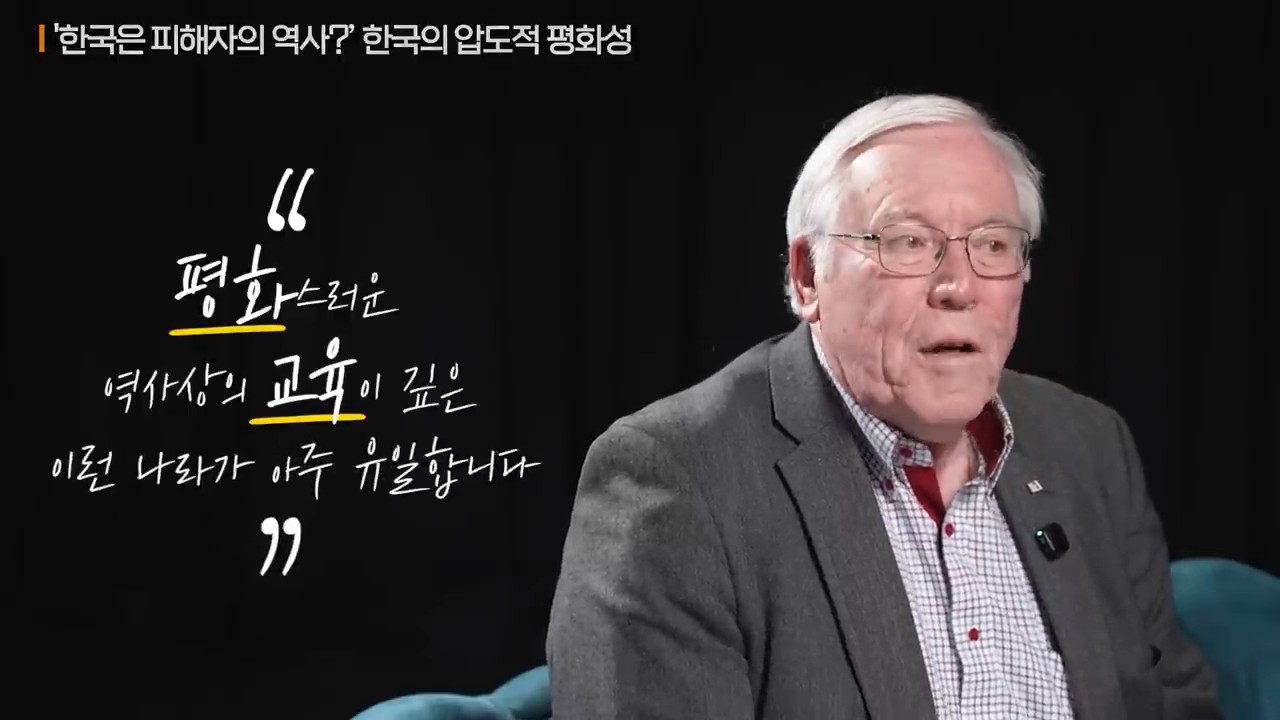
    Opening scene from the Knowledge Inside interview with Professor Mark Peterson
    The interview introduces Mark Peterson’s view after six decades of studying Korea.
    ## In poor Korea, the first thing he saw was “the light in people’s eyes”

    Looking back on Korea in the 1960s, Peterson says the country was poor, but it did not feel like permanent poverty. What he noticed was people’s eyes: students who wanted to study economics to build the nation, and others who studied East Asian studies to understand Korea anew.

    This makes the Miracle on the Han River more than a set of economic indicators. Industrialization, education fever, national strategy, and diligence matter, but underneath them was a collective belief that “we can change.”

    ## Continuity visible in Korean surname culture

    The interview discusses the surnames Kim, Lee, and Park. Peterson finds it interesting that royal surnames did not disappear but remain widespread. In many countries, old royal families were eliminated when dynasties changed; Korea preserved more continuity in names, genealogies, and local memory.

    Interview scene explaining Korean surnames and national character
    The video reads Korean social traits through surname culture and attitudes toward royal families.

    This does not explain all of Korean history in one sentence. But it makes us think about how Korea often preserved the past instead of simply erasing it.

    ## The Miracle on the Han River was the result of habits that made the impossible possible

    The Miracle on the Han River is usually explained through growth rates, exports, industrialization, and infrastructure. The interesting part of the video is its focus on attitude rather than numbers. Peterson says Koreans had hope and a will to learn and build even during poverty.

    Scene explaining the strength of Koreans behind the Miracle on the Han River
    Peterson says Koreans had hope and a learning spirit even in poor times.

    Foreigners are often surprised by Korea’s subway system for the same reason. Koreans see it as daily infrastructure; outsiders see a highly integrated system of cleanliness, connectivity, safety, speed, and information.

    ## The story of Yi Sun-sin is about responsibility, not only tactics

    Yi Sun-sin is a symbol of tactics and victory, but Peterson’s emphasis is not only military genius. The story also concerns responsibility under difficult conditions and the will to protect the community despite political pressure.

    Interview scene about Yi Sun-sin’s tactics and character
    Yi Sun-sin is presented as a symbol of respect and leadership beyond military heroism.

    This connects to Korea today. Korea’s competitiveness lies in fast execution and learning ability. But for that strength to last, responsible leadership and public-mindedness must accompany it.

    ## Korean language and respect culture are strengths, but also burdens

    Peterson notes that Korean is difficult. Honorifics, relational expressions, and context-reading are woven tightly into the language. This reflects a culture of respect.

    At the same time, it can become a burden. If relationships are tracked too finely, a single word becomes hierarchy and evaluation. Respect is an asset, but if it turns into excessive competition, fear of failure, and constant monitoring of others’ reactions, it blocks potential.

    ## Low birthrate is the most realistic warning against Korea’s potential

    The heaviest topic in the latter part is low birthrate. Peterson does not treat it as merely personal choice. When raising children becomes too expensive, private education becomes overheated, and parenting feels like a financial project, young people inevitably see childbirth as a burden.

    Mark Peterson discussing Korea’s low birthrate and education burden
    The latter part mentions low birthrate and education costs as tasks that erode Korea’s potential.

    Korea’s potential comes from people. If the next generation shrinks and raising children becomes an excessively expensive project, society’s energy weakens. Low birthrate is therefore not only welfare policy; it is directly tied to national competitiveness.

    ## Five questions for seeing Korea’s strength again
    • Which everyday Korean systems would look extraordinary to an outsider?
    • Does education still create possibility, or only competition costs?
    • Can respect culture remain humane without becoming hierarchy?
    • Are fast execution and responsibility developing together?
    • Can the next generation inherit Korea’s accumulated strengths?
    ## Korea’s potential lies in the power to look again

    The video is interesting not because it exaggerates Korea’s greatness, but because it reflects back what Koreans overlook. Korea’s potential is not a completed trophy; it is the habit of learning quickly, rebuilding, and turning crisis into opportunity.

    But that strength is not automatic. If education hardens into cost competition, low birthrate becomes structural anxiety, and respect culture remains only hierarchy, potential will be exhausted. The question is not “Is Korea great?” but “Are we making Korea’s strengths usable for the next generation?”

    ## Related reading ## FAQ ### What is the core message of the Mark Peterson interview? Koreans can underestimate their own potential. The message is to re-examine Korea’s strengths in surnames, education, infrastructure, historical leadership, language, and respect culture. ### How does the video explain the Miracle on the Han River? It emphasizes learning, rebuilding, fast execution, and communal energy more than economic numbers alone. ### What is the biggest obstacle to Korea’s potential? The video highlights low birthrate and excessive education costs as major threats. ### Is this article only positive about Korea? No. It uses the positive outside view to examine strengths and also structural problems such as low birthrate, private education costs, and excessive competition. ## References

    Original Korean article

    Image source: Captured images used in this article are stills from the original YouTube video. They are used for review, commentary, and educational explanation, and copyright remains with the original rights holders and the channel.

  • How to Read the Korean Manse Calendar: A Beginner’s Guide

    How to Read the Korean Manse Calendar: A Beginner’s Guide

    Have you ever opened an app to look at fortune tellers or Tojeong secrets, but were suddenly blocked by the word “Manpower Calendar”? Anyone can find it difficult if they just enter their date of birth, but encounter Chinese characters and unfamiliar terms such as Byeong-o-nyeon, Imjin-wol, and Eulhae-il.

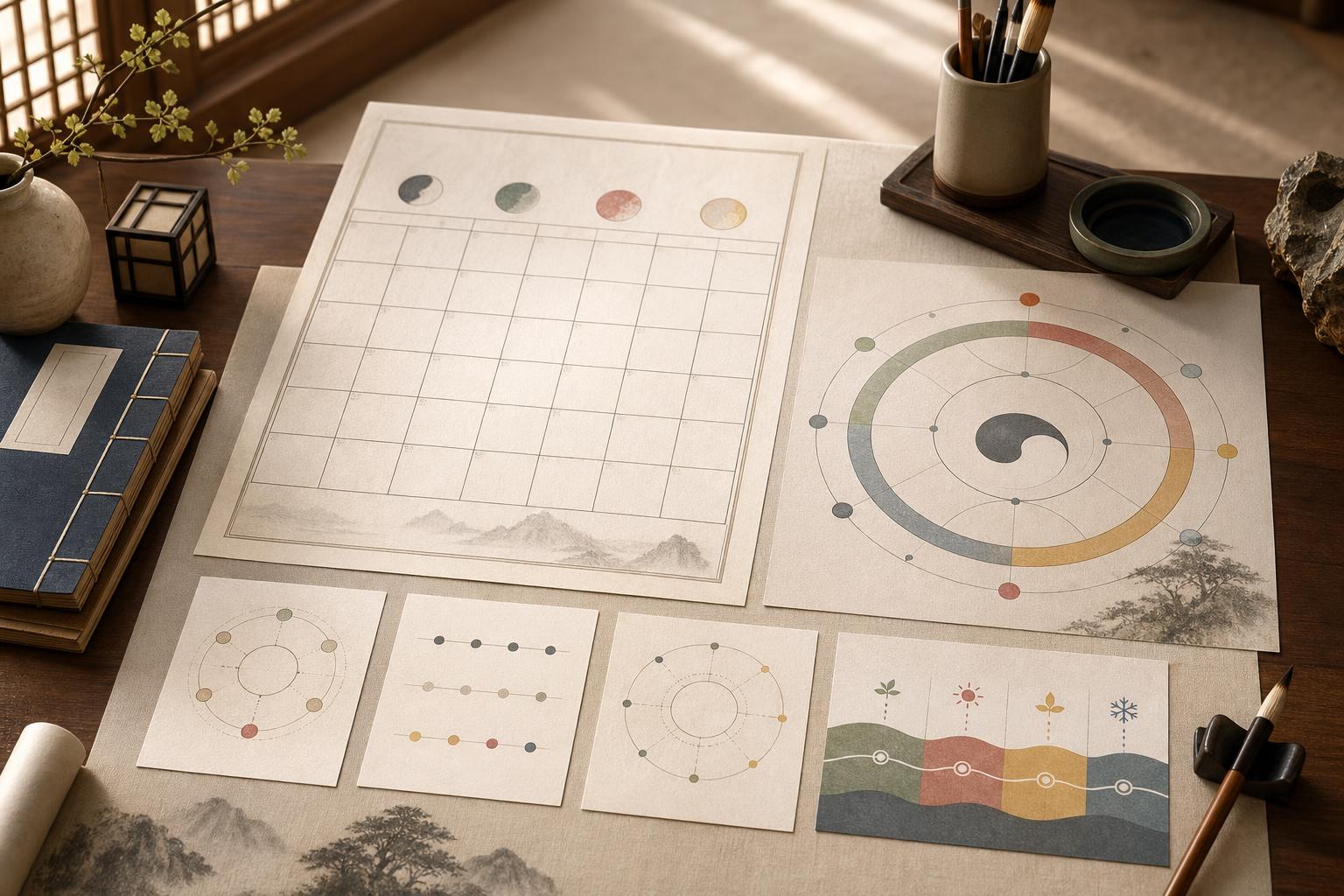
    만세력과 사주 입문 개념을 차분하게 설명하는 전통 달력 이미지
    만세력과 사주의 기본 원리를 전통 달력과 순환 구조로 표현한 이미지

    Original Korean article: How to Read the Korean manse calendar: An Introduction to the Meaning and Principles of Saju for Beginners

    But the Korean manse calendar is not a mysterious code table. To put it simply, it is a calendar that shows the date and time of my birth in the form of four weeks. This article will organize the meaning of the Korean manse calendar, the heavenly cycle and support, the 24 solar terms, and the four pillars of fortune telling in detail so that even those who are new to fortune telling can understand them.

    This article is an explanation to help you understand traditional culture and the calendar. Sajumyeongrihak is closer to a traditional interpretation system than a scientifically proven prediction tool. It is best to make important decisions with realistic information.

    What is the Korean manse calendar?

    The Manpower Calendar is the calendar used to look at the four weeks and eight quarters of life. While a regular calendar shows solar dates, lunar dates, and days of the week, the Korean manse calendar displays the dates and times using the zodiac sign.

    The kanji mentioned in fortune telling is a name that combines the heavenly kanji and jiji, such as Gapja, Eulchuk, and Byeongin. The Korean manse calendar displays the year, month, day, and time of birth in the Chinese zodiac sign. These four bundles are the four pillars mentioned in the Saju.

    To summarize, the role of the Universal Powers is as follows.

    Category General calendar Korean manse calendar Basic information Solar calendar dates, lunar calendar dates, days of the week Solar and lunar calendar dates, zodiac signs, season information Purpose of use Check schedule Check standards for interpreting the 4th week Key result Date Yeonju, Moonju, Ilju, Siju

    In other words, the Korean manse calendar is closer to a reference table that converts dates to begin the interpretation of fortune telling rather than a “table that directly tells the future.”

    Why is the Manpower power needed when looking at Saju and Tojeongbigyeol?

    Four Pillars literally means four pillars and eight letters. Based on a person's date of birth, the Yeonju, Wolju, Ilju, and Siju pillars are established, and each pillar consists of one character for Cheongan and one character for Jiji.

    For example, let's say the result of a certain Korean manse calendar comes out as follows.

    Pillar meaning example performance The zodiac sign of the year of birth The zodiac sign of the year of birth The zodiac sign of the year of birth The zodiac sign of the month of birth The zodiac sign of the month of birth The zodiac sign of the month of birth The zodiac sign of the day of birth The zodiac sign of the day of birth

    If you combine these four pillars, you get eight letters. That's why it's called fortune-telling.

    Tojeongbigyeol is also a traditional way of interpreting fortunes based on the date of birth and the flow of the year. Although the detailed calculation method is different from the Four Pillars of Myeongri, it is connected to the Korean manse calendar in that the reader must understand his or her date of birth based on the lunar, solar, and zodiac calendars.

    Core ingredients of the Manpower: Cheongan, Jiji, Sixty Gapja

    To understand the Korean manse calendar, you only need to grasp three words.

    To put it simply, the 10 upper letters of the heavenly stem, Gap, Eul, Byeong, Jeong, Mu, Ki, Gyeong, Shin, Lim, Realm, Jiji, Ji, Axis, In, Myo, Jin, Sa, Five, Mi, Shin, Yu, Sul, Hae. The 12 lower letters, connected to the 12 zodiac signs.

    There are 10 Cheongan and 12 Jiji. If you pair the two in order, it will take 60 times to return to the first combination. That's why it's called sixty-six pairs.

    It is this zodiac system that we commonly refer to as “Gapjanyeon” and “Byeongonyeon.” The Korean manse calendar displays this zodiac sign not only for the sun, but also for the month, day, and time.

    Why the 24 solar terms are important

    The most confusing part for beginners in the Korean manse calendar is “Why do solar calendar birthdays and quarterly months look different?” The reason is that when looking at the months in the Saju, the 24 solar terms are considered important rather than just January and February in the solar calendar.

    The 24 solar terms are the seasons divided into 24 sections based on the movement of the sun. Names like Ipchun, Gyeongchip, Cheongmyeong, and Ipha go here.

    In Saju, the seasonal criteria must be considered especially when determining the moon week. For example, even if you were born in early February according to the solar calendar, the standard for the year or month of the four quarters may be set differently depending on whether it is before or after the first spring.

    For beginners, it is enough to remember this.

    In the Korean manse calendar, dates are not viewed simply as calendar months. In Saju, seasonal standards work together.

    Since the exact incision time varies from year to year, it is best to check the actual calculation based on reliable chronological calendar or astronomical/calendar data.

    Four Pillars of Four Pillars: Yeonju, Wolju, Ilju, Siju

    When looking at the results of the Korean manse calendar, the first thing to check is the four pillars.

    1. Performance: Pillar of the year of birth

    Yeonju is the zodiac sign of the year of birth. This is a part that is often thought of as connected to the zodiac sign. One thing to be careful of is that fortune telling is often based on the beginning of spring rather than the Lunar New Year, so people born in January or early February may perform differently from the general zodiac calculation.

    2. Weolju: Pillar of the Moon at birth

    The moon is a pillar that shows the seasonal flow of the month of birth. Seasonal standards must be considered more than the solar calendar month numbers. Since the moon week is often viewed as very important in the interpretation of fortune telling, check how the moon week appears in the Korean manse calendar.

    3. One week: Pillar of the day of birth

    Ilju is the zodiac sign of the day of birth. In many interpretations of the four fortunes, the daily life, or the heavenly cycle of a week, is considered the center of seeing “myself.” For example, if one week is Eulhae, the above letters are considered as daily days.

    4. Donor: Pillar of birth time

    The lord is a pillar determined based on the time of birth. Therefore, if you do not know the time of birth, your prayers may not be accurate. If you have access to birth certificates, family records, hospital records, etc., it's a good idea to check those first.

    How to read the Korean manse calendar: Beginners, read it in this order

    When using a free almanac app or website, it can be complicated to try to see all the interpretations from the beginning. It's much easier if you check them in the order below.

    Step 1: Determine whether your date of birth is solar or lunar

    First, check whether your birthday is in the solar or lunar calendar. Especially if your parents tell you that it is your “lunar birthday,” you must not forget to select the lunar calendar in the input window.

    Step 2: Check for leap months

    Some lunar birthdays may include leap months. If you enter a leap month incorrectly, the results may vary, so if your birthday falls on the lunar calendar, check whether it is a leap month or not.

    Step 3: Enter your birth time

    The more accurate your birth time is, the more accurate your prayers will be. If you do not know the time, it is best to take a limited view of the stock price analysis.

    Step 4: Check the performance, monthly cycle, daily week, and hourly week

    The first thing to see in the All Powers results is the four pillars. Items such as Daeun, Seun, Sipseong, and Shinsal are the next level.

    Step 5: Check your daily

    If you're a beginner and only want to see one more thing, it's a good idea to check the dailies. Il-il is the upper letter of Il-ju, and is used as a standard to represent myself in many interpretations of four weeks.

    Terminology that beginners often confuse

    Easy explanation of terms A calendar that shows the date and time of birth based on the zodiac signs and seasons A name that combines the zodiac signs and the zodiac signs A name that combines the zodiac signs The 10 zodiac signs Gap, Eul, Byeong, Jeong, Mu, Ki, Gyeong, Shin, Im, Realm 12 supporting characters, axis, person, myo, Jin, Sa, Oh, Mi, God, Yu, Sul, and the sun 60 zodiac signs Combination of 60 zodiac signs Performance Pillar of the year of birth Moon week Pillar of the moon of birth Circle of birth Pillar of the day of birth Offering birth Pillar of Time Great Luck The flow of luck seen in a long cycle The flow of a specific year established

    If you just know the terms in this table, the Calendar results screen will look much less unfamiliar.

    Lunar, Solar, and Chinese Calendar: Frequently Asked Questions

    What if I don’t know if my birthday is on the lunar or solar calendar?

    Check with your family or see if the birthday on your resident registration is different from the birthday you actually celebrated. Older generations often remember their birthdays based on the lunar calendar. Before entering the Korean manse calendar, the distinction between solar and lunar calendars is the most important thing to consider.

    Can't you see the calendar if you don't know your birth time?

    You can see it. One thing to watch out for is that the stock price may be missing or inaccurate. In this case, it is best to refer to the year, month, and week, and be careful about interpretations that vary depending on time.

    Does the date change if you are born at 11pm?

    In traditional fortune telling, midnight is considered to be from 11 PM to 1 AM. Opinions may differ depending on the school of thought as to which date this section should be attached to. For those born around 11 p.m., it is recommended to check the perpetual calendar settings or interpretation standards.

    Are the results of the Tojeongbi and the Korean manse calendar the same?

    It's not the same. The Mansae Calendar is a calendar that organizes dates and times using the Chinese zodiac sign, and Tojeongbigyeol is a traditional interpretation method that interprets the year's fortunes. One thing to watch out for is that both require an understanding of the date of birth and the lunar calendar and zodiac sign.

    Can your zodiac sign be different if you are born before Ipchun?

    In general life, people often refer to their Chinese zodiac signs based on the Lunar New Year or year of birth. However, in Saju, there are cases where the performance is divided based on the beginning of spring, so people born in late January or early February may have different results from the zodiac sign and general recognition of the zodiac sign.

    What does the Korean manse calendar tell us, and what does it not tell us?

    What the Korean manse calendar tells us is relatively clear.

    • Chinese zodiac sign of my date of birth
    • Yeonju, Wolju, Ilju, Siju
    • Correspondence information between lunar and solar calendars
    • Division of months according to seasonal criteria
    • Basic information on Daeun and Seun calculations

    On the other hand, there are some things that the Korean manse calendar itself does not tell you right away.

    • A definite future where “something like this will definitely happen”
    • A categorical personality judgment that applies equally to everyone
    • Final decisions on important matters such as health, investments, career, and marriage

    The Korean manse calendar is the starting point for interpretation. It is not a tool that judges the situation, choices, or environment of the person looking at the results.

    How to use the All Powers wisely

    The Korean manse calendar is most healthy when used as a tool for self-understanding or learning about traditional culture. It can help you reflect on your personality, use it as a topic of conversation with your family, or understand the Eastern calendar and sense of the seasons.

    One thing to be careful of is that you must be careful about interpretations that stimulate anxiety. It is best to be wary of statements such as “You will definitely fail during this period,” “If you don’t use this name, you will be in big trouble,” and “This can only be resolved through expensive counseling.”

    If you are interested in Saju and Tojeongbigyeol, first understand the structure of the Manseryeok. Knowing the structure reduces the need to be overly scared and trust blindly.

    Checklist before viewing the free Manpower Calendar

    Please check the items below before opening the Korean manse calendar app or website.

    • I checked whether the date of birth was solar or lunar.
    • If it was a lunar birthday, we checked whether it was a leap month or not.
    • Birth time was confirmed as accurately as possible.
    • People born in late January or early February know that the standards before and after the start of spring may vary.
    • First, I decided to check only Yeonju, Wolju, Ilju, and Siju.
    • I decided to watch Daeun, Seun, and Sipseong after understanding the basic structure.
    • It was decided not to make important decisions based solely on universal power.

    Conclusion: The first thing to look at in the Korean manse calendar is “changing the date to the four weeks language”

    The Korean manse calendar looks difficult, but the first thing to look at is simple. It is a calendar that changes the date and time of my birth based on the heavenly period, jiji, and season, and shows the results in annual, monthly, daily, and hourly weeks.

    If you want to understand Saju or Tojeongbigyeol more deeply, it is better to first learn the basic structure of the Manse calendar rather than memorizing the interpretation first. If you understand the Korean manse calendar, you can more naturally accept the term 'four major signs', the term 'zodiac sign', and the explanation that your zodiac sign may change before and after spring.

    Just remember four things at first:

    1. The Manpower Calendar is a calendar for interpreting the four fortunes of heaven.
    2. Date of birth is changed to four pillars.
    3. The four pillars are made up of the ceiling and supports.
    4. In Saju, the 24 solar terms standard is important.

    Knowing just this much will change the way you look at the Calendar results screen.

    References

    • Korea Astronomy and Space Science Institute astronomy and space knowledge information, monthly yin-yang calendar: https://astro.kasi.re.kr/life/pageView/5
    • Korea Astronomy and Space Science Institute astronomy and space knowledge information, yin-yang power conversion calculation: https://astro.kasi.re.kr/life/pageView/8
    • Wikipedia, Korean manse calendar: https://ko.wikipedia.org/wiki/Almanac
    • Wikipedia, Kanji: https://ko.wikipedia.org/wiki/Sanji
    • Wikipedia, Seasons: https://ko.wikipedia.org/wiki/Jeongi
    • Wikipedia, Four Pillars of Myeongrihak: https://ko.wikipedia.org/wiki/Four Pillars of Myeongrihak

    Good article to read together

    This is a related article on thinknote.co.kr that can help broaden the context when read along with this topic.

    • More traditional culture categories
    • thinknote.co.kr View latest posts

    Related Reading

    Continue with these related Thinknote English articles in the Psychology & Society cluster.

    FAQ

    What is this article about?

    This article explores psychology, society, culture, or Korean interpretive frameworks for global readers who need context and careful explanation.

    How should I use this guide?

    Use it as cultural and conceptual context. Interpretive traditions should be read thoughtfully rather than as deterministic claims.

    Where can I read the original Korean article?

    The original Korean article is available here: Original Korean article.