
This fuller English version follows the original Korean article more closely. The central question from Anthropic’s Claude Code London 2026 message is not whether a developer can ask an AI model for code. It is whether a development organization is ready to operate AI agents with goals, tools, security, evaluation, and review loops.
Original Korean article: Anthropic이 던진 질문: 당신의 개발 조직은 AI 에이전트를 운영할 준비가 됐나
The Core Change Announced at Claude Code London 2026
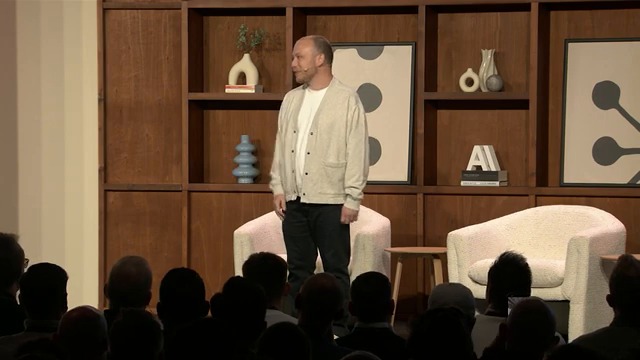
The keynote framed AI coding as an operational change. The distance from idea to execution is shrinking: a product manager can describe a feature, an engineer can ask an agent to explore a codebase, and the model can draft changes, run checks, and report back. But the original Korean article stresses that this speed only helps when the organization knows how to receive and verify the work.
From idea to execution
In the old workflow, an idea moved through tickets, handoffs, coding, review, and deployment. With Claude Code-style agents, some of those steps can happen asynchronously. The agent can investigate files, propose a plan, edit code, and run tests while the human focuses on judgment. The bottleneck moves from typing to task design and validation.
Linear adoption meets exponential model improvement
Companies usually adopt new tools slowly: a pilot, a few champions, a security review, and then gradual rollout. Model capability, however, is improving faster than that rhythm. Anthropic’s message is that teams should build the operating foundation now, because the agents of tomorrow will have longer task horizons and higher autonomy than the tools they are testing today.
Claude Model Roadmap: Longer Tasks and Better Judgment
Task horizon is expanding
A key concept in the source article is task horizon: how long a model can keep working toward a goal before it loses context, makes mistakes, or needs human rescue. Earlier coding assistants handled short completions. Newer agents can work across multiple files and longer sequences. The practical implication is that teams must prepare work units that are clear enough for agents to execute but bounded enough for humans to review.
Less scaffolding, more general tools
As models become stronger, teams may need less fragile scaffolding around every prompt. Yet this does not mean “no structure.” It means agents should be given clean repositories, reliable commands, clear acceptance criteria, and general tools such as search, tests, documentation, issue trackers, and deployment checks. The better the workbench, the less the team depends on prompt tricks.
Advisor strategy balances performance and cost
The article also highlights the need to balance powerful models and cost-efficient models. Not every step requires the most expensive reasoning. Some tasks can be routed to cheaper models, while architecture review, security-sensitive changes, and difficult debugging may require a stronger advisor model. Agent operations therefore become a routing problem as much as a prompting problem.
Claude Platform: Infrastructure for Product-Grade Agents
Managed agents, self-hosted sandboxes, and MCP tunnels
The Claude platform direction points toward agents that can operate in controlled environments. Managed agents reduce setup burden; self-hosted sandboxes give enterprises more control; MCP tunnels connect agents to internal tools without exposing everything blindly. The source article treats these pieces as the infrastructure layer for making AI agents part of real products.
Asynchronous coding requires verification
When an agent works in the background, the human does not watch every keystroke. That makes verification more important. Teams need automated tests, linting, reproducible builds, review checklists, and logs that explain what the agent changed. Without this, asynchronous work can become asynchronous risk.
Routines: Claude prompting Claude Code
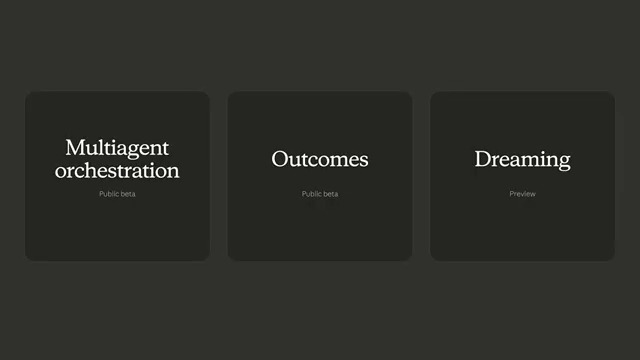
The article’s discussion of routines is important because it shows a recursive pattern: Claude can help write the instructions that Claude Code follows. Instead of every developer inventing prompts from scratch, a team can maintain reusable routines for bug fixes, refactors, dependency updates, documentation, or test generation. This turns good practice into shared organizational memory.
Claude Code Changes the Developer Role
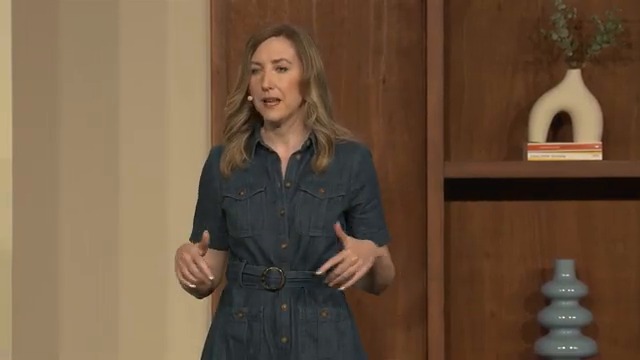
Claude Code is not merely a faster autocomplete. It pushes developers toward the role of automation designers. The developer writes specifications, chooses tools, defines the boundary of autonomy, checks tradeoffs, and decides whether the result is safe to merge. In that sense, the developer’s responsibility becomes broader rather than smaller.
The source article’s warning is practical: organizations should prepare evaluation and architecture before giving agents too much freedom. A model that can modify code at scale can also amplify unclear requirements, weak tests, and insecure defaults. The maturity of the organization determines whether AI agents become leverage or chaos.
What Developers and Enterprises Should Prepare Now
Prepare evaluation and architecture first
Teams should inventory the work they want agents to perform, define success criteria, and build measurable checks. They should document architecture decisions, coding standards, security constraints, and escalation rules. If humans cannot explain the desired outcome, an agent cannot reliably produce it.
Move from personal productivity to organizational operations
The biggest shift is from individual productivity to team operations. One developer using an AI tool is useful; a company operating AI agents needs governance. Access control, audit logs, tool permissions, privacy rules, and incident response become part of the AI coding stack.
Claude Code London 2026 Readiness Checklist
- Define which coding tasks agents may perform and which require human-only judgment.
- Create reusable routines for common workflows such as bug fixing, test writing, and documentation.
- Build automated verification before increasing agent autonomy.
- Separate low-risk tools from sensitive tools and grant permissions gradually.
- Track cost, latency, model choice, and failure patterns as operational metrics.
Conclusion: The Next Stage Is Operation, Not Conversation
The article’s conclusion is that AI development tools are moving beyond chat. The important question is no longer “Can the model answer?” but “Can the organization run the model as a dependable worker inside a controlled system?” Teams that answer this early will be better prepared for the next wave of agentic software development.
Related Reading
Continue with these related Thinknote English articles in the Digital Transformation cluster.
- Thinknote English article
- Thinknote English article
- Thinknote English article
- Thinknote English article
- Thinknote English article
- Thinknote English article
FAQ
What is this article about?
This article explains a digital transformation, platform, market-structure, or technology-adoption topic with Korea-specific context and global implications.
How should I use this guide?
Use it to understand market signals and strategic patterns. Combine it with current market data before making business or investment decisions.
Where can I read the original Korean article?
The original Korean article is available here: Are Development Teams Ready to Operate AI Agents?.