Anthropic’s “Mythos” issue is not just another story about a new AI model. The core message is colder than that. Frontier AI models are now cloud services and strategic assets at the same time.
Like advanced semiconductor equipment or high-end GPUs, access to a model itself is becoming a matter of diplomacy and national security. Korea cannot treat this shift as someone else’s regulatory news.
What Is at the Core of the Mythos Issue?
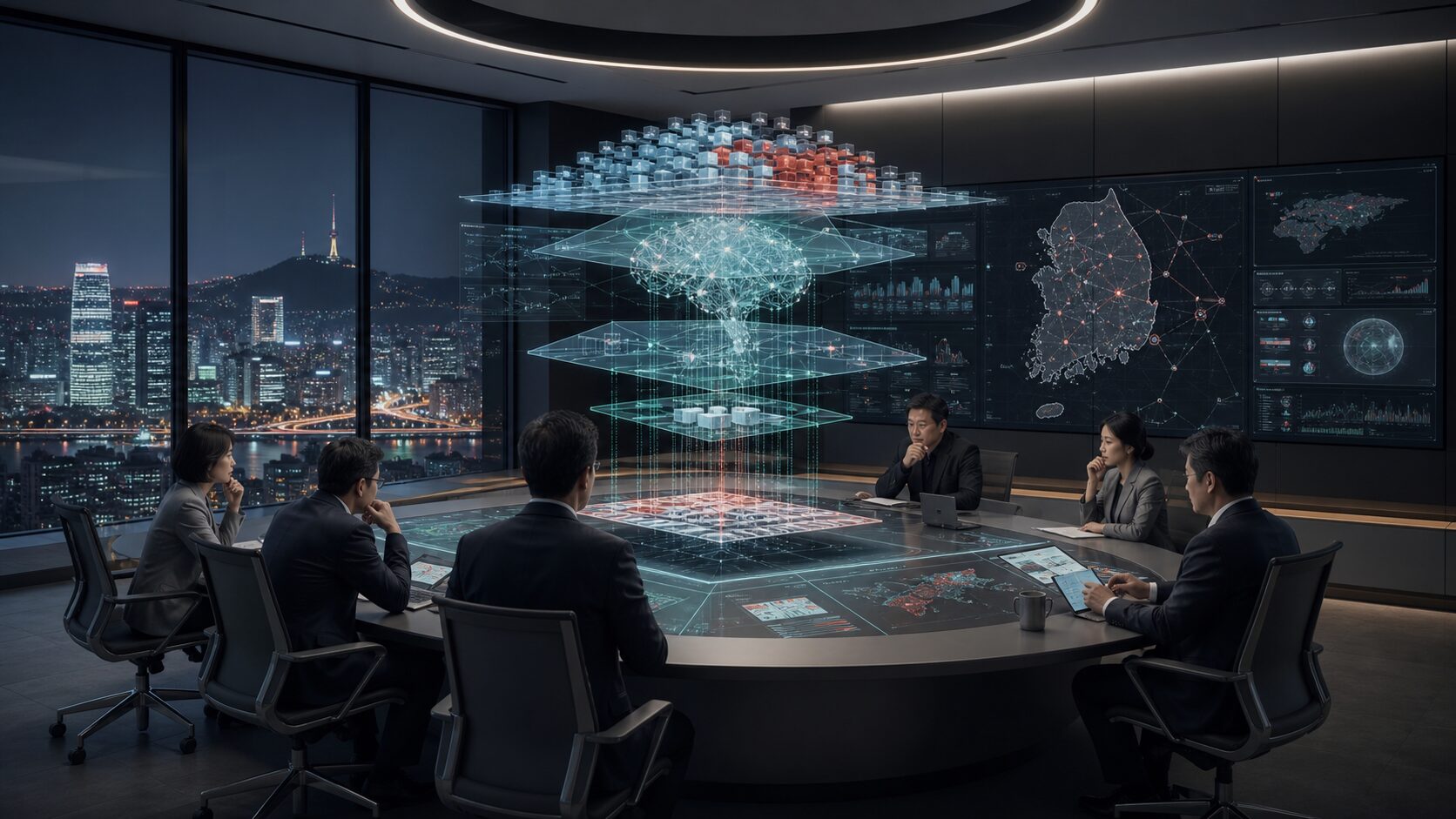
Anthropic describes Claude Mythos 5 as a model with strong capabilities in cybersecurity and biology research. Through Project Glasswing, the company framed it as a tool for finding and defending critical software vulnerabilities.
According to Anthropic’s own updates, early partners used Mythos Preview to find more than 10,000 high- or critical-severity vulnerabilities in important software. For defensive security teams, that is a compelling result.
The problem is that the same capability can also be used offensively. A model that finds vulnerabilities quickly can strengthen defenders. If control fails, it can also strengthen attackers.
That is why Mythos was limited to vetted partners from the start. When the U.S. government issued a directive suspending foreign national access to Fable 5 and Mythos 5, the story moved from technology news to national strategy.
Why People Are Saying AI Is Becoming a Strategic Asset
The U.S. directive showed that access to frontier AI models can be treated as a national security matter. In practical terms, a pattern once associated with semiconductor export controls is now moving toward the model layer itself.
One important change sits underneath this shift. In the past, the bottleneck was mostly compute, chips, and manufacturing equipment. Going forward, model weights, API access, safeguard settings, and data retention rules may also become objects of control.
For companies, this makes AI adoption more complicated. A model that was available yesterday may be restricted today. In high-risk fields such as public administration, finance, healthcare, defense, and research, that is not just an inconvenience. It is an operational risk.
Three Risks Korea Should Watch

1. Dependence on Foreign Models
Korean companies and public institutions have adopted global AI models quickly. From a productivity standpoint, that choice is natural. But when core workflows become tightly coupled to a specific overseas model, access restrictions can become workflow disruptions.
This matters most in areas connected to national functions: public administration, defense, cybersecurity, healthcare, energy, and finance. The point is not that every AI system must be domestic. The point is that systems that cannot stop need alternative routes.
2. The Dual-Use Nature of Security AI

Mythos raises a hard question: if a powerful security AI is released more broadly, does the world become safer or more dangerous?
Vulnerability-discovery AI can help defenders enormously. Yet if verification, disclosure, and patching cannot keep up, the result may be a faster-growing list of weaknesses. Anthropic has also noted that after AI accelerates discovery, the bottleneck shifts to verification, disclosure, and remediation.
Korea should not build AI security capability by focusing only on detection models. Coordinated vulnerability disclosure, patch responsibility, supply-chain response, and incident exercises need to be designed together.
3. The Practical Reality of Sovereign AI
Sovereign AI should not remain a slogan. It is not simply a matter of building one Korean-language model. It requires public data governance, domestic computing infrastructure, high-risk AI evaluation, sector-specific standards, and procurement rules.
Korea is already preparing parts of this foundation through the AI Basic Act, the National AI Committee, the AI Safety Institute, and the national AI computing center. The direction is right. The Mythos issue simply demands more speed and sharper prioritization.
Korea’s Future Strategy: Build Controllable AI Systems, Not Just Models
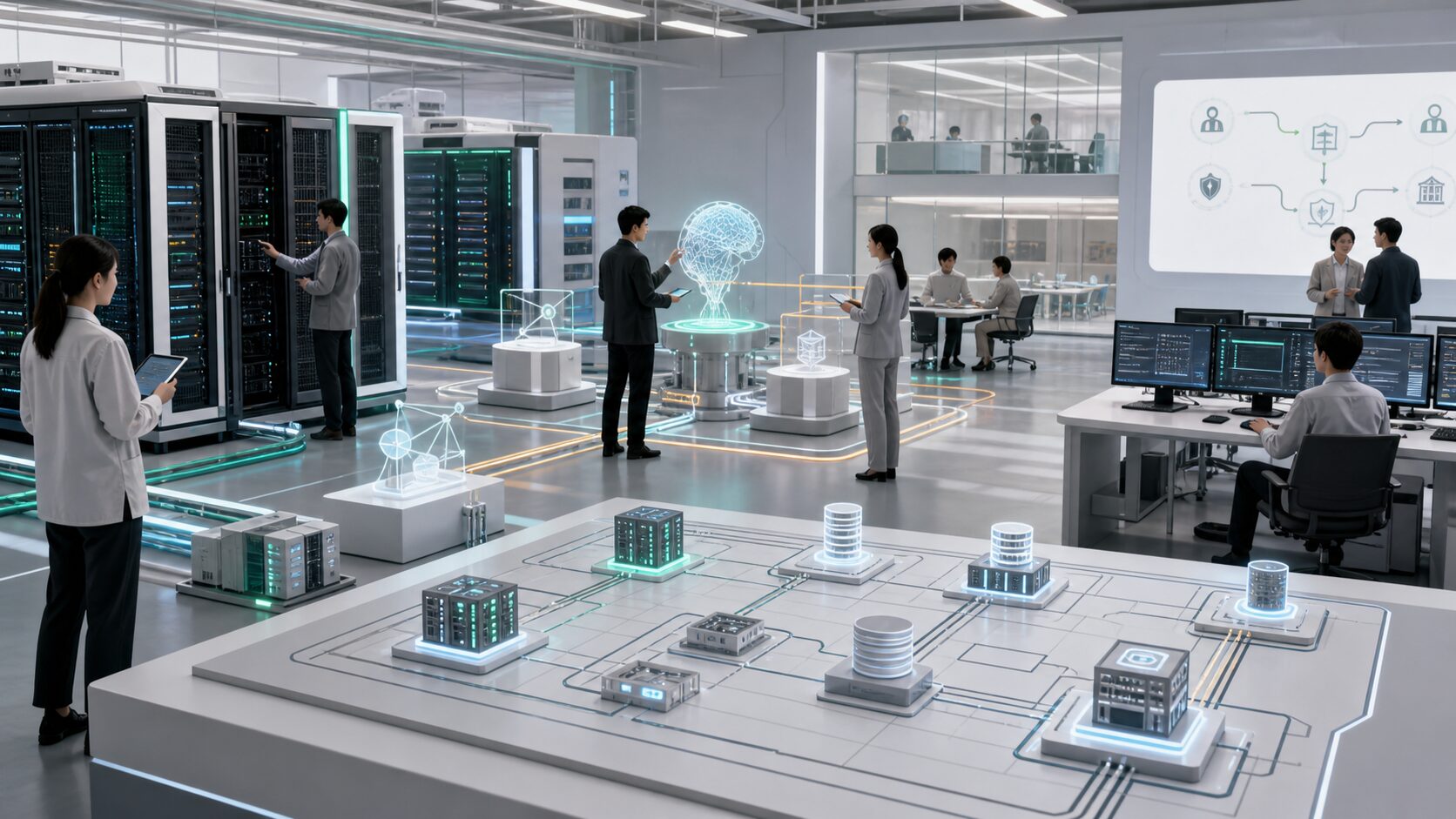
Korea’s response should not stop at “we need our own frontier model.” The more important question is this: in which domains should Korea secure control, at what level, and at what cost?
First, Classify AI Dependence in Critical National Domains
Public institutions and critical industries should classify the AI services they use by operational importance. A simple writing assistant and a cybersecurity, healthcare, or administrative decision-support system should not be governed by the same standard.
Critical domains need at least three safeguards: replaceable models, inference paths inside Korea or a trusted jurisdiction, and manual fallback procedures for outages.
Second, Make Korea’s AI Safety Evaluation More Operational
AI safety evaluation should not end with paperwork. In high-impact areas such as cybersecurity, biology, financial fraud, disinformation, and privacy leakage, red-team testing and repeated evaluation are essential.
For frontier models, there must be more than two choices: total prohibition or unlimited release. Restricted partner access, usage logging, high-risk query routing, independent evaluation, and incident reporting should work as one system.
Third, Treat the National AI Computing Center as Strategic Infrastructure
The Korean government is moving forward with a national AI computing center of up to 2 trillion won. This infrastructure should not be only a place to rent GPUs. It should become the foundation that connects Korean models, safety evaluation, and public-sector AI pilots.
Accessibility matters. If only large companies can use the infrastructure, national resilience will not grow very much. Universities, startups, security research groups, and public institutions need realistic access.
Fourth, Cooperate Internationally but Plan for Access Cutoff Scenarios
Korea cannot build every AI capability alone. Cooperation with the United States, Europe, Japan, Singapore, and other partners remains necessary. But cooperation is not the same as dependence.
Contracts should address data location, model access interruption, emergency patching, transition to alternative models, and audit rights. Public procurement should not only ask which model performs best. It should ask which system can keep operating in a crisis.
What Companies and Individuals Should Check
Companies should inventory the AI tools they already use. They need to know which workflows depend on which models, where data is stored, and how quickly the organization could switch if a service were restricted.
Individuals can start with a simpler rule. Using AI well is important. But trusting the answer of one model without question is risky. In the AI era, it is more important to have your own language and judgment criteria before writing better prompts.
Related Reading
- In the AI Era, What You Need to Learn Before Prompts Is Your Own Language
- Metacognition in the AI Era: How to Check Your Own Thinking Before Trusting Smart Answers
- AI Agent Evolution: What OpenClaw Shows About the Next Step Beyond Chatbots
- AI Agent Automation: What Matters More Than the One-Click Illusion
Conclusion: Korea Needs to Prepare for the Politics of AI Access
The message from the Mythos issue is clear. Future AI competition will not be only about performance. It will also be about who can access models, who can adjust safeguards, and who can keep services running when access conditions change.
Korea should continue using global models, but critical domains need controllable alternatives. Sovereign AI is not isolation. It is insurance. That insurance works only when models, data, computing, safety evaluation, and procurement systems move together.
FAQ
Can ordinary users access Anthropic Mythos?
No. Anthropic describes Mythos 5 as a restricted-access model with strong capabilities in cybersecurity and biology research. The company also introduced Fable 5 as a safer model for general knowledge work, but access to that model was also suspended after the U.S. government directive.
Does the Mythos issue immediately affect Korean companies?
Not every company will be affected immediately. Still, it is a warning for organizations that rely heavily on overseas frontier models for critical workflows. They should review access rights, data location, alternative models, and outage response plans.
Does sovereign AI mean Korea should stop using overseas AI?
No. The core of sovereign AI is control and optionality in areas where they matter. Korea can keep using global AI services while building domestic operating capacity and alternatives for public, security, and industrially critical domains.
What is the Korean government already preparing?
Korea is preparing several foundations, including the AI Basic Act, the National AI Committee, the AI Safety Institute, and the national AI computing center. The computing center is expected to become a key infrastructure layer for domestic AI research and industrial use.
What should individuals prepare?
Individuals should avoid depending on a single model for important judgments. Important claims should be checked against multiple sources, and users should practice explaining AI-generated answers in their own words before accepting them.
References
- Anthropic, Claude Mythos
- Anthropic, Statement on the U.S. government directive to suspend access to Fable 5 and Mythos 5
- Anthropic, Claude Fable 5 and Claude Mythos 5
- Anthropic, Project Glasswing: Securing critical software for the AI era
- Anthropic, Project Glasswing: An initial update
- Korea Policy Briefing, Building a national AI computing center
- Ministry of Science and ICT, AI Basic Act passed at the National Assembly
- No Cut News, The warning from the U.S. Anthropic access restriction