[카테고리:] AI & Technology

English articles about AI agents, LLMs, automation, developer tools, and technology trends.

  • AI Agent Evolution: What OpenClaw Shows About the Next Step Beyond Chatbots

    AI Agent Evolution: What OpenClaw Shows About the Next Step Beyond Chatbots

    The Korean article uses OpenClaw as a lens for understanding why AI agents are moving beyond chat. The point is not that one project has solved everything. The point is that AI is becoming a system that can observe, decide, and execute work across tools. That shift makes execution quality, permission design, and safety controls as important as answer quality.

    AI agent evolution beyond chatbots
    AI agent evolution beyond chatbots.

    Original Korean article: AI agent 변화: OpenClaw가 보여주는 실행형 AI의 다음 단계

    Why AI Agent Evolution Matters Now

    Chatbots trained people to ask questions and receive polished text. Agentic AI changes the question: can the system carry out a task responsibly in the user’s work environment? The source argues that answer quality alone is no longer enough.

    As AI moves into browsers, computers, documents, and workflow tools, the value shifts from conversation to completion. The agent must understand context, select tools, perform steps, check results, and know when to stop or ask for permission.

    OpenClaw as an Observation Lens

    OpenClaw is presented not as the final answer but as a useful observation lens. It shows a direction in which agents are designed around execution environments rather than only model prompts.

    This matters because future AI competition may be decided less by which model writes a better paragraph and more by which operating structure connects models, tools, memory, permissions, gateways, logs, and human review.

    AI Comes Out of the Chat Window

    The first change is that AI leaves the isolated chat window. In practical work, AI is closer to a channel that moves between apps than a separate application. Users want it to read, compare, fill, generate, summarize, and deliver inside existing workflows.

    When AI becomes part of the work channel, interface design changes. A useful agent needs access to browsers, files, APIs, calendars, forms, and internal systems. But every added connection also raises questions about authentication, scope, and auditability.

    From Answering AI to Execution AI

    Execution agents must use browsers and computers, not only language. They may search a page, click a button, fill a form, download a file, or run a workflow. This creates real productivity potential but also real operational risk.

    The source’s central distinction is simple: a chatbot gives a response; an execution agent changes a state. Once AI can change a state, error recovery, rollback, logging, and human approval become essential design features.

    Operating System and Gateway Thinking

    The article emphasizes that the first thing to examine is not only the model. It is the operating structure around the model. A gateway perspective is useful because agents need a route between user requests, tools, external services, and final deliverables.

    This is why agent infrastructure includes queues, tool registries, credentials, sandboxing, notifications, and result delivery. A powerful model without an operating framework becomes difficult to trust in real work.

    Chatbot AI and Execution Agent Compared

    A chatbot is optimized for dialogue, explanation, drafting, and Q&A. An execution agent is optimized for task decomposition, tool use, progress tracking, and completion. The former can be wrong in text; the latter can be wrong in action.

    That difference changes evaluation. We must measure whether the agent completed the requested task, preserved constraints, avoided unauthorized access, produced verifiable outputs, and left a trace that humans can inspect.

    Personal Assistant and Work Automation Boundaries Blur

    The more capable agents become, the more personal assistance and enterprise automation overlap. A personal AI can schedule, summarize, prepare files, and monitor tasks. A work agent can handle reports, forms, customer replies, and operations.

    The boundary blurs because both need context and permissions. If permission boundaries are vague, risk grows. The source warns that convenience cannot be separated from control.

    Why Open Source Agent Ecosystems Are Growing

    Open source matters because agent systems need adaptation. Companies and individuals want to inspect, modify, and connect agents to their own tools. Open ecosystems can accelerate experimentation and reduce dependence on a single vendor.

    But the source also stresses that open source does not automatically mean safe. Public code may reveal design choices, but real safety still depends on deployment practices, isolation, permission design, monitoring, and governance.

    Checklist and Security for Agent Adoption

    Before adopting an OpenClaw-style agent, users should ask what task it will execute, which tools it can touch, what data it can read, who approves sensitive actions, how logs are stored, and how failures are handled.

    Minimum privilege and isolation are the starting point. Agents should receive only the permissions needed for a task, run in controlled environments when possible, and provide review points before irreversible actions. Responsible execution is the essence of the AI agent shift.

    Practical Implications for Readers

    For readers using this article as a working reference, the practical lesson is to move from abstract interest to a concrete audit. Identify where the topic touches your own work, which assumptions are already outdated, what data or tools are missing, and which decision could be tested on a small scale before a larger commitment. Write that test down, assign an owner, and review evidence rather than impressions.

    The Korean source repeatedly treats technology, strategy, and human judgment together. That is why the safest next step is not blind adoption or passive worry. It is disciplined experimentation: define the problem, compare alternatives, verify results, protect sensitive information, and keep the human purpose visible while the tool or trend evolves.

    Related Reading

    FAQ

    How is OpenClaw different from a general chatbot?

    The important difference is the execution orientation. A chatbot mainly answers; an agent framework is designed to connect models with tools, workflows, and task completion.

    What is the most important technology in AI agent evolution?

    The model is important, but the operating structure around it—tool access, permissions, gateway design, logging, and verification—is equally critical.

    Can companies immediately deploy execution agents?

    They should start with limited tasks, clear permission boundaries, human review, and logs rather than giving broad access from the beginning.

    Will execution agents replace people?

    They will automate parts of work, but people still define goals, approve sensitive actions, handle exceptions, and take responsibility.

  • Satya Nadella’s Next Bet: How Microsoft Is Rebuilding the On-Device AI Ecosystem

    Satya Nadella’s Next Bet: How Microsoft Is Rebuilding the On-Device AI Ecosystem

    The Korean source argues that Satya Nadella’s next move should be read as a platform strategy, not merely as another AI feature launch. Microsoft is trying to rebuild Windows around on-device AI, Copilot+ PCs, Windows AI Foundry, small models such as Phi, and developer workflows that make local AI part of everyday computing.

    Microsoft on-device AI strategy
    Microsoft on-device AI strategy.

    Original Korean article: 사티아 나델라의 다음 승부수: 마이크로소프트는 온디바이스 AI 생태계를 어떻게 바꾸려 하나

    Read Nadella Through Platforms, Not Products

    Copilot Plus PC and NPU ecosystem
    Copilot Plus PC and NPU ecosystem.

    Microsoft’s strength under Satya Nadella has been platform thinking: cloud, productivity, developer tools, and operating systems are connected into ecosystems. The same logic now appears in on-device AI.

    The question is not whether one Copilot feature is useful. The bigger question is whether Windows can become the default environment where AI models, apps, devices, and developers meet.

    Copilot+ PC Creates a New Baseline

    Windows AI Foundry platform
    Windows AI Foundry platform.

    Copilot+ PC is important because it sets a hardware and experience baseline for AI PCs. Neural processing units, local inference, and AI-ready applications become part of what a modern Windows device is expected to support.

    This changes the market. PC makers, chip companies, software developers, and enterprise buyers must think about AI capability as a standard requirement, not an optional add-on.

    Windows AI Foundry Connects the Developer Ecosystem

    Phi small models and local AI
    Phi small models and local AI.

    Windows AI Foundry and related local development tools are described as a device for binding developers to the Windows AI ecosystem. Developers need ways to select, optimize, run, and ship models across devices.

    If Microsoft can make local AI development easier, it can turn Windows from an operating system into an AI application platform. That is the strategic importance behind the tooling.

    Phi Small Models Challenge Cloud-Only AI

    trust issues around Recall
    trust issues around Recall.

    Phi and other small models show that useful AI does not always require a massive cloud model. Smaller models can run locally, reduce latency, protect some data, and lower cost for focused tasks.

    This does not mean cloud AI disappears. It means the ecosystem becomes hybrid: local models handle immediate, private, or lightweight tasks, while cloud models handle broader or heavier reasoning.

    Recall and the Trust Problem

    The Recall controversy revealed the trust challenge of on-device AI. A feature that records or indexes user activity can be powerful, but it also raises privacy, consent, security, and transparency concerns.

    For on-device AI to succeed, users must understand what is stored, where it is stored, who can access it, and how it can be disabled. Trust becomes a product requirement.

    The Ecosystem Structure Microsoft Wants to Change

    Microsoft is trying to connect Windows, Azure, Copilot, developer tools, PC hardware, and local models. This structure could make AI capabilities available across consumer and enterprise environments.

    The strategic move is replatforming: making AI a layer of Windows itself so that application builders and users treat AI as a built-in computing resource.

    How Microsoft Differs From Apple and Google

    Apple has strong device integration and privacy positioning. Google has AI research, Android, Search, and cloud-scale data. Microsoft’s advantage is enterprise distribution, Windows reach, developer tooling, and productivity workflows.

    That means Microsoft can win not only by making the best demo, but by making AI usable inside everyday work systems: documents, meetings, code, security, and business applications.

    What Users Should Prepare

    Users should learn the difference between cloud and local AI, check device requirements, understand privacy settings, and evaluate whether AI PC features solve real tasks.

    Organizations should prepare governance for local AI as well as cloud AI. On-device processing does not automatically remove risk; it changes where data, logs, and controls must be managed.

    Practical Implications for Readers

    For readers using this article as a working reference, the practical lesson is to move from abstract interest to a concrete audit. Identify where the topic touches your own work, which assumptions are already outdated, what data or tools are missing, and which decision could be tested on a small scale before a larger commitment. Write that test down, assign an owner, and review evidence rather than impressions.

    The Korean source repeatedly treats technology, strategy, and human judgment together. That is why the safest next step is not blind adoption or passive worry. It is disciplined experimentation: define the problem, compare alternatives, verify results, protect sensitive information, and keep the human purpose visible while the tool or trend evolves.

    Related Reading

    FAQ

    Why is Satya Nadella focusing on on-device AI?

    Because on-device AI can make Windows a renewed platform for local models, AI apps, developer tools, and AI-ready hardware.

    What is most important about Copilot+ PC?

    It creates a new baseline for AI-capable PCs, including local inference and dedicated AI hardware.

    Why are Windows AI Foundry and Foundry Local important?

    They help developers build and run AI applications locally within the Windows ecosystem.

    Does on-device AI replace cloud AI?

    No. The likely future is hybrid: local AI for privacy, speed, and focused tasks; cloud AI for larger workloads.

    What did the Recall controversy teach?

    It showed that privacy, consent, transparency, and user control are central to AI PC trust.

  • AI Token Diet: What Headroom Teaches About Cutting LLM Agent Costs

    AI Token Diet: What Headroom Teaches About Cutting LLM Agent Costs

    This English version is a fuller translation and adaptation of the original Korean article, “넷플릭스 개발자의 토큰 다이어트: Headroom이 보여준 AI 비용 절감법,” for global readers. The article discusses the importance of reducing token costs when using AI agents, and how the open-source project Headroom can help achieve this goal. As AI agents become more prevalent in various industries, the need to optimize their performance and reduce costs becomes increasingly important. One of the key challenges in using AI agents is the high cost of tokens, which can quickly add up and become a significant expense. In this article, we will explore the main arguments and findings of the original Korean article and provide a comprehensive overview of the topic.

    AI token diet with Headroom
    AI token diet with Headroom.

    Original Korean article: 넷플릭스 개발자의 토큰 다이어트: Headroom이 보여준 AI 비용 절감법

    What is Headroom?

    Headroom is a context compression layer that compresses the input sent to LLM (Large Language Models) by AI agents. According to the GitHub repository description, it is a tool that reduces tool output, logs, files, and RAG (Retrieval-Augmented Generation) chunks before they reach the LLM. Headroom is not just a simple prompt compression tip, but rather a developer tool that can be used in various forms, such as a library, proxy, MCP (Model-Parallel Computing) server, or agent wrapper. It can be used in front of coding agents like Claude Code, Codex, Cursor, and Aider to reduce token waste.

    LLM agent cost optimization
    LLM agent cost optimization.

    Why do AI agent costs increase?

    When using chatbots, users input questions and receive answers. However, AI agents are different. They read files, search, check logs, call tools, and put the results back into the LLM. The problem is that this process creates a lot of duplication. The same error logs are entered multiple times, unnecessary file contents are included, and RAG search results are too broad. Even information that seems like noise to humans can incur token costs. According to The Register, Tejas Chopra, the creator of Headroom, became interested in token reduction after receiving a $287 bill while using Claude Sonnet. He then discovered that many inputs were not necessary for actual reasoning, but rather consisted of repetition, boilerplate, and duplicate data.

    Headroom’s Core Structure

    The Headroom README explains the structure as consisting of components like CacheAligner, ContentRouter, CCR (Context Compression and Retrieval), SmartCrusher, CodeCompressor, and Kompress-base. Although the names may seem complex, the flow can be understood in a practical sense. First, ContentRouter distinguishes the type of input. Reducing code, JSON, logs, and plain text in the same way can lead to errors, so it is essential to determine the nature of the content first. Second, CodeCompressor and SmartCrusher carefully reduce structured data like code and JSON. Reducing code can damage identifiers or grammar, leading to more loss than gain. Third, CCR stores the original content locally and retrieves it when necessary. It sends only the compressed version but allows the model to retrieve the original content if needed. Fourth, CacheAligner stabilizes the input prefix to prevent the provider’s cache from being broken. Simple compression can lower the cache hit rate, ultimately increasing costs. This is where Headroom differs from simple prompt summarization tools.

    context compression for logs and files
    context compression for logs and files.

    What do the numbers mean?

    The Headroom README claims that it can reduce tokens by 60-95% in actual agent workloads. Examples include code search, SRE incident debugging, GitHub issue triage, and codebase exploration, which show significant reduction rates. However, it is essential to note that these numbers do not guarantee the same results for all organizations. Some tasks may have a lot of logs and search results, making them more prone to reduction. On the other hand, short questions or well-organized inputs may not have many tokens to reduce. Therefore, the practical judgment standard is not just about how much reduction is promised, but rather about measuring input tokens, output tokens, latency, cache hit rate, and failure rate in the actual agent workflow.

    Signals that a team needs token diet

    Teams that should consider introducing Headroom or similar tools are those that exhibit certain signals. These include: coding agents that repeatedly read large repositories, logs and test results that are attached to every request, RAG search results that are overly broad, system prompts and policy documents that are repeated continuously, and AI tool utilization that is halted due to usage limits or monthly costs. In such situations, it is essential to examine the context structure before changing the model. The problem may not be the expensive model itself, but rather the structure that continuously sends unnecessary inputs to the expensive model.

    5 Lessons for Organizations

    First, AI cost optimization is not just a financial issue, but an engineering problem. Costs are determined by token structure, tool calls, cache design, and RAG quality. Second, prompt compression is the last step. It is essential to reduce search results, remove duplicates, and read only necessary files before compressing sentences. It is challenging to solve waste that is not reduced at the source through sentence compression alone. Third, compression must be accompanied by quality verification. If the answer is incorrect, even if the tokens are reduced, it is a failure. This is why Headroom provides benchmarks and reproduction commands. Fourth, cache-preserving design is crucial. Provider prompt caches can be ineffective if the input changes slightly. If the reduction tool breaks the cache, the total cost may increase. Fifth, preserving the original content is essential. If AI only looks at compressed information, it may miss important context. Having a structure that can retrieve the original content when needed is safe.

    Pre-Introduction Checklist

    When reviewing Headroom or similar tools, check the following items first: Are you currently measuring input tokens and output tokens for each agent task? Do you have topK and duplicate removal criteria for RAG search results? Are you putting logs, files, and test results in their entirety? Can you compare the answer rate and task success rate before and after compression? Are you safely protecting code, JSON, security policies, URLs, and identifiers? Is the cache hit rate maintained after compression? Do you have a fallback to turn off compression and re-run in case of failure?

    Related Reading

    – AI Era Skills: https://www.thinknote.co.kr/ai-era-skills-demis-hassabis-learning-stem-agents/
    – Prepare for the AI Era: https://www.thinknote.co.kr/prepare-for-ai-era-literacy-judgment-human-value/
    – AI Future of Work: https://www.thinknote.co.kr/ai-future-of-work-meaning-careers-human-roles/

    Conclusion: AI costs are a design problem, not a usage problem

    The insight provided by Headroom is not just about reducing tokens, but about how AI agents fit into an organization’s workflow. When AI agents become part of the workflow, the key capability is how to collect, reduce, preserve, and reuse context. In the future, good AI systems will not just have good models, but will also be able to send only necessary information, reduce duplication, utilize caches, and return to the original content in case of failure. Token diet is not just a cost-reduction technique, but also the starting point for AI operation design.

    FAQ

    Is Headroom a Netflix official project?

    According to The Register, Headroom is not an official Netflix project. It is an open-source project created by Netflix senior engineer Tejas Chopra and is used by several teams and external projects.

    Is Headroom a prompt summarization tool?

    It is narrow to view Headroom as just a prompt summarization tool. Headroom is a context compression layer that reduces logs, files, RAG results, tool output, and conversation history before they reach the LLM. It can be used as a library, proxy, MCP server, or agent wrapper.

    Does reducing tokens affect answer quality?

    It can. Therefore, it is essential to consider the work success rate, answer rate, latency, cache hit rate, and failure rate before and after compression. Reducing code or JSON, which have important structures, can be risky if done excessively.

    Which organizations need it first?

    Organizations that frequently use coding agents, RAG, large-scale log analysis, SRE incident response, and large codebase exploration should prioritize introducing Headroom. Teams that focus on short question-and-answer sessions may find the effects limited.

    References

    – GitHub, chopratejas/headroom
    – Headroom README (original)
    – Headroom documentation site
    – The Register, Netflix wiz creates app to slash AI bills

  • AI Job Market Anxiety: What New Graduates Should Prepare For

    AI Job Market Anxiety: What New Graduates Should Prepare For

    This English version of the article is a fuller translation and adaptation of the original Korean article, “AI 취업 공포가 던진 질문: 신입 채용 시장에서 무엇을 준비해야 할까”, for global readers. The article delves into the anxiety surrounding the job market due to the impact of Artificial Intelligence (AI) on employment, particularly for new graduates. It explores the changing landscape of job requirements, the need for adaptability, and the skills necessary to thrive in an AI-driven economy.

    AI job market anxiety for graduates
    AI job market anxiety for graduates.

    Original Korean article: AI 취업 공포가 던진 질문: 신입 채용 시장에서 무엇을 준비해야 할까

    Background of Growing AI Job Market Anxiety

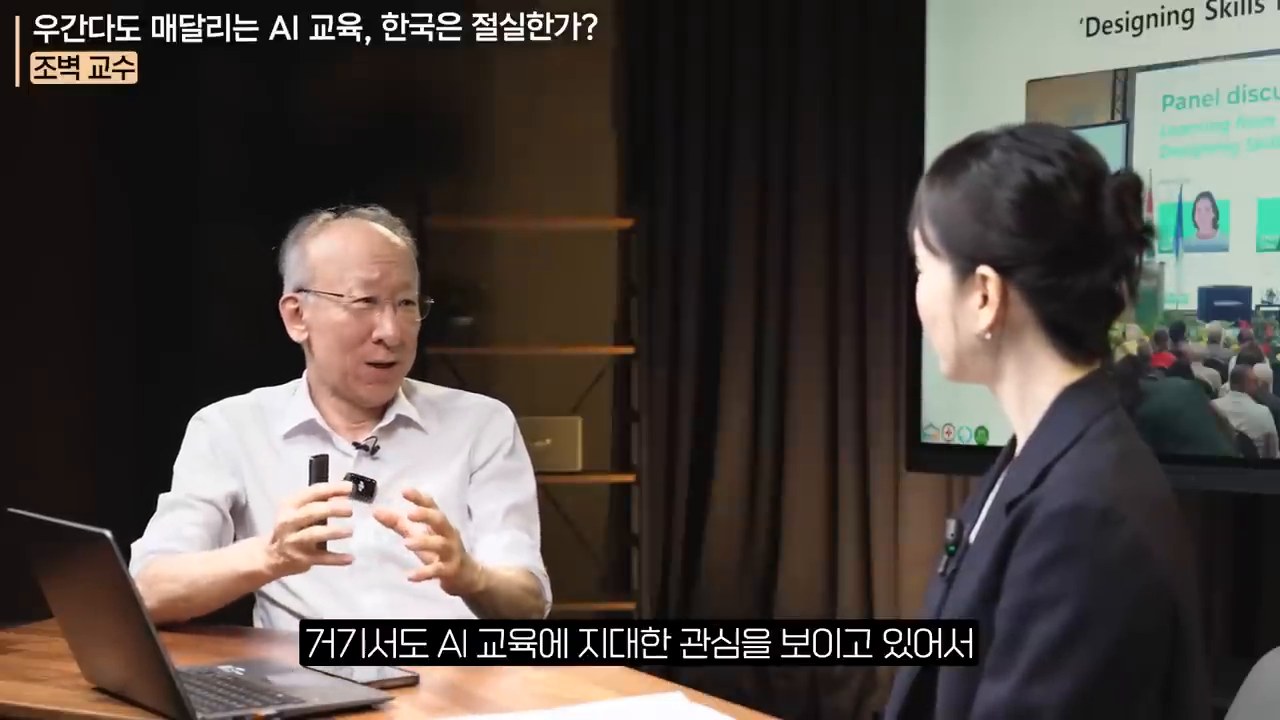
    The article begins by citing a report from KBS News on May 29, 2026, which highlights the challenges faced by graduates from prestigious universities in the United States in securing jobs in the tech industry. This trend is not limited to the US, as it also affects students, job seekers, and educators in Korea, raising questions about the skills required to succeed in the job market.

    The shift in the job market is attributed to the increasing use of AI, which has led to structural changes, reduced hiring, and cost-cutting measures in the tech industry. While having a degree in computer science was once a strong signal for securing a job in the tech industry, the landscape has changed, and the ability to work with AI has become a crucial factor.

    entry level hiring in the AI era
    entry level hiring in the AI era.

    Change in Entry Barriers Rather Than Replacement

    According to Goldman Sachs, generative AI could impact around 300 million jobs worldwide. However, this does not necessarily mean that all these jobs will disappear. Instead, many jobs will undergo changes, with some tasks being automated, and new ones emerging. The challenge lies in the fact that new graduates lack a proven track record, making it essential for them to demonstrate their ability to work with AI tools and produce results quickly.

    The article emphasizes that the focus should be on the change in entry barriers rather than replacement. While experienced professionals can rely on their existing performance and domain knowledge, new graduates need to demonstrate their ability to work with AI tools and produce results quickly.

    AI skills and career preparation
    AI skills and career preparation.

    Combination of Skills Rather Than a Single Major

    A student featured in a video mentions that they are double-majoring in computer science and accounting to connect technology with real-world business problems. This approach highlights the importance of combining skills and knowledge from different fields to succeed in the AI-driven economy.

    The article suggests that having a single major is no longer sufficient; instead, the ability to combine skills and knowledge from different fields, such as accounting, manufacturing, education, healthcare, and public administration, is becoming increasingly important. The focus should be on understanding real-world problems and being able to structure them using AI.

    college education and AI literacy
    college education and AI literacy.

    Social Issue 1: Youth Anxiety is Not Just a Personal Problem

    The article argues that viewing AI job market anxiety as a personal problem due to a lack of effort is misguided. The promise of a university degree leading to a stable job is weakening, and young people are being asked to acquire more skills and qualifications while companies demand more productivity with fewer employees.

    This creates a social issue, as university education is still focused on imparting knowledge in a specific major, while the job market requires skills such as project execution and AI utilization. Shifting the burden solely to individuals will only exacerbate anxiety.

    new graduate portfolio strategy
    new graduate portfolio strategy.

    Social Issue 2: AI Gap Becomes an Employment Gap

    The article highlights that the difference between those who can use AI tools effectively and those who cannot will result in a productivity gap. This gap can widen due to disparities in access to education, practice environments, and mentorship.

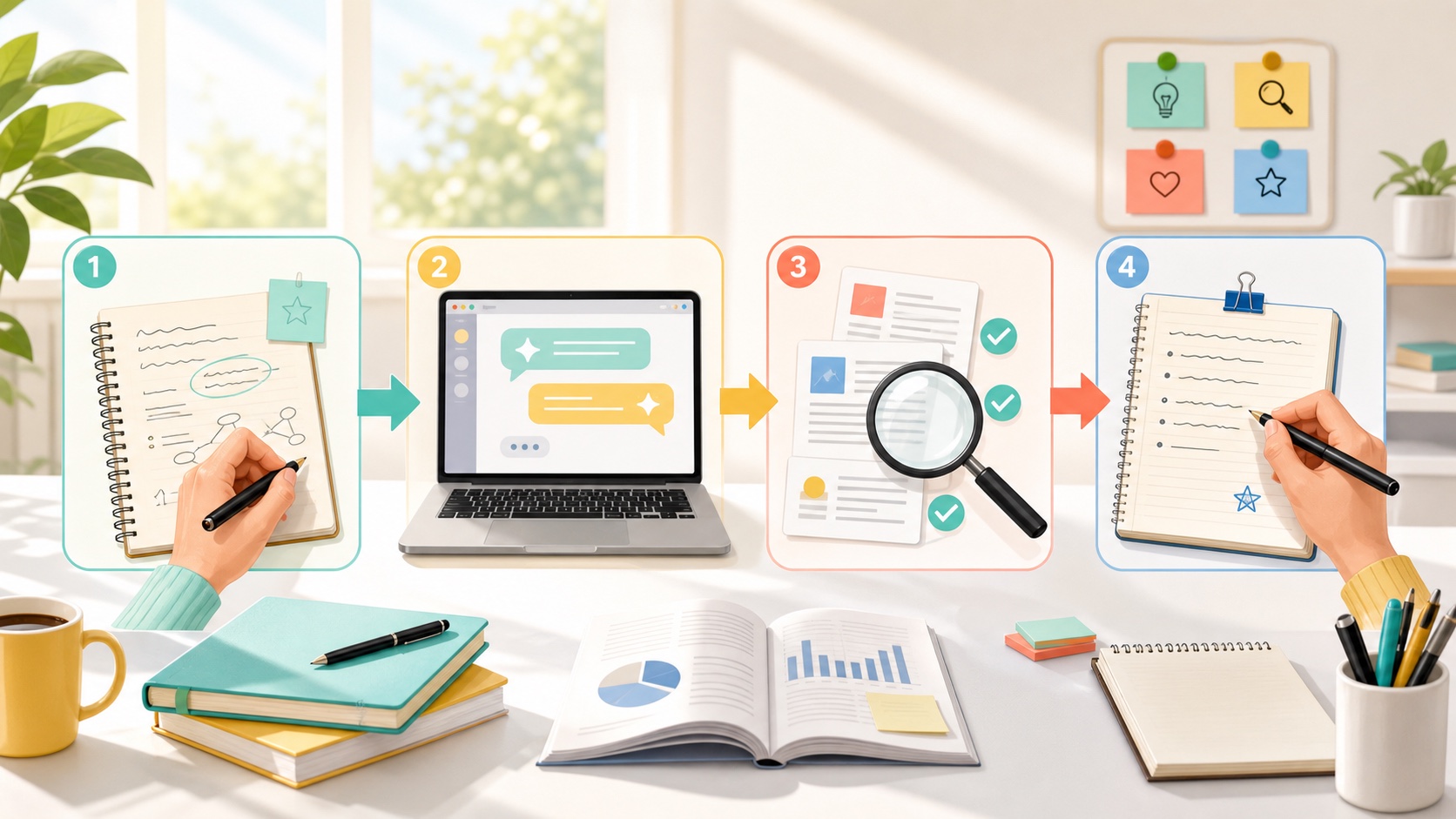
    Therefore, AI education should go beyond just coding skills and include the ability to break down questions, verify data, critically revise results, and design automation that fits the work context.

    Social Issue 3: Focusing Only on Disappearing Jobs Misses New Opportunities

    The article notes that while AI may lead to job displacement in some areas, it also creates new opportunities in fields such as data centers, semiconductors, power, cooling, security, networks, education, consulting, and regulatory compliance.

    Instead of focusing solely on whether to join an AI company, individuals should consider what new bottlenecks are emerging in their industry due to AI and position themselves to address these challenges.

    5 Skills for Individuals to Prepare

    The article outlines five essential skills for individuals to prepare for the AI-driven job market:

    • AI tool utilization: applying tools such as search, summary, coding, documentation, and data cleaning to real-world tasks
    • Domain understanding: connecting major knowledge to real-world problems
    • Verification ability: checking AI results for errors, biases, and sources
    • Work design ability: dividing repetitive tasks between AI and human roles
    • Communication ability: explaining AI-generated outputs in the organization’s language

    What Universities and Organizations Need to Change

    Universities should not view AI utilization solely as a means of preventing academic misconduct. Instead, they should teach students how to use AI in their major courses, how to verify results, and how to take responsibility for their outputs.

    Companies and public organizations should also change their approach to hiring and education. Rather than simply asking if a candidate has experience with AI, they should provide real-world data and ask them to define problems, design prompts, verify results, and write reports.

    Related Reading

    For further reading, the following articles are recommended:

    Conclusion: Transition Strategy Over Fear

    The article concludes that while AI job market anxiety is real, it is essential to focus on developing a transition strategy rather than simply being fearful. The key question should be “What problems can I solve better with AI?” rather than “Will AI take my job?”

    What young people need is not just a collection of specs, but a practical portfolio that demonstrates their ability to connect their major with AI and real-world problems. Universities and organizations also have a clear role to play in redesigning their approach to education and work.

    FAQ

    Will AI Reduce Hiring of New Developers?

    Some companies may reduce or raise the bar for hiring new developers due to AI. However, this does not mean that all development jobs will disappear. Instead, the focus will shift from repetitive coding to problem definition, verification, and domain understanding.

    Will Non-STEM Majors be at a Disadvantage?

    Not necessarily. If individuals can use AI tools to connect their domain knowledge to real-world problems, they can gain a competitive edge. In fields like accounting, education, policy, marketing, and administration, where context is crucial, domain understanding can be a significant advantage.

    What Kind of Portfolio Should University Students Create?

    A portfolio that showcases the process of solving real-world problems, rather than just a list of certifications, is more valuable. Students should record the problem definition, AI tools used, verification process, final output, and limitations.

    What Should Organizational Educators Change?

    Simply teaching AI usage is not enough. Educators should bring real-world work processes into the classroom and practice where to reduce tasks using AI and where human verification is necessary. The educational goal should be to develop the ability to redesign work processes, not just master tools.

    References

    The following sources were referenced in this article:

    • KBS News, AI Job Market Anxiety Report
    • Goldman Sachs, Generative AI Could Raise Global GDP by 7%
    • Federal Reserve Bank of New York, Labor Market for Recent College Graduates
    • Layoffs.fyi, Tech and Startup Layoff Tracker

    Image source: KBS News YouTube video screenshot, used for explanatory and critical purposes.

  • Small Language Models and Open Source AI: Can They Break Big Tech Winner-Take-All?

    Small Language Models and Open Source AI: Can They Break Big Tech Winner-Take-All?

    The Korean article discusses small language models, open source AI, and whether they can weaken the winner-take-all structure of Big Tech. Its message is not that small models will replace frontier models in every task. Rather, Korea and many organizations need to look beyond GPU scale and ask where direction, specialization, physical AI, and the ability to make AI locally can create strategic advantage.

    small language models and open source AI
    small language models and open source AI.

    Original Korean article: 소형 언어 모델과 오픈소스 AI, 승자독식 구조를 깰 수 있을까

    From Hype to Reality Check

    AI democratization beyond big tech
    AI democratization beyond big tech.

    The AI industry has moved from pure excitement to a more sober phase. Users now ask what models can do reliably, how much they cost, where data goes, and whether adoption creates real productivity.

    This reality check is healthy. It forces organizations to distinguish between impressive demonstrations and deployable systems.

    Why Unpopular Choices Matter

    physical AI as a strategic opportunity
    physical AI as a strategic opportunity.

    The source highlights the importance of choices that others are not making. Competing head-on with the largest companies on model size, data centers, and GPU budgets can be unrealistic for smaller countries or firms.

    Strategic advantage may come from specialization, timing, integration, local needs, or physical-world domains where domain knowledge matters more than leaderboard scale.

    Large Model Competition Is Not Enough

    local AI and specialized models
    local AI and specialized models.

    Frontier models are powerful, but a strategy based only on bigger models can deepen dependence on Big Tech. Cost, latency, data governance, and vendor lock-in become structural problems.

    Small language models can be tuned for specific tasks, run closer to the user, and operate with lower cost. They are not universal replacements, but they can be the right tool when the task is narrow and the context is controlled.

    Korea’s AI Strategy Is Not Only About GPUs

    AI leadership skills for organizations
    AI leadership skills for organizations.

    GPU infrastructure matters, but the source argues that Korea must also think about data, applications, talent, manufacturing, robotics, and industry-specific use cases.

    If the whole strategy becomes “buy more GPUs,” Korea may still remain dependent on external platforms. A stronger strategy connects compute with local industries and real deployment.

    Physical AI as a Strategic Area

    Physical AI connects models with robots, devices, factories, vehicles, logistics, healthcare, and manufacturing sites. Korea has strengths in hardware, manufacturing, semiconductors, and industrial systems, so this area may be strategically meaningful.

    In physical AI, success depends on sensors, control, safety, reliability, and domain integration. That creates opportunities beyond pure language model scale.

    AI Democratization Means Making, Not Only Using

    AI democratization is often described as everyone being able to use AI. The source pushes it further: democratization means more people and organizations can make, adapt, and deploy AI systems.

    Open source models and small models matter because they allow inspection, customization, education, and local experimentation. They reduce the distance between user and builder.

    Where Small Language Models Are Strong

    Small models are useful for internal search, classification, device-side assistance, document workflows, domain-specific support, privacy-sensitive tasks, and low-latency services.

    Their strength is focus. If the task is well-defined and the data environment is known, a smaller specialized model may be cheaper, faster, and easier to govern than a general frontier model.

    Capabilities Leaders Need

    AI-era leaders need more than technical vocabulary. They need strategic judgment: where to use large models, where to use small models, where open source is acceptable, and where safety or privacy requires stricter control.

    For individuals and organizations, the checklist is to define the real problem, choose model size by task, build internal data capability, test open source responsibly, and look for areas where direction matters more than size.

    Practical Implications for Readers

    For readers using this article as a working reference, the practical lesson is to move from abstract interest to a concrete audit. Identify where the topic touches your own work, which assumptions are already outdated, what data or tools are missing, and which decision could be tested on a small scale before a larger commitment. Write that test down, assign an owner, and review evidence rather than impressions.

    The Korean source repeatedly treats technology, strategy, and human judgment together. That is why the safest next step is not blind adoption or passive worry. It is disciplined experimentation: define the problem, compare alternatives, verify results, protect sensitive information, and keep the human purpose visible while the tool or trend evolves.

    Related Reading

    FAQ

    What is AI democratization?

    It means not only using AI services but being able to build, adapt, inspect, and deploy AI systems for local needs.

    Can small language models replace large models?

    They can replace large models in some focused tasks, but not in every broad reasoning or frontier capability use case.

    Where can Korea compete in AI?

    Korea can look to physical AI, manufacturing, robotics, domain applications, efficient models, and industry integration.

    What capability matters most for individuals?

    Problem definition, learning speed, judgment about tools, and the ability to combine AI with domain knowledge.

  • Future Talent in the AI Era: Thinking Power, AI Factories, and Korea’s AI Nation Strategy

    Future Talent in the AI Era: Thinking Power, AI Factories, and Korea’s AI Nation Strategy

    The Korean source organizes Choi Tae-won’s comments around future talent, agentic AI, AI factories, and Korea’s AI nation strategy. Its key message is that the unit of production is shifting from goods to intelligence. Therefore, future talent must combine thinking power, adaptability, empathy, and body skills while Korea builds systems that let society actually use AI.

    future talent in the AI era
    future talent in the AI era.

    Original Korean article: 최태원이 말한 AI 시대 미래 인재: 생각하는 힘과 AI 네이션 전략

    The Production Unit Changes From Products to Intelligence

    AI factory and agentic AI strategy
    AI factory and agentic AI strategy.

    In the industrial era, production was measured through goods, factories, and physical output. In the AI era, intelligence itself becomes a production unit. Models, agents, data, and compute create decisions, services, and automation.

    This is why AI factories matter. They are not only data centers; they are infrastructure for producing usable intelligence at scale.

    Future Talent Becomes More Generalist

    thinking power and adaptability
    thinking power and adaptability.

    The source argues that future talent is not only a narrow specialist. AI can support specialized tasks, so people must connect fields, ask larger questions, and coordinate multiple capabilities.

    A generalist in this sense is not shallow. It is someone who can combine domain knowledge, AI tools, human context, and strategic judgment across boundaries.

    Four Capabilities Individuals Need

    empathy and body skills in the AI era
    empathy and body skills in the AI era.

    The first is thinking power: the ability to define problems, question assumptions, and decide what matters. The second is adaptability: learning new tools and changing methods without losing direction.

    The third is empathy, because AI may handle information but humans still need trust, care, negotiation, and social understanding. The fourth is body skill: the ability to work in the physical world, sense context, and connect digital intelligence with real action.

    Korea’s AI Strategy: Speed, Scale, and Safety

    Korea AI nation strategy
    Korea AI nation strategy.

    The source summarizes AI nation strategy through speed, scale, and safety. Speed matters because AI adoption compounds. Scale matters because data, compute, talent, and applications need national coordination.

    Safety matters because uncontrolled adoption can create privacy, bias, security, and social risks. A serious AI nation strategy must move fast without treating safety as an afterthought.

    The Missing Piece: A Social System That Uses AI

    Korea should not focus only on owning models. The more important question is whether schools, companies, public agencies, small businesses, and individuals can use AI in daily systems.

    That requires training, workflows, procurement, data standards, infrastructure, and trust. AI becomes national capability only when it changes how society solves problems.

    What Individuals and Organizations Should Start With

    Individuals can begin by using AI for summarizing, drafting, coding, research, and planning, but they should also practice verifying outputs and asking better questions.

    Organizations should identify repeated work, redesign processes, prepare data, create internal rules, and train people. AI adoption is not installing a tool; it is changing the operating method.

    Key Takeaway

    Future talent is not defined by memorizing more than AI. It is defined by thinking with AI, adapting faster, understanding people, and connecting intelligence to real work.

    Korea’s AI nation strategy should therefore combine infrastructure with education, safety, and practical use across industries.

    Practical Implications for Readers

    For readers using this article as a working reference, the practical lesson is to move from abstract interest to a concrete audit. Identify where the topic touches your own work, which assumptions are already outdated, what data or tools are missing, and which decision could be tested on a small scale before a larger commitment. Write that test down, assign an owner, and review evidence rather than impressions.

    The Korean source repeatedly treats technology, strategy, and human judgment together. That is why the safest next step is not blind adoption or passive worry. It is disciplined experimentation: define the problem, compare alternatives, verify results, protect sensitive information, and keep the human purpose visible while the tool or trend evolves.

    Related Reading

    FAQ

    Will all specialists disappear in the AI era?

    No. Specialists remain important, but they need broader thinking and the ability to work with AI across adjacent fields.

    How is agentic AI different from chatbots?

    Agentic AI can plan and execute tasks across tools, not only answer questions in a chat window.

    What should students study?

    They should study fundamentals, AI literacy, problem definition, communication, empathy, and real-world practice.

    Where should companies start AI adoption?

    Start with repeated workflows where data is available, risk is manageable, and results can be verified.

    What matters most for an AI nation?

    Usable infrastructure, trained people, practical workflows, safety, and social adoption at scale.

  • AI Era Skills: What Demis Hassabis Teaches About Learning, STEM, and Agents

    AI Era Skills: What Demis Hassabis Teaches About Learning, STEM, and Agents

    The Korean source uses Demis Hassabis’s interviews and the history of AlphaGo and AlphaFold to think about learning in the AI era. Its main lesson is that students and workers should not stop learning fundamentals. AI makes math, science, experimentation, and problem definition more important because people must know how to use powerful agents wisely.

    AI era skills from Demis Hassabis
    AI era skills from Demis Hassabis.

    Original Korean article: AI 시대 필수 역량, 데미스 하사비스 인터뷰로 정리한 공부의 방향

    AlphaGo Meant More Than a Go Victory

    AlphaGo and AI learning lessons
    AlphaGo and AI learning lessons.

    AlphaGo was not important only because it beat a human Go champion. It showed that AI could discover strategies that surprised experts and changed how people thought about intelligence.

    The source treats AlphaGo as a symbolic moment: machines could now explore complex decision spaces in ways that humans had not fully anticipated.

    Games Were Training Grounds, Not Toys

    AlphaFold and science with AI
    AlphaFold and science with AI.

    Hassabis’s background in games matters because games provide rules, feedback, goals, and environments for learning. They are useful laboratories for AI research.

    This teaches a broader learning principle. Good practice environments give clear feedback and allow repeated experimentation, whether the subject is coding, science, design, or business.

    AlphaFold Showed AI as a Scientific Tool

    STEM foundations in the AI era
    STEM foundations in the AI era.

    AlphaFold demonstrated that AI could contribute to science by predicting protein structures and accelerating biological research. This moved AI from game achievement to scientific infrastructure.

    The implication is that AI-era learning should connect computation with real domains. The most powerful applications may appear when AI meets biology, physics, chemistry, medicine, and engineering.

    Math and Science Still Matter

    AI agents and CEO-like thinking
    AI agents and CEO-like thinking.

    The source rejects the idea that AI makes fundamentals unnecessary. If anything, math and science become more important because they help people understand problems, evaluate outputs, and work with advanced tools.

    People who rely only on AI answers without conceptual grounding may become faster but not wiser. Fundamentals protect judgment.

    Children Should Use AI, Not Only Study About It

    Students should not learn AI only as abstract theory. They should experiment with tools, ask questions, build small projects, and observe where AI helps or fails.

    Hands-on use creates intuition. It teaches prompting, verification, iteration, and the limits of automation.

    Think Like a CEO in the Agent Era

    The source says a future skill is the ability to think like a CEO. This does not mean everyone becomes an executive. It means people must define goals, delegate tasks to agents, evaluate results, allocate resources, and take responsibility.

    As AI agents handle more execution, human value moves toward orchestration: deciding what should be done, in what order, by which tool, and with what standard.

    Essential Skills Checklist

    Key skills include math and science foundations, coding or computational thinking, AI literacy, problem definition, experimentation, communication, ethics, and the ability to learn continuously.

    For workers, the first step is to use AI on a real task, verify the result, and then ask what part of the workflow can be redesigned.

    Conclusion: Study Moves Toward Problem Definition

    The conclusion is that AI-era study is not memorization versus AI. It is learning how to define problems that are worth solving and how to use AI as a partner in solving them.

    Hassabis’s examples show that deep fundamentals and bold tool use belong together. The future favors people who can connect both.

    Practical Implications for Readers

    For readers using this article as a working reference, the practical lesson is to move from abstract interest to a concrete audit. Identify where the topic touches your own work, which assumptions are already outdated, what data or tools are missing, and which decision could be tested on a small scale before a larger commitment. Write that test down, assign an owner, and review evidence rather than impressions.

    The Korean source repeatedly treats technology, strategy, and human judgment together. That is why the safest next step is not blind adoption or passive worry. It is disciplined experimentation: define the problem, compare alternatives, verify results, protect sensitive information, and keep the human purpose visible while the tool or trend evolves.

    Related Reading

    FAQ

    Can students learn less math and science because of AI?

    No. Math and science help students understand, verify, and apply AI in meaningful domains.

    What AI skill should children learn first?

    They should learn to use AI tools through small projects while checking accuracy and understanding limitations.

    Who benefits in the AI agent era?

    People who define goals clearly, delegate intelligently, verify results, and connect AI to domain knowledge.

    Why discuss AlphaGo and AlphaFold together?

    Together they show AI moving from strategic games to scientific discovery.

    What should workers start with?

    Choose one real task, use AI to assist it, verify the output, and redesign the workflow.

  • AI as a Civilization Shift: How Work and Careers Change in the Plus Human Era

    AI as a Civilization Shift: How Work and Careers Change in the Plus Human Era

    The Korean source interprets AI not as a temporary tool trend but as a civilization-level shift. In the Plus Human framing, people are not simply replaced by AI; they are pushed to combine with it. Work changes because knowledge becomes cheaper, understanding becomes more valuable, and tasks inside jobs are reorganized one by one.

    AI civilization shift and work
    AI civilization shift and work.

    Original Korean article: AI 문명 시대, 일과 직업은 어떻게 바뀌나: 김미경 플러스 휴먼 인터뷰 정리

    AI Is Closer to a New Electricity

    AI as the new electricity
    AI as the new electricity.

    AI is compared to electricity because it can enter every industry and everyday routine. It is not one app or one device. It becomes a general-purpose capability that changes how work is produced.

    This framing helps explain why people feel both excitement and fear. When a technology becomes infrastructure, every job must ask how it will connect to that infrastructure.

    Different From the Internet and SNS

    understanding becomes more valuable than knowledge
    understanding becomes more valuable than knowledge.

    The internet changed information access and SNS changed communication. AI enters the way people earn money more directly because it can draft, analyze, translate, code, design, summarize, and serve customers.

    That means adoption is not optional for many workers. Even if a person does not love AI, their workplace may begin measuring speed, quality, and cost with AI-assisted workflows in mind.

    Knowledge Gets Cheaper, Understanding Gets Expensive

    career change in the AI era
    career change in the AI era.

    AI lowers the cost of obtaining information and producing first drafts. But understanding the user, context, emotion, risk, and business situation becomes more valuable.

    The source distinguishes thinking from understanding. Mere thinking can become mechanical problem-solving; understanding includes context, empathy, motive, and judgment.

    Job Risk Arrives by Task, Not All at Once

    plus human working with AI
    plus human working with AI.

    The article avoids a simplistic “all jobs disappear” claim. Work is made of tasks, and AI enters tasks unevenly. Repetitive writing, summary, search, reporting, and analysis may change quickly; human-facing judgment may change differently.

    Therefore the practical question is: which parts of my job can AI do, which parts require human review, and which parts become more important because AI handles the rest?

    Look at Opening Doors, Not Only Closing Doors

    Some doors will close, but new roles appear around AI operation, review, integration, data preparation, training, content strategy, and human-centered service.

    The Plus Human attitude is to search for combinations. A person who knows a domain and learns AI can often create more value than either pure technology knowledge or old experience alone.

    Immediate AI Adaptation Checklist

    Find repetitive organizing tasks. Design questions instead of only searching. Reduce first-draft time and increase review time. List the tasks you can delegate to AI. Train understanding that only humans can provide.

    This checklist turns anxiety into action. The goal is not to become an AI engineer overnight; it is to redesign one’s own work with AI as a partner.

    Plus Human Means Combining With AI

    A Plus Human is not someone who passively waits to be replaced. It is a person who adds AI to their thinking, production, communication, and learning while keeping human judgment.

    This requires humility and agency at the same time: humility to learn new tools, agency to decide how those tools serve real human goals.

    Conclusion: Learn AI for Possibility, Not Only Fear

    The source concludes that learning AI should not be driven only by anxiety. It can also expand what individuals can create, learn, and offer.

    The better question is not “Will AI take my job?” but “Which part of my work can be amplified, and what human understanding should I strengthen because AI is here?”

    Practical Implications for Readers

    For readers using this article as a working reference, the practical lesson is to move from abstract interest to a concrete audit. Identify where the topic touches your own work, which assumptions are already outdated, what data or tools are missing, and which decision could be tested on a small scale before a larger commitment. Write that test down, assign an owner, and review evidence rather than impressions.

    The Korean source repeatedly treats technology, strategy, and human judgment together. That is why the safest next step is not blind adoption or passive worry. It is disciplined experimentation: define the problem, compare alternatives, verify results, protect sensitive information, and keep the human purpose visible while the tool or trend evolves.

    Related Reading

    FAQ

    Do I really need to learn AI?

    Yes, at least basic use and judgment. AI is becoming part of many work systems, even outside technology jobs.

    Will AI replace every job?

    No. It changes tasks inside jobs unevenly, creating both risk and new opportunities.

    Is it too late for people in their 40s to 60s?

    No. Domain experience can become more valuable when combined with AI tools.

    What is the most important ability?

    Understanding: context, people, problems, and meaning beyond raw information.

    What should I try first?

    Use AI on one repeated task, compare the result, and redesign the workflow with human review.

  • Claude Skills for Small Business: From Chatbot to Workflow Automation

    Claude Skills for Small Business: From Chatbot to Workflow Automation

    This fuller English adaptation follows the Korean source on Claude Skills for small businesses. The key claim is that a Skill is not just a smarter chatbot prompt. It can package repeatable work, connect data, and help small teams automate routines that normally consume the owner’s morning and attention.

    Claude Skills for small business
    Claude Skills for small business.

    Original Korean article: Claude 소상공인 Skill, 챗봇을 넘어 업무 자동화 도구가 되다

    Why Claude Skills for Small Business Matter

    Small businesses often do not have dedicated operations teams. The owner or manager checks sales, messages, invoices, appointments, hiring, inventory, and customer issues personally. A general chatbot can answer questions, but it does not automatically know the business context or the repeated format of work.

    A Claude Skill can bundle instructions, templates, files, and workflow logic so that the AI performs a specific job more consistently. That is why the source article describes the shift from chatbot to workflow automation.

    Business Pulse: Turning the Day Into One Briefing

    Reducing the morning check burden

    Business Pulse represents a daily briefing workflow. Instead of opening multiple apps to check orders, calendar items, reviews, messages, and urgent tasks, the owner receives a summarized snapshot. The value is not only speed; it is attention management. A clear briefing helps the owner decide what must be handled first.

    For a small shop, salon, restaurant, agency, or local service business, this can reduce the feeling of being scattered across tools. The Skill becomes a morning operations packet that organizes signals into actions.

    Invoice Chase: Where Receivables Management Becomes Automated

    Data connection matters more than automatic email

    Invoice Chase shows why connected data matters. Sending a reminder email is easy; knowing which invoice is overdue, who has already replied, what tone is appropriate, and whether the customer is important requires context. A Skill can combine invoice data, customer history, and approved message templates.

    The Korean source highlights that automation should not mean careless pressure. Human review may remain important for sensitive customers, disputes, or large balances. But routine follow-ups can be standardized so that cash flow does not depend on memory.

    Job Post Builder: Hiring Work Becomes a Packet

    small business daily briefing automation
    small business daily briefing automation.

    Improving consistency in hiring documents

    Small businesses hire part-time staff, service workers, assistants, or specialists without a formal HR department. Job Post Builder can turn a role description into a consistent posting with responsibilities, requirements, schedule, compensation details, and evaluation criteria.

    This helps avoid vague hiring posts. It also lets the business reuse successful templates. Over time, the hiring process becomes a packet: job definition, posting, screening questions, interview guide, and follow-up message.

    App Connectors and MCP Create Executable AI

    The article connects Claude Skills with app connectors and MCP because execution requires access to real systems. A Skill becomes more useful when it can read approved documents, calendars, invoices, or CRM data. MCP-style connections can make that access more structured and permissioned.

    The practical lesson is that workflow automation needs both intelligence and connection. Without data, the AI guesses. With uncontrolled data, the AI becomes risky. The correct middle is permissioned access to the minimum information needed for the task.

    Security and Permissions Before Adoption

    invoice and email workflow automation
    invoice and email workflow automation.

    Tasks where human review must remain

    Small businesses should not automate everything blindly. Payments, legal messages, hiring decisions, customer refunds, medical or financial advice, and public posts should keep human review. Credentials should never be pasted into chats. Access should be limited, logged, and revoked when no longer needed.

    Practical Benefits for Small Business Owners

    The benefits are concrete: fewer repetitive checks, faster document creation, more consistent customer communication, better receivables follow-up, and less dependence on the owner’s memory. The deeper benefit is that small businesses can operate with a level of process discipline that previously required larger teams.

    A useful way to start is to choose one daily pain point rather than automate the whole business at once. If the owner spends thirty minutes every morning checking messages and unpaid invoices, that is a good first workflow. If hiring posts are inconsistent, Job Post Builder is a better starting point. Small wins build trust and reveal where data connections are still weak.

    Related Reading

    job post builder with Claude Skills
    job post builder with Claude Skills.

    FAQ

    What is a Claude Skill for small business?

    It is a packaged workflow that helps Claude perform a repeated business task with relevant instructions, context, and templates.

    How is a Skill different from a normal prompt?

    A prompt is one instruction. A Skill can preserve reusable workflow structure, files, and task-specific behavior.

    Can small businesses adopt it immediately?

    They can start with low-risk workflows, but should review permissions, privacy, data connections, and human approval rules first.

    MCP and app connectors for business AI
    MCP and app connectors for business AI.
  • How to Prepare for the AI Era: Literacy, Judgment, and Human Value

    How to Prepare for the AI Era: Literacy, Judgment, and Human Value

    This English version is a fuller translation and adaptation of the original Korean article, “AI 시대의 승자는 무엇을 준비할까? 세바시 강연 6편에서 뽑은 핵심,” for global readers. The article explores the essential skills and mindset required to thrive in the AI era, based on a collection of lectures by six experts. As AI becomes a fundamental tool for work, study, and creativity, the true difference lies in the ability to read the changing flow, redefine problems, and create value that resonates with people.

    prepare for the AI era
    prepare for the AI era.

    Original Korean article: AI 시대의 승자는 무엇을 준비할까? 세바시 강연 6편에서 뽑은 핵심

    Winners in the AI Era Read the Structure of Change

    According to Jang Dong-seon, change is not just about the emergence of new products, but about altering people’s behavior, relationships, and social systems. The true power of change lies in its ability to transform these fundamental aspects of human society. In the context of AI, it’s essential to look beyond the surface level of new tools and technologies and understand the underlying structure of change.

    Direction of Change is More Important than Tool Names

    The names of AI tools are constantly changing, and what’s trendy today may become a basic function tomorrow. Instead of asking “which tool should I learn,” it’s more important to ask: What behavior does this technology make easier? Why do people choose this technology? What assumptions in my work are being challenged? What new expectations will customers, colleagues, and organizations have as a result of this change? Winners in the AI era focus on understanding the structure of change rather than just following new features.

    AI literacy and future scenarios
    AI literacy and future scenarios.

    In an Uncertain Future, Multiple Scenarios are Necessary

    Seo Yong-seok describes the current era as one of “super uncertainty,” characterized by climate crises, geopolitical conflicts, technological shocks, and economic changes. In such an environment, making definitive predictions about the future can be hazardous. Instead, it’s essential to develop the ability to imagine multiple possible futures and prepare for various scenarios.

    Future Literacy is the Ability to Reduce Shock

    Future literacy is not about predicting the future accurately but about being able to imagine multiple possible futures and prepare for them. This ability is crucial for individuals and organizations to navigate the complexities of the AI era. By developing future literacy, we can reduce the shock of unexpected events and create a more resilient and adaptable mindset.

    human relationships in the AI era
    human relationships in the AI era.

    AI Proximity Increases the Importance of Human Relationship Safety Nets

    Kim Sang-gyun highlights the potential for people to become emotionally dependent on AI characters and conversational technologies. As AI becomes more natural and responsive, we may start to see it as a relationship partner rather than just a machine. However, this can lead to a weakening of human relationships if we rely too heavily on AI for emotional support.

    AI Utilization Ability Includes Boundary Sense

    While AI can be useful for providing comfort, advice, and conversation, it’s essential to maintain a sense of boundaries and not rely solely on AI for emotional support. In the workplace, AI can assist with tasks, but human judgment, responsibility, and trust-building are still essential. A strong safety net in the AI era requires a combination of technological proficiency, boundary sense, and human relationships.

    problem solving with AI tools
    problem solving with AI tools.

    Literacy is the Basic Fitness for the AI Era

    Lee Jung-mo emphasizes that literacy is not just about reading texts but about understanding information, connecting contexts, and evaluating the validity of explanations. In an era where AI can generate answers quickly, literacy is more crucial than ever. It’s essential to develop the ability to critically evaluate AI-generated content and ask questions like: What is the basis for this answer? Are there any missing conditions? Are there alternative interpretations?

    Answer-Receiving Ability is Less Important than Answer-Judging Ability

    AI can produce plausible sentences rapidly, but that doesn’t mean they are always accurate or relevant. It’s essential to develop the ability to judge answers critically, considering factors like context, assumptions, and potential biases. By doing so, we can use AI-generated content as a starting point for further inquiry and exploration.

    AI era checklist for work and learning
    AI era checklist for work and learning.

    AI is a Problem-Solving Tool, Not a Technology for Show

    Jo Yong-min cautions against adopting AI as a trendy technology without a clear understanding of its purpose. True utilization of AI begins when we accurately identify the problems we want to solve. It’s essential to define problems clearly, break them down into smaller parts, and distinguish between tasks that AI can handle and those that require human judgment.

    Good AI Utilization Starts with Problem Definition

    Instead of asking “should we use AI,” it’s more important to ask “what problem do we want to solve with AI?” By focusing on problem definition, we can use AI as a tool to enhance productivity and creativity, rather than just as a means to showcase technology.

    Ultimately, Human-Selected Value is the Survival Strategy

    Choi Jae-bung emphasizes that while AI can accelerate production and reduce costs, the ultimate value lies in being chosen by people. Whether it’s a product, service, or idea, its value is determined by the people who use it, interact with it, and recommend it to others. In the AI era, it’s essential to develop the ability to understand human problems, design better experiences, and build trust.

    Subscriptions and Likes are Not Just Simple Buttons

    Subscriptions and likes are digital signals of human selection. People invest time in things that are helpful, enjoyable, trustworthy, and meaningful to them. Companies and individuals who fail to receive these signals may struggle to survive, even with advanced AI capabilities. Therefore, preparation for the AI era requires a combination of technological proficiency, human understanding, and trust-building abilities.

    Practical Checklist for Winners in the AI Era

    To prepare for the AI era, it’s essential to start with small, practical steps. Here’s a checklist to get you started: Measure the time saved by using AI for one task per week, review AI-generated content for accuracy and context, distinguish between repetitive and judgment-based tasks, record customer or colleague pain points, and manage human relationships, trust, and communication alongside AI utilization. Remember, the key is not just about knowing AI but about using it to solve problems, create value, and build meaningful relationships.

    FAQ

    Can only developers or experts be winners in the AI era?

    No, while having development knowledge can be advantageous, it’s not necessary for everyone to become a developer. The key is to understand the problems in your field and connect AI to solve them. Anyone can utilize AI in their work, regardless of their profession.

    Is learning many AI tools sufficient?

    Learning tools is necessary but not sufficient. Tools are constantly changing, and what’s more important is developing the ability to ask questions, understand context, define problems, and evaluate results. With these skills, you can adapt quickly to new tools and technologies.

    What should I start with?

    Start by selecting a small, repetitive task and measuring the time saved by using AI. Choose tasks where you can compare results directly, such as meeting notes, data summarization, or customer question classification. Record the time, quality, and modification required before and after using AI, and you’ll find it easier to discover the right utilization method for your work.

    Related Reading

    For more context and insights, explore these related articles on thinknote.co.kr: Vibe Coding for Beginners: https://www.thinknote.co.kr/vibe-coding-beginners-it-basics-ai-coding-tools/, AI Future of Work: https://www.thinknote.co.kr/ai-future-of-work-meaning-careers-human-roles/, Create AI Skills: https://www.thinknote.co.kr/create-ai-skills-claude-gpt-work-automation/

  • Vibe Coding for Beginners: The IT Map You Need Before AI Writes Code

    Vibe Coding for Beginners: The IT Map You Need Before AI Writes Code

    This English version is a fuller translation and adaptation of the original Korean article, “바이브 코딩 입문자가 막히는 이유, 코딩보다 먼저 알아야 할 IT 지도,” for global readers. The article discusses the importance of understanding the basics of IT and coding before diving into vibe coding, a new way of coding that utilizes AI tools to generate code quickly. However, the article highlights that relying solely on AI tools can lead to confusion and frustration when dealing with errors and understanding the underlying structure of the code.

    vibe coding for beginners IT map
    vibe coding for beginners IT map.

    Original Korean article: 바이브 코딩 입문자가 막히는 이유, 코딩보다 먼저 알아야 할 IT 지도

    Understanding the Structure is More Important than the Tool

    Even in an era where AI can write code for us, the fundamental structure of development remains the same. In fact, beginners need to have a broader understanding of the IT map to navigate and modify the code generated by AI tools. This includes understanding the difference between frontend and backend code, identifying errors, and knowing how to deploy the code to a server or cloud.

    Judgment is Still a Human Responsibility

    While AI can generate code quickly, it’s essential to remember that the user is still responsible for making judgments about the code. This includes answering questions such as: Is this code for the frontend or backend? Is the error due to an execution environment issue or a syntax problem? Will the result be deployed to the internet or only viewed on my local computer? What type of data storage will be used? By answering these questions, users can provide more specific instructions to the AI tool and get more accurate results.

    AI coding tools and IDE basics
    AI coding tools and IDE basics.

    ChatGPT, Claude, and Cursor are Not the Same

    ChatGPT and Gemini are conversational AI tools that can be used to ask questions and receive answers. On the other hand, Cursor is a code editor that combines AI and development environment, making it closer to an integrated development environment (IDE). Claude is also a development assistant tool that can be used in conjunction with code editors. Understanding the differences between these tools is essential to choose the right one for the task at hand.

    IDE is a Workshop for Handling Code

    An IDE is a workshop where code is written, managed, and executed. It’s a development environment that connects coding, file management, and execution. Visual Studio Code and Cursor are examples of IDEs. When starting with vibe coding, it’s essential to separate the task of choosing an AI tool from understanding the development environment. Regardless of the AI tool used, the code is still stored in files and modified within the development environment.

    Git and GitHub for beginners
    Git and GitHub for beginners.

    Context is More Important than Prompt

    Initially, AI utilization focused on crafting the perfect prompt. However, now it’s more important to provide context to the AI tool. Context refers to the surrounding circumstances that the AI needs to make a judgment. By providing information such as project purpose, current file structure, error messages, and desired output format, the AI can provide more accurate answers. For example, instead of saying “create a login feature,” it’s better to say “I have a React frontend and a FastAPI backend, and I want to implement a login feature using JWT. I’m currently getting a 401 error.”

    Source Code and GitHub are Essential

    The result of AI-generated code is still source code, which is a file written in a programming language such as Java, Python, or JavaScript. It’s essential to manage these files and track changes using a version control system like Git. GitHub is a service that stores and manages code repositories, making it possible to collaborate with others and track changes.

    frontend backend API and server basics
    frontend backend API and server basics.

    Git is a Tool for Managing Change History

    Git is a tool that manages the change history of code. GitHub is a service that stores and manages code repositories. While Git may seem challenging at first, understanding the basic concepts of repositories, commits, branches, and pushes is essential. In vibe coding, GitHub is crucial because it allows users to revert to previous versions of the code, work on the same project from different computers, and collaborate with others.

    Build and Execution are the Processes of Turning Code into a Service

    Source code is not the final product. Depending on the language and environment, the code may need to be compiled or built before it can be executed. In web projects, libraries and configuration files are bundled together to create a deployable result. When the AI tool reports a “build error,” it’s not just a syntax problem. The issue could be related to library versions, environment variables, execution commands, or folder locations. Therefore, vibe coding beginners need to develop the ability to read code and understand project structure.

    deployment and database concepts for AI coding
    deployment and database concepts for AI coding.

    Distinguishing Between Frontend and Backend Reduces Errors

    The frontend refers to the area responsible for creating the user interface, including web screens, app screens, buttons, input fields, lists, and designs. React, React Native, and Flutter are popular tools for frontend development. The backend, on the other hand, refers to the server-side program that handles data processing, login, posting, payment processing, and data retrieval. Spring Boot, Node.js, and FastAPI are popular frameworks for backend development.

    Backend Handles Data Processing Behind the Scenes

    When creating an app using vibe coding, if the screen is visible but data is not being saved, it’s not just a frontend issue. The backend API, server execution status, and database connection also need to be checked. Understanding the structure of the web and app, including the client-server relationship, makes it easier to identify and solve problems.

    Server, Port, API, and Database are Essential Concepts After Deployment

    A server program runs on a specific port. Web servers often run on ports 80 or 443. During development, ports 3000, 5000, or 8000 are commonly used. Understanding the concepts of URL, HTTP, and API is essential for deploying and managing web services. When encountering errors such as “CORS error,” “404,” “500,” or “connection refused,” it’s essential to understand the underlying causes, which often relate to address, port, server execution, API path, or permission issues.

    API is the Channel for Client-Server Communication

    An API is an agreement between the client and server for exchanging data. GET is used for retrieving data, POST for sending new data, PUT for modifying data, and DELETE for deleting data. JSON is a common format for API responses. A database is a space for storing actual data, and SQL is a language for querying or modifying data in the database.

    A Suggested Order for Learning

    It’s not necessary to learn all the technologies at once. Instead, following a suggested order can help reduce confusion and errors. By understanding the basics of IT and coding, including the concepts of frontend, backend, server, API, and database, users can ask more specific questions to the AI tool and get more accurate results.

    FAQ

    Do I Need to Learn Programming Languages Before Starting Vibe Coding?

    While it’s not necessary to deeply learn programming languages, understanding the basic concepts and roles of languages such as JavaScript, Python, and HTML is essential for checking the AI’s answers and modifying the code.

    Can I Use Cursor Without Knowing GitHub?

    No, Cursor is a code editor, and GitHub is a service for managing code repositories. They have different roles, and understanding both is essential for managing and tracking changes in the code.

    What is the Difference Between Localhost and Server?

    Localhost refers to the environment that runs only on the user’s computer, while a server is an environment that can be accessed by multiple users over a network. Deployment is the process of moving the result from the local environment to a server or cloud.

    Do I Need to Learn API?

    While it’s not necessary to learn API for simple experiments that only involve creating a screen, understanding API concepts is essential for creating actual services that involve login, posting, payment, and data storage.

    Conclusion: The Speed of AI Coding Depends on Basic Concepts

    Vibe coding makes coding easier, but it’s essential to remember that the fundamental structure of development remains the same. As AI generates code, humans need to make judgments about the code and understand where errors occur. By understanding the basics of IT and coding, including the concepts of frontend, backend, server, API, and database, users can reduce errors and create more accurate results.

    Related Reading

    For more information on AI and digital transformation, please visit our AI and digital transformation category. You can also find related articles on Agentic Engineering After Vibe Coding, AI-Native Workflows, and Create AI Skills.

    References

    Technical Note with Alex YouTube: Vibe Coding Without Obstacles. GitHub Docs. MDN Web Docs: HTTP. Cloudflare Pages Docs.

  • Antigravity CLI and Obsidian Automation: Turning Notes Into an AI Work Hub

    Antigravity CLI and Obsidian Automation: Turning Notes Into an AI Work Hub

    This fuller English adaptation follows the Korean source on Antigravity CLI, Obsidian, and OpsiGravity. The important point is that the combination should not be seen as “just another note app setup.” It points to a workflow where notes, images, search, and external AI tools become one operational knowledge hub.

    Antigravity CLI and Obsidian automation workflow
    Antigravity CLI and Obsidian automation workflow.

    Original Korean article: Antigravity CLI Obsidian 자동화: OpsiGravity로 노트·이미지·검색을 한 번에 연결하는 방법

    Why the Antigravity CLI and Obsidian Combination Matters

    Look first at the work hub, not the note app

    Obsidian is powerful because it stores knowledge in local Markdown files and lets users build links between ideas. Antigravity CLI adds a command-line AI layer. OpsiGravity connects these into a workflow where notes can become prompts, image inputs, research seeds, and reusable knowledge units.

    The Korean source argues that the key is not the novelty of a plugin. It is the change in work structure. A note is no longer a passive archive. It becomes an input that can trigger generation, search, rewriting, splitting, and connection.

    What Is OpsiGravity?

    Main features shown in OpsiGravity

    OpsiGravity is presented as an automation layer that links Obsidian notes with Antigravity CLI and related tools. It can use the content of a note as context, support image generation flows, help restructure long documents, and connect to external search or build tools. For knowledge workers, this means the same note can support writing, research, visual ideation, and task execution.

    The source is careful not to treat it as magic. The quality of output depends on the quality of notes, prompts, files, and review. But when the workflow is organized, the user can reduce context switching between note app, browser, AI chat, image tool, and terminal.

    Creating Note-Based Images With Antigravity CLI

    Advantages and limits of image generation

    One practical flow is turning a note into an image prompt. A user may write a concept, brand direction, scene description, or article outline in Obsidian, then ask the CLI workflow to generate an image based on that note. This is useful for blog thumbnails, presentation visuals, mood boards, and ideation.

    However, image generation still needs human taste. The model may misunderstand tone, produce visual artifacts, or miss brand consistency. The source article’s practical view is that AI images are helpful drafts, not automatic final assets. Users should keep prompts, outputs, and revisions together so the process improves over time.


    Note Surgeon and Atomic Split for Knowledge Management

    Obsidian as an AI work hub with OpsiGravity
    Obsidian as an AI work hub with OpsiGravity.
    Turning long reports into reusable notes

    Long documents are difficult to reuse. Note Surgeon and Atomic Split represent the idea of cutting a long report into smaller, linked notes. Each atomic note can contain one claim, one concept, one example, or one action item. This makes future writing and research easier.

    The value is not only tidiness. Atomic notes give AI cleaner context. Instead of feeding an entire messy document into a model, the user can provide focused notes with clear titles and links. This improves retrieval, summarization, and recombination.

    Why Connect Grok Build and X-Search?

    The meaning of external CLI connectors

    The source article discusses connecting external tools such as Grok Build and X-search because knowledge work often requires fresh information and executable steps. Notes contain internal knowledge; search brings outside signals; CLI tools turn ideas into actions. A connected workflow lets the user move from “I wrote this down” to “I researched, generated, revised, and executed it.”

    This kind of connector also raises responsibility. Search results may be noisy, APIs may change, and generated outputs require review. The workflow should store sources, dates, and decisions so the user can audit what happened later.

    Installation and Basic Setup

    AI image generation from Obsidian notes
    AI image generation from Obsidian notes.

    Setup checklist

    • Confirm that Obsidian vault files are backed up before automation.
    • Install and test the required CLI tools in a controlled folder.
    • Create a small sample vault before running workflows on important notes.
    • Define folders for prompts, generated images, research notes, and outputs.
    • Keep API keys and credentials outside notes and never commit them to a public repository.

    Questions to Check Before Adoption

    Before using this workflow seriously, ask what data will be sent to external models, whether private notes are included, how outputs are stored, and whether the process can be reproduced. The source article’s practical warning is that automation should increase control, not create hidden risk.

    A safe vault structure matters

    A practical setup separates private journals, credentials, published materials, research notes, and generated outputs. This prevents an automation command from accidentally sending sensitive personal information into an external model or overwriting important notes.

    One-line summary

    The workflow is valuable when it helps a user move from captured knowledge to reviewed output without losing sources, context, or control.

    Conclusion: Notes Become an AI Work Hub

    Note Surgeon and Atomic Split for knowledge management
    Note Surgeon and Atomic Split for knowledge management.

    The one-line summary is that Antigravity CLI plus Obsidian turns notes into a work hub. The best use case is not random experimentation, but a repeatable system where ideas, sources, images, search, and execution remain connected.

    Related Reading

    FAQ

    Is OpsiGravity an official Obsidian plugin?

    The article treats it as a workflow/tool connection around Obsidian and Antigravity CLI, so users should verify current official status before relying on it.

    Can Antigravity CLI alone generate videos?

    Not by itself in every setup. Video generation depends on connected tools, APIs, and model support.

    What is the biggest adoption risk?

    The biggest risk is sending private notes or credentials into external tools without a clear permission and storage policy.

    External AI CLI connectors inside Obsidian
    External AI CLI connectors inside Obsidian.