
Does human competitiveness in the AI era come from memorizing more knowledge? Or from producing results faster? Professor Kim Dae-sik and choreographer Kim Hye-yeon take their conversation in a slightly different direction. They focus on the ability to put AI to work, and the uniqueness of a life that cannot come from copying someone else.
This video, released by Kyobo Book Centre’s BORA, combines a talk on technology’s future with a conversation with an artist. The description lists September 19, 2026, as the filming date and October 13 as the release date. Below, we reconstruct their remarks and add criteria for applying them to work and learning. We do not treat predictions or personal views as verified facts.
Saying technology matters less does not mean you should stop learning
The video’s provocative title alone could suggest that learning technical skills is unnecessary. Yet in his talk, Professor Kim Dae-sik recommends studying vibe coding and agentic AI. Reading it as a claim that knowledge and skills are useless would be inconsistent.
He contrasts the ability to make something with the question of what to make. If producing comparable writing, images, and videos becomes easier, the advantage gained through production skills alone shrinks. Engaging stories, perspectives drawn from experience, and criteria for deciding what to keep or discard then stand out more.
The discussion of films around the 3-minute mark illustrates this difference. Convincingly imitating an existing work is different from creating a story people encounter for the first time. Professor Kim says new stories require extensive experience and reading. His message is closer to weaving what you learn into your own perspective than to abandoning learning.
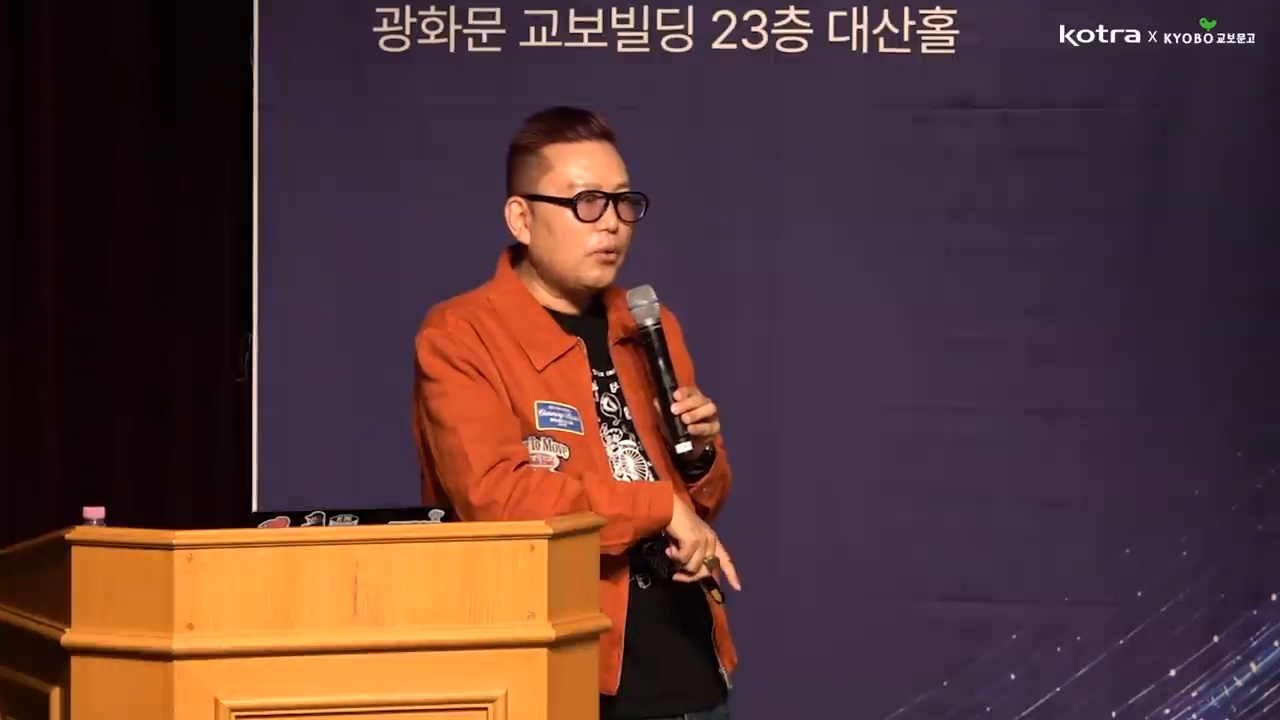
For example, AI can quickly draft presentation materials. But someone still has to decide why the audience should care about the issue. One objection heard in the field can sometimes persuade more effectively than ten polished slides. This example is an interpretation that applies the talk’s distinction to work.
Divide tasks into four types instead of focusing on job titles
Around the 6-minute mark, Professor Kim divides work along two axes. Is it done alone or with others? Does it have a correct answer or not? This classification is not useful because it predicts the disappearance of particular jobs. It helps distinguish where automation and human judgment belong within a single occupation.
- Working alone with a correct answer: These are repetitive tasks with clear rules. Candidates for delegation to AI are easy to identify, but errors still need checking.
- Working alone without a correct answer: Exploration plays a large role, as in research and creative work. Rather than excluding AI, you can use it to explore alternatives.
- Working with others with a correct answer: Precise procedures overlap with interpersonal relationships. Even when AI assists with providing knowledge, explanation and trust-building remain.
- Working with others without a correct answer: People set a direction amid different interests. Reaching agreement on what counts as a good outcome becomes important.
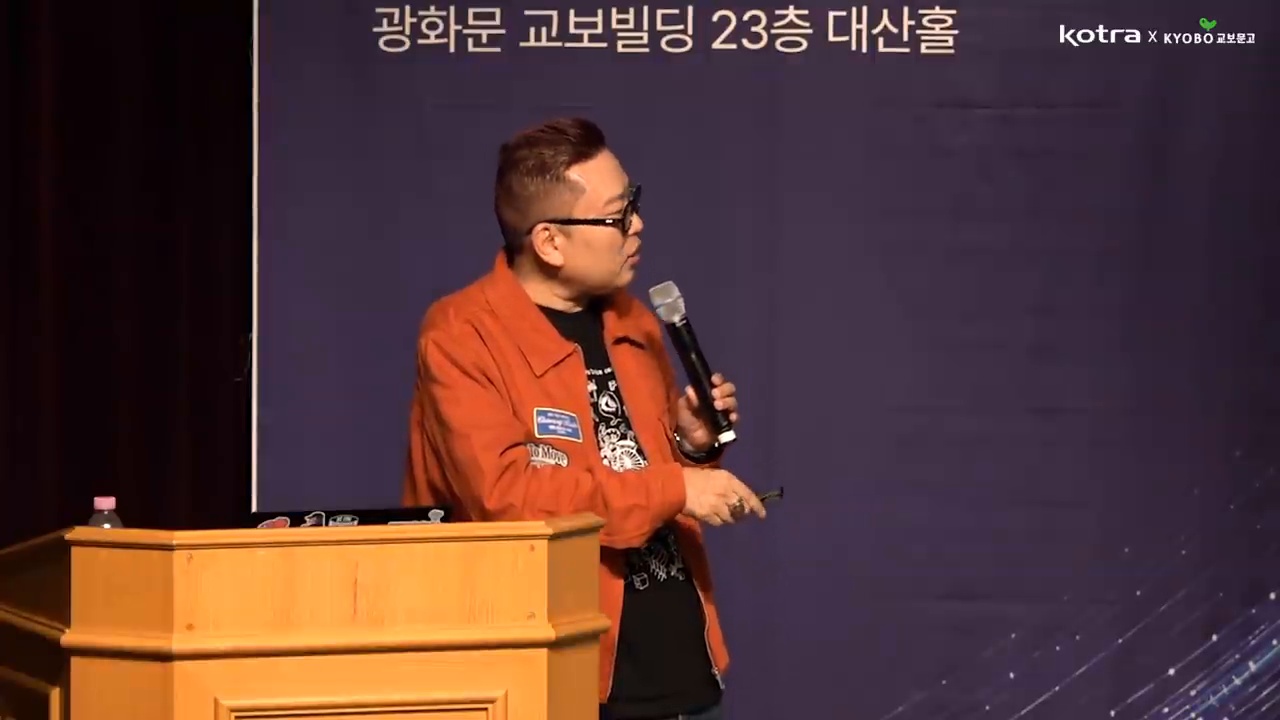
The explanation of teachers’ roles is particularly memorable. Professor Kim emphasizes counseling, motivation, and support for resilience over knowledge delivery. This does not mean teachers need not know their subjects. He asks what relationships teachers should build with students when the cost of delivering knowledge has fallen.
However, expressions such as ‘100% replacement’ in the video represent the speaker’s strong predictions. This classification alone cannot quantify actual employment changes. In fields with major safety and responsibility concerns, such as medicine and education, accuracy, institutions, and practical conditions also require separate consideration.
A lack of technical skills is not the only barrier to AI adoption
From around the 8-minute mark, the discussion turns to employees’ emotions. Is AI a tool, a colleague, or a competitor that will eventually push me out? If that remains unclear, asking only for a willingness to learn is difficult. People worry about their place before they worry about productivity metrics.
Here, the idea of ‘people before technology’ becomes more concrete. Organizations must explain the conditions of the transition, not just teach people to use new tools. Who benefits from the time saved? Will people have opportunities to retrain when their roles change? Who bears responsibility for mistakes?
The talk also includes survey percentages and corporate examples. However, this article has not independently verified the original surveys or the results of the unnamed companies. It therefore does not repeat those figures as general facts. The question worth keeping is simpler. Can an adoption plan last if employees see using AI as a personal loss?
For a connected discussion of how companies should distribute authority and responsibility, read Redesigning Corporate and Individual Work in the Agentic AI Era. This conversation adds questions of identity and uniqueness to those operational issues.
Choreographer Kim Hye-yeon’s answer: Immerse yourself in the act before the outcome
Around the 14-minute mark, Professor Kim asks how people might define themselves if work loses its place as a measure of self-worth. Choreographer Kim Hye-yeon answers through her experience as an artist who works with the body. Rather than first calculating monetary or exchange value, she immerses herself in the activity itself.
This answer differs from a ranking of jobs that declares artists safe from automation. Dance, too, is affected by livelihood pressures and technological change. What the conversation highlights is an attitude that does not tie life’s value solely to the price of its output. A reason to move your body can remain even on days when you cannot produce something more marketable.

There is a little room for this in working people’s lives, too. Not every hobby needs to generate income. A scene from a walk, a long-held question, and tastes that are hard to explain are also part of your life. Treating experiences without immediate results as nothing but waste leaves less room for a distinctive story to grow.
To reflect further on the value of work and life, continue with Questions About Finding Meaning in a World Without Work. The future of productivity and the meaning of life are connected, but they are not the same question.
Having abundant data is different from having personal memories
After the 16-minute mark, Professor Kim contrasts mass production with human uniqueness. He then discusses the difference between information handled by AI and memories from an individual’s life. From this perspective, data describing a fall is not the same as my memory of what I felt when I fell.
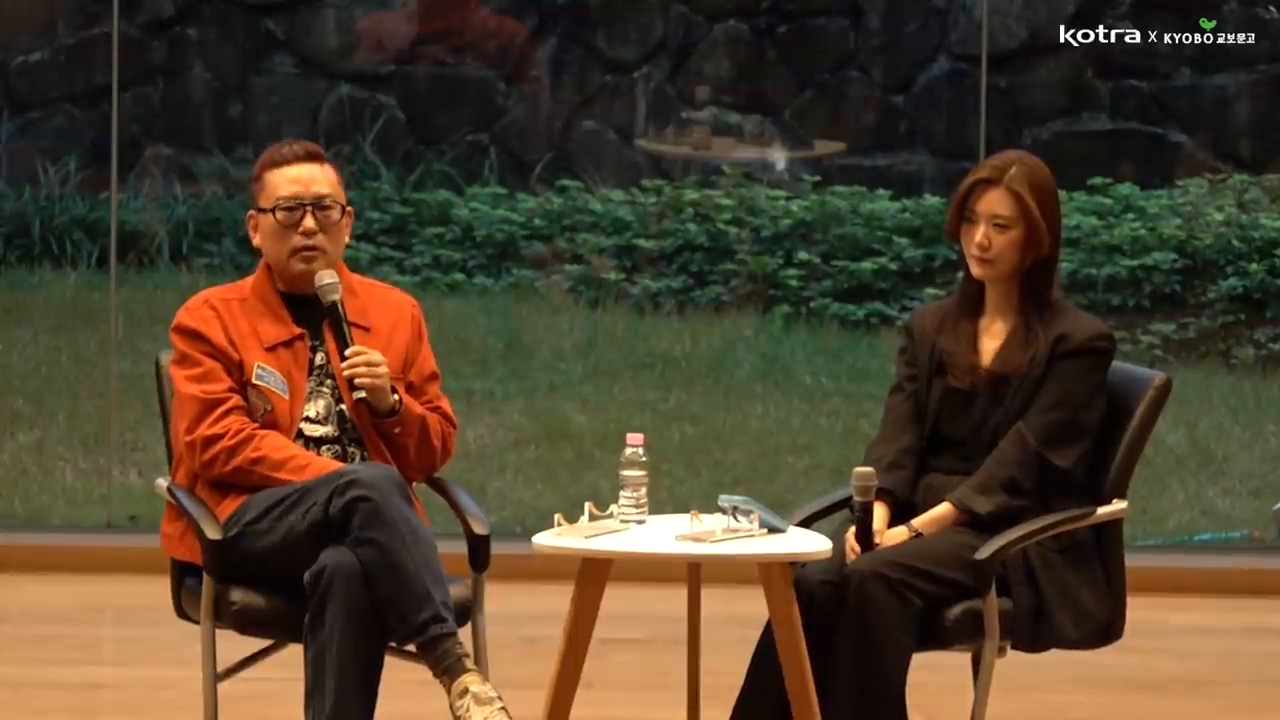
We should not extend this distinction into a scientific conclusion that AI can never be creative. Current system characteristics, future technological possibilities, and the philosophical meaning of human experience are separate questions. The title’s absolute wording is better read as a prompt to consider human life, not a proven technical limit.
A practical question remains. What would change if I removed myself from my work? If only explanations available anywhere remain, strengthen your observation and judgment before adding more information. Conversely, relying only on personal experience while skipping fact-checking is also a problem. Uniqueness does not exempt anyone from accuracy.
The priority is deciding what to delegate, not adding more agents
The talk ends by encouraging viewers to try AI themselves. It would be risky to interpret ‘many agents’ as a contest over how many you run. When goals are vague or verification costs are high, automation can create more work. The following suggestions draw on the conversation. They are not a procedure presented verbatim by the speakers.
- Choose one repetitive task. Start with work whose results are easy to compare, such as classifying materials or organizing drafts.
- Write down completion criteria first. Define the evidence needed, the items that must not be omitted, and the cost of an error.
- Keep a human approval checkpoint. Separate actions that are difficult to reverse, such as payments, public publishing, and personal data processing.
- Record both time saved and time spent reviewing. Check the actual net benefit rather than relying on the feeling that things are faster.
- Use the remaining time to develop your own perspective. Observe the field, meet people, and collect questions that existing answers have missed.
For help choosing specific tools, see Comparing AI Agent Tools for Work Automation. However, tool selection and successful automation are separate matters. First decide what to delegate and what to remain personally responsible for.
Frequently asked questions
Is learning knowledge and skills unnecessary in the AI era?
No. Professor Kim Dae-sik also recommends learning to use AI and studying vibe coding. Saying knowledge alone makes differentiation harder is different from saying knowledge is unnecessary. Evaluating results still requires an understanding of the relevant field.
Does human uniqueness mean the same thing as personal branding?
The video also mentions personal brands. But reducing uniqueness to a promotional slogan misses the discussion of experience and memory. Its foundation is the choices you have made and what you care about. Branding is closer to how you communicate those things.
Will AI replace every task with a correct answer?
The video contains strong predictions of replacement, but these are not established employment forecasts. Actual adoption also involves data quality, error costs, responsibility, regulation, and face-to-face relationships. Testing individual tasks is better than treating an entire occupation as one unit.
Is it true that AI can never match human experience?
This video alone cannot establish grounds for such a categorical claim. The speakers emphasize memories lived through the body and the uniqueness of individual lives. It is best not to turn this into a verified claim of impossibility for all future AI.
After producing more, what will you keep?
This conversation is hard to read as a call to abandon technology and cling only to humanity. Instead, it leaves two tasks to pursue together. Learn how to share repetitive work with AI. And use the resulting time for a life that is not a copy of someone else’s.
Today’s first step can be small. Write down one repetitive task to try delegating and one activity you want to continue without calculating its efficiency. The former changes how you work. The latter gives you a way to describe yourself beyond work.
References
- Kyobo Book Centre BORA: Original talk and conversation with Professor Kim Dae-sik and choreographer Kim Hye-yeon
- Key sections: 03:36 Production and new stories / 06:00 Four categories of work / 08:20 Emotional risks in organizations / 14:37 Immersion in the act itself / 16:15 Uniqueness and memory / 19:09 Encouragement to use AI.
Images in the body are scene excerpts used to illustrate the corresponding discussions in the original video. The source is Kyobo Book Centre BORA, and each image includes its video timestamp. Automatic captions contain recognition errors, so sentences have been reconstructed around their meaning. The talk’s predictions, survey figures, and unnamed corporate examples are distinguished from independently verified facts.