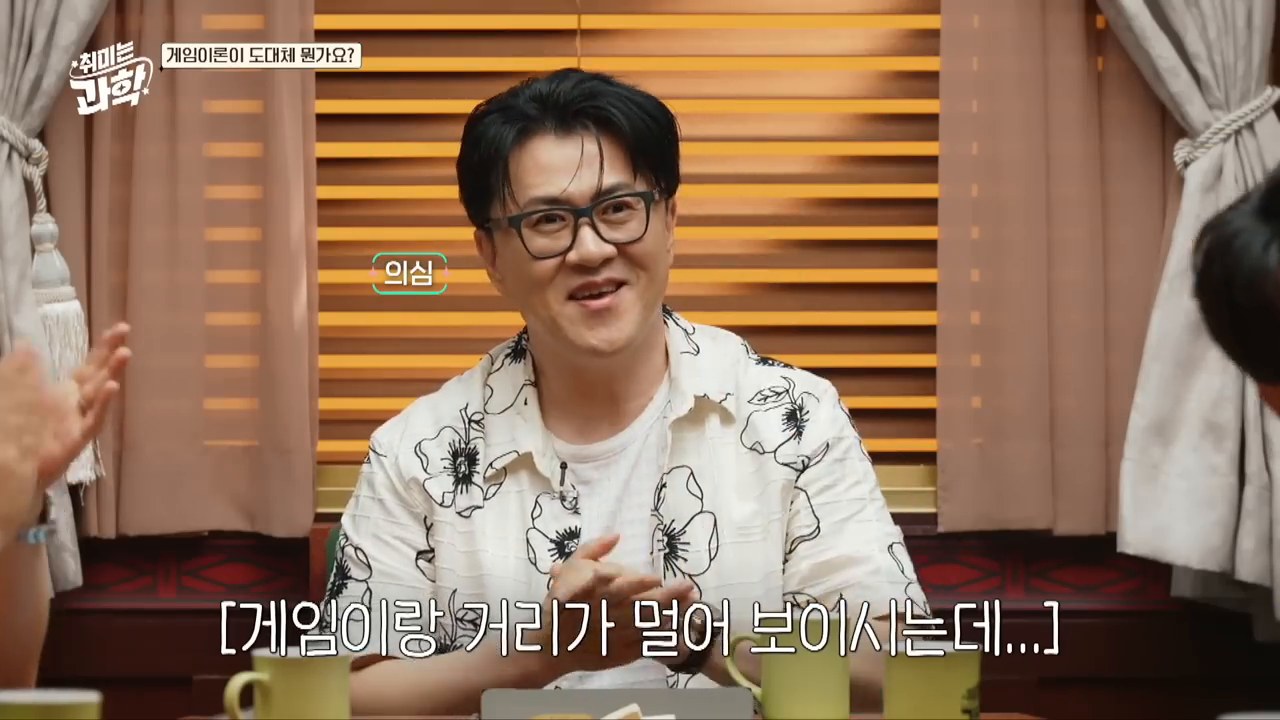
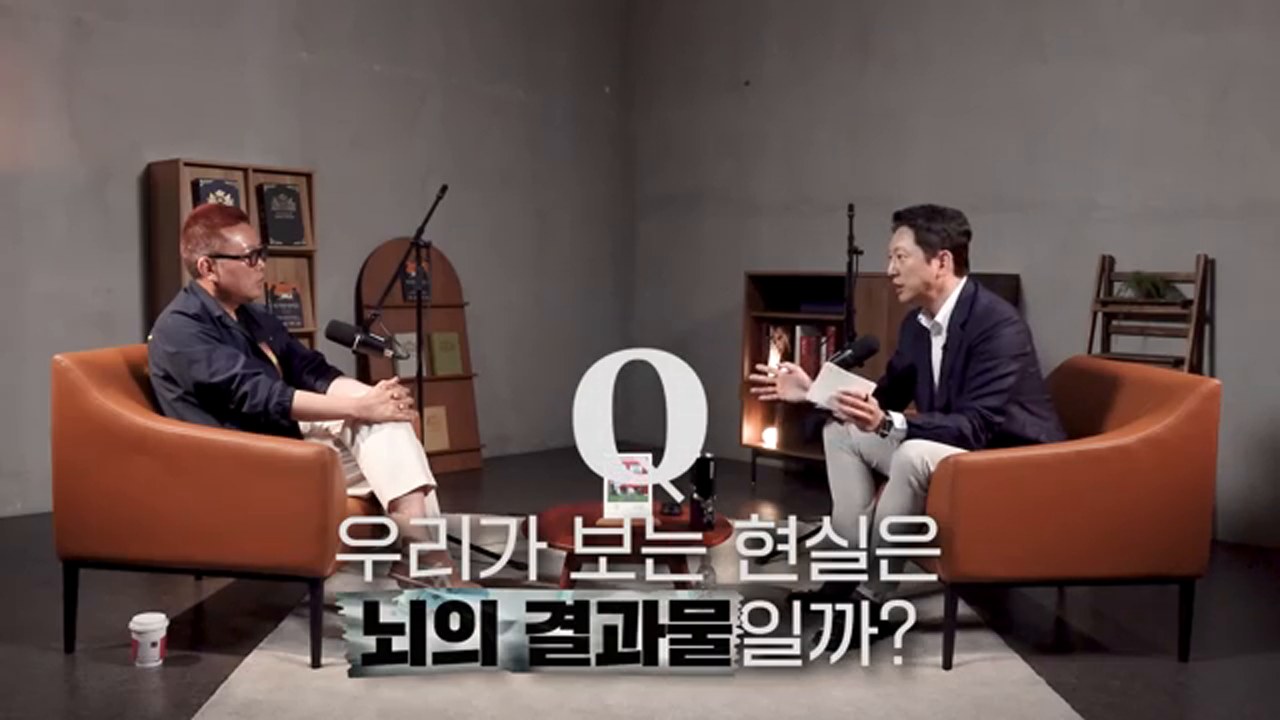
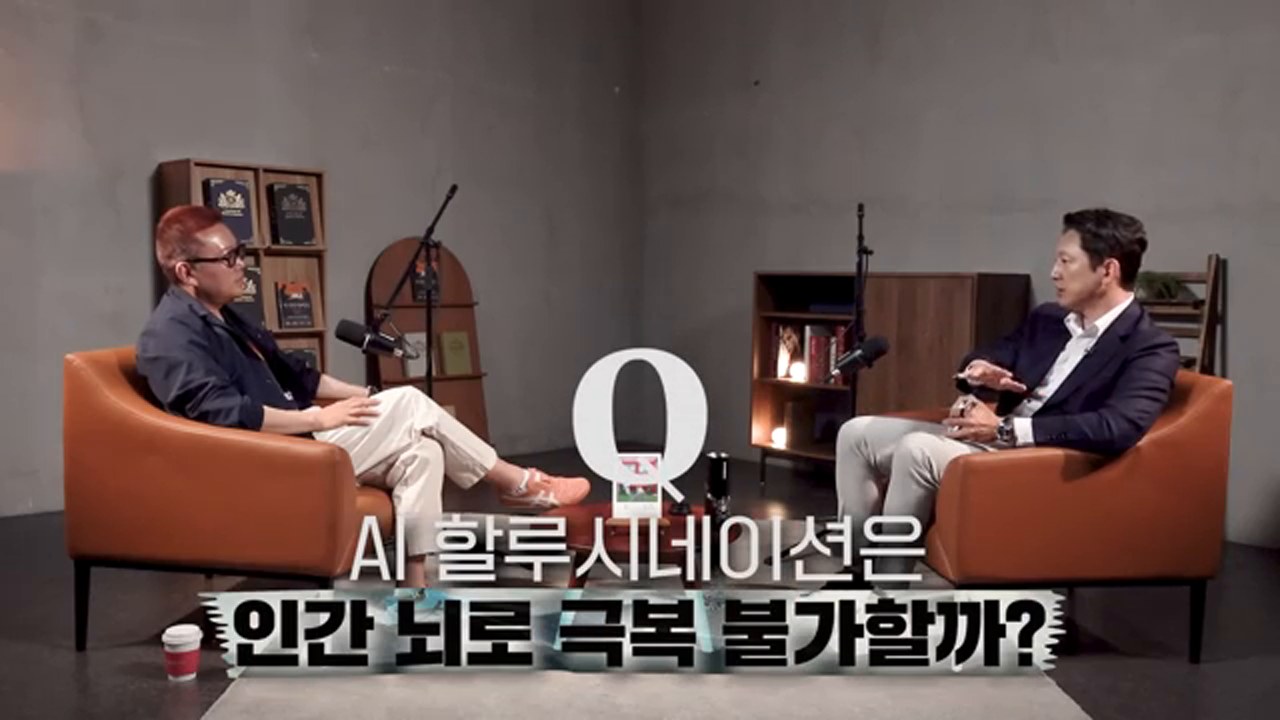
The hardest moments in working with others often come when you feel the other person might betray you. If both sides trust each other, both can benefit. But if only one side keeps the promise, that side loses. That is why we often ask, “Am I the only one being foolish?”
The extended EBS program Hobby Is Science explains this familiar anxiety through game theory. Professor Choi Jung-kyu uses the language of economics and evolutionary science to show why human societies have created cooperation even in situations where betrayal appears profitable. The key is not goodwill alone. Repetition, reputation, the possibility of retaliation, institutions, and rules for handling free riders must work together.
Game Theory Is a Tool for Choices Involving Other People
Game theory is not a problem you calculate alone. Your own choice matters, but you also have to anticipate what the other person will choose. That is why game theory is used in economics, politics, biology, and psychology. It can explain not only human choices but also animal survival strategies and conflicts between states.
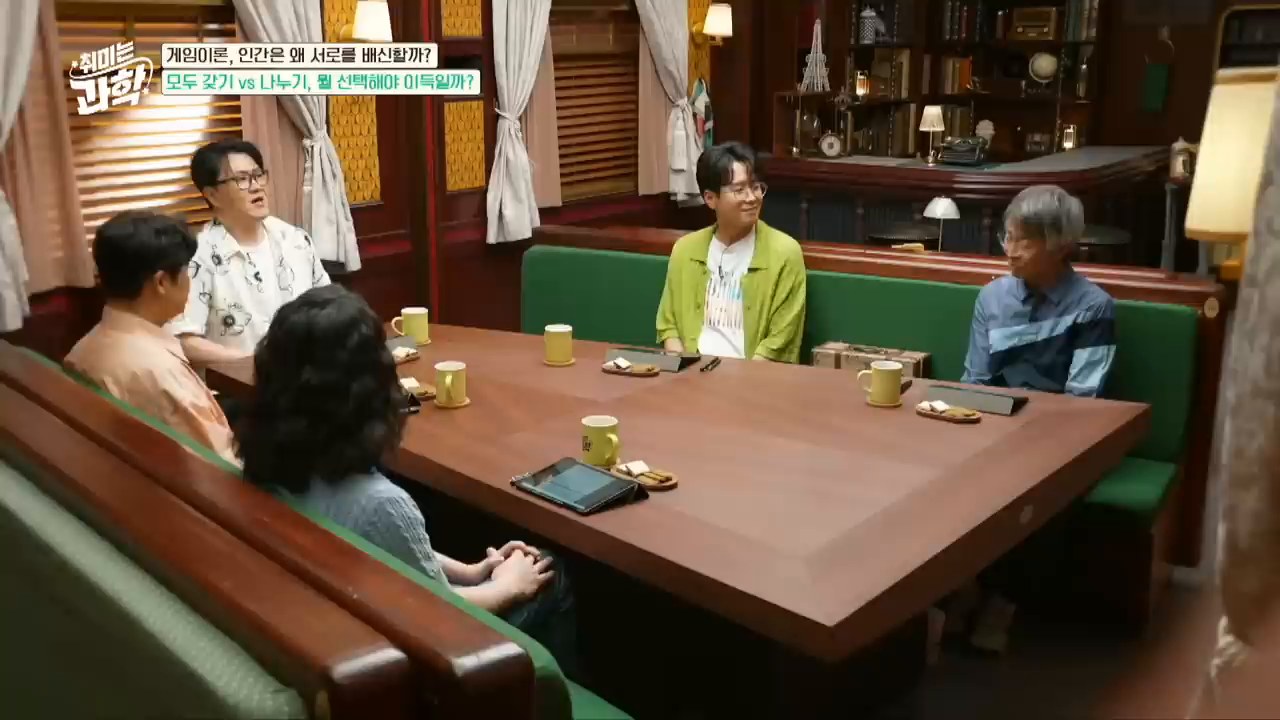
The video begins with a scene in which participants choose between split and take all for a reward of one million won. If both choose split, they share peacefully. If only one chooses take all, that person takes everything. If both choose take all, nobody gets anything. It is very simple, but it reveals the tension between trust and betrayal.
A scene explaining the choice between splitting and taking all
The Prisoner’s Dilemma: Each Person Is Rational, Yet the Result Gets Worse
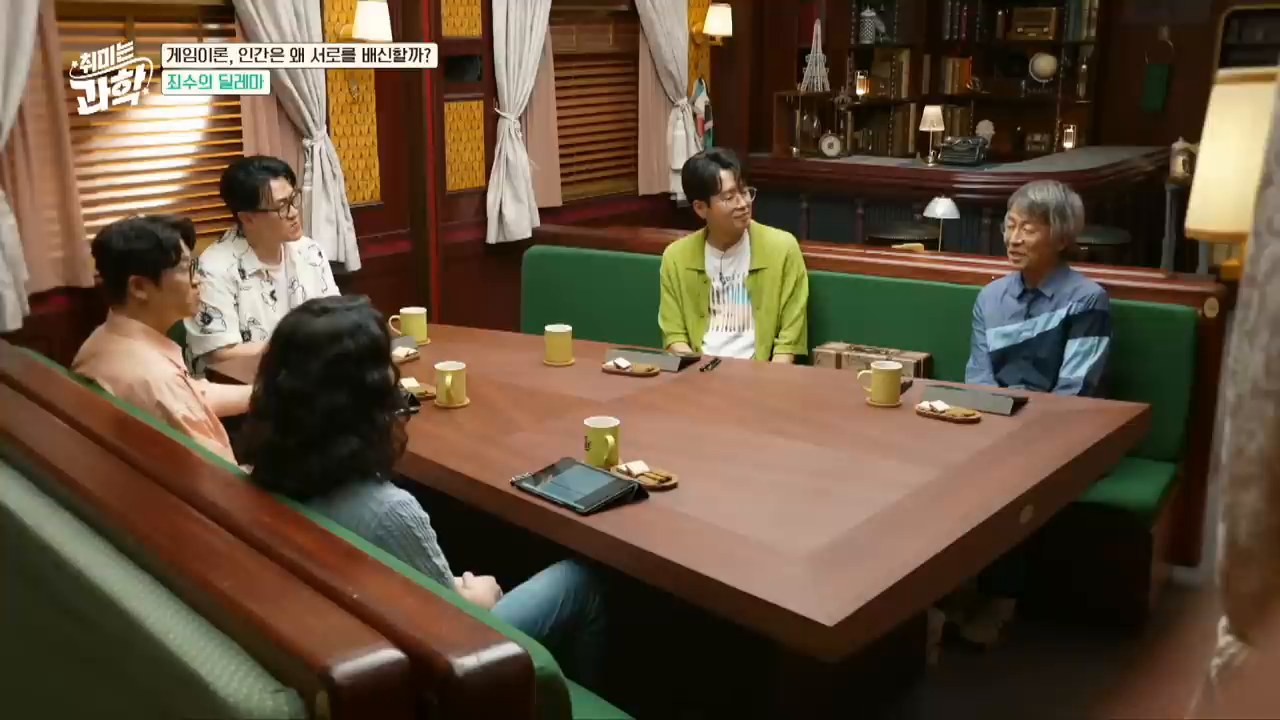
The prisoner’s dilemma is uncomfortable not because humans are irrational. It is uncomfortable because the more each person calculates their own interest, the closer the group can move toward a bad result. If you cannot be sure the other side will cooperate, betrayal can look like a fairly safe choice.
But if everyone thinks that way, cooperation disappears. A choice that is rational for the individual becomes harmful for the group as a whole. Competition between departments, price wars, public resource use, and information sharing inside organizations often resemble this structure.
A scene explaining the prisoner’s dilemma
The Tragedy of the Commons: Everyone Can Work Hard and Still Fail Together
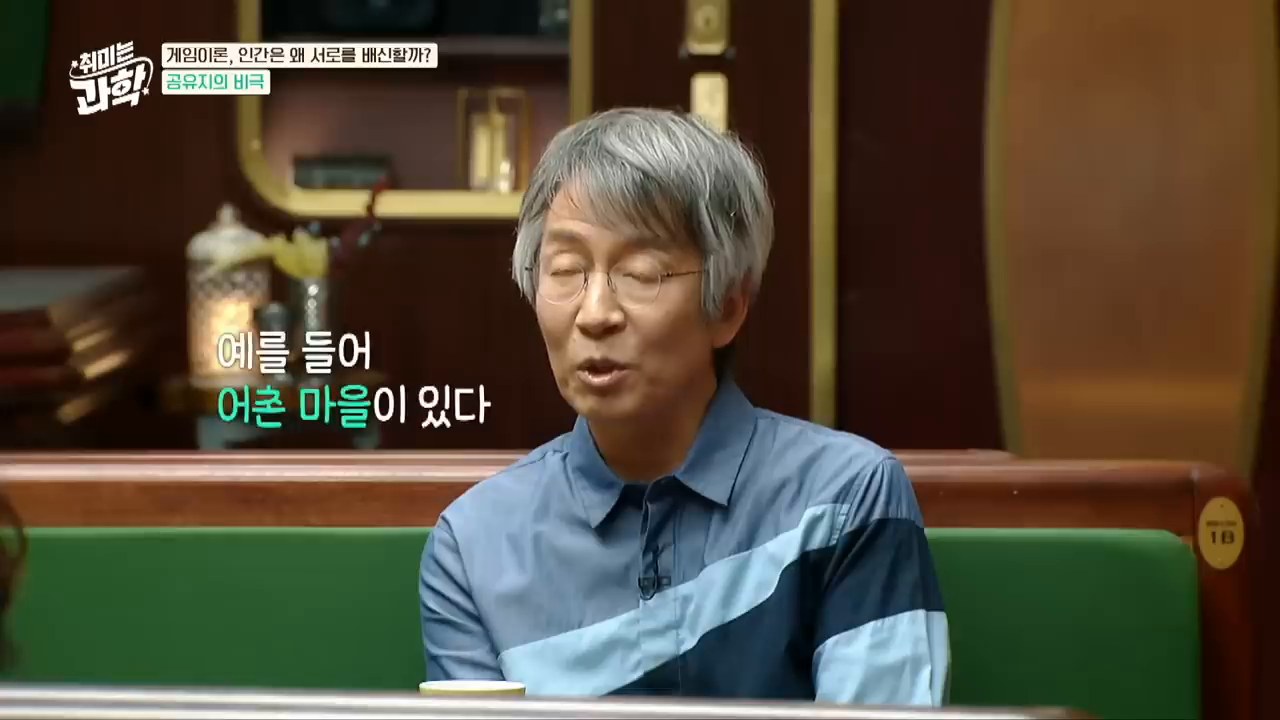
The tragedy of the commons is even more everyday. If each person releases more cattle onto a shared pasture, the individual gains. But if everyone acts the same way, the pasture is destroyed. Nobody may have malicious intent, yet the result becomes the worst possible outcome.
This concept does not explain only environmental problems. Similar situations occur inside organizations. Someone who uses too much meeting time, someone who does not maintain shared documents, or someone who only consumes the team’s trust is also wearing down a kind of commons. Cooperation cannot be maintained by goodwill alone. Rules are needed for managing shared resources.
A scene explaining the tragedy of the commons
Tit-for-Tat: Cooperation Is Not Naivety, but Generosity with Memory
The core idea in the latter part of the video is the tit-for-tat strategy. Tit-for-tat begins by cooperating, and after that it responds according to the other side’s previous action. If the other side cooperates, I cooperate. If the other side defects, I respond with defection next time. But if the other side returns to cooperation, I also return to cooperation.
This strategy is interesting because it is simple. It shows goodwill first. It does not ignore betrayal. But it also does not seek revenge forever. A cooperative society needs this balance. If you are only nice, you are exploited; if you only suspect others, no relationship lasts long.
A scene explaining tit-for-tat and repeated games
Five Conditions That Create a Cooperative Society
A structure where people meet repeatedly is needed, rather than one-off encounters.
Reputations should remain for those who keep promises and those who break them.
Betrayal should carry a cost, but there should also be a chance to recover.
Rules for using shared resources must be clear.
Institutions must not leave free riders unattended.
Cooperation does not appear automatically just because many kind people gather. We must create a structure in which good people can endure. Game theory may look like cold calculation, but in practice it helps us design better communities.
A scene summarizing the conditions for building a cooperative society
The Message This Video Gives to Work and Organizations
When cooperation collapses in an organization, people blame personalities: “That person is selfish” or “Our team has no culture of collaboration.” Of course, individual attitudes matter. But game theory asks one step further: is the current structure rewarding betrayal?
If performance is evaluated only at the individual level, information sharing decreases. If the cost of failure is too high, nobody tries first. If responsibility is vague but rewards are competitive, people move defensively. If you want cooperation, you need to change the rules of the game more than the slogans.
Game theory is a tool for analyzing situations where another person’s choice affects your outcome. It began in economics but is widely used in politics, biology, psychology, and organizational management.
Why is the prisoner’s dilemma important?
It shows that choices rational for each individual can create bad outcomes for the whole. It helps us see cooperation failure as a structural problem, not only a personality problem.
Does the tragedy of the commons apply only to environmental issues?
No. It applies to any situation involving shared resources. Organizational time, trust, information, and shared documents can also collapse like a commons if they are not managed.
What does tit-for-tat mean?
It is a strategy that cooperates first and then responds according to what the other side did immediately before. It answers cooperation with cooperation and betrayal with betrayal, but returns to cooperation when the other side comes back.
What is needed to build a cooperative organization?
Repeated relationships, reputation, clear rules, costs for betrayal, and opportunities for recovery are needed together. Rather than simply demanding good intentions, it is important to create a structure where cooperation is not a loss.
# Korean Behaviors Foreigners Struggle to Understand: The Relationship Grammar Behind Ppalli-Ppalli
There are behaviors that can still feel unfamiliar to foreigners even after they have lived in Korea for a long time: opening an umbrella indoors to dry it, pressing the elevator close button as soon as they get in, beginning a sentence with “ani” (“no”), and asking whether someone has eaten as casually as a greeting.
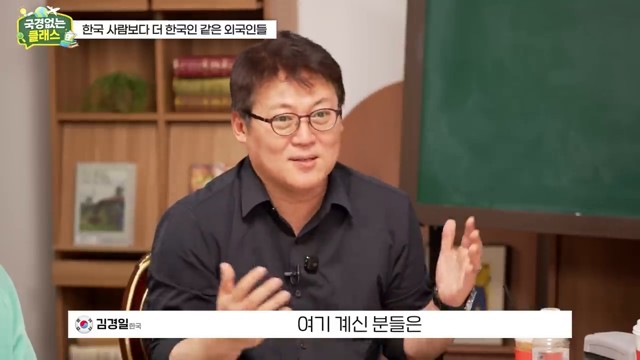
Awesome Korea’s video presents these behaviors as humorous material, but the more interesting point lies elsewhere. If we follow Professor Kim Kyung-il’s explanation, these distinctive Korean behaviors are less about “national character” and closer to a social grammar of preparing for the next state within relationships, being aware of one another, and checking on people through food and care.
Cultural behavior can be read not as innate nature, but as social grammar formed through repeated living environments. Source: screenshot from Awesome Korea YouTube video.
Korean behavior is closer to the grammar of daily environments than to innate nature
It is easy to say, “Koreans are just like that,” but it is not accurate. Cultural behavior is less an inborn personality trait than a response naturally learned through repeated environments.
For example, washing your hands and feet after coming home is not only about cleanliness. The same is true of drying an umbrella right away or wiping a dog’s paws. These actions combine preparation for the next use with an awareness of the people who share the indoor space.
So the important question in this article is not “Why do Koreans behave strangely?” A better question is: “What function does that behavior serve in Korean society?”
Korean behavior often rests on a subtle awareness that people sharing the same space are watching one another. Source: screenshot from Awesome Korea YouTube video.
1. Ppalli-ppalli may be preparation for the next state, not mere impatience
Korea’s ppalli-ppalli, or “hurry-hurry,” culture is often criticized. Pressing the elevator close button immediately or opening the microwave door one second before it finishes can look impatient to foreigners.
But if we read this behavior, as the video does, as an attitude of “setting up the next state in advance,” it looks a little different. Drying an umbrella is also less about immediate efficiency and more about preparing it so it will not still be wet the next time it is used.
Of course, not every fast action is good. Ppalli-ppalli can increase efficiency, but it can also create haste and pressure. The key point is that Korean speed contains not only impatience, but also readiness.
2. Nunchi and mutual observation are part of the background of Korean-style trust
Leaving a laptop or bag at a cafe table to hold a seat can feel especially unfamiliar to foreigners. In some countries, it would be considered dangerous behavior.
In Korea, the relative possibility of doing this is supported by CCTV, public safety, and the subtle sense that people in the same space are watching one another. The idea that “whether someone is watching matters” works not merely as surveillance, but also as a form of social restraint.
Still, this should never be mistaken for absolute safety. Leaving valuables unattended is still risky. Cultural trust and personal safety management are separate issues.
Enthusiastic photo-taking can be interpreted as behavior that puts the person and the relationship ahead of the background. Source: screenshot from Awesome Korea YouTube video.
3. Relationship-centeredness also appears in how Koreans take photos for others
When Koreans take photos for someone else, they often lower their body, search for the right angle, and take multiple shots. The people in the video also strongly identify with this behavior.
This is not simply because they want to take a good picture. It is a reaction that helps the other person look better in the photo, and a relational behavior that places that person at the center of the scene.
Korean-style consideration is often expressed as doing “a little extra,” not only doing exactly what is needed. Giving two or three tissues when someone asks for one fits this pattern.
4. “Ani” is not always opposition; it can be a conversational signal
In Korean conversation, “ani” can sound aggressive to foreigners. In practice, however, it is often used less to reject what the other person said than as an attention signal meaning, “Wait, listen to what I’m saying.”
Of course, “ani” can also be a real rebuttal. That is why, in Korean conversation, you have to read intonation, facial expression, and the surrounding context together rather than relying on a single word.
This point matters for learners of Korean. Natural Korean conversation is often shaped more by discourse markers and relational nuance than by sentences in grammar textbooks.
In Korean, bap, or a meal/rice, is not simply food but an expression that checks health and relationships. Source: screenshot from Awesome Korea YouTube video.
5. “Have you eaten?” may be a check-in, not a meal inspection
In Korean culture, bap is not merely food. “Have you eaten?” or “Are you eating well?” can ask about the actual meal. At the same time, they check on someone’s health, daily life, and well-being.
The Korean word sikgu, meaning “family” or “household,” sits in the same context: literally, it points to people who eat together. People who share meals are not just cohabitants; they are people inside the circle of relationship.
So if foreigners understand this phrase only literally, it can feel strange. But if Korea’s food greeting is read as an emotional expression blending “Are you doing well?” and “You’re not having a hard time, are you?”, it becomes much more natural.
Behaviors that look like comedy material also reveal the social functions of speed and everyday community awareness. Source: screenshot from Awesome Korea YouTube video.
The balance needed when looking at behaviors foreigners find unfamiliar
The video title describes these as behaviors “foreigners cannot imitate no matter how hard they try.” For a blog article, however, it is better to read them a little differently. More precisely, they are “Korean social grammar whose function is hard to understand before you become used to it.”
When explaining cultural differences, three cautions are necessary.
1. Do not say all Koreans are the same. 2. Do not say all foreigners react the same way. 3. Do not judge one culture as superior to another.
Culture can explain average tendencies, but it cannot stand in for the individual. Behavior can vary greatly by generation, region, personality, occupation, and living environment.
Five observation criteria for understanding Korean behavior
Look for whether fast behavior contains a sense of preparing for the next state.
Remember that excessive consideration can feel like interference to the other person.
Interpret words such as “ani” and “Have you eaten?” through context rather than literal wording.
Nunchi and mutual observation can create both trust and pressure.
See cultural differences not as ranks of superiority, but as different social rules.
Q1. Why do Koreans often add “ani” when they speak?
It does not always mean they are disagreeing. At the beginning of a sentence, “ani” can be used less as a denial of the other person’s words and more as a request for attention: “Wait, listen to me too.” Depending on intonation and context, however, it can also be an actual rebuttal.
Q2. Did Korea’s ppalli-ppalli culture arise simply because Koreans are impatient?
It is hard to see it only that way. As the video suggests, behaviors such as drying an umbrella, pressing the elevator close button, or opening the microwave just before it ends can be connected to a sense of preparing for the next situation in advance.
Q3. Why do people in Korea leave belongings at cafe tables to hold seats?
It can be seen as the result of public safety, CCTV, and a culture in which people in the same space subtly notice one another. But leaving valuables unattended is still risky, so a cultural practice should not be treated as a guarantee of safety.
Q4. Does “Have you eaten?” really mean asking whether someone ate?
It depends on the situation. It can ask about the actual meal, but in many cases it is an expression that checks health and well-being. It also carries the meaning of “Are you doing well?” and “You’re not having a hard time, are you?”
Q5. Are all Korean behaviors that surprise foreigners caused by Korean culture?
No. Cultural tendencies are only one axis of explanation. Behavior varies by individual personality, generation, region, and living environment. We therefore need an attitude that avoids treating Koreans and foreigners as fixed single groups.
It is hard to describe the most popular dramas of the first half of 2026 with a single one-line ranking. The drama with the highest TV rating, the drama watched heavily on Netflix, and the title people say they are “enjoying most these days” are not always the same.
So this article separates the criteria. The main benchmark is Gallup Korea’s monthly preference survey for “favorite broadcast/video programs.” TV ratings reports and Netflix performance are added as supporting indicators. To give the conclusion first: the drama that felt like No. 1 in the first half of 2026 was the Netflix web drama Teach You a Lesson.
Start with the criteria: the ratings No. 1 and the felt-popularity No. 1 are different
The reason drama rankings differ from source to source is simple. TV ratings strongly reflect people who watched on television at a scheduled broadcast time. OTT rankings, by contrast, reflect binge-watching immediately after release and global viewing. Gallup Korea’s preference survey goes beyond platform and time slot, capturing the impression a program leaves in respondents’ minds.
For that reason, it is safer to read “the most popular dramas of the first half of 2026” through the following lenses.
National preference: titles that recorded high percentages in Gallup Korea’s monthly preference survey
TV ratings: titles that achieved high nationwide ratings on terrestrial, general-programming, or cable channels
OTT performance: titles with strong viewing numbers and weekly rankings on platforms such as Netflix
Online buzz: titles that drew large news, community, and search reactions immediately after broadcast or release
Combining these criteria into one score may look neat, but it can be misleading. The ranking below therefore centers on each drama’s peak in Gallup Korea preference and adds supporting evidence next to each title.
Top 7 most popular K-dramas in the first half of 2026
Rank
Title
Key evidence
How to read it
1
Teach You a Lesson
No. 1 in Gallup Korea’s June preference survey with 10.7%. Also strong in reports on Netflix’s first-half global viewing numbers.
The OTT hit that effectively dominated the latter part of the first half.
2
The Grand Prince’s Wife in the 21st Century
No. 1 in Gallup Korea’s May preference survey with 5.1%. Episode 9 was reported at 11.7% nationwide TV rating.
A terrestrial Friday-Saturday drama that was strong in both ratings and preference despite divided opinions.
3
Brilliant Days
No. 1 in Gallup Korea’s January preference survey with 4.5%.
A title that showed the steady audience power of weekend dramas.
4
Rookie Employee Chairman Kang
No. 2 in Gallup Korea’s June preference survey with 3.4%.
A title that lifted the felt popularity of TV dramas in late June.
5
We Prescribe Love
Joint No. 3 in Gallup Korea’s June preference survey with 3.0%.
A weekend-drama-style contender that stayed in the rankings throughout the first half.
5
Brave New World
Joint No. 3 in Gallup Korea’s June preference survey with 3.0%.
A Friday-Saturday drama whose attention rose around its finale period.
5
Scarecrow
Joint No. 2 in Gallup Korea’s May preference survey with 3.0%.
A title that showed presence among Monday-Tuesday dramas.
The reason the table has a joint fifth place is that several titles recorded the same 3.0% preference level. Rather than forcing an artificial order, it is more accurate to group titles that showed the same level of popularity.
No. 1 Teach You a Lesson: a drama where preference and OTT results exploded together
When discussing dramas from the first half of 2026, the first title to examine is Teach You a Lesson. It ranked No. 1 in Gallup Korea’s June survey with 10.7%. Considering that few dramas have exceeded 10% preference since 2013, that is a notably strong figure.
Its OTT performance was also large. According to a Media Today report, Teach You a Lesson recorded 48.2 million views within one month of release and was also mentioned around sixth place in Netflix’s first-half global viewing ranking. In other words, it captured both domestic preference and global OTT consumption.
Thinknote has also published an MBTI analysis of the characters in Teach You a Lesson. If this ranking article shows the drama’s overall popularity, the character article lets you continue into why Na Hwa-jin and Im Han-lim drew such strong reactions.
No. 2 The Grand Prince’s Wife in the 21st Century: a case where harsh criticism and high ratings coexisted
The Grand Prince’s Wife in the 21st Century is an interesting case. It received plenty of harsh comments online, but measured by indicators, it has to be included among the representative dramas of the first half. It ranked No. 1 in Gallup Korea’s May survey with 5.1%, and Sports Kyunghyang reported that episode 9 recorded 11.7% nationwide and 11.9% in the Seoul metropolitan area according to Nielsen Korea.
This drama shows that “a well-reviewed drama” and “a widely watched drama” are not always the same. In pop-culture rankings, artistic evaluation and viewing/preference indicators need to be read separately.
No. 3 Brilliant Days: the January standout that showed the power of weekend dramas
Brilliant Days ranked No. 1 in Gallup Korea’s January survey with 4.5%. Even if it did not create the explosive online reaction of an OTT hit, weekend dramas still have a strong fixed audience.
That is why a title like this can easily be left out if first-half popularity is viewed only through OTT buzz. Conversely, if you look only at TV ratings, the impact of new OTT releases can be underestimated. This is exactly why the criteria are separated in this article.
After the top four: June was competitive for TV dramas
In June, Teach You a Lesson took an overwhelming No. 1 spot, but TV dramas were not weak. In Gallup Korea’s June survey, Rookie Employee Chairman Kang ranked second with 3.4%, while We Prescribe Love and Brave New World were jointly third with 3.0%.
The titles in this range look less like a single long-running front-runner and more like weekend and Friday-Saturday dramas dividing their own audience groups. So if you choose “the best single title of the first half,” Teach You a Lesson leads. But if you include dramas people steadily watched on TV, the ranking becomes much more complicated.
What changes if we look only at OTT?
By OTT standards, Teach You a Lesson stands out the most. Immediately after its June release, it hit No. 1 in domestic preference and was strongly mentioned in reports on Netflix global viewing numbers. In April, Bloodhounds Season 2 entered Gallup Korea’s top 20, and in March, Lady Dua appeared in the top 10.
The important shift here is that the hit cycle for dramas has become shorter. In the past, success centered on accumulating ratings across the broadcast period. Now, buzz concentrates in the first one or two weeks after release, and the result appears immediately in preference surveys and global viewing numbers.
If we look only at TV ratings, The Grand Prince’s Wife in the 21st Century matters more
By TV ratings, The Grand Prince’s Wife in the 21st Century gains more weight. A nationwide rating in the 11% range is a notable figure for a 2026 first-half miniseries or Friday-Saturday drama. Its 2049 rating, a key indicator among younger viewers, was also reported at 5.1%.
However, TV ratings are strongly affected by time slot, channel, and whether the title is a weekend drama. So being No. 1 in TV ratings does not necessarily mean being No. 1 in OTT popularity or online buzz.
What was the most popular drama in the first half of 2026?
When Gallup Korea preference and OTT performance are considered together, it is most natural to view Teach You a Lesson as No. 1. It ranked first in Gallup Korea’s June survey with 10.7% and was also strongly mentioned in reports on Netflix global viewing numbers.
Why is this ranking different from a TV-ratings ranking?
TV ratings mainly count people who actually watched during a TV broadcast time. Gallup Korea preference and OTT performance reflect a broader mix of platform, viewing time, and buzz. The same drama can therefore rank differently depending on the criterion.
Why is The Grand Prince’s Wife in the 21st Century ranked high despite mixed reviews?
Evaluation and popularity indicators are different. The Grand Prince’s Wife in the 21st Century drew criticism, but its No. 1 Gallup Korea preference result in May and reported nationwide ratings in the 11% range provide enough basis to place it near the top for the first half.
Does the No. 1 title change if we look only at OTT dramas?
If the focus is OTT, the lead of Teach You a Lesson becomes even clearer because it received strong responses in both domestic preference and global viewing numbers immediately after release.
Is this an official integrated ranking?
No. This is not an official integrated ranking. It is a comparison of publicly available data by criterion, centered on Gallup Korea preference peaks and supplemented with TV ratings and OTT performance.
# Why We Hurt Family Most: How Not to Lose Courtesy with Those Closest to Us
The psychology of hurting only family members is familiar. Some people are kind and polite outside, but rough at home. They watch their words with colleagues yet speak carelessly to parents, spouses, or children. The issue is not always lack of love. It is that boundaries blur the moment we believe someone is “too close” to leave.
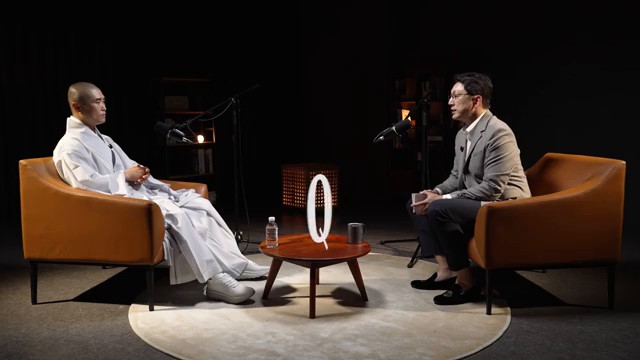
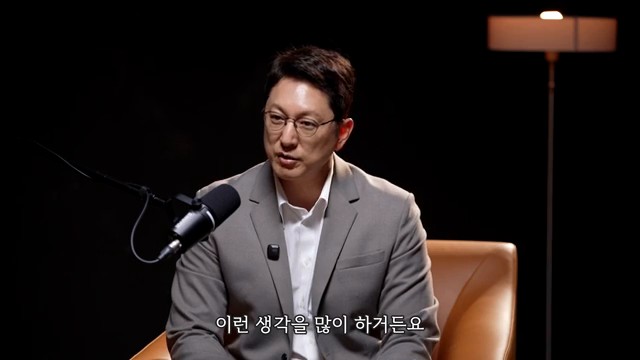
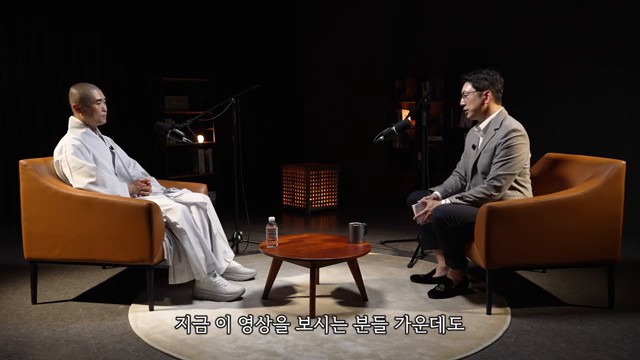
The Knowledge Inside interview with Buddhist monk Boman explains this through everyday language and Buddhist mind practice. The core is simple: in close relationships, we may become comfortable, but we do not earn the right to be careless.
The episode discusses family, relationships, and habits of the mind.
## Harmony does not mean making every opinion the same
At the beginning, Boman says even monks feel hurt, sulk, and argue over small things. That matters. Shaken feelings do not belong only to “bad” people; they arise whenever people meet.
True harmony is not everyone thinking the same. A mountain is not made only of tall pines; thorns, grass, and insects also belong. Relationships are similar. If we remove every uncomfortable trait and keep only what we like, the relationship becomes narrower, not cleaner.
Harmony is described not as unanimity, but as the attitude of holding differences.
## If you score people, your side eventually becomes empty
The intro includes a confession about rating people from 0 to 100. If we constantly measure who is acceptable, who is lacking, and who fails our standards, judgment becomes quick but relationships become poor.
This also happens in families. Thoughts such as “Why can’t they even do that?” weaken our ability to see the other person as they are. What is needed is not blind endurance, but a pause in evaluation and a return to observation.
## Why people become rude only to family
People who hurt family often carry two illusions: that family will ultimately understand, and that closeness makes certain words acceptable.
Outside the home, there is tension because relationships can break. We choose words, manage expressions, and regulate emotion. At home, that tension relaxes. The problem begins when relaxation becomes neglect, and emotions suppressed outside spill onto the safest person.
The central question is why we speak carelessly to those closest to us.
Saying that close people deserve more courtesy is not stiff moralism. It is a practical skill for preserving a relationship over time. The word “family” does not automatically heal wounds.
## An apology is not a phrase for reducing guilt
The section on parenting is worth considering. Saying “I’m sorry” to a child is not bad. But an apology that transfers the adult’s guilt to the child must be handled carefully.
If a parent explodes and then repeatedly asks for forgiveness, the child may be pushed into comforting the parent. The purpose of apology is not to make the speaker feel better, but to help the other person feel safe again.
A parent’s apology should lead to behavioral change and safety, not only relief from guilt.
A good family apology is short and specific: “I’m sorry I shouted earlier. That was wrong. Next time I will pause before speaking.” Repeated behavior matters more than lengthy explanation.
## Five-point checklist for protecting close relationships
Would I say this in the same tone to someone outside the family?
Am I reacting to the other person’s action or to my unmet expectation?
Did I apologize to restore safety, or to reduce my guilt?
Do I treat closeness as permission to cross boundaries?
What repeated behavior, not words, will show change?
This checklist is not a tool for fixing the other person. It is a mirror for my own tone and reactions.
## Taking relationships too seriously can make them easier to wound
Boman also says that living too seriously can cost us. This does not mean treating relationships lightly. It means that if we attach excessive meaning to every word and expression, the mind tires quickly.
Misunderstandings and hurt feelings occur. If every mistake becomes “that person disrespects me,” the relationship cannot endure. We need the habit of delaying judgment by one beat.
The latter part organizes attitudes and practical standards for difficult relationships.
## Even close people need boundaries
Family is the closest relationship, but not a relationship where boundaries disappear. A boundary is not a wall; it is the minimum line that protects both people over time.
The psychology of hurting family can be summarized as mistaking closeness for permission. Once we notice that mistake, the relationship can change: not speaking less, but choosing words; not apologizing more, but repeating the same wound less.
## FAQ
### Does hurting family mean there is no love?
Not necessarily. Love can coexist with weak emotional regulation and the habit of taking close relationships for granted.
### What should I do first to fix a rude tone at home?
Ask whether you are saying things at home that you would not say outside. Then create a pause rule for moments of anger.
### Is it bad to apologize to a child?
No. The problem is making the child comfort the parent’s guilt. Apologize briefly, specifically, and show change.
### Do boundaries make family cold?
No. Boundaries are not walls; they are lines that prevent careless treatment and help relationships last.
## References
Image source: Captured images used in this article are stills from the original YouTube video. They are used for review, commentary, and educational explanation, and copyright remains with the original rights holders and the channel.
# Korea’s Potential That Koreans Often Overlook: Mark Peterson on the Strength of Korea
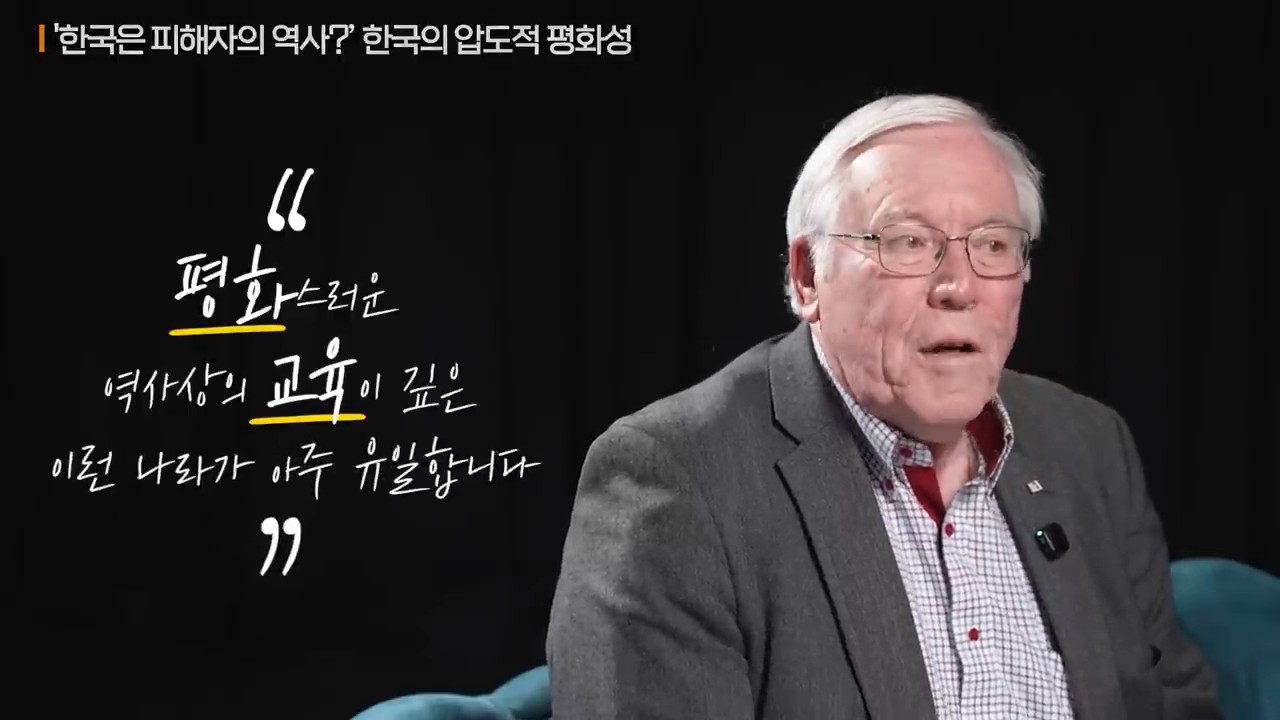
Korea’s potential is sometimes hardest for Koreans themselves to see. Subways arrive on time, cities keep moving at night, and the rapid rise of education, industry, and technology feels ordinary. To an outsider, it looks different: not everyday convenience, but the accumulated strength of a society.
The full Knowledge Inside interview with Professor Mark Peterson shows that perspective well. A scholar who has studied Korea for nearly sixty years is most useful not as simple praise, but as a mirror for both Korea’s strengths and its risks.
The interview introduces Mark Peterson’s view after six decades of studying Korea.
## In poor Korea, the first thing he saw was “the light in people’s eyes”
Looking back on Korea in the 1960s, Peterson says the country was poor, but it did not feel like permanent poverty. What he noticed was people’s eyes: students who wanted to study economics to build the nation, and others who studied East Asian studies to understand Korea anew.
This makes the Miracle on the Han River more than a set of economic indicators. Industrialization, education fever, national strategy, and diligence matter, but underneath them was a collective belief that “we can change.”
## Continuity visible in Korean surname culture
The interview discusses the surnames Kim, Lee, and Park. Peterson finds it interesting that royal surnames did not disappear but remain widespread. In many countries, old royal families were eliminated when dynasties changed; Korea preserved more continuity in names, genealogies, and local memory.
The video reads Korean social traits through surname culture and attitudes toward royal families.
This does not explain all of Korean history in one sentence. But it makes us think about how Korea often preserved the past instead of simply erasing it.
## The Miracle on the Han River was the result of habits that made the impossible possible
The Miracle on the Han River is usually explained through growth rates, exports, industrialization, and infrastructure. The interesting part of the video is its focus on attitude rather than numbers. Peterson says Koreans had hope and a will to learn and build even during poverty.
Peterson says Koreans had hope and a learning spirit even in poor times.
Foreigners are often surprised by Korea’s subway system for the same reason. Koreans see it as daily infrastructure; outsiders see a highly integrated system of cleanliness, connectivity, safety, speed, and information.
## The story of Yi Sun-sin is about responsibility, not only tactics
Yi Sun-sin is a symbol of tactics and victory, but Peterson’s emphasis is not only military genius. The story also concerns responsibility under difficult conditions and the will to protect the community despite political pressure.
Yi Sun-sin is presented as a symbol of respect and leadership beyond military heroism.
This connects to Korea today. Korea’s competitiveness lies in fast execution and learning ability. But for that strength to last, responsible leadership and public-mindedness must accompany it.
## Korean language and respect culture are strengths, but also burdens
Peterson notes that Korean is difficult. Honorifics, relational expressions, and context-reading are woven tightly into the language. This reflects a culture of respect.
At the same time, it can become a burden. If relationships are tracked too finely, a single word becomes hierarchy and evaluation. Respect is an asset, but if it turns into excessive competition, fear of failure, and constant monitoring of others’ reactions, it blocks potential.
## Low birthrate is the most realistic warning against Korea’s potential
The heaviest topic in the latter part is low birthrate. Peterson does not treat it as merely personal choice. When raising children becomes too expensive, private education becomes overheated, and parenting feels like a financial project, young people inevitably see childbirth as a burden.
The latter part mentions low birthrate and education costs as tasks that erode Korea’s potential.
Korea’s potential comes from people. If the next generation shrinks and raising children becomes an excessively expensive project, society’s energy weakens. Low birthrate is therefore not only welfare policy; it is directly tied to national competitiveness.
## Five questions for seeing Korea’s strength again
Which everyday Korean systems would look extraordinary to an outsider?
Does education still create possibility, or only competition costs?
Can respect culture remain humane without becoming hierarchy?
Are fast execution and responsibility developing together?
Can the next generation inherit Korea’s accumulated strengths?
## Korea’s potential lies in the power to look again
The video is interesting not because it exaggerates Korea’s greatness, but because it reflects back what Koreans overlook. Korea’s potential is not a completed trophy; it is the habit of learning quickly, rebuilding, and turning crisis into opportunity.
But that strength is not automatic. If education hardens into cost competition, low birthrate becomes structural anxiety, and respect culture remains only hierarchy, potential will be exhausted. The question is not “Is Korea great?” but “Are we making Korea’s strengths usable for the next generation?”
## FAQ
### What is the core message of the Mark Peterson interview?
Koreans can underestimate their own potential. The message is to re-examine Korea’s strengths in surnames, education, infrastructure, historical leadership, language, and respect culture.
### How does the video explain the Miracle on the Han River?
It emphasizes learning, rebuilding, fast execution, and communal energy more than economic numbers alone.
### What is the biggest obstacle to Korea’s potential?
The video highlights low birthrate and excessive education costs as major threats.
### Is this article only positive about Korea?
No. It uses the positive outside view to examine strengths and also structural problems such as low birthrate, private education costs, and excessive competition.
## References
Image source: Captured images used in this article are stills from the original YouTube video. They are used for review, commentary, and educational explanation, and copyright remains with the original rights holders and the channel.
Kang Sung-jae’s growth is revealed less through grand declarations than through the feel in his fingertips and the rhythm of repeated days.
The Perspective of This Article
This article is a character reading of TVING’s original drama The Legend of the Kitchen Soldier through the lens of MBTI. Here, MBTI is not a tool for evaluating the actors or any real people. It is closer to a lens for examining what fictional characters notice first, how they endure, and how they form relationships in the unfamiliar space of the military.
The Legend of the Kitchen Soldier combines the military, cooking, and growth fantasy, just as its promotional phrase suggests: “a kitchen knife instead of a rifle, an apron instead of a cartridge belt.” Private Kang Sung-jae encounters a new role as a kitchen soldier inside the closed order of the military, and within that role he gradually creates his own ability and place. That is why the characters in this drama are difficult to explain with simple labels such as “kind,” “strong,” or “by the book.”
This article focuses on Kang Sung-jae, Jo Ye-rin, the senior kitchen soldier, and the ambitious officer. The goal, however, is not to force four letters onto each character. The more important question is why they move in such different ways when faced with the pressures of food, rules, recognition, and survival.
Quick Conclusion: MBTI Summary of the Main Characters
Character
This Article’s Reading
Alternative Possibility
Confidence
Core Reason
Kang Sung-jae
ISFP
INFP
67%
A growth-oriented survivor who endures a harsh reality while making a place for himself through sensation and hands-on skill.
Jo Ye-rin
ESTJ
ISTJ
64%
An “FM” platoon-leader type who values rules, responsibility, and order on the ground.
Senior kitchen soldier
ESFJ
ESTJ
58%
A practical helper who manages the unit’s meals, people, and daily rhythm.
Ambitious officer
ENTJ
ESTJ
57%
A command-organization figure who reads the internal board in terms of promotion and performance.
Kitchen team
Mixed-type team
—
55%
A structure in which sensation, rules, survival, and the desire for recognition collide and produce growth.
This table is a starting point for enjoying the drama. In The Legend of the Kitchen Soldier, the key question is not “who is more capable?” but “who creates a place for themselves, and by what method?” Kang Sung-jae quietly endures and then grows through the feel in his hands. Jo Ye-rin holds a disordered field together through rules and responsibility. The senior kitchen soldier understands the rhythm of daily life, while the ambitious officer calculates performance and position inside the organization.
Even within the same military kitchen, sensation, rules, care, and ambition move in different ways.
Before Reading It Through MBTI: The Characters in The Legend of the Kitchen Soldier Are “Everyday Survival” Characters
The characters in The Legend of the Kitchen Soldier are less like grand war-hero archetypes and more like everyday survival characters. The setting is the military, and the core space is the kitchen. The military is a place with clear rules and hierarchy, while the kitchen is the place within it that takes responsibility for the rhythm of each day. People become sensitive when they are hungry, and meals can change the atmosphere of an entire unit. In this drama, then, food is not just a prop. It becomes a language of relationships and recognition.
This is also why Kang Sung-jae is interesting. He does not appear from the beginning as an overwhelming leader or a fully formed genius. Based on the public introduction, he is a private who has just been transferred into the unit, a young man who has lived tenaciously through a tough reality. That kind of person encounters unexpected quests and opportunities through cooking in the military and begins to grow. This premise creates a tension that is well suited to an MBTI reading.
In a military space, personality often becomes sharper than usual. Some people cling to rules. Some read other people’s moods. Some calculate results. Some prove themselves by doing the work directly with their hands. The Legend of the Kitchen Soldier shows precisely these differences through the genre devices of cooking and fantasy.
For that reason, this article looks less at one specific scene and more at repeated choices. How Kang Sung-jae learns under pressure, how Jo Ye-rin protects order, how the senior kitchen soldier connects people with the rhythm of meals. What the ambitious officer calculates first inside the organization.
Kang Sung-jae’s MBTI: Close to ISFP, a “Survivor Who Grows Through His Fingertips”
Kang Sung-jae’s Repeated Actions and Judgment Criteria
At first glance, Kang Sung-jae may look like a growth-protagonist who simply receives a lucky opportunity. But if we see him only as “a soldier who becomes good at cooking,” we miss what matters. Kang Sung-jae’s core lies in his attitude. Rather than making grand plans, he learns the task in front of him with his body and creates a place for himself.
TVING’s official description presents Kang Sung-jae as a private who is reborn as a “legendary kitchen soldier.” The Naver Webtoon original introduction also refers to “an opportunity to become the legendary kitchen soldier, arriving like a ray of light in an anxious military life.” This setup shows. Kang Sung-jae is not a character who initially tries to change the world. He is someone who grasps a small possibility inside an anxious reality.
The first repeated trait Kang Sung-jae shows is learning through sensation. He reads as someone who grows through doing, tasting, failing. Adjusting again, rather than through abstract theory. The subject of cooking itself strengthens this tendency. Food cannot be understood only in the head. The strength of the flame, the rhythm of knife work, the subtle difference in seasoning. People’s reactions all have to be learned through the body.
His second trait is endurance: he does not easily show that he dislikes something. In articles from the production presentation, Kang Sung-jae is introduced as a diligent and sincere young man who lives tenaciously even amid a harsh reality. This prevents us from reading him as merely impulsive. Even if he wants to move freely, he is closer to someone who first shoulders today’s portion of work.
In relationships, Kang Sung-jae reads as a person who shows his heart through action rather than exaggerating it through big words. In the space of the kitchen, he persuades less by speech and more by putting food on the table and receiving reactions through results. Even when he wants recognition, he is likely to prove his existence by making one proper meal rather than directly demanding acknowledgment.
Under pressure, Kang Sung-jae does not command the whole board from the start. He moves his body and adapts. That is why he reads as ISFP-like. I is not passivity, but a direction of organizing emotion internally. S is the sensory attention to concrete realities such as the ingredients, the time, and people’s immediate reactions. F is not illogic, but a tendency to include personal values and human responses in judgment. P does not mean the absence of planning. It means adjusting with hands and senses to match a changing field.
There is still room to see Kang Sung-jae as INFP. If we look only at the structure of a young man from a poor background discovering his own possibility and moving toward the narrative of the legendary kitchen soldier, an INFP-style growth arc also feels natural. But this article gives slightly more weight to ISFP. Kang Sung-jae’s change is proven less by expanding ideals or concepts in words and more through the sensory act of cooking inside the real constraints of the military.
Ultimately, Kang Sung-jae is closer to “a person who changes his life through small changes at his fingertips” than to “a person who talks about a great dream.” His ISFP-like side is not looseness, but survival instinct. Through making one proper meal, rather than through grand slogans, Kang Sung-jae learns. He, too, can become necessary to someone.
A character like Jo Ye-rin tries to rebuild a chaotic field through rules and responsibility.
Jo Ye-rin’s MBTI: Close to ESTJ, an “FM-Type Character Who Sets the Field Straight”
Jo Ye-rin’s Sense of Rules and Way of Taking Responsibility
Public articles refer to Jo Ye-rin as an “FM platoon leader.”. Phrase alone already reveals something of her basic texture. An FM-type character is not simply a rigid person. It is someone who believes that when rules collapse, the field collapses. In a military setting, that tendency inevitably becomes even more visible.
Jo Ye-rin’s first trait is that she sees order first. If Kang Sung-jae is a person who adapts through sensation in unfamiliar situations, Jo Ye-rin reads as a person who first establishes standards and tries to protect them. She quickly checks who should do what. Procedures must be followed, and which lines must not be crossed.
Her second trait is placing responsibility ahead of personal emotion. A character like Jo Ye-rin does not easily set aside rules just because she feels sorry for someone. On the surface, she may look cold or stiff. But seen more deeply, that strictness is not meant to harass people. It is closer to the responsibility of holding the field together so accidents do not happen.
In relationships, Jo Ye-rin is likely to deal with people through standards rather than praise. Even if she likes someone, she will not simply protect that person unconditionally. She will look at whether they properly perform the role they have been assigned. As Kang Sung-jae grows, Jo Ye-rin may come to acknowledge him not merely as a new private but as a functioning member of the field. That recognition will probably be closer to a judgment. “he did it” than to warm words.
In conflict, Jo Ye-rin prioritizes procedure and responsibility rather than impulsive emotional reactions. This is where she reads as ESTJ-like. E does not simply mean talkativeness; it indicates a direction of directly intervening in external situations to establish order. S is attention to current rules, reports, and actual conditions on the ground. T is not coldness but a tendency to ground judgment in role and responsibility. J is a way of organizing and fixing an unstable situation.
There is also room to see Jo Ye-rin as ISTJ. If the drama emphasizes her quietly maintaining regulations and duties more than leading people from the front, an ISTJ reading would be persuasive. Considering the publicly presented image of an FM platoon leader and the role of managing a military field, however, this article gives slightly more weight to ESTJ.
It is not enough to see Jo Ye-rin’s ESTJ-like side merely as strictness. She is less a character who uses rules to control people and more a character who believes people will not collapse if rules are in place. In her relationship with Kang Sung-jae, then, the key is not emotional opposition but the standard of growth. Jo Ye-rin observes how well Kang Sung-jae performs while also checking whether his ability is connected to responsibility within the field.
The Relationship Between Kang Sung-jae and Jo Ye-rin: When ISFP Meets ESTJ
Relationship Point
Kang Sung-jae’s Tendency
Jo Ye-rin’s Tendency
Possible Conflict or Complement
Way of growing
Learns by doing and by sensation
Sets standards and procedures first
One side may feel frustrated, the other uneasy.
Expression of responsibility
Results and actions more than words
Rules, roles, and standards
They may recognize each other’s sincerity late.
Crisis response
Adjusts flexibly to the field
Restores disordered structure
When sensation and discipline meet, they become a strong team.
Way of seeking recognition
Proves that he is needed
Evaluates role performance
Trust accumulates before praise.
The relationship between Kang Sung-jae and Jo Ye-rin is interesting because the two see the same field from completely different directions. Kang Sung-jae learns with his hands; Jo Ye-rin judges by standards. What matters to Kang Sung-jae is how to save this one meal right now. What matters to Jo Ye-rin is whether. One meal functions properly inside the order of the unit.
At first, this difference can look like conflict. Kang Sung-jae may feel Jo Ye-rin’s standards are rigid. Jo Ye-rin may view Kang Sung-jae’s flexibility as unstable. When Kang Sung-jae achieves a result by sensory improvisation and. Result collides with procedure, their standards of judgment can easily clash.
Yet that very difference becomes a complement. Kang Sung-jae’s ISFP-like sensation gives life to Jo Ye-rin’s ESTJ-like order. Jo Ye-rin’s standards keep Kang Sung-jae’s talent from scattering as mere luck or impulse. With sensation alone, the field becomes unstable; with rules alone, food loses its vitality. When the two are together, the drama’s two axes—cooking and the military—come alive at the same time.
Relationally, Jo Ye-rin can become both a wall and a standard for Kang Sung-jae’s growth. Kang Sung-jae can show Jo Ye-rin that even within rules, a sense that saves people is necessary. Their relationship is less a simple opposition or attraction than a process in which each person’s method is tested in the field.
So the core of these two is not that they “fit well.” They need each other precisely because they are different. If Kang Sung-jae shows Jo Ye-rin a flexible instinct for survival, Jo Ye-rin shows Kang Sung-jae the moment when ability turns into responsibility. The growth narrative of The Legend of the Kitchen Soldier gains its strength from this difference.
Senior Kitchen Soldier MBTI: Close to ESFJ, a “Practical Helper Who Knows the Rhythm of Rice and People”
The senior kitchen soldier is likely to be one of the roles most closely connected to Kang Sung-jae’s growth. Although official materials have not disclosed enough detailed character names, the nature of the kitchen as a space makes this role more than just “a senior soldier.” He is closer to an everyday manager who knows the unit’s meals, schedule, people’s moods. The nagging realities of the field.
The reason this character reads close to ESFJ is. He sees people and daily rhythms together. A military kitchen is not a place where good taste alone solves everything. Meals must come out on time, fill many people’s stomachs. Account for hygiene, portions, and atmosphere. A person who handles all of this is likely to be someone who does not miss people’s reactions.
The senior kitchen soldier’s first trait is reading the field through experience. Rather than moving only by a rulebook, he knows when actual unit members become sensitive. Foods they respond to, and which mistakes lead to big problems. This reads as S-like: he sees the meal. Has to function today and the physical condition of people now, rather than grand possibilities.
His second trait is managing relationships through daily life. An ESFJ-like person does not necessarily express emotion only through soft words. Sometimes care appears as nagging, checking in repeatedly, or everyday phrases like “Did you eat?” The way a senior kitchen soldier treats Kang Sung-jae is likely to be less about grand theory and more about teaching him how to endure on the ground.
In conflict, he may also look like an ESTJ. If he emphasizes kitchen order, hygiene, and punctuality, he can read as a strict manager. But this article gives slightly more weight to ESFJ. The heart of a kitchen is feeding people. That work cannot be completed by rules alone. People’s tastes, atmosphere, stamina, and morale all matter together.
The senior kitchen soldier is not simply a person who teaches Kang Sung-jae technique. He is the person who shows him what rice—or a meal—means inside a unit. Therefore, his ESFJ-like side is not merely “being kind.” It is more naturally read as the ability to care for people and maintain an organization’s emotional temperature through the repetition of daily life.
Ambitious Officer MBTI: Close to ENTJ, an “Organization-Type Character Who Calculates Performance and Promotion”
Public articles from the production presentation mention an officer role who charges forward for success. This type of character is likely to create a contrasting axis to Kang Sung-jae’s growth within The Legend of the Kitchen Soldier. If Kang Sung-jae develops his ability in order to survive, the ambitious officer moves toward higher status and results inside the organization.
The reason this character reads close to ENTJ is strong goal orientation. A character who reads as ENTJ-like is not simply ambitious. He reads the board of the organization, calculates where results must be produced. Tries to move people and situations toward a target. In the hierarchical space of the military, this tendency becomes even more visible.
The first trait is seeing results first. Good intentions may matter less than visible performance. The kitchen, the atmosphere of the unit. Kang Sung-jae’s ability may not be seen only as they are. Interpreted in terms of “how does this affect my position and the organization’s evaluation?”
The second trait is reading relationships as resources. An ENTJ-type character is not necessarily cold toward people. However, such a character often sees role, ability, and usefulness before emotion. As Kang Sung-jae’s talent becomes visible, this officer may see. Possibility less as something to cheer for purely and more as a card inside the organization.
In conflict, this character tries to organize the board rather than soothe emotions. He first calculates who will take responsibility, what report will go up, and what result will remain. This is where he reads as ENTJ-like. E is the energy of directly intervening in external situations. N is the sense of seeing opportunities and the larger board beyond the current event. T is not cold-bloodedness, but a judgment standard that prioritizes performance and structure. J is the method of organizing situations toward a goal.
ESTJ is also possible. If the emphasis is on promotion, regulations, hierarchy. Practical evaluation within the organization, ESTJ also fits. But this article gives slightly more weight to ENTJ. This character appears not merely to preserve existing rules. To move the board for his own rise and performance.
The ambitious officer can create an uncomfortable tension in the drama. But a character like this is necessary if Kang Sung-jae’s growth is not to remain merely an improvement in cooking skill. His ability can be hope to some people and a tool of performance to others. This tension becomes visible through such a character.
Kitchen Team Analysis: A Space Where Sensation, Rules, Daily Life, and Ambition Meet
Seen through MBTI, the kitchen team is not an organization of people who all share one type. It is a team in which different survival methods collide in a single space. Kang Sung-jae grows through the sensation in his fingertips and the ability to adapt. Jo Ye-rin holds the field through rules and responsibility. The senior kitchen soldier knows the rhythm of rice and people. The ambitious officer calculates results and position inside the organization.
This combination is interesting because everyone sees “rice” or “a meal” differently. For Kang Sung-jae, a meal is a chance to prove his own possibility. For Jo Ye-rin, a meal is one of the standards by which the unit runs properly. For the senior kitchen soldier, a meal is the everyday language of looking after people. For the ambitious officer, a meal can sometimes become material for performance and evaluation.
Each person’s strength also becomes a seed of conflict. Kang Sung-jae’s flexibility can look unstable to those who value rules. Jo Ye-rin’s strictness can feel like a wall to Kang Sung-jae while he is still growing. The senior kitchen soldier’s practical sense of daily life can collide with performance logic from above. The ambitious officer’s drive can make people on the ground feel like tools.
But the fun of this drama comes from exactly that difference. The kitchen is not just a background; it is a place where people eat, endure, and receive recognition. Food is the most realistic thing and, at the same time, one of the most emotional. That is why the teamwork in The Legend of the Kitchen Soldier is closer to daily life than to combat, and closer to a growth story than to a hero’s tale.
The best way to read this team through MBTI is not to look at a compatibility chart. It is to look at what function each character performs in the space of the kitchen. When ISFP-like sensation, ESTJ-like order, ESFJ-like care. ENTJ-like desire for results collide in the same place, the drama becomes not only a military story but also a story about people finding their place.
What to Be Careful About in This Analysis
First, the MBTI types in this article are not official settings. What can be confirmed from TVING, CJ ENM, Naver Webtoon. Production-presentation articles are the drama’s basic premise, the characters’ roles, and casting information. The MBTI types are not official materials. They are a blog-style interpretation based on behavior and relationship patterns in the work.
Second, I and E should not be judged only by how much someone talks. Reading Kang Sung-jae as ISFP does not mean he is passive. He is closer to someone who proves himself through action and sensation rather than words. Likewise, reading Jo Ye-rin or the ambitious officer as E-like does not simply mean they are lively. It refers to the direction of directly intervening in external situations to create standards or results.
Third, T and F should not be divided into cold people and warm people. Jo Ye-rin’s T-like judgment does not mean she lacks emotion. It means she first looks at roles and responsibilities in order to protect the field. Kang Sung-jae’s F-like side is also not irrationality. It is a way of including the values he wants to protect and people’s reactions in his judgment.
Fourth, it would be difficult to treat genre fantasy as the correct answer for real military life. The Legend of the Kitchen Soldier deals with the military and cooking, but it also uses status-window and growth-fantasy devices. The purpose of this article is not to evaluate real military service, but to read genre characters through the language of personality types.
Finally, this reading may differ from fandom interpretations. Some readers may see Kang Sung-jae as INFP, Jo Ye-rin as ISTJ, or the ambitious officer as ESTJ. Those differences are not necessarily right or wrong; they are differences in emphasis. A character’s MBTI can change depending on which behaviors are placed at the center.
In this drama, rice is not just food; it is a language that changes the atmosphere and relationships of the unit.
Conclusion: The Legend of the Kitchen Soldier Shows “How to Make a Place for Yourself” Before It Shows MBTI
The appeal of The Legend of the Kitchen Soldier does not lie only in guessing whether Kang Sung-jae is ISFP or Jo Ye-rin is ESTJ. The more important question is how a person thrown into an unfamiliar order creates a place for themselves. Someone learns through sensation, someone protects through rules, someone knows the rhythm of daily life, and someone reads the board in pursuit of results.
MBTI helps us see these differences a little more easily. Even within the same kitchen, people do not take responsibility in the same way. Kang Sung-jae proves himself through a meal, Jo Ye-rin protects the field through standards. The senior kitchen soldier cares for people through the rhythm of repeated meals.
That is why this drama is both a food drama and a growth drama. Cooking rice does not simply mean making food. It means helping someone get through their day and becoming a necessary person within that process. The MBTI reading of The Legend of the Kitchen Soldier ultimately returns to a question beyond four letters: how does a person become legendary in the place they have been given?
Is Kang Sung-jae’s MBTI in The Legend of the Kitchen Soldier ISFP?
This article sees Kang Sung-jae as close to ISFP. Cooking as a sensory act, his way of physically adapting inside the unfamiliar military. His tendency to prove himself through results rather than words all read as ISFP-like. However, if the growth narrative and inner possibility are emphasized, an INFP reading is also possible.
Is Jo Ye-rin’s MBTI in The Legend of the Kitchen Soldier ESTJ?
This article interprets Jo Ye-rin as close to ESTJ. Since public articles introduce her as an FM platoon leader, she reads as a character who values rules, responsibility, and order on the ground. If quiet duty performance and adherence to procedure are emphasized more, ISTJ is also possible.
What type can the senior kitchen soldier be seen as?
This article reads the senior kitchen soldier role as close to ESFJ. A military kitchen is not simply a place that makes food. It is a place that manages people’s meals, moods, and daily rhythms together. That is why this article interprets him as a helper who reads people and the flow of daily life, rather than as someone who only looks at rules.
Is this analysis official MBTI?
No. This article is not official MBTI material, but a blog-style interpretation for reading fictional characters. Official sources were used to confirm the premise and basic settings. MBTI types were inferred from behavior, relationships, roles, and repeated choices.
Is it okay to analyze drama characters through MBTI?
Yes, but MBTI should not be used like an answer sheet. Character MBTI works best not as a tool for defining a person once and for all. As a language for discussing why a character repeats certain choices.
When order has broken down, each person’s role becomes visible first.
How this article reads the characters
This article is a character interpretation of Netflix’s drama Teach You a Lesson through the lens of MBTI. Here, MBTI is not a tool for judging the actors or real people. It is closer to a lens for asking what each character notices first under pressure, how they collide with others, and how they carry responsibility.
Teach You a Lesson is built around schools where students, teachers, and parents have crossed the line. It also centers on the Teacher’s Rights Protection Bureau, which steps in to set things right. Because of that setup, the characters do not reveal themselves in calm everyday routines. They reveal themselves in conflict and crisis. One person moves immediately. Another designs the field. Another organizes information. Another pushes into the situation with their body first.
This article focuses on Na Hwa-jin, Im Han-lim, Choi Kang-seok, and Bong Geun-dae. The goal is not to “guess four letters” as if there were one official answer. The more interesting question is why these people speak about justice in such different ways. It is also why they move at different speeds even when they are aiming at the same goal.
Quick answer: MBTI summary for the main characters
Character
This article’s interpretation
Possible alternative
Confidence
Core reason
Na Hwa-jin
ENTJ
ESTJ
72%
Takes control of the field and moves people and situations toward results
Im Han-lim
ESTP
ENTP
68%
Fast reaction, bold execution, and unpredictable breakthroughs
Choi Kang-seok
INTJ
ENTJ
63%
Institutional design, long-term strategy, and a structural view of problems
Bong Geun-dae
INTP
ENTP
61%
Information analysis, systems thinking, and loose but quick problem solving
Teacher’s Rights Protection Bureau team
Mixed-type team
–
60%
Command, execution, strategy, and analysis are divided across the team
MBTI works better here as a lens for repeated behavior than as a fixed label.
This table is only a starting point. In Teach You a Lesson, the more important question is not “who is stronger,” but “who tries to restore order in what way.” Na Hwa-jin pushes directly into the field. Im Han-lim shakes the situation with an irregular speed. Choi Kang-seok looks at the larger institutional frame. Bong Geun-dae supports the team through information and systems.
Before reading it through MBTI: these are crisis-intervention characters
The characters in Teach You a Lesson are closer to crisis-intervention characters than ordinary coming-of-age drama characters. Official materials introduce the series through the Teacher’s Rights Protection Bureau, created to deal with collapsed teacher authority and broken school environments. In other words, these characters exist by being sent into places where balance has already fallen apart.
In this kind of setup, personality does not appear gently. Who gathers information first, who accepts risk, who persuades people, and who overturns the board becomes the evidence of personality. That is why an MBTI reading of Teach You a Lesson should focus less on speech style or surface impression and more on repeated judgment patterns.
Another important point is that the drama carries both real social issues and genre fantasy. The Teacher’s Rights Protection Bureau is a dramatic device that pushes through the frustration viewers may feel in real life. So the characters move between realistic public officials and genre-style problem solvers. That double quality makes the MBTI reading more interesting.
It is not enough to see Na Hwa-jin only as a tough male character. It is also not enough to see Im Han-lim only as someone reckless. Choi Kang-seok and Bong Geun-dae cannot be explained by their job titles alone, either. All of them try to restore order, but their methods of restoration are different.
The person who takes control of the field first clarifies direction.
Na Hwa-jin MBTI: an ENTJ-like field commander and problem solver
Na Hwa-jin’s repeated behavior and judgment standard
At first glance, Na Hwa-jin may look forceful and uncompromising. But if we reduce him to “a strong person,” we miss the important part. His core is not the display of power. It is the drive to regain control quickly in a field that has already broken down.
Netflix’s official page and trailer materials present Na Hwa-jin as an inspector at the Teacher’s Rights Protection Bureau. He is a person who solves school problems in his own way. That setup is the starting point for understanding his personality. He is not someone who observes a case from far away. He steps into the middle of the field and shakes the center of the problem directly.
The first repeated feature Na Hwa-jin shows is speed of judgment. Instead of holding on to a situation for a long explanation, he quickly sees what is wrong. He also sees where pressure has to be applied for the situation to change. This speed fits an ENTJ-like drive to organize the outside world and produce results.
The second feature is the way he moves people. Na Hwa-jin is not a gentle coordinator who keeps everyone comfortable. He applies the pressure he thinks is necessary, even if the other person dislikes it. On the surface, this can look aggressive. At a deeper level, though, what he wants is not emotional victory. It is the restoration of order.
Why Na Hwa-jin reads as ENTJ
In relationships, Na Hwa-jin does not explain trust at length. He looks at whether the other person can play their role. He also looks at whether they can endure the field they are standing in and avoid stepping back in the face of risk. His relationship style is therefore closer to recognition in real situations than warm verbal empathy. He quickly gives room to people who can move with him, but reacts sharply to people who avoid responsibility.
Under pressure, Na Hwa-jin changes the structure before soothing emotions. He calculates who is creating harm, what kind of power is twisting the field, and how the board has to be overturned. This is where he reads as ENTJ. E does not mean loudness; it means energy directed toward direct intervention in the outside situation. N points to a sense for structural problems beyond the event in front of him. T is not coldness; it means placing judgment on results and principles. J is not a closed personality; it is a way of organizing the board toward a goal.
There is also room to read Na Hwa-jin as ESTJ. If we emphasize rules, order, responsibility, and immediate execution in the field, the ESTJ interpretation makes sense. Still, this article leans a little more toward ENTJ. Na Hwa-jin seems less like someone simply enforcing existing rules and more like someone strategically taking control of a broken field to create the result he wants.
In the end, Na Hwa-jin is closer to “someone who reorganizes the field around results” than “someone who presses people down with force.” That is also why he can feel uncomfortable. Rather than carefully adjusting the temperature of each relationship, he drives people and situations in the direction he believes is necessary. His ENTJ-like side is therefore better read as leadership that proves responsibility through results, not as a desire to dominate.
An unpredictable move can be the force that shakes a closed situation open.
Im Han-lim MBTI: an ESTP-like executor who breaks through unpredictably
Im Han-lim’s field sense and execution style
Im Han-lim is an inspector like Na Hwa-jin, but her rhythm of movement is different. Official newsroom materials describe her as a former special forces soldier who now works as an inspector at the Teacher’s Rights Protection Bureau. Netflix episode descriptions also describe her as a “wild card” who is hard to predict. Even from that phrase alone, Im Han-lim feels like a character whose field reaction comes before the written plan.
Her first impression is free, bold, and unrestrained. But that freedom is not simple impulsiveness. She reads situations through her body, senses the direction of danger quickly, and instantly digs into the other side’s weak point. This agility fits an ESTP-like sensitivity to the reality and stimuli right in front of her.
In terms of repeated behavior, Im Han-lim reads the temperature of the field before the fixed procedure. Instead of persuading at length, she collides directly and tries to create a crack quickly. When someone subtly controls the mood, Im Han-lim does not solve that situation with logic alone. She changes the flow through posture, tone, timing, and the intensity of pressure.
Why Im Han-lim reads as ESTP
In relationships, Im Han-lim has a short distance. She reacts directly rather than observing people from far away. This is both a strength and a weakness. To some people, she may feel like a refreshing teammate. To others, she may feel hard to predict. Im Han-lim is a character whose feelings are already visible in her reactions before she has neatly organized them into words.
In conflict, Im Han-lim chooses approach over avoidance. She does not wait because she is afraid; she judges while moving. In crisis situations, this style can be powerful. But not every problem can be solved only through a fast breakthrough. That is why her style may sometimes clash with Na Hwa-jin’s bigger picture or Choi Kang-seok’s institutional judgment.
In MBTI terms, Im Han-lim’s E points to energy that comes alive through direct contact with people and situations. S points to a focus on what is happening right now rather than abstract slogans. T does not mean a lack of emotion. It is closer to a tendency to look first for a workable solution instead of sinking into emotion during urgent moments. P is not looseness for its own sake; it is a way of keeping options open in a changing field.
An ENTP reading is also possible. If we emphasize Im Han-lim’s irregularity, verbal speed, and enjoyment of shaking the board, she can be read as ENTP. This article, however, gives more weight to ESTP. Her core does not seem to be the expansion of ideas as a logic game. It is the way she cuts in immediately through field pressure and physical instinct.
Im Han-lim may look like an unstable variable inside the team, but that variability is exactly what makes her feel alive. When not every problem can be solved by rules and procedure, she changes the atmosphere of the field. Her ESTP-like side is therefore not light improvisation. It is survival-oriented execution that works instantly in crisis.
When Na Hwa-jin and Im Han-lim meet: ENTJ and ESTP in the same field
Relationship point
Na Hwa-jin’s tendency
Im Han-lim’s tendency
Possible conflict or complement
Field approach
Tries to control the whole board
Jumps into the crack in front of her
Their speed aligns, but their methods can differ
Leadership
Results and responsibility first
Action and reaction first
Command and improvisation may collide
Risk response
Calculated pressure
Breakthrough through direct contact
They become a strong team if they recognize each other’s strengths
Relationship expression
Recognition and role assignment
Reaction and companionship
Trust grows in the field more than through words
The relationship between Na Hwa-jin and Im Han-lim is interesting because both of them are moving characters. Neither of them is the type to sit still and wait. But if Na Hwa-jin designs the board and then pushes into it, Im Han-lim works differently. She senses the tremor inside the board and jumps in right away.
That difference can become a strong complement inside the team. Na Hwa-jin sets the direction, and Im Han-lim creates speed inside that direction. To Na Hwa-jin, Im Han-lim is unpredictable but necessary execution power. To Im Han-lim, Na Hwa-jin is the command line that turns improvisation into results.
Of course, conflict is also possible. Na Hwa-jin, read as ENTJ-like, tries to control the flow for the sake of results. Im Han-lim, read as ESTP-like, trusts the immediate sense of the field. From Na Hwa-jin’s view, Im Han-lim may jump too far. From Im Han-lim’s view, Na Hwa-jin may try to hold the board too tightly.
But in a drama like Teach You a Lesson, that tension becomes part of the team’s driving force. The problems faced by the Teacher’s Rights Protection Bureau are not solved only in a neat meeting room. Someone has to see the larger structure, and someone has to push the situation in front of them. The difference between the two is not simple compatibility. It is how a crisis-response team works.
So the core of this relationship is not “they match well.” It is that when two different speeds of execution face the same direction, the team becomes much stronger. Na Hwa-jin binds Im Han-lim’s speed to a direction, and Im Han-lim gives Na Hwa-jin’s direction the vitality of the actual field.
Choi Kang-seok MBTI: an INTJ-like strategist who designs institutions
Choi Kang-seok is introduced as the Minister of Education who created the Teacher’s Rights Protection Bureau. He is less a field-level problem solver who runs into the situation himself. He is more the person who creates the board on which such problem solvers can move. His personality should therefore be read through the size of his view rather than the intensity of his actions.
Choi Kang-seok’s first feature is that he sees structure first. He does not look only at a single school incident, one offender, or one conflict. He looks at why these problems repeat at an institutional level. This attitude fits an INTJ-like sense for long-term patterns and direction inside scattered events.
The second feature is that he places people into roles rather than emotionally comforting them. Through the Teacher’s Rights Protection Bureau, Choi Kang-seok institutionalizes the method of problem solving. This is an attempt to keep anger from being consumed as a simple emotion and to make it work inside a system.
In relationships, Choi Kang-seok is closer to a designer than a warm comforter. He understands why someone like Na Hwa-jin is needed. He also sees the kinds of situations where an executor like Im Han-lim can exert power. Rather than gathering people because he likes them personally, he builds a team by placing necessary people in necessary positions.
In conflict, Choi Kang-seok looks at long-term consequences before immediate emotional reaction. Because of that, he can sometimes appear cold or calculating. But T does not only mean coldness. For Choi Kang-seok, T is a standard that prioritizes public judgment over personal preference. J is the way he fixes that judgment into organizations and systems.
An ENTJ reading is also possible. His position as minister, his drive to create an organization, and his use of authority can all be read as ENTJ. This article, however, leans more toward INTJ. Choi Kang-seok seems less like a leader who personally dominates the field. He looks more like a strategist who designs the larger board on which the field can operate.
Choi Kang-seok is a quiet axis inside Teach You a Lesson. If Na Hwa-jin and Im Han-lim are remembered through movement, Choi Kang-seok remains through structure. His INTJ-like side is therefore not a cold distance from people. It is the attitude of a designer who wants to change the problem in a way that can last.
Bong Geun-dae MBTI: an INTP-like information supporter who reads systems
Bong Geun-dae is introduced as a genius officer at the Teacher’s Rights Protection Bureau. From that setup alone, he may look like a typical analytical supporter. But a good supporter is not simply someone who organizes documents. A good supporter discovers variables the team has missed and turns complicated information into something the team can act on.
Bong Geun-dae’s first feature is that he reads problems as systems before reading them as people. Instead of focusing first on who got angry, he looks for missing information, weak procedures, and hidden connections. This attitude fits an INTP-like form of internal logic-centered thinking, often described in MBTI cognitive-function language as a Ti tendency.
The second feature is that he creates a slightly different rhythm inside tense situations. When Na Hwa-jin and Im Han-lim create pressure at the front, Bong Geun-dae interprets the board from behind. His presence keeps the team from moving only through force. Pressure needs information to gain direction, and execution needs analysis to avoid waste.
In relationships, Bong Geun-dae is unlikely to be the type who displays emotion loudly. Instead, he gives the information the team needs and provides the basis for the next action. His way of expressing care is closer to useful clues and hints toward a solution than emotional language.
Under pressure, Bong Geun-dae tries to grasp the structure before jumping in. This style can look slow in a fast-moving field. But the more complex the problem is, the more the team needs someone like Bong Geun-dae. Immediate action alone cannot reveal connections that are hidden under the surface.
An ENTP reading is also possible. If the “genius officer” setup and his ability to shift the team’s mood are emphasized, he can be read as ENTP. This article, however, gives more weight to INTP. His center seems closer to analyzing information and understanding structure through internal logic than to persuading people and expanding the board outward.
Bong Geun-dae is not a person who slows the team down. He is the person who keeps its speed from spinning in the wrong direction. The teamwork in Teach You a Lesson is not completed by Na Hwa-jin’s pressure and Im Han-lim’s breakthrough alone. When someone like Bong Geun-dae quietly reads the system, the team’s actions become designed intervention rather than simple anger.
A team grows stronger when different functions interlock, not when everyone has the same style.
Team analysis: command, execution, strategy, and analysis are divided
Viewed through MBTI, the Teacher’s Rights Protection Bureau team is not a group of people with the same type. It is closer to a team where different functions are divided. Na Hwa-jin controls the field. Im Han-lim breaks through irregularly. Choi Kang-seok designs the institutional direction, and Bong Geun-dae interprets information and systems.
This combination is interesting because all of them talk about justice, but they approach justice differently. For Na Hwa-jin, justice is a result that must be corrected now. For Im Han-lim, justice is the bodily reaction to unfairness right in front of her. For Choi Kang-seok, justice is institutional balance. For Bong Geun-dae, justice begins with reading the structure of the problem accurately.
Each person’s strength can also become the seed of conflict. Na Hwa-jin’s drive can feel like pressure to someone else. Im Han-lim’s quick reaction can shake a plan. Choi Kang-seok’s strategy can feel distant in the field. Bong Geun-dae’s analysis can feel frustrating in an urgent situation.
But teams become stronger when they are different, not when everyone is the same. Especially in a drama like Teach You a Lesson, which deals with cracks in the school environment, emotion, institution, field action, and information are all necessary. If only one side is emphasized, the problem becomes oversimplified. The strength of the Teacher’s Rights Protection Bureau team comes from that balance.
The best way to read this team through MBTI is not to look at a compatibility chart. It is to look at what function each character performs. When ENTJ-like command, ESTP-like execution, INTJ-like design, and INTP-like analysis face the same direction, the team becomes more than a dramatic device. It becomes a living group.
What to be careful about in this analysis
First, the MBTI types in this article are not official settings. Netflix’s official materials introduce the plot, cast, and character setup, but they do not officially confirm the characters’ MBTI types. The types in this article are interpretations based on behavior and relationship patterns inside the drama.
Second, T and F should not be used to divide people into cold and warm personalities. If Na Hwa-jin or Choi Kang-seok reads as T-like, that does not mean they have no emotion. It means they seem more likely to put results, structure, and responsibility before emotion as a decision standard.
Third, E and I should not be judged only by how much someone talks. Im Han-lim’s E does not simply mean that she is lively. It means she reacts immediately to external situations and gains energy through contact with the field. Bong Geun-dae’s I is not passivity, either. It is closer to a way of approaching problems through internal logic and analysis.
Fourth, the genre exaggeration should not be taken as a real-world answer for schools. Teach You a Lesson deals with real problems, but it also uses genre catharsis. The purpose of this article is to read those genre characters through the language of personality types.
Finally, this reading may differ from fandom interpretations. Some readers may see Na Hwa-jin as ESTJ, Im Han-lim as ENTP, or Choi Kang-seok as ENTJ. Those differences are not necessarily mistakes. They are usually differences in emphasis. Depending on which behavior is placed at the center, a character’s MBTI can change.
Conclusion: Teach You a Lesson is more about “how to set things right” than about MBTI
The appeal of Teach You a Lesson is not limited to guessing whether Na Hwa-jin is ENTJ or Im Han-lim is ESTP. The more important question is how people move when they face a broken field. One person commands the board, one breaks through with the body, one designs institutions, and one reads the gaps in the information.
MBTI makes those differences easier to see. People who share the same goal do not always fight in the same way. That is why the characters in Teach You a Lesson are remembered first through the rhythm of their actions, not through four letters.
This article reads Na Hwa-jin as close to ENTJ and Im Han-lim as close to ESTP. It also reads Choi Kang-seok as close to INTJ and Bong Geun-dae as close to INTP. But the most important interpretation is elsewhere. Teach You a Lesson shows not only a single powerful problem solver, but the process by which different forms of responsibility gather and become a team.
This article reads Na Hwa-jin as close to ENTJ. He quickly takes control of the field, pushes problems toward results, and moves people and situations in the direction of a goal. However, an ESTJ reading is also possible if we emphasize his focus on order and responsibility.
Is Im Han-lim from Teach You a Lesson an ESTP?
This article interprets Im Han-lim as close to ESTP. Official materials introduce her as a former special forces soldier and an inspector. Inside the drama, she reads as a character with immediate execution power and unpredictable reactions. If her irregularity and verbal speed are emphasized, an ENTP reading is also possible.
What types could Choi Kang-seok and Bong Geun-dae be?
Choi Kang-seok is read as close to INTJ because he created the Teacher’s Rights Protection Bureau. He also seems to look first at institutions and long-term strategy. Bong Geun-dae is given more weight as INTP because he works as a supporter who understands information and systems.
Are these official MBTI types?
No. This article is a blog-style interpretation for reading fictional characters, not an official MBTI source. Official materials were used to confirm the series introduction and character setup, while the MBTI types were inferred from scenes, behavior, and relationship patterns.
Is it okay to analyze drama characters through MBTI?
Yes, as long as MBTI is not treated as an answer sheet. Character MBTI works best as a language for discussing why a character repeats certain choices. It should not be used as a tool for fixing that character into one final label.
Image source: Captured images used in this article are stills from the original YouTube video. They are used for review, commentary, and educational explanation, and copyright remains with the original rights holders and the channel.
This English version is a fuller translation and adaptation of the original Korean article, “The Neuroscience of Hate: Why We Struggle to Understand One Another,” for global readers. The article explores the neuroscience of hate, delving into why human brains struggle to understand each other. It is based on the explanations of Professor Kim Dae-sik in “Knowledge Inside Guest Interview EP.134,” which connects brain science, AI, and perception issues to shed light on why humans easily misunderstand and sometimes hate each other.
The neuroscience of hate shows how perception and group identity shape conflict.
Key Summary: 5 Perspectives on the Neuroscience of Hate
To understand the neuroscience of hate, we must first accept an uncomfortable fact: we do not see the world as it is but rather through the reality created by our brains. This is why we can look at the same scene and attach completely different meanings to it, or hear the same words and react with different emotions.
Colors Are Not the Same Experience for Everyone
Professor Kim Dae-sik uses colors as an example. The color we call “red” is actually the interpretation by our brains of light wavelengths, and there’s no way to confirm if the “red” I see is the same as the “red” you remember or imagine. We believe we share the same experience because we use the same words, but in reality, our brains may be creating different experiences that we roughly match with the same language.
The brain interprets reality rather than simply recording it.
1. The Brain Does Not See Reality Directly
Professor Kim Dae-sik explains the brain as an entity trapped in the skull, not directly experiencing the outside world but interpreting it through sensory data from our eyes, ears, nose, skin, etc. This explanation is similar to Plato’s allegory of the cave, where we construct reality based on shadows of the actual world, which can always be distorted.
2. The Neuroscience of Hate Begins with the Invisibility of Others’ Inner Worlds
A crucial starting point in the neuroscience of hate is the fact that we cannot directly see into others’ inner worlds. We cannot connect brains like HDMI cables to transfer data. Therefore, we always make estimates when trying to understand others, using facial expressions, tone of voice, behavior, social background, and past experiences to guess their feelings and thoughts.
Group identity can make people divide the world into us and them.
Groups We Have Not Experienced Become Alienated Easily
Professor Kim Dae-sik shares his experience of living in Europe as an Asian, illustrating how people imagine groups they have not directly experienced in simplistic terms. This shows that hate and prejudice do not always stem from strong malice but can also arise from a lack of experience, imagination, and contact.
3. Why Humans Divide into “Us” and “Them”
The video explains that for humans to cooperate, they had to acknowledge the inner worlds of others. Initially, in primitive conditions, trusting only family or close groups might have been enough for survival. However, with settlement, agriculture, and the expansion of society, cooperation with strangers became necessary.
AI debates also reveal how humans think about self, mind, and value.
The Problem Lies in the Fluctuating Scope of Acknowledgment
Even today, we do not treat all people as equals with inner worlds. Political stance, region, gender, generation, nationality, religion, fandom, or taste can easily categorize someone as “someone I don’t understand.” Hate becomes stronger when this categorization solidifies, making it easier to see the other not as an individual but as a group that doesn’t need to be understood.
4. Why AI and Self-Debate Connect to Human Hate Issues
The discussion expands to AI, questioning the criteria by which we treat different beings (objects, animals, humans) differently. The difference lies in judgments about intelligence, self-awareness, and the ability to feel pain. As AI becomes more intelligent, the question arises of how we will understand and control it.
We Still Treat AI as a “Tool”
Currently, we ask AI questions, give commands, and demand results without asking for its consent, treating it like an object or tool. As AI becomes smarter and seems to have abilities like conversation and empathy, this standard may change. This discussion connects to hate issues because we continuously judge who deserves acknowledgment of their inner world.
5. The Analogy of Superintelligent AI: Humans Might Appear Like Ants
A strong analogy in the video is the relationship between humans and ants. Humans do not necessarily hate ants, but when building a house or a road, the presence of an anthill might not be a significant concern. The relationship between superintelligent AI and humans could be similar, warning that as the intelligence gap grows, so does the potential for indifference.
Hate Might Be Less Dangerous Than Indifference
We usually think of hate as a strong emotion, but indifference can be more dangerous socially. When we consider someone or a group not worth our consideration, not out of hate but out of indifference, violence can occur more easily. The neuroscience of hate is thus not just about emotions but also about perception and how we categorize others.
6. The Brain’s Rest: The Judging Brain is a Biological Organ
The latter part of the video discusses sleep and the brain’s rest. Professor Kim emphasizes that the brain operates continuously without rest, unlike electronic devices that can be turned off. The importance of sleep for brain recovery is also highlighted.
A Tired Brain Simplifies More Easily
Sleep is likened to the brain’s garbage collection time, scientifically known to be crucial for memory, recovery, and waste removal. This relates to the issue of hate, as a tired and overloaded brain finds it harder to understand complex individuals and relies more on quick judgments, simple categorizations, and familiar prejudices. Adequate rest is not just a health issue but also a condition for judging others less harshly.
7. What Is Needed for Us to Hate Each Other Less?
In summary, humans are not designed to perfectly understand each other, living in realities created by our brains, unable to directly see into others’ inner worlds, and tending to simplify unfamiliar groups. However, recognizing our limitations allows us to be more cautious. Remembering that our perceived reality is not the only one, that others’ inner worlds are not fully knowable to us, and that unfamiliar groups should not be easily stereotyped can help.
Three Practical Reminders
First, do not believe your reality is the absolute truth; events can be interpreted differently based on individual memories, emotions, and backgrounds. Second, assume that even those you do not understand have their own pains, fears, and reasons. Third, correct your prejudices through actual experiences; abstract images can strengthen biases, while concrete meetings can weaken them.
Conclusion: Acknowledging the Brain’s Limitations Is the First Step to Reducing Hate
The neuroscience of hate does not conclude that humans are inherently bad; rather, it informs us that our brains create reality with limited information and can mistake this reality for absolute truth. Recognizing these limitations allows us to judge others more carefully. Reducing hate begins with humility in our perception, remembering that “my reality might not be the only one.” This simple acknowledgment can make us less prone to hate.
Original Video and Reference Links
Original Video: Knowledge Inside, “The Neuroscientific Reason Humans Hate One Another Throughout Life” (Professor Kim Dae-sik) – Channel: Knowledge Inside YouTube Channel
Frequently Asked Questions
Q: What is the neuroscience of hate? A: The neuroscience of hate explores why human brains struggle to understand each other, leading to hate and prejudice. Q: How does our brain’s perception of reality contribute to hate? A: Our brains create reality based on limited information, and this constructed reality can lead to misunderstandings and hate towards others. Q: Can we reduce hate by acknowledging the brain’s limitations? A: Yes, recognizing our brain’s limitations and the subjective nature of our reality can help us be more cautious and less prone to hate.
Related Reading
Continue with these related Thinknote English articles in the Digital Transformation cluster.
This article explains a digital transformation, platform, market-structure, or technology-adoption topic with Korea-specific context and global implications.
How should I use this guide?
Use it to understand market signals and strategic patterns. Combine it with current market data before making business or investment decisions.
Image source: Captured images used in this article are stills from the original YouTube video. They are used for review, commentary, and educational explanation, and copyright remains with the original rights holders and the channel.