The previous article summarized the core of corporate innovation in the AI era as “reinterpreting the existing business” and “a mission larger than the system.” This video asks the next question: what does it actually mean for a company to attach AI to its work, and what should individuals prepare?
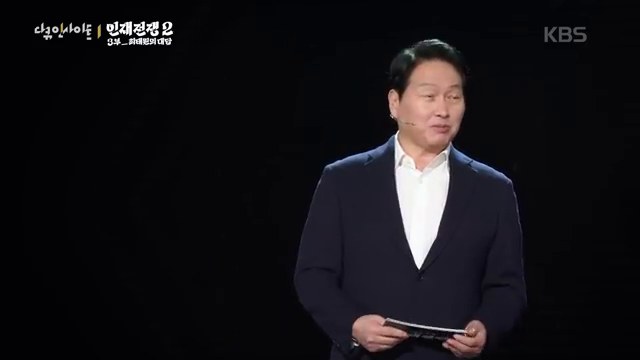
In Samsung SDS’s video “The Killer Move for Surviving the AGI Era,” Professor Daesik Kim offers a simple but important conclusion. AI is not a technology to watch from the sidelines. You understand it by using it. More precisely, in the AI era, the ability to redesign how you work and what role you play becomes more important than the ability to operate a tool.
## Using AI tools and working with AI are different
Many companies understand AI adoption as “using a tool like ChatGPT.” In the corporate field, however, it is not that simple. Public AI tools answer from information available on the internet. If they do not know a company’s internal technology, customer data, patents, organizational capability, or competitors’ movements, their answers are usually vague.
If enough internal information is provided, the answers become much better. At that moment, however, security and trust issues arise because new product strategies, customer information, and technical materials may flow into external models.
That is why enterprise AI is not only about raw performance. “Can we trust it with the work?” matters as much as “How smart is it?” This is why security, permission management, audit logs, data governance, and accountability structures will be central in the enterprise AI market.
## Enterprise AI competition will be decided by trust, not only performance
The video mentions enterprise AI services such as Samsung SDS’s FabriX and Brity. The important point is not product promotion. From a company’s perspective, an AI environment that safely handles internal data and can be held accountable may be a more realistic choice than a public AI tool, even if it looks less flashy.
When agentic AI arrives, this issue becomes larger. If AI only generates answers, people can filter wrong responses. But if AI begins to execute real work—sending email, making purchases, editing code, or handling customers—the cost of mistakes becomes much higher.
The enterprise AI question therefore changes:
– What data can this AI access?
– Which actions may it perform automatically, and which require approval?
– If it makes a mistake, who is responsible and how is recovery handled?
– How much of the AI’s reasoning can employees inspect?
– Can the operation be explained to customers and partners?
Without answers to these questions, AI adoption may increase risk before it increases productivity.
## Agentic AI moves people from “commanding” to “supervising”
In the generative AI era, humans kept entering prompts: ask, receive, revise, and instruct again. The human was inside the AI loop.
In the agentic AI era, the direction changes. A person gives a broad goal and conditions, and AI handles detailed execution. For example, if someone says, “This month’s grocery budget is 400,000 won, and I want mostly Korean meals,” AI may plan meals, compare prices, and place orders.
In companies, the change is bigger. Work requests, research, report drafts, code fixes, customer service, and scheduling can be connected into one flow. People move toward setting goals, checking intermediate results, and taking final responsibility rather than doing every step by hand.
This is not only convenience. It also means human roles must become clearer. Organizations must decide what to delegate, where to stop the AI, and when a person must intervene.
## Past success formulas can become obstacles in the AI era
One of the most interesting points in the video is that “past success can hold you back.” Successful companies are strongly bound to the way they have worked well. Perfect products, strict approvals, long development cycles, and detailed quality control were strengths in the past.
But AI technology changes too quickly. While an organization waits months for a perfect result, market standards may shift. A culture that pursues perfection can slow learning.
This does not mean abandoning quality. In finance, healthcare, manufacturing, and public services, stability is essential. But if every task follows old release methods, it becomes hard to keep up with new technology.
AI-era organizations need two speeds. Core systems that affect customers must be operated safely. At the same time, internal experiments, prototypes, workflow automation, and customer-experience improvements must be tried much faster.
## Vibe coding is not only a developer story
The video notes that planners and designers can now use AI to create samples themselves. In the past, non-specialists could not easily challenge a statement such as “this feature will take two years.” Now a planner can create a simple screen and working example with AI.
This does not mean replacing developers. It means the standard for collaboration changes. A person who used to explain in words can now bring a working draft. The distance between idea and execution shrinks.
The important capability ahead is not clinging to one job title. It is the ability to connect multiple tasks with AI, experiment quickly, and show a result. Planners must think more technically, developers must understand customers and experiences more deeply, and designers must design flows and automation beyond screens.
## Individuals must first analyze their own situation honestly
Professor Kim advises office workers in their 30s and 40s, developers, founders, and self-employed people to first look calmly at their abilities and situation. Vague anxiety or watching YouTube alone does not create direction.
Preparation for the AI era does not begin with grand certificates or declarations. It begins with checking what you do well, what work you do, and where your time should go.
Useful questions include:
– Do I spend more time on repetitive tasks or judgment tasks?
– Which part of my work can AI help with immediately?
– Which part creates value only when I do it myself?
– What real outcome do customers or my organization expect from me?
– What small AI experiment can I try over the next three months?
Answering these questions reduces vague fear. Anxiety grows when you do not act; experience turns anxiety into information.
## AI becomes familiar only when you ride it like a bicycle
The conclusion of the video is: try it first. Learning AI is like learning to ride a bicycle. You cannot ride by only reading books or listening to lectures. You must get on, fall, and find balance again.
AI is the same. Watching someone else use it is completely different from applying it to your own work. You build a feel for it by entering prompts, seeing why results are wrong, asking again, and connecting it with your own materials.
You do not need a grand project at first. Start small:
– Summarize meeting notes.
– Create three versions of a report outline.
– Draft customer-service replies.
– Turn spreadsheet data into an explanation.
– Prototype a simple landing page or app screen with AI.
– Automate one weekly repetitive task.
The key is the experience of “I tried it myself.” As that experience accumulates, you begin to see what you can do well with AI.
## As AI replaces functions, humans must design experiences
Near the end, the video discusses luxury brands. If we look only at function, it is hard to explain why one bag costs tens of millions of won more than another. The function of holding objects is similar. But people do not buy only function. They pay for waiting, story, symbol, belonging, and self-satisfaction.
This matters in the AI era. As AI rapidly equalizes functional capabilities, it becomes difficult to differentiate by function alone. Document writing, image generation, code drafts, and customer-service functions will become easier to copy.
So how should companies and individuals differentiate? Through experience, trust, scarcity, and human context.
Companies must move beyond providing functions and design experiences that make customers feel more comfortable, safer, and more confident in their choices. Individuals must also become people who use AI to create their own perspective and output, not people who merely imitate what AI can do.
## In sequence, AI innovation looks like this
The previous article argued that companies must reinterpret their existing business and attach AI and technology to it. This video adds the next stage: after attaching AI, the organization’s way of working and the individual’s role must also change.
The sequence is:
– Redefine the essence of the existing business.
– Connect AI and technology to customer problems.
– Move beyond public tools and build a trustworthy enterprise AI environment.
– Separate tasks that agentic AI may execute from tasks requiring human approval.
– Divide organizational speed into experimental and stable modes.
– Let individuals build intuition by using AI directly on small tasks.
– Differentiate through experience and trust rather than function alone.
Seen this way, AI innovation is not a technology-adoption project. It is a change in business definition, organizational design, work style, and personal career strategy.
## Conclusion: the survival strategy is to experience first and design differently
In the agentic AI era, “knowing how to use AI” means something different. Beyond writing good prompts, people need the ability to structure tasks AI can execute, design boundaries of trust and responsibility, and clarify the value humans should own.
Companies must not stop at adopting AI tools. They must change how work is done. Individuals must not simply watch in anxiety. They must use it, fail, and try again.
As AI replaces functions, humans must design more human things: experience, trust, happiness, scarcity, and context. Ultimately, competitiveness in the AI era depends not only on how well we use technology, but also on how clearly we can show why people should choose us.
## Further reading
– [Anthropic Mythos Shock: As AI Becomes a Strategic Asset, What Should Korea Prepare?](https://www.thinknote.co.kr/anthropic-mythos-ai-strategic-asset-korea/)
– [Innovative Small Business AI Support: Eligibility, Scale, and Pre-Application Checklist](https://www.thinknote.co.kr/innovative-small-business-ai-support-2026/)
– [Seoul Learn Generative AI Service Support: A Free Opportunity for 1,000 High School and Older Students](https://www.thinknote.co.kr/seoul-learn-generative-ai-service-2026/)
– [The Decisive Difference Between Companies That Collapse and Companies That Grow Again in the AI Era](https://www.thinknote.co.kr/ai-era-business-innovation-system-mission/)
## References
– Original video: [The Killer Move for Surviving the AGI Era with KAIST Professor Daesik Kim — Samsung SDS](https://www.youtube.com/watch?v=U4kRwsTgI84)
## FAQ
### How is agentic AI different from generative AI?
Generative AI mainly creates answers when a person asks. Agentic AI develops toward receiving goals and conditions, then planning and executing multiple steps on its own.
### Why is using only public ChatGPT not enough for companies?
Corporate strategy and work involve internal data, technology, customer information, and security issues. Public tools lack context, while adding internal information can create leakage risk.
### Where should individuals start in the AI era?
Rather than grand study, choose one task and try handling it with AI. Start with small experiments such as summarizing, drafting, organizing materials, or simple automation.
### Where does human value remain if AI replaces many functions?
Function alone becomes hard to differentiate. Experience, trust, context, emotion, brand, and scarcity become more important because they give people a reason to choose.
### How should companies begin AI transformation?
Redefine the essence of the existing business and start with small AI experiments tied to customer problems. At the same time, design data security, permissions, approvals, and accountability.
[Original Korean article](https://www.thinknote.co.kr/agentic-ai-work-style-premium-human-value/)