
[태그:] AI Coding

English articles about AI-assisted coding and developer workflows.

  • Are Development Teams Ready to Operate AI Agents?

    Are Development Teams Ready to Operate AI Agents?

    This fuller English version follows the original Korean article more closely. The central question from Anthropic’s Claude Code London 2026 message is not whether a developer can ask an AI model for code. It is whether a development organization is ready to operate AI agents with goals, tools, security, evaluation, and review loops.
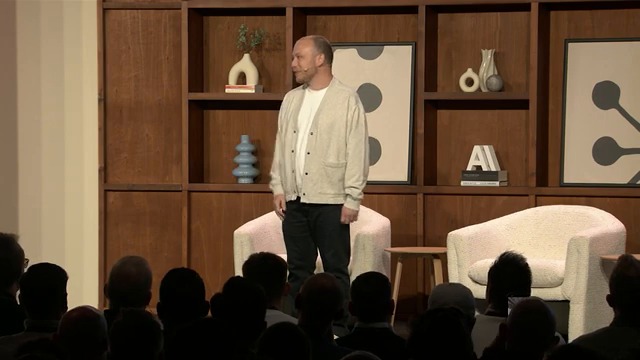
    operate AI agents in a development team dashboard
    A development team needs dashboards, tools, and review loops to operate AI agents.

    Original Korean article: Anthropic이 던진 질문: 당신의 개발 조직은 AI 에이전트를 운영할 준비가 됐나

    The Core Change Announced at Claude Code London 2026

    The keynote framed AI coding as an operational change. The distance from idea to execution is shrinking: a product manager can describe a feature, an engineer can ask an agent to explore a codebase, and the model can draft changes, run checks, and report back. But the original Korean article stresses that this speed only helps when the organization knows how to receive and verify the work.

    From idea to execution

    In the old workflow, an idea moved through tickets, handoffs, coding, review, and deployment. With Claude Code-style agents, some of those steps can happen asynchronously. The agent can investigate files, propose a plan, edit code, and run tests while the human focuses on judgment. The bottleneck moves from typing to task design and validation.

    Linear adoption meets exponential model improvement

    Companies usually adopt new tools slowly: a pilot, a few champions, a security review, and then gradual rollout. Model capability, however, is improving faster than that rhythm. Anthropic’s message is that teams should build the operating foundation now, because the agents of tomorrow will have longer task horizons and higher autonomy than the tools they are testing today.

    Claude Model Roadmap: Longer Tasks and Better Judgment

    Task horizon is expanding

    A key concept in the source article is task horizon: how long a model can keep working toward a goal before it loses context, makes mistakes, or needs human rescue. Earlier coding assistants handled short completions. Newer agents can work across multiple files and longer sequences. The practical implication is that teams must prepare work units that are clear enough for agents to execute but bounded enough for humans to review.

    Less scaffolding, more general tools

    As models become stronger, teams may need less fragile scaffolding around every prompt. Yet this does not mean “no structure.” It means agents should be given clean repositories, reliable commands, clear acceptance criteria, and general tools such as search, tests, documentation, issue trackers, and deployment checks. The better the workbench, the less the team depends on prompt tricks.

    Advisor strategy balances performance and cost

    The article also highlights the need to balance powerful models and cost-efficient models. Not every step requires the most expensive reasoning. Some tasks can be routed to cheaper models, while architecture review, security-sensitive changes, and difficult debugging may require a stronger advisor model. Agent operations therefore become a routing problem as much as a prompting problem.

    Claude Platform: Infrastructure for Product-Grade Agents

    Managed agents, self-hosted sandboxes, and MCP tunnels

    The Claude platform direction points toward agents that can operate in controlled environments. Managed agents reduce setup burden; self-hosted sandboxes give enterprises more control; MCP tunnels connect agents to internal tools without exposing everything blindly. The source article treats these pieces as the infrastructure layer for making AI agents part of real products.

    Asynchronous coding requires verification

    When an agent works in the background, the human does not watch every keystroke. That makes verification more important. Teams need automated tests, linting, reproducible builds, review checklists, and logs that explain what the agent changed. Without this, asynchronous work can become asynchronous risk.

    Routines: Claude prompting Claude Code

    The article’s discussion of routines is important because it shows a recursive pattern: Claude can help write the instructions that Claude Code follows. Instead of every developer inventing prompts from scratch, a team can maintain reusable routines for bug fixes, refactors, dependency updates, documentation, or test generation. This turns good practice into shared organizational memory.

    Claude Code Changes the Developer Role

    Claude Code workflow for AI agent operations
    Claude Code points toward development workflows where agents execute longer tasks.

    Claude Code is not merely a faster autocomplete. It pushes developers toward the role of automation designers. The developer writes specifications, chooses tools, defines the boundary of autonomy, checks tradeoffs, and decides whether the result is safe to merge. In that sense, the developer’s responsibility becomes broader rather than smaller.

    The source article’s warning is practical: organizations should prepare evaluation and architecture before giving agents too much freedom. A model that can modify code at scale can also amplify unclear requirements, weak tests, and insecure defaults. The maturity of the organization determines whether AI agents become leverage or chaos.

    What Developers and Enterprises Should Prepare Now

    Prepare evaluation and architecture first

    Teams should inventory the work they want agents to perform, define success criteria, and build measurable checks. They should document architecture decisions, coding standards, security constraints, and escalation rules. If humans cannot explain the desired outcome, an agent cannot reliably produce it.

    Move from personal productivity to organizational operations

    The biggest shift is from individual productivity to team operations. One developer using an AI tool is useful; a company operating AI agents needs governance. Access control, audit logs, tool permissions, privacy rules, and incident response become part of the AI coding stack.

    Claude Code London 2026 Readiness Checklist
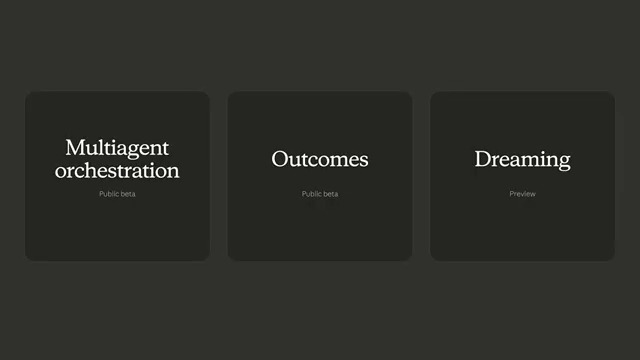
    AI agent task horizon and software automation
    Longer task horizons make agent supervision and verification more important.
    • Define which coding tasks agents may perform and which require human-only judgment.
    • Create reusable routines for common workflows such as bug fixing, test writing, and documentation.
    • Build automated verification before increasing agent autonomy.
    • Separate low-risk tools from sensitive tools and grant permissions gradually.
    • Track cost, latency, model choice, and failure patterns as operational metrics.

    Conclusion: The Next Stage Is Operation, Not Conversation

    The article’s conclusion is that AI development tools are moving beyond chat. The important question is no longer “Can the model answer?” but “Can the organization run the model as a dependable worker inside a controlled system?” Teams that answer this early will be better prepared for the next wave of agentic software development.

    Related Reading

    AI agent platform infrastructure and MCP tools
    Agent platforms need infrastructure, sandboxes, tools, and secure connections.

    FAQ

    What is the main message of Claude Code London 2026?

    The main message is that development teams must learn to operate AI agents, not merely chat with coding assistants.

    Why is verification so important for AI coding agents?

    Because agents may work across many files and steps. Automated tests, review rules, and audit trails prevent speed from becoming uncontrolled risk.

    Does this mean developers are less important?

    No. Developers move toward higher-level responsibility: defining tasks, building harnesses, reviewing outputs, and deciding what is safe to ship.

    AI coding automation governance checklist
    Teams need clear governance before giving AI agents production-level authority.
  • Harness Engineering: How to Make AI Agents Work Reliably

    Harness Engineering: How to Make AI Agents Work Reliably

    This fuller English article follows the Korean source on harness engineering. The core idea is that AI agents do not become reliable simply because we write longer prompts. They become reliable when we build a harness: a structured work environment with goals, tools, tests, permissions, feedback, and human review.

    harness engineering workflow for AI agents
    Harness engineering gives AI agents a structured workplace instead of only a prompt.

    Original Korean article: 하네스 엔지니어링이 온다: AI 에이전트를 제대로 일하게 만드는 법

    What Is Harness Engineering?

    Not a request, but a structure

    A harness is the system that holds an AI agent in the right working position. In software development, that may include repository access, test commands, coding standards, file boundaries, issue context, and review criteria. In business operations, it may include approved data sources, templates, workflow steps, and escalation rules.

    The Korean article contrasts this with simply saying “do this for me.” A request gives the agent a desire. A harness gives the agent a safe path for execution. The more consequential the task, the more important the harness becomes.

    Vibe Coding Raises the Floor; Harness Engineering Raises the Ceiling

    Vibe coding made it easier for beginners to create prototypes. This is powerful because it lowers the floor of software creation. But organizations need to raise the ceiling: they need agents that can do complex work reliably, repeatedly, and safely. Harness engineering is the discipline that raises that ceiling.

    Verification is harder than generation

    The source article emphasizes that code generation is no longer the hardest part. Verification is. An AI can produce thousands of lines quickly, but a team still has to know whether the code is correct, secure, maintainable, and aligned with the product. Without verification, speed becomes debt.

    Longer Prompts Are Not Enough

    A good workplace beats a good prompt

    Prompt engineering matters, but it cannot carry the whole burden. If the repository is undocumented, tests are broken, commands are unclear, and acceptance criteria are missing, even a good model will struggle. A clean workplace gives the agent stable ground.

    A good harness includes task templates, examples of correct output, constraints, automated checks, and a way to ask for clarification. It also defines what the agent should not touch. Guardrails are not a sign of weak AI; they are how responsible work is done.

    More Tools Are Not Always Better

    agentic coding environment with tools and checks
    Agentic coding depends on tools, context, and verification loops.

    Give narrow and accurate tools for each task

    The article warns against giving agents every possible tool. Too many tools increase confusion and risk. A refactoring agent may need search, edit, tests, and lint. It does not need production database access. A marketing agent may need approved brand assets and analytics summaries, not unrestricted email sending.

    Tool design should follow least privilege. Start with read-only access, add write access where needed, and require confirmation for external actions. The harness should make the right action easy and the dangerous action difficult.

    Practical Checklist for Harness Engineering

    • Define the task type and expected deliverable before invoking the agent.
    • Provide source-of-truth documents, not scattered context.
    • Limit tools to what the task actually requires.
    • Attach test commands, acceptance criteria, and examples of failure.
    • Keep logs of agent actions and decisions.
    • Require human review for security, money, customer communication, and production changes.

    Developers Become AI Team Leaders

    AI agent verification workflow for software teams
    Verification becomes more important as AI agents generate more code.

    From direct coding to work-environment design

    The developer’s role shifts from writing every line to designing the environment in which agents can write useful lines. That includes preparing tasks, maintaining tests, reviewing diffs, choosing models, and improving routines after failures. The best developers will be those who can multiply their judgment through systems.

    This does not make programming knowledge obsolete. On the contrary, a developer who understands architecture, debugging, security, and user needs is better equipped to supervise agents. A weak human reviewer cannot reliably catch a strong model’s subtle mistakes.

    Conclusion: The Next Step After Saying “Do It”

    The source article concludes that the age of simply asking AI to work is giving way to the age of building systems where AI can work well. Harness engineering is that system-building practice. It turns agents from impressive demos into dependable collaborators.

    Related Reading

    focused AI tools for reliable agent workflows
    Narrow and accurate tools are often better than giving agents too much access.

    FAQ

    Is harness engineering the same as prompt engineering?

    No. Prompt engineering focuses on instructions. Harness engineering includes tools, context, tests, permissions, feedback, and review loops.

    Why not give an AI agent every tool?

    Because broad access increases risk and confusion. Agents should receive the narrow tools needed for the task.

    Who needs harness engineering?

    Any team that wants AI agents to perform real work repeatedly, safely, and measurably needs harness engineering.

    developer as AI agent team leader
    Developers increasingly lead AI agents by designing safe workflows and review systems.
  • Local LLM on Apple Silicon: What OMLX and Hermes Agent Show in Real Use

    Local LLM on Apple Silicon: What OMLX and Hermes Agent Show in Real Use

    Local LLMs are no longer only a hobbyist experiment. With high-memory Apple Silicon machines, local model servers, and agent tools, the question is becoming more practical: can a local LLM actually support real work?

    This article looks at that question through the lens of local LLM on Apple Silicon, OMLX-style local serving, and Hermes Agent workflows. The important point is not whether local models replace cloud AI immediately. The better question is where local models fit into a hybrid AI workflow.

    local LLM on Apple Silicon model dashboard
    A local LLM setup shows how models can run inside a local AI workflow.

    The Core Question: Can Local LLMs Be Used for Real Work?

    For a long time, local LLMs were interesting but limited. They were slower, less capable, or harder to run than cloud models. That is changing. New open-source models, better inference engines, and powerful local hardware are making local AI more realistic.

    Still, “possible” does not mean “always better.” A local LLM workflow should be judged by speed, quality, privacy, cost, setup complexity, and how well it integrates with daily tools.

    Why OMLX Matters: Serving Experience Comes Before Model Hype

    OMLX token dashboard for local LLM serving
    OMLX-style serving makes local LLM performance easier to inspect.

    Many discussions about local AI focus only on model names. That is understandable, but the serving layer is just as important. A model that is theoretically strong is not useful if it is difficult to run, unstable, or too slow for an agent workflow.

    OMLX-style local serving matters because it points toward a smoother way to run models on Apple Silicon. The practical experience includes starting the server, connecting tools, sending requests, checking latency, and seeing whether the output is good enough for the task.

    Claude Code, Local Models, and the Need for Verification

    local LLM admin dashboard for model operations
    A local model admin dashboard helps monitor and operate local AI services.

    Local models can be fast and private, but verification remains essential. This is especially true for coding. A local model may generate a patch, explain a file, or suggest a command. The result still needs tests, review, and sometimes comparison with stronger cloud models.

    The best local LLM workflows do not blindly trust local output. They use local models for the right tasks: drafting, summarizing, classifying, exploring code, transforming text, or handling private context. Critical decisions should still go through stronger review gates.

    Hermes Agent and Local LLMs: A New Experiment for Agent Operations

    Claude Code local model output for AI coding
    Local models can support coding workflows, but outputs still need verification.

    Hermes Agent is useful as a workflow layer because it can connect chat, files, tools, schedules, and skills. When local LLMs are added, a new possibility appears: some agent work can run locally while other work still uses cloud models.

    This hybrid pattern is important. A local model may handle private notes, repetitive transformations, or low-risk drafts. A cloud model may handle complex reasoning, long-form synthesis, or final review. The workflow becomes more flexible than a single-model setup.

    Why Apple Silicon Is Interesting for Local AI

    Apple Silicon is attractive for local LLM experiments because of memory bandwidth, energy efficiency, and integrated hardware. High-memory configurations make larger local models more practical. For individual creators, developers, and small teams, this can reduce dependence on cloud APIs for some tasks.

    However, hardware still matters. A high-end machine may deliver a very different experience from a base laptop. When evaluating local LLMs, it is important to distinguish what is possible on premium hardware from what is realistic for everyday users.

    Checklist Before Adopting Local LLMs

    Hermes Agent local LLM workflow with search tools
    Hermes Agent can combine local LLMs with tools in a hybrid workflow.
    1. Define the task. Is the model for writing, coding, summarization, search, or private context handling?
    2. Measure latency. A model that is too slow will not fit an agent workflow.
    3. Compare quality. Test local outputs against your current cloud model for real tasks.
    4. Check privacy needs. Local models are most valuable when sensitive context matters.
    5. Estimate cost. Hardware cost should be compared with cloud API usage.
    6. Plan a hybrid setup. Local and cloud models should complement each other.
    7. Keep review gates. Local does not automatically mean reliable.

    Conclusion: Local LLMs Are About Placement, Not Replacement

    The strongest case for local LLMs is not that they replace Claude, ChatGPT, or other cloud models tomorrow. The stronger case is that they give users another place to run AI work. Some tasks belong in the cloud. Some tasks can move local. Some tasks should use both.

    For AI agents, this placement question matters. A good agent system should be able to choose the right model for the right job. Local LLMs on Apple Silicon make that future more realistic.

    Related Reading

    FAQ

    Can a local LLM replace Claude or ChatGPT?

    For some tasks, yes. For complex reasoning or final review, cloud models may still perform better. The practical answer is usually hybrid use.

    Why run a local LLM on Apple Silicon?

    Apple Silicon can offer strong local performance, efficient memory use, and a convenient developer environment, especially on high-memory machines.

    What tasks are best for local LLMs?

    Private note processing, summarization, draft generation, code exploration, text transformation, and low-risk agent tasks are good starting points.

    Original Korean article: M5 Pro Max 128GB 로컬 LLM 실사용