
[태그:] Critical Thinking

  • What Should Humans Learn When AI Knows Every Answer?

    What Should Humans Learn When AI Knows Every Answer?

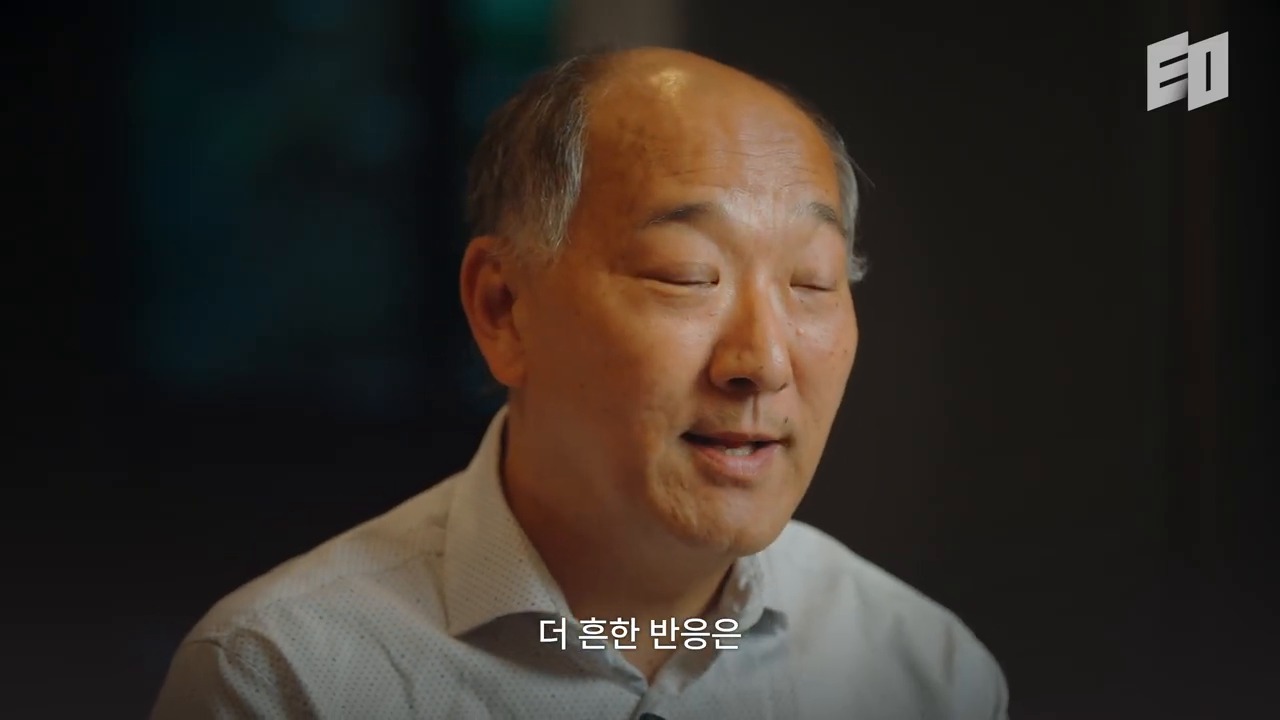
    This fuller English adaptation follows the Korean source’s reflection on Ken Ono, deep intelligence, and learning in the AI era. If AI can produce answers instantly, human learning cannot remain a contest of memorized information. The question becomes: what kind of intelligence should humans cultivate?

    human learning in the AI era
    human learning in the AI era.

    Original Korean article: AI가 모든 답을 아는 시대, 인간은 무엇을 배워야 하나

    Why Learning in the AI Era Is No Longer a Knowledge Competition

    For a long time, school and career success rewarded people who could absorb information, recall it quickly, and apply standard methods. AI changes that environment. A student can ask for a summary, a worker can ask for a draft, and a researcher can ask for references. The value of simply “knowing the answer” declines when answers are everywhere.

    The source article does not say knowledge is useless. It says the purpose of knowledge changes. Knowledge becomes the material for asking better questions, recognizing false answers, connecting ideas, and pursuing problems that matter personally.

    Ken Ono’s Idea of Deep Intelligence

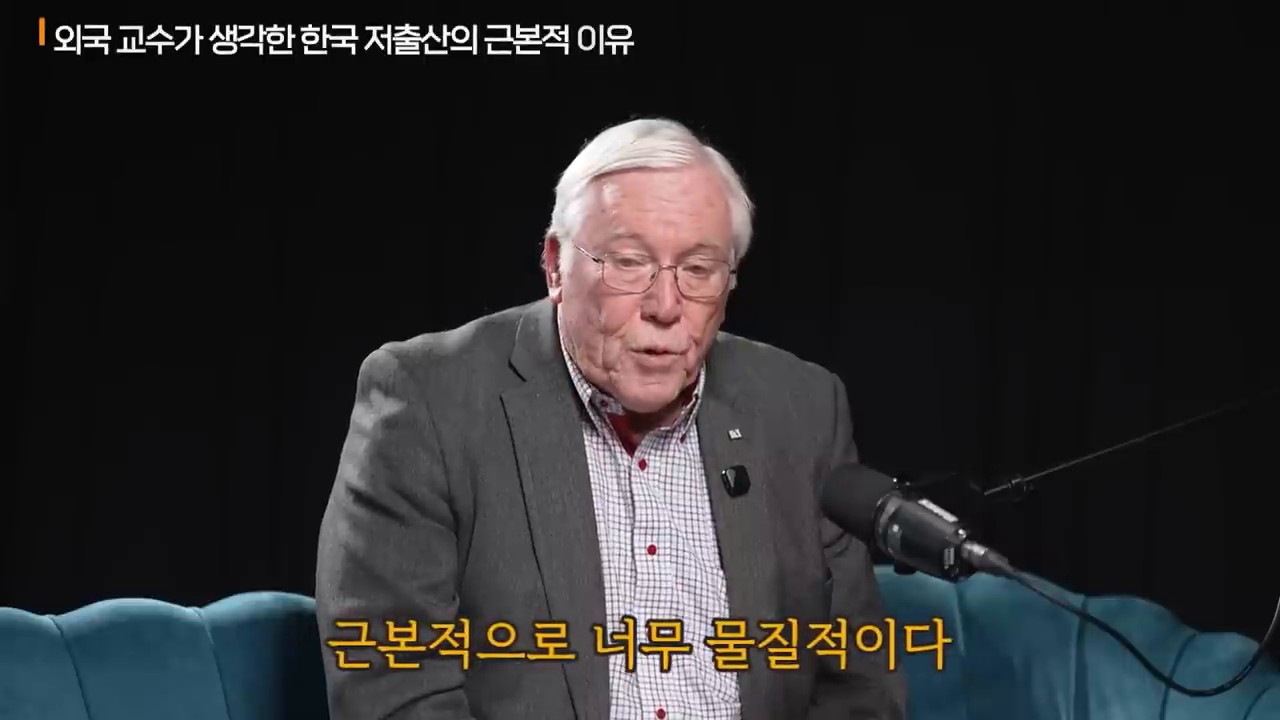
    The article introduces Ken Ono’s message as a challenge to shallow learning. Deep intelligence is not the ability to repeat correct answers. It is the ability to stay with a question, sense patterns, connect fields, and develop an inner reason to learn. It includes curiosity, persistence, and identity.

    In mathematics, music, art, research, or work, the deepest learning often begins when a person finds a question that will not let go. AI can help explore that question, but it cannot replace the human decision to care about it.

    Education Is Not a Checklist; It Is the Recovery of Curiosity

    The Korean source criticizes checklist-style education. When learning becomes only grades, certificates, rankings, and completed assignments, curiosity weakens. Students may become efficient at passing tasks but lose the ability to wonder.

    AI makes this problem more urgent. If homework can be outsourced to a model, schools must design learning that brings students back into ownership. Discussion, projects, exploration, explanation, and personal reflection become more important than worksheets that measure only output.

    What Students and Workers Should Learn Again

    deep intelligence and curiosity
    deep intelligence and curiosity.

    Students should practice asking original questions, explaining reasoning, comparing sources, building projects, and revising their own work. Workers should learn to turn experience into reusable knowledge, use AI as a thought partner, and make decisions under uncertainty. Both groups need literacy in AI’s strengths and limits.

    The article’s practical message is that people should build a relationship with learning rather than only collect facts. A person who knows how to investigate, verify, and persist will use AI better than a person who only copies AI output.

    For students, the output is less important than the process

    If an AI system can produce a polished paragraph, the student’s value appears in the process: choosing the question, checking the evidence, explaining why one answer is better than another, and connecting the result to personal experience. Teachers can therefore ask students to show drafts, reasoning notes, oral explanations, and revisions.

    For workers, learning becomes a way to redesign work

    Workers should not only ask AI to finish tasks faster. They should ask which parts of the task are repeated, which decisions require expertise, and which knowledge should be saved for reuse. In that sense, learning becomes a way to improve the work system itself.

    Persistence Matters More Than Perfectionism

    Perfectionism often stops learning before it begins. A person waits until the plan is perfect, the tool is perfect, or the answer is guaranteed. Deep intelligence grows differently. It grows through staying with a personal problem long enough to make progress, even when the path is unclear.

    AI can reduce friction by explaining basics, generating examples, and offering feedback. But the human must decide what problem is worth returning to. The source article highlights this power of holding onto one’s own question.

    Conclusion: The Direction of Learning in the AI Era

    questions and identity beyond AI
    questions and identity beyond AI.

    The article concludes that human learning should move from answer collection to question ownership. AI can know many answers, but humans still choose meaning, purpose, responsibility, and direction. The most important skill may be the ability to ask, “What do I want to understand deeply enough that I will keep learning?”

    Related Reading

    Continue with these related Thinknote English articles in the Digital Transformation cluster.

    FAQ

    What is this article about?

    This article explains a digital transformation, platform, market-structure, or technology-adoption topic with Korea-specific context and global implications.

    How should I use this guide?

    Use it to understand market signals and strategic patterns. Combine it with current market data before making business or investment decisions.

    Where can I read the original Korean article?

    The original Korean article is available here: What Should Humans Learn When AI Knows Every Answer?.

  • Six Habits of People Who Get Smarter While Using AI

    Six Habits of People Who Get Smarter While Using AI

    This English version is a fuller translation and adaptation of the original Korean article, AI를 쓸수록 똑똑해지는 사람의 6가지 습관, for global readers. The question of whether using AI makes our thinking faster or weaker depends on how we use it. A video by the Research Institute of Reading and Learning connects experiments by MIT Media Lab, Microsoft Research, Harvard Business School, and BCG to explore this question.

    six habits for smarter AI use
    six habits for smarter AI use.

    Original Korean article: AI를 쓸수록 똑똑해지는 사람의 6가지 습관

    AI Use Crossroads: Cognitive Crutch or Thought Expansion

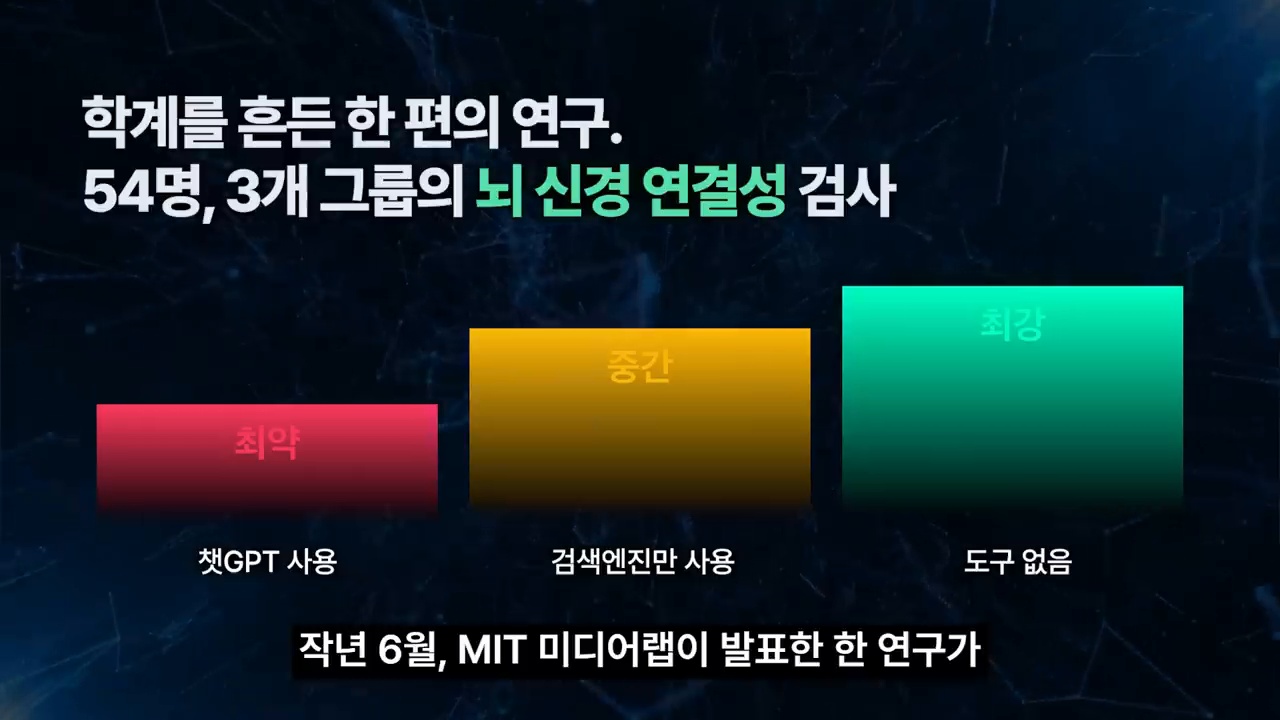
    The video begins with a research case from MIT Media Lab, comparing groups that used GPT to write essays, those who used search engines, and those who wrote without any tools. The results showed that the group using GPT had weaker brain neural connections, which the video describes as “cognitive crutch.” However, the key point is that using AI itself is not the problem; the difference lies in the user’s thinking habits.

    1. People with Expertise in Their Field

    To judge the accuracy of AI-provided answers, one needs a standard, which comes from expertise in their field. People with expertise do not simply copy AI answers; they verify the facts, adjust them according to context, and connect them with their own experiences. On the other hand, those lacking field knowledge may not notice AI errors, making AI a substitute for judgment rather than an assistant.

    AI cognitive debt and thinking expansion
    AI cognitive debt and thinking expansion.

    2. People Who Understand How AI Works

    Using AI like a magic box is dangerous. While it provides answers, these are based on predicting the next word, not understanding the truth. Knowing this principle changes one’s attitude towards AI answers, distinguishing between “plausible sentences” and “verified facts.” Assuming AI can be wrong makes the results safer.

    3. People with High Metacognition

    Metacognition is the ability to know what one knows and what one does not. In the AI era, this ability is more crucial. Those who are unaware of their knowledge gaps may accept AI answers without question. In contrast, people with high metacognition place AI in its correct position, asking questions and rephrasing answers in their own words, leading to actual learning rather than mere consumption of answers.

    metacognition when using AI
    metacognition when using AI.

    4. People Who Design Questions Precisely

    The quality of AI answers largely depends on the quality of the questions. A good question is not just a lengthy prompt but involves clarifying goals, context, constraints, and desired outcomes. For example, instead of asking “Tell me about study methods in the AI era,” it’s better to ask:

    • Explain from the perspective of a working professional, not a high school student.
    • Distinguish between work productivity and learning capabilities.
    • Provide practical, achievable standards rather than exaggerated forecasts.
    • Include a checklist for immediate action.

    The process of designing questions itself is a thought-training exercise. Those who ask good questions to AI first organize their own thoughts.

    5. People Who Do Not Blindly Believe AI Answers

    The video strongly emphasizes critical thinking. The more one relies on AI, the less one verifies. Especially with high-performance AI, the risk increases because the answers seem natural and persuasive. Therefore, AI results should be considered drafts. Always check numbers, sources, legal, medical, or policy information, and important decision-making aspects. People who use AI well do not verify to distrust AI but to achieve better results.

    question design for AI learning
    question design for AI learning.

    6. People Who Intentionally Secure Time Without AI

    The video’s final point is the importance of “AI-free time.” Time for reading, reflection, direct experience, and deep conversation is necessary. While AI quickly generates drafts, relying on it for the initial stages of thought can weaken one’s thinking muscles. Those who think with their own minds first use AI better. In contrast, relying on AI from the start confines one within the framework AI creates.

    Practical Checklist for Using AI in Real Work

    To become smarter while using AI, make the following steps a habit:

    • First, write down your thoughts, even briefly.
    • Clearly inform AI of your goals and context.
    • Divide answers into facts, interpretations, and suggestions.
    • Re-check important content for sources and numbers.
    • Do not use AI answers as is; reconstruct them in your own words.
    • Allocate some time each day or week for reading and thinking without AI.

    This checklist applies not only to studying but also to writing reports, planning, content creation, and decision-making.

    intentional time without AI
    intentional time without AI.

    Conclusion: What Matters More Than AI is the Depth of the Person Using It

    AI can either replace thought or expand it; the difference lies in the user’s attitude. Expertise, understanding of AI’s working principle, metacognition, precise question design, critical verification, and AI-free time are crucial. When these six elements are present, AI becomes a tool for growth, not dependence. As tools become more powerful, human depth is more necessary. The core competency in the AI era is not the ability to use AI extensively but the ability to maintain one’s judgment and thought while using AI.

    Related Reading

    Continue with these related Thinknote English articles in the Digital Transformation cluster.

    FAQ

    What is this article about?

    This article explains a digital transformation, platform, market-structure, or technology-adoption topic with Korea-specific context and global implications.

    How should I use this guide?

    Use it to understand market signals and strategic patterns. Combine it with current market data before making business or investment decisions.

    Where can I read the original Korean article?

    The original Korean article is available here: Six Habits of People Who Get Smarter While Using AI.

  • The Neuroscience of Hate: Why Human Brains Struggle to Understand Each Other

    The Neuroscience of Hate: Why Human Brains Struggle to Understand Each Other

    This English version is a fuller translation and adaptation of the original Korean article, “The Neuroscience of Hate: Why We Struggle to Understand One Another,” for global readers. The article explores the neuroscience of hate, delving into why human brains struggle to understand each other. It is based on the explanations of Professor Kim Dae-sik in “Knowledge Inside Guest Interview EP.134,” which connects brain science, AI, and perception issues to shed light on why humans easily misunderstand and sometimes hate each other.

    neuroscience of hate and human bias
    The neuroscience of hate shows how perception and group identity shape conflict.

    Original Korean article: The Neuroscience of Hate: Why We Struggle to Understand One Another

    Key Summary: 5 Perspectives on the Neuroscience of Hate

    To understand the neuroscience of hate, we must first accept an uncomfortable fact: we do not see the world as it is but rather through the reality created by our brains. This is why we can look at the same scene and attach completely different meanings to it, or hear the same words and react with different emotions.

    Colors Are Not the Same Experience for Everyone

    Professor Kim Dae-sik uses colors as an example. The color we call “red” is actually the interpretation by our brains of light wavelengths, and there’s no way to confirm if the “red” I see is the same as the “red” you remember or imagine. We believe we share the same experience because we use the same words, but in reality, our brains may be creating different experiences that we roughly match with the same language.

    human perception and brain interpretation
    The brain interprets reality rather than simply recording it.

    1. The Brain Does Not See Reality Directly

    Professor Kim Dae-sik explains the brain as an entity trapped in the skull, not directly experiencing the outside world but interpreting it through sensory data from our eyes, ears, nose, skin, etc. This explanation is similar to Plato’s allegory of the cave, where we construct reality based on shadows of the actual world, which can always be distorted.

    2. The Neuroscience of Hate Begins with the Invisibility of Others’ Inner Worlds

    A crucial starting point in the neuroscience of hate is the fact that we cannot directly see into others’ inner worlds. We cannot connect brains like HDMI cables to transfer data. Therefore, we always make estimates when trying to understand others, using facial expressions, tone of voice, behavior, social background, and past experiences to guess their feelings and thoughts.

    social identity and in-group out-group bias
    Group identity can make people divide the world into us and them.

    Groups We Have Not Experienced Become Alienated Easily

    Professor Kim Dae-sik shares his experience of living in Europe as an Asian, illustrating how people imagine groups they have not directly experienced in simplistic terms. This shows that hate and prejudice do not always stem from strong malice but can also arise from a lack of experience, imagination, and contact.

    3. Why Humans Divide into “Us” and “Them”

    The video explains that for humans to cooperate, they had to acknowledge the inner worlds of others. Initially, in primitive conditions, trusting only family or close groups might have been enough for survival. However, with settlement, agriculture, and the expansion of society, cooperation with strangers became necessary.

    AI and human self-understanding debate
    AI debates also reveal how humans think about self, mind, and value.

    The Problem Lies in the Fluctuating Scope of Acknowledgment

    Even today, we do not treat all people as equals with inner worlds. Political stance, region, gender, generation, nationality, religion, fandom, or taste can easily categorize someone as “someone I don’t understand.” Hate becomes stronger when this categorization solidifies, making it easier to see the other not as an individual but as a group that doesn’t need to be understood.

    4. Why AI and Self-Debate Connect to Human Hate Issues

    The discussion expands to AI, questioning the criteria by which we treat different beings (objects, animals, humans) differently. The difference lies in judgments about intelligence, self-awareness, and the ability to feel pain. As AI becomes more intelligent, the question arises of how we will understand and control it.

    We Still Treat AI as a “Tool”

    Currently, we ask AI questions, give commands, and demand results without asking for its consent, treating it like an object or tool. As AI becomes smarter and seems to have abilities like conversation and empathy, this standard may change. This discussion connects to hate issues because we continuously judge who deserves acknowledgment of their inner world.

    5. The Analogy of Superintelligent AI: Humans Might Appear Like Ants

    A strong analogy in the video is the relationship between humans and ants. Humans do not necessarily hate ants, but when building a house or a road, the presence of an anthill might not be a significant concern. The relationship between superintelligent AI and humans could be similar, warning that as the intelligence gap grows, so does the potential for indifference.

    Hate Might Be Less Dangerous Than Indifference

    We usually think of hate as a strong emotion, but indifference can be more dangerous socially. When we consider someone or a group not worth our consideration, not out of hate but out of indifference, violence can occur more easily. The neuroscience of hate is thus not just about emotions but also about perception and how we categorize others.

    6. The Brain’s Rest: The Judging Brain is a Biological Organ

    The latter part of the video discusses sleep and the brain’s rest. Professor Kim emphasizes that the brain operates continuously without rest, unlike electronic devices that can be turned off. The importance of sleep for brain recovery is also highlighted.

    A Tired Brain Simplifies More Easily

    Sleep is likened to the brain’s garbage collection time, scientifically known to be crucial for memory, recovery, and waste removal. This relates to the issue of hate, as a tired and overloaded brain finds it harder to understand complex individuals and relies more on quick judgments, simple categorizations, and familiar prejudices. Adequate rest is not just a health issue but also a condition for judging others less harshly.

    7. What Is Needed for Us to Hate Each Other Less?

    In summary, humans are not designed to perfectly understand each other, living in realities created by our brains, unable to directly see into others’ inner worlds, and tending to simplify unfamiliar groups. However, recognizing our limitations allows us to be more cautious. Remembering that our perceived reality is not the only one, that others’ inner worlds are not fully knowable to us, and that unfamiliar groups should not be easily stereotyped can help.

    Three Practical Reminders

    First, do not believe your reality is the absolute truth; events can be interpreted differently based on individual memories, emotions, and backgrounds. Second, assume that even those you do not understand have their own pains, fears, and reasons. Third, correct your prejudices through actual experiences; abstract images can strengthen biases, while concrete meetings can weaken them.

    Conclusion: Acknowledging the Brain’s Limitations Is the First Step to Reducing Hate

    The neuroscience of hate does not conclude that humans are inherently bad; rather, it informs us that our brains create reality with limited information and can mistake this reality for absolute truth. Recognizing these limitations allows us to judge others more carefully. Reducing hate begins with humility in our perception, remembering that “my reality might not be the only one.” This simple acknowledgment can make us less prone to hate.

    Original Video and Reference Links

    Original Video: Knowledge Inside, “The Neuroscientific Reason Humans Hate One Another Throughout Life” (Professor Kim Dae-sik) – Channel: Knowledge Inside YouTube Channel

    Frequently Asked Questions

    Q: What is the neuroscience of hate?
    A: The neuroscience of hate explores why human brains struggle to understand each other, leading to hate and prejudice.
    Q: How does our brain’s perception of reality contribute to hate?
    A: Our brains create reality based on limited information, and this constructed reality can lead to misunderstandings and hate towards others.
    Q: Can we reduce hate by acknowledging the brain’s limitations?
    A: Yes, recognizing our brain’s limitations and the subjective nature of our reality can help us be more cautious and less prone to hate.

    Related Reading

    Continue with these related Thinknote English articles in the Digital Transformation cluster.

    FAQ

    What is this article about?

    This article explains a digital transformation, platform, market-structure, or technology-adoption topic with Korea-specific context and global implications.

    How should I use this guide?

    Use it to understand market signals and strategic patterns. Combine it with current market data before making business or investment decisions.

    Where can I read the original Korean article?

    The original Korean article is available here: The Neuroscience of Hate: Why Human Brains Struggle to Understand Each Other.