
Work gets faster when AI drafts content and summarizes materials for us. But does doing more at that faster pace always produce better results? If incorrect information slips in, we may also release more work without checking it.
In a STUDIO LOLA interview, cognitive psychologist Professor Kim Kyung-il says AI has made his work easier but also made him more vigilant. The concern is not just the possibility of being replaced. He also worries about trusting incorrect AI content or citing it without verification. The video’s central concern is not that we should use AI less. Instead, it can be understood as a call to rebalance the time spent generating content and exercising judgment.
The More Convenient AI Becomes, the More We Must Distinguish Finding from Verifying
Finding the information we wanted used to take considerable time. It was easy to see a hard-won answer as an achievement. Now a question immediately produces fluent sentences and organized lists. But getting an answer and knowing it is correct are different things.
Kim is particularly wary of readily trusting AI’s plausible answers. Fluent writing can make information feel as though someone has already reviewed it. Copy an AI explanation into a report or teaching materials, and you pass along unverified claims under your own name.

The video also presents a strong view that language model hallucinations will persist. We need not interpret this as permanent proof of the limits of future technology. The practical message is clearer: Check the answers from today’s AI on the assumption that they may contain errors.
Do Not Fill All the Time You Save with More Work
Kim says agentic AI has helped him handle more work faster. Yet he remains vigilant because he feels he may also be making more mistakes. This is a personal impression, not a productivity statistic or experimental finding that applies to everyone.
What follows is the important point. Rather than making speed the sole goal, he says we need quiet time afterward to check, reflect, and verify.
Applying this perspective changes how we evaluate AI use at work. We should consider not just drafting speed, but also the process of finding errors, correcting them, and finalizing the work. Generation may be faster, but fact-checking and rework can still take considerable time. Perceived speed and actual performance may therefore differ.
The following practical workflow draws on the concerns raised in the interview. It is not a formula or measurement scale validated in the video. It is a sequence for making sure verification does not get overlooked.
- Generate: Give AI the purpose, audience, and scope of materials, then request a draft.
- Separate: Label factual claims, opinions, estimates, and proposed actions separately.
- Verify: Check figures, quotations, laws, and proper names against the original sources.
- Judge: Remove statements with insufficient support or explicitly state the uncertainty.
- Approve: Have the person responsible perform a final check before external delivery, publication, or execution.
Asking AI for another review can help. But agreement from another answer cannot replace checking the original source. What matters is not the number of reviews, but which evidence and actual results you checked against.
Do Not Reduce a Profession to a Single Digital Task
The interview uses radiology to show that a profession involves more than its most visible specialist task. Beyond interpreting images, the work includes persuading patients, coordinating with other medical professionals, securing organizational resources, and taking responsibility when problems arise.
This discussion does not treat the video’s claims about salary changes or task proportions as verified statistics. Instead, it offers a way to understand professions: distinguish an easily automated task from the relationships, circumstances, and responsibilities surrounding it.
Training professionals’ work can be divided in a similar way. AI can help write announcements and summarize surveys. But persuading reluctant employees, coordinating training schedules with operational departments, and reconciling different stakeholders’ needs remain separate tasks.
This does not guarantee that any profession will remain safe forever. It means we should not judge automation potential by job titles or only the most conspicuous technical tasks.
Collaboration Skills Come from Working Together, Not Just Knowing the Theory
Kim also emphasizes understanding people unlike ourselves and gaining experience working with them. He cautions against giving up on collaboration simply because people differ in age, gender, or cultural background.
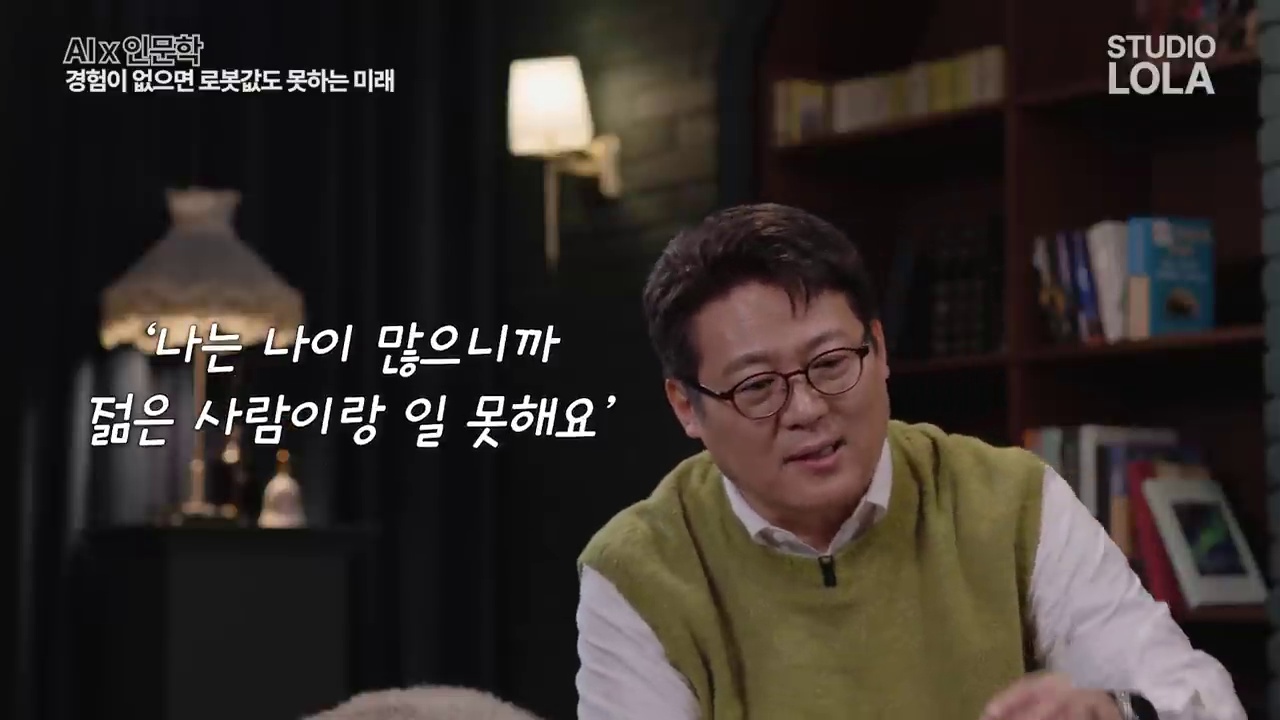
Knowing that empathy matters is different from actually reaching agreement with someone. We learn by hearing why someone interprets the same proposal differently, changing our explanations, and repairing relationships after conflict.
Talking only to AI makes feedback easy to obtain, but it does not eliminate real people’s objections or hesitation. Developing collaboration skills requires keeping opportunities to work with people.
- Explain a draft to a colleague in a different role and listen to what they find unclear.
- When opinions clash, first identify the conditions the other person wants to preserve and the risks they fear.
- Try explaining the same content separately to a manager, a practitioner, and a user.
- After finishing, reflect not only on the result but also on what you missed during coordination.
These activities need not be seen as the opposite of using AI. Use AI to organize materials and draft content. Then you can spend the time saved meeting people and understanding context.
Studying the Humanities in the AI Era Is Not a Retreat from Reality
In the interview, the humanities are not decorative knowledge detached from a changing world. Kim explains their role through the growing need to understand people at historical turning points.

Learning AI’s capabilities can go hand in hand with learning about people. That means understanding what technology can do while considering who receives its output and the circumstances in which they use it.
For example, an automatically written notice may be grammatically correct yet unhelpful to users. A survey summary may look accurate while overlooking conditions on the ground. That is why skill with tools needs judgment about people and situations.
Five Things to Check in the Work You Create with AI Today
The phrase ‘people becoming less intelligent’ in the video’s title should not automatically be read as a research finding about cognitive decline. The interview poses a practical question: as tools become more convenient, are we unthinkingly handing over our judgment too?
Before releasing your next piece of work, ask five questions.
- Can I distinguish facts I checked myself from explanations supplied by AI?
- Did I actually open the sources I cited and check their context?
- Have I considered who would be affected if this result were wrong?
- Did I spend some of the time AI saved on checking and reflection?
- Did I revise anything after listening to actual users or colleagues?
Competitiveness in the AI era cannot be explained solely by how quickly we produce more output. Kim’s interview shifts attention toward checking quickly generated answers and gaining experience working with people unlike ourselves. The starting point is to enjoy the convenience without handing over judgment and responsibility.
Related Reading
- Kim Dae-sik and Kim Hye-yeon on What Makes Humans Unique in the AI Era
- Jensen Huang on Real Intelligence and Understanding People in the AI Era
- Work Environments and Verification: What to Look for When Comparing AI Agent Tools
FAQ
Does heavy AI use necessarily weaken thinking skills?
This interview alone cannot establish that causal relationship. The central point is not how much AI we use. It is to be careful about trusting AI explanations without checking them and surrendering our judgment.
How should I verify AI answers?
Separate statements that require checking, such as figures, quotations, and laws, then compare them against original sources and actual materials. Remove unsupported claims or mark the uncertainty. Do not consider verification complete merely because another AI gave the same answer.
Why does collaboration experience matter in the AI era?
Work involves not only processing information but also persuading people, coordinating interests, and taking responsibility for outcomes. The interview emphasizes that these abilities develop through experience working with different people.
How should I use the time AI saves?
Rather than spending it all on more work, reserve some for reviewing output, checking original sources, reflecting, and listening to actual users and colleagues. Instead of a fixed time ratio, let the work’s risks and required level of verification guide you.
References
The images are video frames quoted to explain and critique the interview. The speaker’s views and personal impressions are distinguished from general research findings. The practical checklist was adapted from the concerns raised in the interview.