[태그:] Digital Transformation

  • Korea Ecommerce Outlook 2024–2025: PEST Analysis of Market Change

    Korea Ecommerce Outlook 2024–2025: PEST Analysis of Market Change

    This English article is a fuller global adaptation of the original Korean analysis. The original post is not only a short market note; it is a PEST-based industry outlook that connects regulation, platform trust, consumer behavior, logistics cost, and technology adoption in Korea’s ecommerce market. The purpose here is to preserve that level of detail while making the article readable for international readers who search for Korea ecommerce trends, platform regulation, C-commerce, and digital retail strategy.

    Korea ecommerce outlook 2024 2025 PEST analysis
    Korea ecommerce outlook 2024 2025 PEST analysis.

    Original Korean article: 이커머스 산업 전망 2024-2025: 시장 변화와 PEST 분석

    Why Korea Ecommerce Is Entering a New Phase

    Korea’s ecommerce market is no longer in the simple “sell more online” phase. For many years, gross merchandise volume and fast user acquisition were treated as signs of strength. The original Korean article argues that this era is ending. The market is now shaped by settlement risk, trust, cross-border price competition, consumer polarization, logistics pressure, and platform regulation.

    The TMON and WeMakePrice settlement delay crisis damaged confidence in marketplace platforms. At the same time, Chinese C-commerce platforms such as AliExpress and Temu pressured domestic players with ultra-low prices. High inflation weakened mid-market consumption. These changes mean that ecommerce strategy must be understood through market structure, not only sales growth.

    The core message is clear: survival and profitability matter more than raw scale. The companies that survive will not simply be the ones with the largest app downloads. They will be the companies that manage trust, cash flow, logistics, customer experience, and regulatory risk better than competitors.

    Political Factors: Platform Regulation, Settlement Rules, and C-Commerce

    Platform fair competition rules are becoming stricter

    Korea’s policy direction is moving from voluntary self-regulation toward legally binding platform regulation. The Fair Trade Commission has been concerned about monopoly power, self-preferencing, bundled services, and restrictions that prevent sellers or users from using competing platforms. Even if the final regulatory form changes, the pressure on dominant platforms remains significant.

    For large players such as Naver and Coupang, this may limit aggressive membership expansion, private-label exposure, or platform-lock-in strategies. For smaller competitors, regulation can create opportunity. However, the overall market may also become less efficient if rules slow down experimentation or increase compliance costs.

    The TMON-WeMakePrice crisis changed settlement expectations

    The settlement delay crisis triggered a strong policy response. The article highlights shorter settlement cycles and separate management of seller payments, similar to escrow-style protection. This is especially important because many sellers depend on timely settlement to pay suppliers, employees, and logistics partners.

    The impact can be double-edged. Stronger settlement rules protect sellers and consumers, but they can also weaken smaller platforms that previously relied on cash-flow timing to expand. As liquidity requirements rise, the market may consolidate around platforms with stronger capital structures.

    C-commerce regulation and customs barriers are becoming strategic issues

    Chinese platforms compete with extremely low prices and increasingly fast delivery. Korea’s policy response includes safety inspections, customs scrutiny, and potential adjustment of duty-free thresholds for small parcels. These measures are partly about consumer safety and partly about reducing reverse discrimination against domestic sellers.

    If customs and safety rules become stricter, C-commerce may lose part of its speed and price advantage. Domestic platforms should not assume that regulation alone will protect them, but regulation can change the competitive balance.

    Economic Factors: Polarized Consumption and Profitability Pressure

    The disappearance of the average consumer

    High inflation and high interest rates are changing the way Koreans shop. The original article describes a “disappearance of the average.” Consumers are moving toward either ultra-low-price options or clear premium value. Products in the middle price range can become difficult to defend unless they offer strong trust, brand identity, or convenience.

    This explains why discount stores, low-cost imported goods, and premium categories can grow at the same time. The strategic problem for ecommerce operators is that a vague middle-market position is becoming dangerous.

    The market is maturing into a zero-sum game

    As ecommerce penetration is already high, growth rates naturally slow. The market becomes less about bringing people online for the first time and more about taking share from other platforms. In this environment, marketing cost, delivery subsidy, membership benefits, and seller incentives can easily turn into a zero-sum competition.

    The article stresses that operating profit matters more than GMV. Platforms that cannot convert scale into margin may face restructuring, acquisition, or decline.

    Logistics and labor costs widen the gap

    Rising minimum wages, warehouse expenses, last-mile delivery costs, and returns management all create pressure. Companies with their own fulfillment networks may gain an advantage, but only if utilization and operational efficiency are high enough. For smaller sellers and platforms, logistics can become a structural disadvantage.

    Social Factors: Time Efficiency, Short-Form Commerce, and Senior Shoppers

    One-person households and time-efficient lifestyles are expanding demand for quick commerce, small packages, scheduled delivery, and easy returns. Fast delivery is no longer a luxury feature; it is becoming a hygiene factor that customers expect by default.

    The original article also highlights “Ditto consumption,” where shoppers follow influencers, algorithms, and social proof rather than searching only by product category. Short-form video, TikTok-style discovery, Instagram Reels, and creator recommendations are now part of the ecommerce funnel. Marketing must combine content and commerce.

    Another important social shift is the rise of active seniors in their 50s and 60s. These customers have purchasing power and are increasingly comfortable with online shopping. However, they need better user interfaces, trustworthy product information, clear payment flows, and sometimes vertical platforms that match their interests.

    Technological Factors: Generative AI, Retail Tech, and Cross-Border Logistics

    Generative AI can improve personalization, review summaries, customer service chatbots, product copy, virtual fitting, and product recommendation. The value is not simply novelty. AI can reduce operational workload and increase conversion when it is connected to actual purchase decisions.

    Retail technology and fulfillment automation are also becoming important. Automated guided vehicles, demand forecasting, inventory optimization, and warehouse management systems can become barriers to entry. Logistics infrastructure becomes a moat when it improves both speed and margin.

    Cross-border logistics is another technological and operational force. If direct purchase delivery times fall to three to five days, national boundaries become weaker in consumer perception. Korean platforms compete not only with domestic rivals but with global price and supply-chain systems.

    Strategic Implications for Ecommerce Companies and Sellers

    The original article’s consultant-style insight is that stronger regulation may shrink some short-term activity but improve long-term market health. Sellers should evaluate platforms not only by traffic, but by settlement stability, financial soundness, customer trust, and operational support.

    For platforms, the strategic priorities are clear: protect seller trust, strengthen compliance, reduce logistics waste, use AI for practical efficiency, and avoid undifferentiated price wars. For brands, the challenge is to choose whether they will compete on price, premium value, community trust, or specialized category authority.

    Korea ecommerce in 2024–2025 is not a simple growth story. It is a restructuring story. The companies that understand this shift early can build resilient operating models before the next wave of regulation, competition, and technology change arrives.

    Related Reading

    FAQ

    What is the main message of this Korea ecommerce outlook?

    The main message is that Korea ecommerce is shifting from growth-at-all-costs to survival, trust, settlement stability, profitability, and operational efficiency.

    Why is C-commerce important in Korea?

    C-commerce platforms such as AliExpress and Temu pressure Korean ecommerce companies with low prices, cross-border supply chains, and improving delivery speed.

    What should sellers consider when choosing a platform?

    Sellers should consider traffic, but also settlement stability, platform financial health, logistics support, customer trust, and regulatory resilience.

  • Analysis of Cannes reaction to Na Hong-jin’s “Hope”: Reasons for the difference between favorable and harsh reviews

    Analysis of Cannes reaction to Na Hong-jin’s “Hope”: Reasons for the difference between favorable and harsh reviews

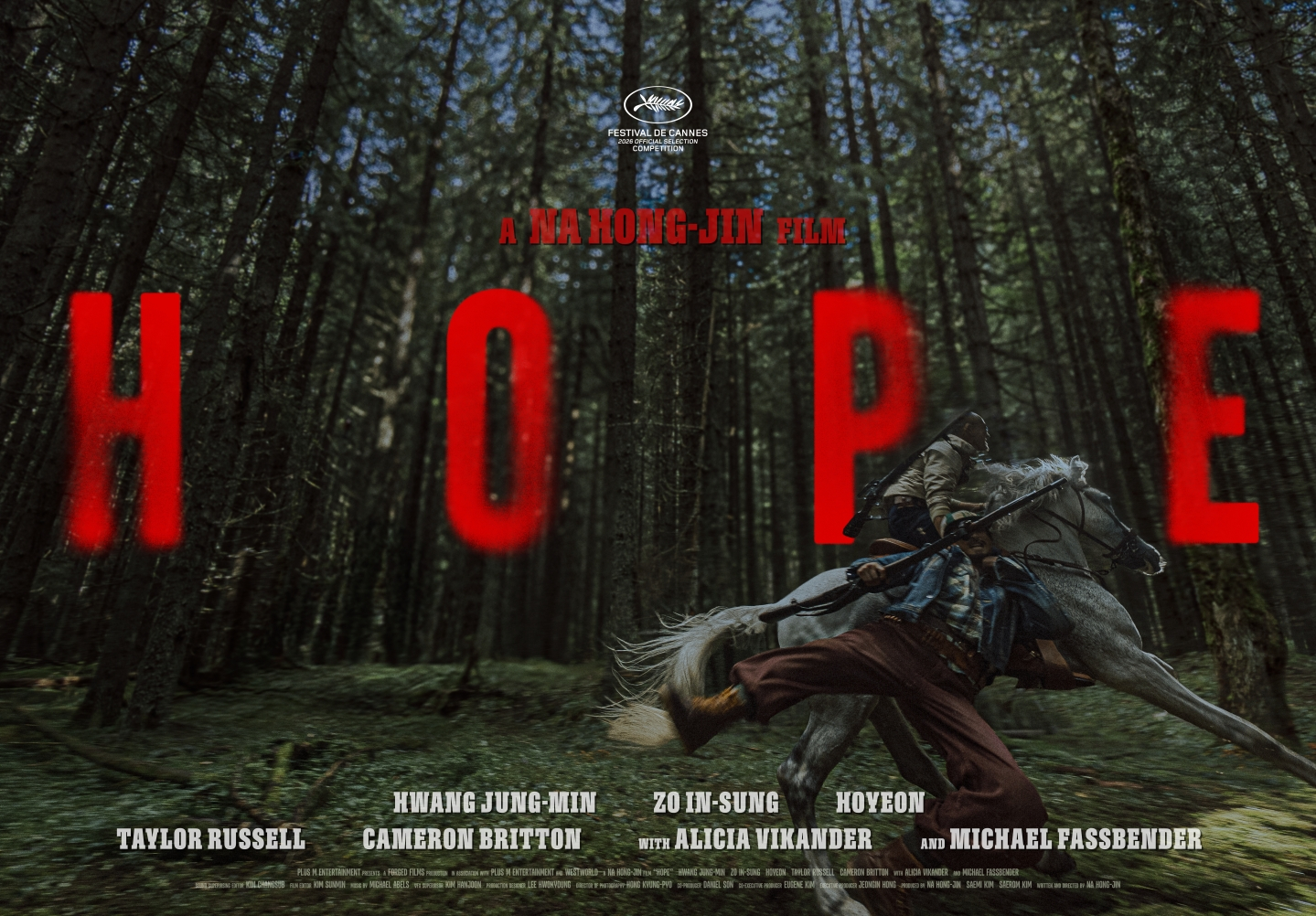
    Na Hong-jin Hope Official poster for the movie Hope that caused a reaction at Khan
    Na Hong-jin Hope Official poster for the movie Hope that caused a reaction at Khan

    Why “Hope” became Cannes’ ‘unsafe blockbuster’ this year

    Director Na Hong-jin's new film "Hope" was invited to the competition section of the 79th Cannes International Film Festival and received great attention even before its release. Expectations were high simply because it was the first new film in 10 years from a director who had pushed the tension and anxiety of genre films with “The Chaser,” “The Yellow Sea,” and “The Wailing.”

    Original Korean article: Analysis of Cannes reaction to Na Hong-jin’s “Hope”: Reasons for the difference between favorable and harsh reviews

    However, the reaction of Na Hong-jin and Hope Khan after Cannes was released was not just a simple positive review. Domestic articles focused on “7-minute standing ovation,” “highest production cost for a Korean film,” and “advance into Cannes competition,” while also reporting that overseas critics’ reactions were extremely divided. Overseas reviews are also similar. Praise poured in for the overwhelming action and energy, but there was also strong criticism for the VFX perfection, long running time, and excessive narrative.

    In the end, Hope’s current location is clear. It is the most controversial Korean film at Cannes this year, and it is a work that makes audiences ask, “What does it mean that a film like this is in the Cannes competition section?” rather than “Is it a well-made film?”

    《Hope》A science fiction monster drama that begins in a village near the DMZ

    《Hope》 is set in ‘Hopo Port’, a virtual port town near the Demilitarized Zone. An unidentified alien life form appears in the village, and as the police, residents, and hunters fight for survival, the incident escalates into greater violence and chaos.

    The main cast members are Hwang Jung-min, Jo In-seong, and Jung Ho-yeon, and foreign actors such as Michael Fassbender, Alicia Vikander, Taylor Russell, and Cameron Britton also participated. According to an interview with Yonhap News, director Na Hong-jin described this film as a story that started from “the ominousness of the world.” He said that the starting point of his work was the sense of war, violence, and the spread of anxiety around the world.

    What's interesting is the genre. 《Hope》 is not just a monster movie, but is introduced as a work that combines mystery, black comedy, war action, and a science fiction worldview. This genre excess is the core cause of both favorable and harsh reviews at Cannes.

    Na Hong-jin and Hwang Jeong-min's official stills for Hof-Kahn reaction analysis
    Na Hong-jin and Hwang Jeong-min's official stills for Hof-Kahn reaction analysis

    Expectations created by “Cannes Competition” and “Standing Ovation”

    Major domestic reports first covered the industrial and symbolic meaning of “Hop.” All of director Na Hong-jin's previous works had a connection to Cannes, but "Hope" was the first to enter the competition category. This can be interpreted as meaning that Korean genre films will once again be evaluated on the center stage of Cannes.

    Korea JoongAng Daily and domestic media reported that there was a standing ovation of about 6 to 7 minutes after the Cannes World Premiere. Maeil Business Newspaper and Kyunghyang Shinmun interpreted this reaction as a “hot topic,” but also introduced mixed local reviews.

    Three points emphasized by domestic articles

    Domestic reporting points Key contents Impression received by readers Invited to the Cannes competition section Director Na Hong-jin's first entry into the Cannes competition section Korean genre film recognized at the art film festival 6-7 minute standing ovation Hot on-site response immediately after release Expectations and topicality rise Dramatic overseas reviews Action praise and CG criticism coexist Strengthening the image as a “controversial problem film”

    One thing to note is that although a standing ovation may be an indicator of the atmosphere at a film festival, it is not a critical indicator that guarantees the completeness of a work. When reading domestic reports, it is necessary to distinguish between “the response was enthusiastic at Cannes” and “it received consistent critical praise.”

    The action is overwhelming, but the VFX and running time are controversial.

    Overseas critics' reactions to Na Hong-jin and Hope Khan are largely divided into two categories. Positive reviews praised “overwhelming energy,” “bold genre mixing,” and “action that pushes the audience.” Conversely, negative reviews raised issues with “long running time,” “insufficient CGI,” and “excessive worldview and narrative.”

    Jo In-sung's official still showing off the action that was well-received by Na Hong-jin and Hope Khan's reaction
    Jo In-sung's official still showing off the action that was well-received by Na Hong-jin and Hope Khan's reaction

    Favorite review: Rated as the most daring genre film of the year

    The Hollywood Reporter evaluated Hope as a work that “deserves to become an instant cult classic,” emphasizing its turbo-charged thrills and genre assurance. Screen Daily also described it as “a genre mix with breakneck pace, gallows humor, blood and gore.”

    Variety gave a more mixed but impressive review. The publication found the film overlong, overlong, and lacking in VFX, but said that for much of the time it played like "one of the most entertaining action films I've seen in a while." AP also reported that “Hope” was not typical science fiction and left the Cannes audience between wonder, confusion, and excitement.

    Criticism: Points out that it becomes weaker after the ‘true nature of the monster’ is revealed

    The first thing to look at in negative reviews is the VFX and narrative. SCMP viewed Hope as close to a “monster mess,” and pointed out that it was difficult to compensate for the awkward CGI and poor setting with only a strong start and the actors’ performances. Screen Daily also evaluated that although the tension in the first hour was strong, the limitations of VFX were visible after the monster was revealed in earnest.

    IGN believed that, even with its flaws, there was a sense of pleasure in wondering, “How can a movie like this exist?” In other words, “Hope” is closer to a runaway film that drags even the flaws as part of its energy, rather than a complete film with no flaws.

    What was the difference between domestic news and overseas reviews?

    Category Focus of major domestic news Focus of overseas critic reviews Interpretation Film festival meaning Invitation to Cannes competition, status of Korean film Festival context of “Expansion of Cannes,” a rare large-scale monster film in competition Category On-site reaction 6-7 minutes standing ovation, topicality A mix of audience cheers and bewilderment Reactions were warm, but not consistent praise Strengths Scale, casting, return of Na Hong-jin Action directing, sense of speed, black comedy, genre ambition Experientiality as a genre film Strengths Weaknesses CG controversy, long running time Introduction VFX, Excessive worldview, sense of repetition, narrative persuasiveness. Prospects for movie audiences pushing for energy rather than completeness. Rising expectations before domestic release. Possibility of cult status and risk of likes and dislikes. Mass box office success likely to be influenced by word of mouth.

    The most important difference in this comparison is the standard of evaluation. Domestic reports emphasize the eventfulness of “Hope,” focusing on its entry into film festivals and on-site reactions. Overseas reviews examine the structure, rhythm, VFX, and genre operation of the actual film in more detail.

    The strength of Na Hong-jin's film soon became a risk.

    Director Na Hong-jin's strength has always been in transforming anxiety and chaos into genre energy. If “The Wailing” mixed the occult, thriller, and mystery to force the audience into uncertainty, “Hope” seems to be a work that expanded that method on a much larger budget and larger scale.

    The problem is that as the scale grows, the standards required by the audience change. The moment monsters and alien lifeforms appear in person, the audience sees not only the director's imagination but also the persuasiveness of the VFX. This is why CG problems were repeatedly mentioned in overseas reviews.

    The pleasure and fatigue of mixing genres

    《Hope》 does not stay in one genre. In the beginning, it starts off as a mystery hiding the true nature of the monster, and later expands into chase action, gore, comedy, and an alien world view. This change may be an “unpredictable pleasure” to some audiences, but it may feel like “unorganized excess” to others.

    The duality of the 160-minute running time

    The running time of 160 minutes is also a deciding factor in reactions. The positive reviews are that the energy is maintained even during the long running time. The critics believe that repeated chases, battles, and newly added settings create fatigue. In the end, “Hope” is read as a film that prioritizes a runaway experience over compressed perfection.

    The position of 《Hope》 compared to 《Monster》 and 《Gakseong》

    “Hope” is naturally compared to Bong Joon-ho’s “The Host” and Na Hong-jin’s own “The Wailing.” While “The Host” elaborately combined family drama and social satire within a monster film, “Hope” pushes violence, misunderstanding, and the sense of invasion more harshly in the space of a village near the DMZ.

    Comparison with 《Gokseong》 is also important. 《The Wailing》 postponed the reality until the end, creating fear of faith and doubt. On the other hand, “Hope” hides its identity in the beginning, but later brings monsters and action to the forefront. Therefore, audiences who expected “The Wailing” may feel that the second half of “Hope” is excessive, and conversely, audiences who expected a large-scale genre film may perceive this excess as attractive.

    Points to watch before domestic release: Final version may vary

    In an interview with Yonhap News, director Na Hong-jin said that there are about two months left until the film's domestic release, and that he will continue to work on it until the very end. This suggests that some post-production work, including VFX, editing, and sound, may be adjusted.

    Therefore, it is too early to conclude that the Cannes version review is the final evaluation of the domestic release. In particular, if the core of the current controversy is VFX and running time, whether or not it is supplemented before release may affect the actual audience response.

    Three things audiences should check

    1. Does VFX break immersion or is it perceived as an exaggeration of the genre?
    2. Does the 160-minute running time increase the density of the experience or create a sense of repetition?
    3. Does the alien life world view work as a sequel possibility, or does it remain as an unfinished setting?

    These three things are likely to determine the direction of word of mouth from domestic audiences.

    《Hope》 is closer to a ‘weird work that creates controversy’ than a ‘well-organized masterpiece’

    If we summarize the reactions to Na Hong-jin Hope Khan to date, Hope is closer to a problematic work that generates strong likes and dislikes rather than a completed masterpiece that everyone agrees on. The action direction, energy, and genre ambition are generally recognized by foreign critics. However, the persuasiveness of the VFX, running time, and narrative are repeatedly pointed out.

    However, this mixed reaction is not necessarily a negative sign. Rather, 《Hope》 is gaining its presence not by being a safe average, but by eliciting extreme responses. The fact that the Korean science fiction monster film in the competition section at Cannes was evaluated as both a “crazy movie” and a “bad CG” shows the nature of this work well.

    There is one thing that audiences need to check after its domestic release. Will “Hope” remain an experience that overwhelms its flaws, or will it remain an example of ambition overtaking perfection? At least looking at the current Cannes reaction, “Hope” is not a film that will pass quietly by.

    FAQ

    Q1. What section of the Cannes Film Festival was 《Hope》 invited to?

    “Hope” was invited to the competition section of the 79th Cannes International Film Festival. It is known that this is the first director Na Hong-jin's work to enter the competition category.

    Q2. Have overseas critics viewed “Hope” favorably?

    Evaluations were divided. The Hollywood Reporter, Screen Daily, AP, etc. highly praised the action, energy, and genre ambition. On the other hand, SCMP and others pointed out CGI, narrative, and running time as problems. There are also reviews, like Variety's, that strongly mention both strengths and weaknesses.

    Q3. What does the 7-minute standing ovation mentioned in domestic reports mean?

    The standing ovation is a sign that the reaction at Cannes was enthusiastic. One thing to note is that this is different from a unanimous evaluation of workmanship. In the case of 《Hope》, the on-site topicality was great, but the reviews were clearly divided into favorable and negative reviews.

    Q4. Will the domestically released version be different from the Cannes screening?

    There is a possibility. In an interview with Yonhap News, director Na Hong-jin said he would put the finishing touches on the film before its domestic release. In particular, there was a lot of response regarding VFX and editing, so it is necessary to confirm the final release version.

    References

    • Festival de Cannes, “HOPE” official work page: https://www.festival-cannes.com/f/hope/
    • AP News, “The breathless Korean sci-fi monster movie ‘Hope’ leaves the Cannes Film Festival floored”: https://apnews.com/article/cannes-hope-na-hongjin-monster-movie-a46d51b2c2e414754697b6ceef007c11
    • Yonhap News, “Na Hong-jin’s ‘Hope’ starts from the sinister side of the world… I’m happy to be invited to Cannes”: https://www.yna.co.kr/view/AKR20260519004700005
    • Korea JoongAng Daily, “Na Hong-jin’s ‘Hope’ gets seven-minute standing ovation at Cannes”: https://koreajoongangdaily.joins.com/news/2026-05-18/entertainment/movies/Na-Hongjins-Hope-gets-sevenminute-standing-ovation-at-Cannes/2595049
    • LA Times, “‘Hope,’ Korea’s biggest gamble, comes to Cannes”: https://www.latimes.com/entertainment-arts/movies/story/2026-05-17/na-hong-jin-hope-korea-sci-fi-cannes-2026
    • Variety, “‘Hope’ Review: Na Hong-jin’s Overlong Creature Feature…”: https://variety.com/2026/film/reviews/hope-review-na-hong-jin-1236750496/
    • The Hollywood Reporter, “‘Hope’ Review: Korean Action Maestro Na Hong-jin’s Rip-Roaring Sci-Fi Creature Feature…”: https://www.hollywoodreporter.com/movies/movie-reviews/hope-review-na-hong-jin-1236598154/
    • Deadline, “‘Hope’ Review: Na Hong-Jin’s Aliens Vs. South Koreans Pic”: https://deadline.com/2026/05/hope-review-aliens-vs-south-koreans-cannes-film-festival-1236913546/
    • Screen Daily, “‘Hope’ review: A rural South Korean community comes under attack…”: https://www.screendaily.com/reviews/hope-review-a-rural-south-korean-community-comes-under-attack-in-na-hong-jins-thunderously-entertaining-genre-mash-up/5216856.article
    • IGN, “The Wailing Director Returns With Hope, an Uncanny Gonzo Thrill Ride”: https://www.ign.com/articles/hope-review-na-hong-jin
    • SCMP, “Hope: director Na Hong-jin of The Wailing fame returns with a monster mess”: https://www.scmp.com/lifestyle/k-drama/k-movies/article/3353931/cannes-2026-hope-movie-review-wailing-director-na-hong-jin-back-monster-mess
    • Maeil Business Newspaper Star Today, “‘Crazy Movie’ VS ‘Worst CG’… Na Hong-jin’s ‘Hope’, polarizing reactions to Cancer”: https://www.mk.co.kr/news/hot-issues/12051990
    • Sports Kyunghyang, “Na Hong-jin’s new work ‘Hope’, ‘absurd but crazy’ vs ‘CG awkward’…”: https://sports.khan.co.kr/article/202605191234003/

    Good article to read together

    • Intellectual property and future technology, why Korea has become a ‘country that prevents copying’
    • Creative thinking has become more important in the AI ​​era, and the power of questions and perspectives spoken of by Dr. Jeongwoon Kim
    • The Brain Science of Hate: Why We Can't Understand Each Other Until the End
    • Human Values ​​in the AI ​​Era: What should people who cannot be replaced prepare?

    Related Reading

    FAQ

    What is this article about?

    This article is an English translation and global-reader adaptation of the Korean post “Analysis of Cannes reaction to Na Hong-jin’s “Hope”: Reasons for the difference between favorable and harsh reviews.” It preserves the original article’s main explanation, examples, and practical context.

    Why is it translated into English?

    The English version helps global readers access Thinknote articles through English search keywords while keeping the Korean source available as the original reference.

    Where can I read the original Korean version?

    You can read the original Korean article here: https://www.thinknote.co.kr/na-hong-jin-hope-cannes-reactions-review/

  • HRD Consulting Industry PEST Analysis: From Training Delivery to Tech Solutions

    HRD Consulting Industry PEST Analysis: From Training Delivery to Tech Solutions

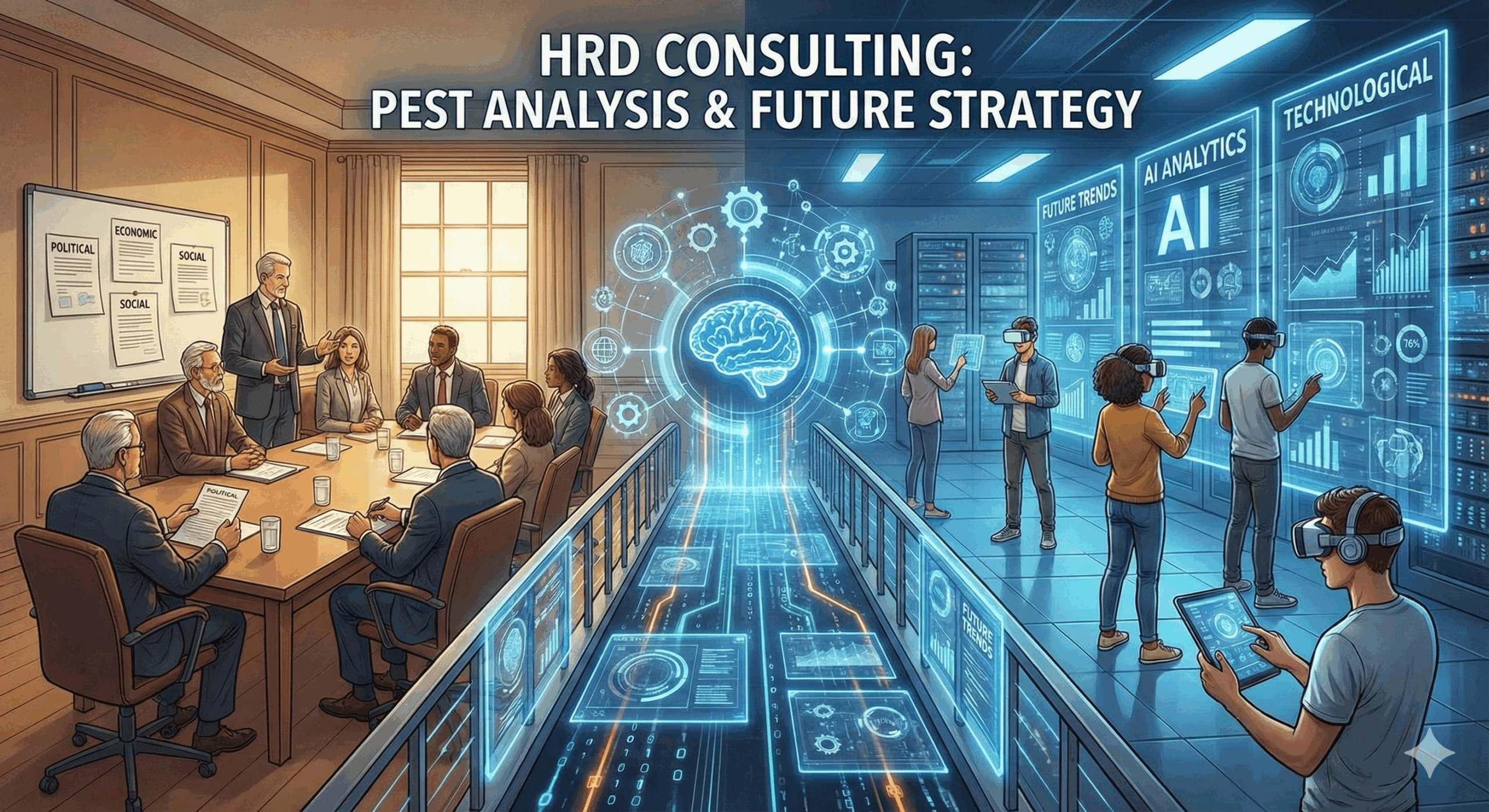
    This English version is a fuller translation and adaptation of the original Korean article, HRD 컨설팅 산업 PEST 분석: 교육에서 Tech 솔루션으로 가는 변화, for global readers. The HRD consulting industry and corporate education environment are undergoing rapid changes. Beyond simple job training, digital transformation and data-based performance management have become the core focus. The HRD consulting industry is shifting from traditional education operations to data, AI, and platform-based tech solutions. To understand the corporate education market, it’s essential to consider how policy, economic, social, and technological changes affect HRD demand and supply.

    HRD consulting PEST analysis and learning technology
    HRD consulting PEST analysis and learning technology.

    Original Korean article: HRD 컨설팅 산업 PEST 분석: 교육에서 Tech 솔루션으로 가는 변화

    HRD Consulting Industry – 1. Political (Political Environment)

    The government’s policies are the most significant variable in determining the flow of HRD budgets. Currently, the government’s focus is clearly on ‘digital’ and ‘safety’. The K-Digital Training policy aims to cultivate 1 million digital talents, with massive budgets invested in private training institutions. This presents a significant opportunity for consulting companies with digital job curricula. The Serious Accident Punishment Act has increased the demand for substantial safety education consulting, rather than formal legal mandatory education. The transition to a job-based pay system and fair hiring practices have also created a demand for consulting services based on job analysis and competency modeling.

    (IMAGE_1)

    HRD Consulting Industry – 2. Economic (Economic Environment)

    The economic downturn may lead to a reduction in education budgets. However, not all budgets are being cut. The polarization of education budgets means that general, universal education budgets are being reduced, while investments are being made in core talent development and digital transformation education. ROI (return on investment) proof has become more crucial than ever. Instead of hiring, companies are focusing on reskilling and upskilling their existing employees, as the cost of hiring has increased. This strategy has become more economically viable.

    (IMAGE_2)

    HRD Consulting Industry – 3. Social (Social and Cultural Environment)

    The learning subject has changed. The MZ generation no longer responds to collective education. Instead, they focus on education that enhances their market value and employability. Personalized career path proposals are essential. The issue of declining literacy and the rise of short-form content have led to a shift towards micro-learning and game-based content. The aging population has also created a new market for outplacement services and mid-career job transition support.

    (IMAGE_3)

    HRD Consulting Industry – 4. Technological (Technological Environment)

    Technology is no longer just a supporting tool for education. It has become the core engine driving the consulting process. Generative AI, such as ChatGPT, has significantly reduced the cost of creating educational content. Real-time AI tutors and ultra-personalized curation algorithms have become essential competitive advantages. HR analytics, which uses data to drive decision-making, has become a critical component of consulting services. By linking learning data and performance data, HR analytics can demonstrate the actual effectiveness of education.

    (IMAGE_4)

    Comprehensive Conclusion and Recommendations

    The paradigm of the HRD consulting industry has shifted from ‘simple education operation’ to ‘tech-based performance management solutions’. The traditional offline collective education market will shrink, but the HR tech market, combined with diagnostic-education-evaluation integrated platforms, is expected to grow continuously. To adapt to this change, HRD consulting companies should develop business models that utilize government digital training subsidies, focus on high-efficiency products, and secure AI-based personalized learning systems and data analysis capabilities.

    Related Reading

    For further insights into the HRD consulting industry and related topics, please refer to the following articles: – AI Agent Operating System: https://www.thinknote.co.kr/ai-agent-operating-system-blueprint/ – Six Habits for Smarter AI Use: https://www.thinknote.co.kr/six-habits-smarter-ai-use-cognitive-debt/ – Future Talent in the AI Era: https://www.thinknote.co.kr/future-talent-ai-era-thinking-power-ai-nation-strategy/ – 2024-2025 E-commerce Industry Outlook – (2026 Industry Outlook) Insurance Comparison Platform Market Future – (2026 Outlook) Pension Fund Era, ‘Return on Investment War’ Winner? – 2026, Jeju Tourism Industry Survival Strategy

    PEST Perspective Core Checklist

    When analyzing the HRD consulting industry from a PEST perspective, consider the following key points: – Does the government’s job training and lifelong education policy change drive HRD demand? – What is the direction of corporate education budgets and personnel reallocation? – Are learners’ expectations shifting from offline lectures to digital experiences? – How do AI tutors, LMS, and learning data analysis change the consulting model?

    Frequently Asked Questions

    Why is the HRD consulting industry moving towards tech solutions?

    Companies want to measure education effectiveness more quickly and provide personalized learning experiences. In this process, technologies like LMS, AI tutors, and learning data analysis are becoming essential tools for consulting services.

    What changes do AI and data bring to corporate education?

    AI and data can be used for education recommendations, learning diagnostics, performance measurement, and content automation. Education managers must interpret learning data and provide improvement suggestions, rather than simply operating the process.

    What capabilities should HRD consulting companies prepare?

    HRD consulting companies should develop capabilities beyond education design, including data analysis, platform operation, AI tool utilization, and performance indicator design. The ability to connect customers’ business problems with technical solutions will become a key differentiator.

    FAQ

    What is a PEST analysis for HRD consulting?

    It is a structured way to examine political, economic, social, and technological forces that shape the HRD consulting industry.

    Why is HRD consulting changing?

    The industry is moving from simple training delivery toward technology-enabled learning, data-based performance support, and organizational transformation.

    What should HRD firms prepare?

    They should strengthen digital learning capability, consulting methodology, data use, and solutions that connect education to business performance.