누군가와 함께 일할 때 가장 어려운 순간은 상대가 나를 배신할 수도 있다고 느낄 때입니다. 서로 믿으면 둘 다 좋아질 수 있습니다. 그런데 한쪽만 약속을 지키면 손해를 봅니다. 그래서 우리는 자주 묻습니다. “나만 바보 되는 거 아니야?”
EBS 취미는 과학 확장판은 이 익숙한 불안을 게임이론으로 설명합니다. 최정규 교수는 경제학과 진화과학의 언어를 빌려, 왜 배신이 이득처럼 보이는 상황에서도 인간 사회가 협력을 만들어 왔는지 풀어냅니다. 핵심은 착한 마음 하나가 아닙니다. 반복, 평판, 보복 가능성, 제도, 그리고 무임승차자를 다루는 규칙이 함께 작동해야 합니다.
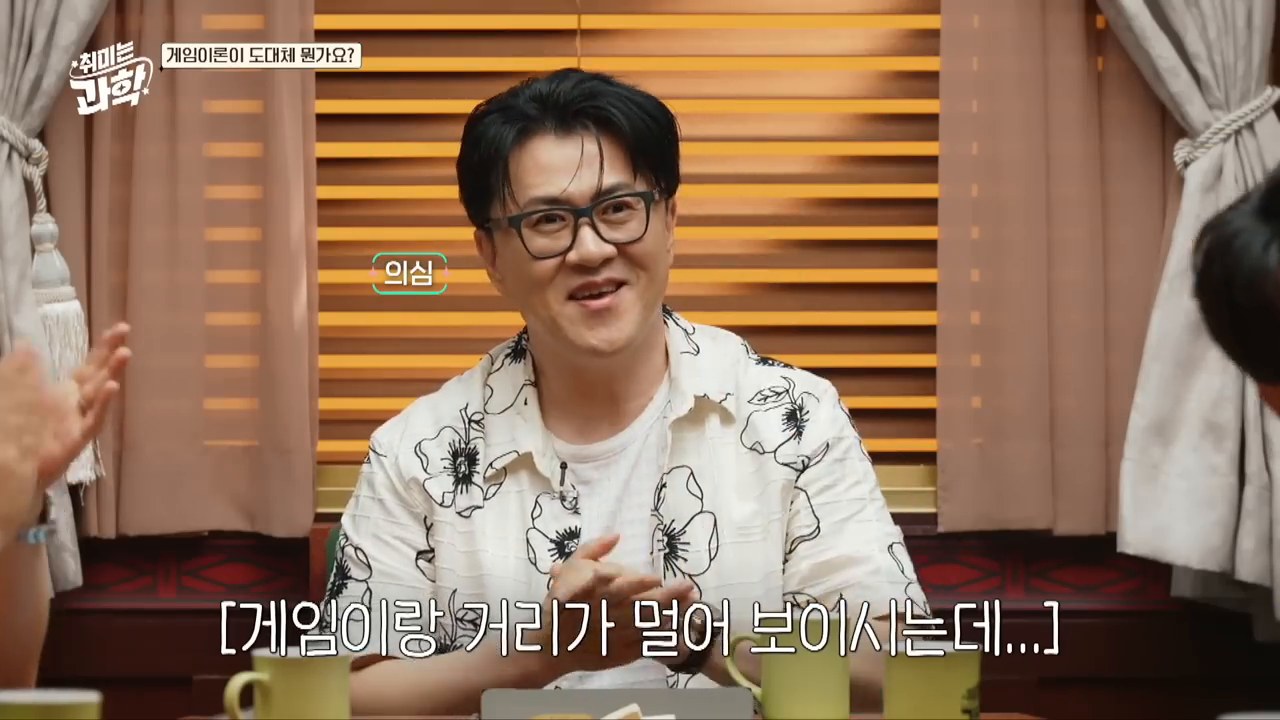
게임이론이 무엇인지 설명하는 장면
게임이론은 ‘상대가 있는 선택’을 다루는 도구다
게임이론은 혼자 계산하는 문제가 아닙니다. 내가 어떤 선택을 하느냐도 중요하지만, 상대가 무엇을 선택할지 예상해야 합니다. 그래서 게임이론은 경제학, 정치학, 생물학, 심리학에서 모두 쓰입니다. 사람의 선택뿐 아니라 동물의 생존 전략이나 국가 간 갈등도 이 틀로 설명할 수 있습니다.
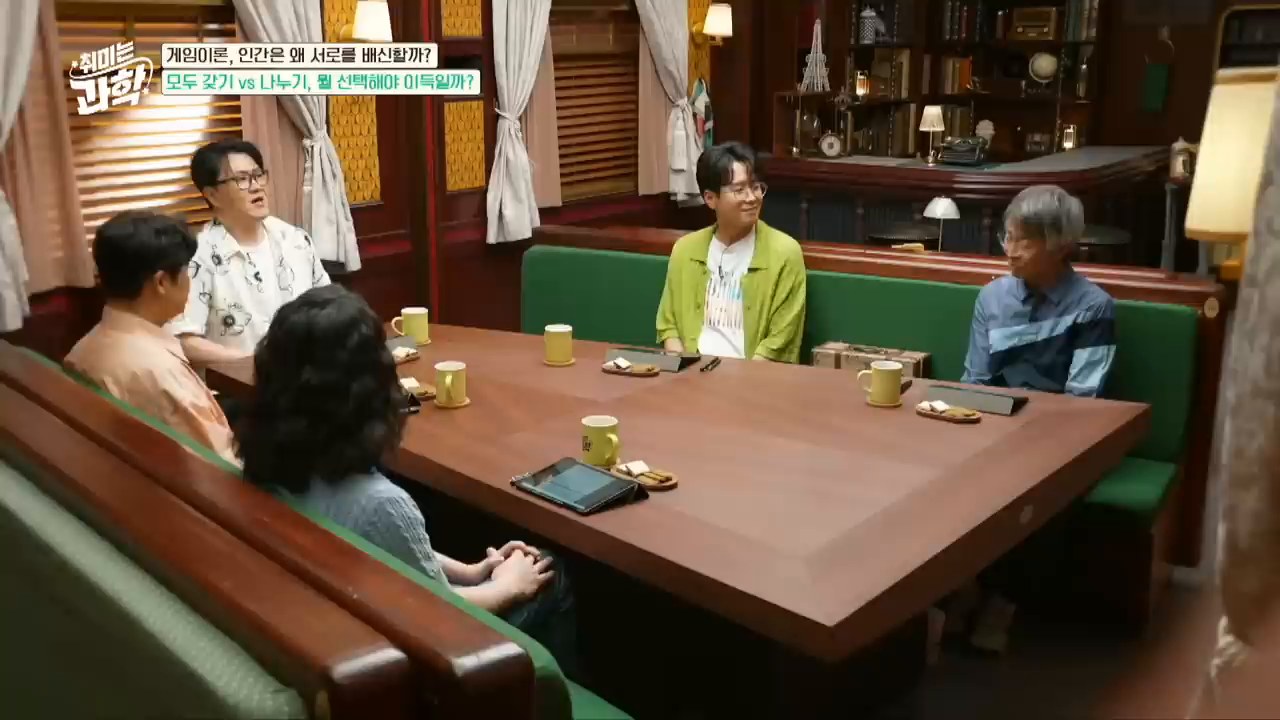
영상은 포상금 100만 원을 놓고 나누기와 모두 갖기를 고르는 장면으로 시작합니다. 둘 다 나누기를 고르면 평화롭게 나눕니다. 한쪽만 모두 갖기를 고르면 그 사람이 독식합니다. 둘 다 모두 갖기를 고르면 아무도 얻지 못합니다. 아주 단순하지만, 신뢰와 배신의 긴장이 그대로 드러납니다.
나누기와 모두 갖기 선택을 설명하는 장면
죄수의 딜레마: 각자 합리적인데 결과는 나빠진다
죄수의 딜레마가 불편한 이유는 인간이 비합리적이라서가 아닙니다. 오히려 각자가 자기 이익을 따질수록 나쁜 결과에 가까워질 수 있기 때문입니다. 상대가 협력할지 확신할 수 없다면, 배신은 꽤 안전한 선택처럼 보입니다.
하지만 모두가 그렇게 생각하면 협력은 사라집니다. 개인에게는 합리적인 선택이 집단 전체에는 손해가 되는 상황입니다. 회사의 부서 간 경쟁, 가격 경쟁, 공공 자원 사용, 조직 내 정보 공유가 자주 이 구조를 닮습니다.
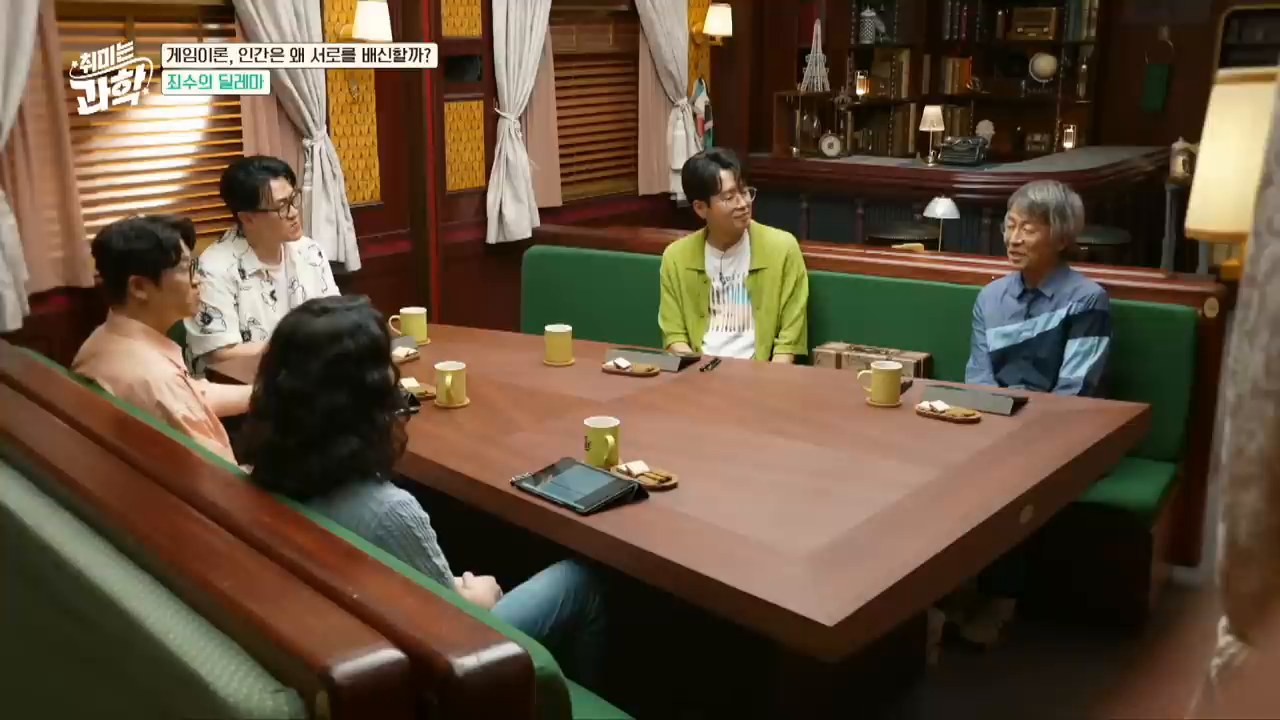
죄수의 딜레마를 설명하는 장면
공유지의 비극: 모두 열심히 했는데 함께 망할 수 있다
공유지의 비극은 조금 더 일상적입니다. 공동 목초지에 각자가 소를 더 많이 풀어놓으면, 개인은 이익을 얻습니다. 그러나 모두가 같은 방식으로 움직이면 목초지는 망가집니다. 누구도 악의를 품지 않았지만 결과는 최악이 됩니다.
이 개념은 환경 문제만 설명하지 않습니다. 조직에서도 비슷한 일이 생깁니다. 회의 시간을 과도하게 쓰는 사람, 공동 문서를 정리하지 않는 사람, 팀의 신뢰를 소비만 하는 사람도 일종의 공유지를 갉아먹습니다. 그래서 협력은 선의만으로 유지되지 않습니다. 공동 자원을 어떻게 관리할지 정한 규칙이 필요합니다.
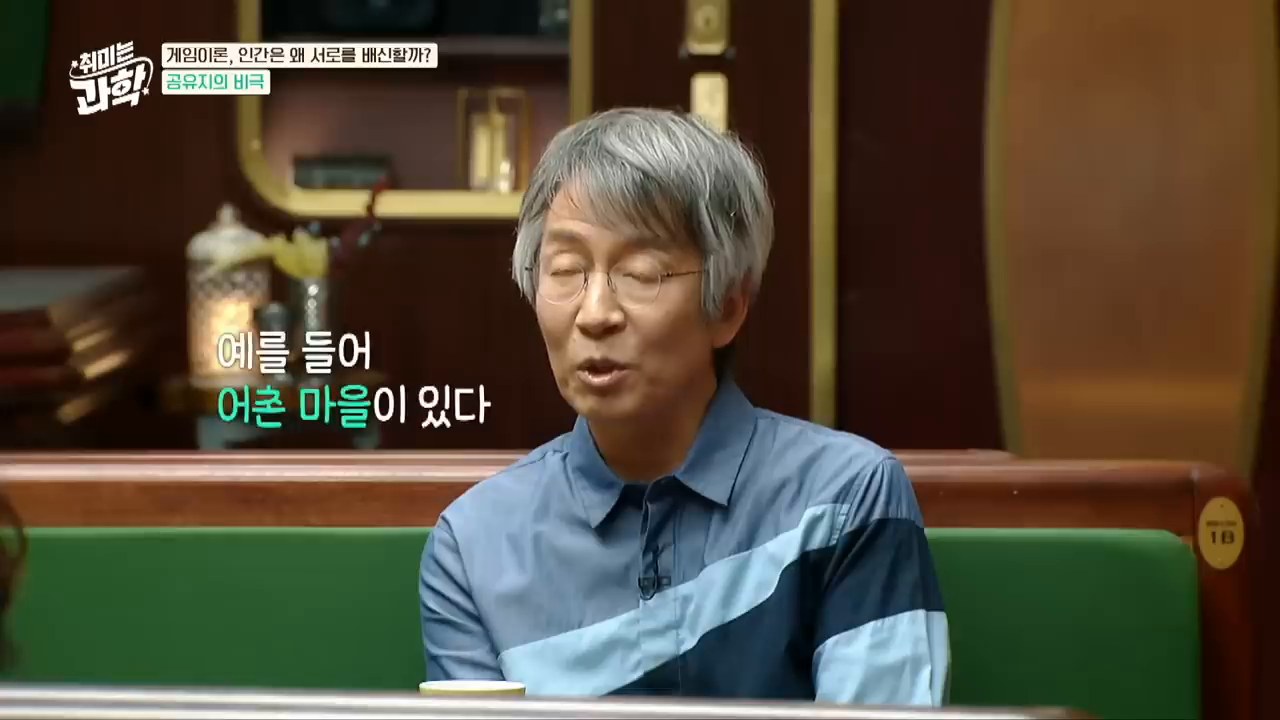
공유지의 비극을 설명하는 장면
팃포탯 전략: 협력은 순진함이 아니라 기억이 있는 관대함이다
영상 후반의 핵심은 팃포탯 전략입니다. 팃포탯은 먼저 협력하고, 이후에는 상대의 직전 행동에 맞춰 대응하는 방식입니다. 상대가 협력하면 나도 협력합니다. 상대가 배신하면 나도 다음에는 배신으로 응답합니다. 하지만 상대가 다시 협력하면 다시 협력으로 돌아갑니다.
이 전략이 흥미로운 이유는 단순해서입니다. 먼저 선의를 보입니다. 배신을 그냥 넘기지는 않습니다. 그렇다고 영원히 복수하지도 않습니다. 협력 사회에는 이 균형이 필요합니다. 무조건 착하기만 하면 이용당하고, 무조건 의심하면 아무 관계도 오래가지 못합니다.
팃포탯 전략과 반복 게임을 설명하는 장면
협력하는 사회를 만드는 5가지 조건
한 번 보고 끝나는 관계보다 반복해서 만나는 구조가 필요합니다.
약속을 지킨 사람과 어긴 사람의 평판이 남아야 합니다.
배신에는 비용이 있어야 하지만, 회복의 기회도 있어야 합니다.
공동 자원을 쓰는 규칙이 명확해야 합니다.
무임승차자를 방치하지 않는 제도가 필요합니다.
협력은 마음씨 좋은 사람을 많이 모으면 저절로 생기는 것이 아닙니다. 좋은 사람이 오래 버틸 수 있는 구조를 만들어야 합니다. 그래서 게임이론은 차가운 계산처럼 보이지만, 실제로는 더 나은 공동체를 설계하는 데 도움을 줍니다.
협력 사회를 만들기 위한 조건을 정리하는 장면
일과 조직에서 이 영상이 주는 메시지
조직에서 협력이 무너질 때 사람들은 성격을 탓합니다. “저 사람은 이기적이야.” “우리 팀은 협업 문화가 없어.” 물론 개인의 태도도 중요합니다. 하지만 게임이론은 한 걸음 더 묻습니다. 지금 구조가 배신을 보상하고 있지는 않은가?
성과를 개인 단위로만 평가하면 정보 공유가 줄어듭니다. 실패 비용이 너무 크면 누구도 먼저 시도하지 않습니다. 책임은 흐리고 보상만 경쟁적이면 사람들은 방어적으로 움직입니다. 협력을 원한다면 구호보다 게임의 규칙을 바꿔야 합니다.
가족에게만 상처 주는 사람의 심리는 낯설지 않습니다. 밖에서는 친절하고 예의 바른데, 집에 들어오면 말투가 거칠어지는 사람. 직장 동료에게는 조심하면서 부모, 배우자, 자녀에게는 툭툭 던지는 사람. 문제는 사랑이 없어서만은 아닙니다. 너무 가깝다고 믿는 순간, 관계의 경계가 흐려지기 때문입니다.
지식인사이드 지식인초대석 EP.148 보만 스님 인터뷰는 이 문제를 불교적 마음공부와 일상 언어로 풀어냅니다. 핵심은 간단합니다. 가까운 관계일수록 더 편해져도 되지만, 더 함부로 대해도 되는 것은 아닙니다.
지식인사이드 지식인초대석 EP.148은 보만 스님과 함께 가족·관계·마음의 습관을 다룹니다.
지식인사이드 지식인초대석 EP.148은 보만 스님과 함께 가족·관계·마음의 습관을 다룹니다.
지식인사이드 지식인초대석 EP.148은 보만 스님과 함께 가족·관계·마음의 습관을 다룹니다.
화합은 의견을 하나로 만드는 일이 아니다
영상 초반 보만 스님은 스님들도 서운하고 삐치고 사소한 일로 다툰다고 말합니다. 이 대목이 오히려 중요합니다. 마음이 흔들리는 일은 특별히 못난 사람에게만 생기지 않습니다. 사람과 사람이 부딪히면 누구에게나 생깁니다.
진정한 화합은 모든 사람이 같은 생각을 하는 상태가 아닙니다. 산에 굵은 소나무만 있는 것이 아니라 가시나무, 풀, 벌레까지 함께 있어야 산이 되는 것처럼 관계도 그렇습니다. 내가 좋아하는 모습만 남기고 불편한 모습은 모두 빼버리면, 그 관계는 더 깨끗해지는 것이 아니라 더 좁아집니다.
영상 초반부는 화합을 만장일치가 아니라 차이를 품는 태도로 설명합니다.
영상 초반부는 화합을 만장일치가 아니라 차이를 품는 태도로 설명합니다.
영상 초반부는 화합을 만장일치가 아니라 차이를 품는 태도로 설명합니다.
사람에게 점수를 매기면 결국 내 곁이 비어간다
영상의 인트로에는 사람을 0점부터 100점까지 나누고 평가하던 태도에 대한 고백이 나옵니다. 누구는 괜찮고, 누구는 별로고, 누구는 내 기준에 못 미친다고 계속 저울질하면 판단은 빨라집니다. 대신 관계는 가난해집니다.
이 기준은 가족에게도 작동합니다. “왜 저 정도도 못 하지?”, “왜 또 저렇게 말하지?”라는 생각이 쌓이면 상대를 있는 그대로 보는 힘이 약해집니다. 평가가 습관이 되면 대화는 줄고, 마음속 채점표만 남습니다.
여기서 필요한 것은 무조건 참는 태도가 아닙니다. 평가를 잠시 멈추고 관찰하는 태도입니다. 지금 내가 화난 이유가 상대의 행동 때문인지, 내가 기대한 방식과 달라서인지 구분해야 합니다.
가족에게만 무례해지는 이유
가족에게만 상처 주는 사람은 대체로 두 가지 착각을 합니다. 첫째, 가족은 결국 나를 이해해 줄 것이라는 착각입니다. 둘째, 친하니까 이 정도 말은 괜찮다는 착각입니다.
밖에서는 관계가 끊어질 수 있다는 긴장이 있습니다. 그래서 말투를 고르고, 표정을 관리하고, 감정을 조절합니다. 그런데 집에서는 긴장이 풀립니다. 문제는 그 풀림이 휴식이 아니라 방치가 될 때입니다. 바깥에서 참은 감정이 가장 안전하다고 느끼는 사람에게 쏟아집니다.
가까운 관계일수록 함부로 말하기 쉬운 이유가 영상의 중심 질문으로 이어집니다.
가까운 관계일수록 함부로 말하기 쉬운 이유가 영상의 중심 질문으로 이어집니다.
가까운 관계일수록 함부로 말하기 쉬운 이유가 영상의 중심 질문으로 이어집니다.
가까운 사람에게 더 예의가 필요하다는 말은 딱딱한 도덕론이 아닙니다. 오히려 관계를 오래 쓰기 위한 현실적인 기술입니다. 가족이라는 이름은 상처를 자동으로 회복시키지 않습니다. “가족인데 뭘”이라는 말이 반복되면, 어느 순간 가족이라서 더 깊게 아픕니다.
사과는 죄책감을 덜기 위한 말이 아니다
영상 후반의 자녀교육 대목도 곱씹을 만합니다. 아이에게 “미안해”라고 말하는 것 자체가 나쁜 것은 아닙니다. 다만 어른의 죄책감을 아이에게 넘기는 사과는 조심해야 합니다.
예를 들어 부모가 감정을 폭발시킨 뒤 아이에게 계속 미안하다고 말하면, 아이는 부모를 위로해야 하는 위치로 밀려날 수 있습니다. 사과의 목적은 내 마음이 편해지는 것이 아니라 상대가 다시 안전하다고 느끼게 하는 데 있습니다.
부모의 사과는 죄책감 해소가 아니라 아이에게 안정감을 주는 행동 변화와 연결되어야 합니다.
부모의 사과는 죄책감 해소가 아니라 아이에게 안정감을 주는 행동 변화와 연결되어야 합니다.
부모의 사과는 죄책감 해소가 아니라 아이에게 안정감을 주는 행동 변화와 연결되어야 합니다.
그래서 가족 관계에서 좋은 사과는 짧고 구체적이어야 합니다. “아까 소리 질러서 미안해. 그건 내가 잘못했어. 다음에는 잠깐 멈추고 말할게.” 이 정도면 충분합니다. 그다음은 설명보다 반복되는 행동이 중요합니다.
가까운 관계를 지키는 5가지 체크리스트
체크 질문
스스로 점검할 기준
밖에서보다 집에서 말투가 거칠어지는가
편안함과 무례함을 혼동하고 있을 수 있습니다.
가족의 실수를 성격 문제로 단정하는가
행동 지적과 사람 평가를 분리해야 합니다.
사과한 뒤 같은 행동을 반복하는가
사과보다 패턴 수정이 먼저입니다.
내 피곤함을 가까운 사람에게 풀고 있는가
감정 배출구와 관계를 구분해야 합니다.
상대가 침묵하면 괜찮다고 생각하는가
말하지 않는 것은 괜찮다는 뜻이 아닐 수 있습니다.
이 체크리스트는 상대를 고치기 위한 도구가 아닙니다. 먼저 내 말투와 반응을 보는 거울입니다. 관계심리에서 가장 어려운 지점도 여기에 있습니다. 우리는 보통 상처받은 내 마음은 크게 느끼지만, 내가 남긴 상처는 작게 봅니다.
관계를 너무 진지하게만 보면 더 쉽게 다친다
보만 스님은 인생을 너무 진지하게만 살면 손해를 본다는 취지의 이야기도 합니다. 이 말은 관계를 가볍게 여기라는 뜻이 아닙니다. 모든 말과 표정에 과도한 의미를 붙이면 마음이 금방 지친다는 뜻에 가깝습니다.
관계에는 오해가 생깁니다. 서운함도 생깁니다. 그때마다 “저 사람은 나를 무시해”라고 결론 내리면 관계는 버티기 어렵습니다. 한 박자 늦춰 보는 태도가 필요합니다. 오늘의 말실수가 관계 전체의 진실은 아닐 수 있습니다.
후반부에서는 인간관계가 힘들 때 붙잡을 태도와 실천 기준이 정리됩니다.
후반부에서는 인간관계가 힘들 때 붙잡을 태도와 실천 기준이 정리됩니다.
후반부에서는 인간관계가 힘들 때 붙잡을 태도와 실천 기준이 정리됩니다.
결국 가까운 사람에게도 경계가 필요하다
가족은 가장 가까운 관계이지만, 경계가 사라져도 되는 관계는 아닙니다. 경계는 벽이 아닙니다. 서로를 오래 지키기 위한 최소한의 선입니다.
가족에게만 상처 주는 사람의 심리를 한 문장으로 줄이면 이렇습니다. “가까움이 허락이라고 착각하는 마음.” 이 착각을 알아차리는 순간부터 관계는 조금 달라질 수 있습니다. 말을 줄이는 것이 아니라 말을 고르는 것. 사과를 많이 하는 것이 아니라 같은 상처를 덜 반복하는 것. 그 작은 차이가 가까운 사람을 지키는 힘이 됩니다.
Before reading The Trauma Code: Heroes on Call through MBTI, there is one point to keep in mind. This article does not diagnose fictional characters as if they were real people. MBTI is used here as one interpretive lens for understanding behavior, conflict, and relationship patterns.
The characters in this story become clearer in crisis than in ordinary daily life. One person rushes in first. Another organizes the field. Someone else watches the institution, status, and reputation. Another has to carry what must be learned even while feeling fear.
So this article does not stop at the question, “What type is Baek Kang-hyuk?” It also looks at why Baek pushes so hard, why Yang Jae-won follows even while shaken, why Cheon Jang-mi holds the team’s rhythm together, and why Han Yu-rim keeps colliding with the trauma center.
In a crisis, each person’s role becomes visible before anything else.
Quick Summary: Main Character MBTI Interpretations
The table is only a starting point for quick understanding. In character MBTI analysis, the important task is not simply matching four letters. What matters more is that the characters respond in very different ways to the same hospital, the same patient, and the same crisis.
Character
This Article’s Interpretation
Possible Alternatives
Confidence
Core Reason
Baek Kang-hyuk
ENTJ
ESTP, INTJ
75%
A crisis-command leader who sets direction and moves people when the situation is urgent.
Yang Jae-won
ISFJ
INFP, ISFP
68%
A growth-oriented character who stays responsible for people even when afraid and turns learning into duty.
Cheon Jang-mi
ESTJ
ESFJ
64%
A practical coordinator who holds onto procedures and field operations before emotions.
Han Yu-rim
ESTJ
ENTJ
60%
A managerial figure who moves by hospital authority, results, hierarchy, and organizational order.
Park Gyeong-won
ISTP
INTP
52%
An observant practitioner who helps the team through technical accuracy and judgment rather than emotional expression.
Before MBTI: These Are Crisis-Response Characters
The Trauma Code: Heroes on Call is, above all, a workplace medical drama. That means personality often appears more through action than through speech. Type interpretation changes depending on who decides first, who accepts risk, who watches the system, and who restores trust between people.
Netflix Tudum introduces The Trauma Code: Heroes on Call as a medical drama about a doctor with combat-medical experience who tries to change Korea’s trauma-response system. The core is not just the brilliance of one genius doctor. The real question is what changes when one person’s skill collides with a team, a hospital, and an institution.
The characters in this drama are easier to read through decisions made under pressure than through casual conversation. In a conference room, status may matter. In an emergency field, what matters more is who moves first, who carries responsibility, and who makes the decision that can save a life.
For that reason, this MBTI reading includes occupational pressure. In a medical drama, a character’s professional role can look stronger than their everyday personality. Baek Kang-hyuk’s ENTJ-like traits are not only personal traits. They also appear through his role as a leader standing in front of life-or-death decisions.
Teamwork is another important point. A trauma center is not completed by one brilliant person. Fast judgment, accurate execution, emotional endurance, and administrative coordination must all work together. That difference becomes the main clue for reading each character’s MBTI pattern.
Baek Kang-hyuk MBTI: An ENTJ-Like Crisis-Command Leader
Baek Kang-hyuk is not simply a charismatic person. If he is read only as someone “strong,” the center of the character is missed. His essence is the power to set direction in a crisis and make people and systems move toward that direction.
The person who reduces chaos is the one who creates direction first.
He tends to present the action needed now rather than explaining emotions at length. In an emergency, he does not wait through long persuasion. He quickly clarifies who must do what. This ability to take command of the field fits well with ENTJ-style directive energy.
Baek’s first repeated behavior is setting a high standard. He does not easily adjust himself to the hospital’s existing inertia. Instead of accepting “good enough,” he holds to a result standard: if a patient can be saved, the team should try to save them. This attitude is not mere stubbornness. It reads as the responsibility of someone dealing with human life.
His second feature is the way he pushes people. He is less a gentle teacher who waits comfortably and more someone who pressures others until they reach the edge of their ability. He does not offer Yang Jae-won only easy encouragement. He throws Yang into uncomfortable situations and makes him judge, act, and grow inside them.
This is where Baek reads as ENTJ. E does not simply mean being talkative. His energy moves outward: changing the situation, moving the team, and shaking up the hospital’s flow. N appears in the way he sees not only the immediate treatment but also what kind of system the trauma center should become.
T does not mean coldness. Baek’s T is closer to keeping the criteria of judgment from becoming blurred in a crisis. J is not about liking schedules. It appears as the habit of structuring chaos and pushing decisions through.
There is also an ESTP possibility. Scenes where he responds quickly, takes physical risks, and seems to enjoy immediate judgment can look ESTP-like. Still, this article gives more weight to ENTJ. Baek is not only moving through field instinct. He keeps holding onto a direction that changes the team and the institution.
In the end, Baek is not a character who stops at “I will get this done.” He is closer to “I will make this team move that way.” His command orientation and will to change are what make him read closer to ENTJ.
Yang Jae-won MBTI: An ISFJ-Like Person Who Turns Fear into Responsibility
Yang Jae-won has a rhythm almost opposite to Baek Kang-hyuk’s. He does not appear at first as someone filled with overwhelming certainty. He is closer to a person who shakes, feels tension, and senses the burden. But that anxiety does not mean weakness.
Fear does not disappear. It changes into a form of responsibility.
Yang’s core lies in the fact that even when he wants to run away, he does not easily let go of the people entrusted to him. He does not see himself as a grand hero. That is why he feels human. He is not fearless. He is someone who feels fear and still remains in the field.
His first repeated behavior is observing and learning. He cannot immediately take over the field the way Baek does. Instead, he looks at the situation, looks at people, and tries to accept what he missed. This pattern connects to the careful, reality-based sense often associated with ISFJ.
His second feature is responsibility inside relationships. Yang does not see patients and the team as abstract tasks. He tends to take another person’s suffering as his own burden. So the more pressure he receives, the heavier his heart becomes. But that weight is also what makes him grow.
I should not be read as passivity. Yang’s I is closer to the way he organizes energy internally. Rather than proving himself loudly, he holds a shaken heart inside and returns to the field. S appears in his focus on the concrete patient in front of him, the procedure, and the technique he must learn.
F is not illogicality. Yang’s F is sensitivity toward people. He does not simply look at an outcome and move on. He senses what that outcome means to someone. J reads less as perfect control and more as an attitude of carrying his assigned role to the end even in confusion.
INFP is also possible as an alternative. If only his weak self-confidence and the way inner values and fear shake him are emphasized, he can look INFP-like. But Yang remains tied for longer to concrete responsibility, learning, and procedure in the field than to imagination or abstract meaning. That is why this article gives more weight to ISFJ.
Yang Jae-won is the character in The Trauma Code with whom readers may most easily empathize. If Baek is the one who opens a direction, Yang is the one who follows that direction and changes himself. His growth is quiet, but it is essential for the team to actually function.
Baek Kang-hyuk and Yang Jae-won: When ENTJ Meets ISFJ
The center of this relationship is rough growth rather than warm mentoring. Baek does not raise Yang by comfortably protecting him. Instead, he gives him the work that must be done now and makes him judge for himself.
From Yang’s point of view, this is a heavy method. He cannot move like Baek from the start. Yet that very difference makes him grow. He begins to see what he fears, and he starts turning that fear into responsibility rather than an excuse.
To Baek, Yang is not simply a junior doctor. He is someone the team needs in order to continue. A genius leader alone cannot build a trauma center. Someone must learn the standard, carry it forward, and connect people with the field.
In MBTI terms, ENTJ and ISFJ move at different speeds. ENTJ looks first at the goal and structure. ISFJ holds first onto people and concrete responsibility. That difference creates frustration, but it can also make the team stronger.
Ultimately, this relationship is not a simple structure where a strong person drags a weak person along. It is a relationship in which someone who opens direction and someone who learns responsibility change each other. That is why Baek and Yang’s relationship is one of the most important axes for understanding the team’s drama.
Relationship Point
Baek Kang-hyuk’s Tendency
Yang Jae-won’s Tendency
Conflict or Complement
Crisis response
Judges and directs immediately.
Feels tense but holds onto responsibility.
The speed gap creates pressure.
Growth style
Pushes people to their limits.
Tries to embody what he learns.
Uncomfortable, but it becomes a trigger for growth.
Emotional expression
Speaks through results and action.
Feels burden and guilt strongly.
They can misunderstand each other’s language.
Role in the team
Leader who creates direction.
Executor who learns the field.
Leadership and trust are built together.
Cheon Jang-mi MBTI: An ESTJ-Like Practical Coordinator Who Holds the Field Together
Cheon Jang-mi is closer to the operational center of the team than to its emotional center. When the field shakes, she quickly sees what is missing, who must move, and what order is needed. This practical sense reads as ESTJ-like.
Her first feature is realistic response. A hospital field does not run on emotion alone. Records, procedures, movement paths, staff, equipment, and communication all have to line up. Cheon is the character who holds onto those concrete elements.
Her second feature is how she manages the team’s temperature. She is not the kind of person who unpacks every emotion at length. But she does not ignore people either. When necessary, she speaks firmly. When necessary, she organizes the atmosphere so the team can move again.
E appears in the way her role comes alive through interaction with people. Cheon is closer to someone who speaks, coordinates, and moves in the field than to a quiet observer lost in thought. S appears in her sense for the treatment and operation needed now rather than an abstract ideal.
T is not coldness. It is the strength to set priorities. She judges what must be handled first for the patient and the team. J appears in the way she reorganizes a scattered field and clarifies each person’s role.
ESFJ is also possible as an alternative. If the focus is on how she looks after team members and senses relational balance, ESFJ can feel natural. Still, this article gives more weight to ESTJ because field operation and procedural coordination appear stronger than emotional caregiving.
Cheon matters because she makes Baek’s leadership work in reality. However powerful a leader may be, a team cannot endure for long if no one holds the field. Cheon is close to a “moving system” inside this story.
Even one person’s decision becomes reality only through the hands of a team.
Han Yu-rim MBTI: An ESTJ-Like Manager Who Tries to Protect Organizational Order
Han Yu-rim is often contrasted with Baek Kang-hyuk. He does not look only at lives in the field. He also watches hospital order, authority, evaluation, and face. That can make him feel frustrating, but inside a professional organization, he is also a very realistic figure.
His first repeated behavior is finding standards inside the organization. If Baek first asks, “What is needed now?” Han first asks, “What is possible inside this organization?” That difference creates the conflict between them.
His second feature is sensitivity to authority and performance. He is conscious of who holds what position in the hospital and what impact each decision will have on the organization. This attitude connects to the structure-oriented side of ESTJ.
Han’s E appears in the way he reveals his position and exercises influence inside the organization. S is his attention to real rank, procedure, and hospital operating conditions. T appears in his preference for organizational judgment and performance standards over emotion. J reads as a preference for predictable order and control.
ENTJ is also possible. If his competitiveness, awareness of power, and struggle for control are emphasized, he can look ENTJ-like. But if Baek is a change-oriented leader trying to create a new structure, Han is closer to a managerial figure trying to preserve order inside an existing structure.
If Han is read only as an obstacle, the interpretation becomes shallow. In workplace dramas, organizational characters create conflict but also give the story realism. Systems do not change through good intentions alone. Budgets, authority, reputation, and profit are all intertwined.
That is why Han’s ESTJ-like traits keep the drama’s tension alive. He checks Baek’s ideals and speed. That check may feel uncomfortable, but precisely because of that friction, the trauma center becomes more than a personal hero story. It becomes a story about organizational change.
Park Gyeong-won MBTI: An ISTP-Like Observer Who Helps Through Skill Rather Than Words
Park Gyeong-won may not take up as much explanation as the central characters, but he can be read as someone who adds texture to the team. Rather than displaying emotions strongly, he contributes through his skill and judgment when needed.
The ISTP possibility comes from places where function comes before emotion, accuracy before speech, and situational judgment before relationship talk. A character like this can look quiet inside a team. In a crisis, however, that stable practical sense becomes a strength.
INTP is possible as an alternative. If analytic thought and an observer-like attitude are emphasized, he may read as INTP. Yet in the hospital-field context, he shows presence more through technical execution than through long explanation of ideas. That is why this article leans toward ISTP.
Team Relationship Analysis: When Leadership and Trust Collide
The team in The Trauma Code is not complete from the beginning. Baek pushes a standard forward. Yang learns that standard. Cheon makes the field actually work. Han reveals the hospital organization’s order and points of collision.
The interesting part of this team is that not everyone looks in the same direction. Baek sees results and the speed of change. Yang feels the weight of people and responsibility. Cheon sees whether the field can execute. Han sees institutional systems and costs.
Through MBTI, these differences also reveal each person’s weakness. ENTJ-style leadership can be fast but rough. An ISFJ-style executor can be faithful but may take on too much burden. An ESTJ-style operator can be stable but uncomfortable with change. An ISTP-style practitioner can be accurate but awkward at explaining the heart.
Still, a team does not become strong only when similar people gather. In a crisis field, someone must set direction. Someone must move their hands. Someone must hold records and procedures. Someone must ask uncomfortable questions. The teamwork in The Trauma Code is built on exactly these differences.
In the end, the core relationship in this drama is not compatibility. It is trust. They do not trust each other because everything feels comfortable. Trust is created through the repeated experience that, even when they clash, each person carries out a role in front of crisis. That is why this team is remembered more for how it endures together than for four MBTI letters.
What remains longer than type is the role each person takes in front of crisis.
What This Analysis Should Be Careful About
First, reading Baek Kang-hyuk as ENTJ does not mean every ENTJ is like Baek. A character is created for a dramatic situation. A real person’s MBTI and a fictional character interpretation should be treated differently.
Second, T and F should not be divided into coldness and warmth. Baek’s T is not indifference toward patients. Yang’s F does not mean weak judgment. Both express the desire to save people in different ways.
Third, E and I are also risky to judge only by the amount of speech. Baek has strong energy for changing the external situation. Yang organizes pressure internally and moves again. Both can be active, but the direction of their energy differs.
Fourth, in a workplace drama, role can look like personality. Being a doctor, nurse, or hospital administrator strongly limits a character’s words and actions. So the types in this article are not official settings. They are interpretations based on behavior inside the story.
Conclusion: The Trauma Code Shows Roles in Crisis Before MBTI Types
The appeal of The Trauma Code: Heroes on Call is not only in guessing whether Baek is ENTJ or Yang is ISFJ. The more important question is what role a person takes when standing in front of crisis.
Baek creates direction. Yang learns responsibility even while afraid. Cheon keeps the field from collapsing. Han shows the wall of the organization. These differences come together to create the drama’s tension.
MBTI is a language that can make those differences easier to explain. But it is not the final answer. This article’s interpretation is also only one possibility. If it helps you watch the characters more closely and understand the difference in their relationships and choices, that is enough.
This article reads Baek Kang-hyuk as closer to ENTJ. He sets direction in crisis, moves the team, and shows a strong will to change the system. However, if his immediate field response and risk-taking are emphasized, ESTP is also a possible interpretation.
Why is Yang Jae-won interpreted as ISFJ?
Yang Jae-won appears as someone who does not easily let go of people and roles even while anxious. He learns and carries concrete responsibility in the field rather than living mainly through abstract ideals. That is why this article gives more weight to ISFJ.
Is Cheon Jang-mi closer to ESTJ or ESFJ?
Cheon Jang-mi can also be read as ESFJ because she cares for the team. In this article, however, her field operation, procedural coordination, and quick practical judgment stand out more strongly. That is why she is interpreted as closer to ESTJ.
Is this an official MBTI analysis?
No. This is not an official MBTI result. It is a character interpretation based on behavior and relationships in the drama. It should not be used as a fixed diagnosis or applied directly to real people.
Is it okay to analyze drama characters through MBTI?
Yes, if MBTI is not used as a label or stereotype. It works best as a supporting language for looking at repeated behavior, relationship style, and conflict response. Used that way, it can make character interpretation safer and more enjoyable.
One person walks toward possibility, while another quietly stays beside them.
The Perspective of This Article
When Life Gives You Tangerines is not a work where a person’s character can be reduced easily to four letters. Ae-sun and Gwan-sik pass through Jeju, family, poverty, love, and time together. That is why the MBTI analysis in this article should not be treated as a search for the “right answer.” It is better understood as one lens for reading a character’s choices and relationship patterns.
The characters in this drama are especially hard to read from first impressions alone. Ae-sun is not ENFP simply because she seems bright. Gwan-sik is not ISFJ simply because he is quiet. Each of them endures life, expresses love, and carries wounds in a different way. This article estimates their types by looking at repeated behavior and the rhythm of their relationships.
MBTI is not a diagnosis of real people. It is not a tool for judging actors or fictional characters either. Still, when we look at what a character notices first under pressure, how they express what they feel, and what kind of responsibility they try to carry inside a relationship, the work becomes a little deeper.
Quick Conclusion: MBTI Summary of the Main Characters
Character
Interpretation in this article
Possible alternatives
Confidence
Core reason
Oh Ae-sun
ENFP
INFP, ENFJ
70%
She does not simply accept the life given to her. Through words and emotions, she keeps opening the possibility of another life.
Yang Gwan-sik
ISFJ
ISTJ, ISFP
75%
Rather than declaring his heart loudly, he stays for a long time and repeats responsibility.
Jeon Gwang-rye
ESTJ
ISTJ, ISFJ
65%
For the survival of her family, she looks at reality first and puts what must be done ahead of emotion.
Yang Geum-myeong
ENFJ
INFJ, ENFP
55%
She tries to understand the wounds and choices of the parents’ generation within the wider context of relationships.
Bu Sang-gil
ESTP
ESFP, ENTP
50%
He reacts immediately and creates competition and tension inside relationships.
MBTI is closer to a lens for reading characters than a final answer.
The table is only a starting point for reading the drama with some fun. In practice, what matters more than each character’s MBTI is why they love, endure, and clash in different ways. Ae-sun and Gwan-sik do not remain together because they are similar. Rather, because they are so different, each person illuminates the empty spaces in the other.
There is one more thing to remember. When Life Gives You Tangerines does not show only one period of a person’s life. Young Ae-sun, Ae-sun choosing love, and Ae-sun as a parent are the same person, but they are not under the same pressure. The same is true of Gwan-sik. That is why the type interpretation in this article is not a label that never changes across a lifetime. It is closer to a judgment about the tendency that appears most repeatedly inside the work.
Before Looking Through MBTI: The Characters Are Shaped by Time
Netflix introduces the drama as the story of a bold girl and a steadfast boy who grow up in Jeju. Their lives do not end with one confession of love or one scene of conflict. The drama shows how love endures through frustration, family, labor, poverty, and the pressure of an era.
That is why the characters in this work are close to “characters shaped by time.” A character shaped by time is seen more clearly through choices repeated over many years than through a single tone of voice. More important than who laughed loudly or who stayed quiet is what each person does when a crisis comes: who runs out into the world, and who remains in place and endures.
Whenever life tries to make Ae-sun smaller, she pushes outward. She speaks, dreams, collides with the world, and holds on to possibility even when it looks reckless. Gwan-sik is the person who stays beside her so that those possibilities do not collapse completely in reality. He does not say much, but he shows love by repeating the same heart in the same place.
In a drama like this, it is risky to hold on to the impression from one scene when using MBTI. If you look only at the moments when Ae-sun appears outgoing, ENFP comes out too easily. If you look only at Gwan-sik’s sense of reality, it is easy to conclude ISTJ. But across the whole drama, both characters are more complex. Inside Ae-sun’s freedom is the strength to endure wounds. Inside Gwan-sik’s quietness is a stubbornness that does not break easily.
So this article reads the characters through four questions.
When this character is under pressure, do they move outward or endure inwardly?
Do they notice real conditions first, or possibility and meaning first?
When deciding, do they prioritize principles and logic, or relationships and emotional texture?
Do they try to organize and control life, or leave possibility open inside the flow?
Oh Ae-sun MBTI: An ENFP-Like Person Who Tries to Stay Alive
Ae-sun is not simply a bright character. Nor does brightness alone make her ENFP. Ae-sun’s core is the force that refuses to fold her life into something small. She is not someone who does not understand reality. Rather, when reality tries to fold her too easily, she tries to open herself back up.
Netflix Tudum introduces Ae-sun as a character with dreams bigger than her village. Official descriptions also portray her as a bold and spirited girl. That description contains something larger than simple cheerfulness. Ae-sun does not simply accept the conditions given to her. She tries to speak, dream, and move in her own way.
Ae-sun’s first repeated behavior is that she holds on to possibility first. She is not unaware of how difficult the conditions in front of her are. In fact, she knows them very well. Still, when life says, “This is enough,” Ae-sun does not easily submit to that sentence. This attitude feels N-like. She sees the still-open direction of life before the reality currently visible in front of her.
The second feature is the way she brings her heart outward. Ae-sun does not quietly fold her emotions away. She pushes them out through words and actions. If something feels unfair, she feels it as unfair. If she loves, that love becomes visible in the way she acts. So Ae-sun’s E does not simply mean that she talks a lot. It is closer to an energy that confirms her existence by colliding with the world.
Inside relationships, Ae-sun does not leave the other person untouched. To Gwan-sik, to her family, and to the world, she tries to show the direction of her heart. To some people, this may look unstable or reckless. But more deeply, Ae-sun is a person who refuses to let the conditions of life explain all of who she is. She wants to speak love, dreams, and even her own name for herself.
At this point, Ae-sun can be read in an ENFP-like way.
E: Her energy comes alive as she meets and collides with people. Rather than only thinking alone, she speaks, moves, and creates relationships.
N: She is drawn to the possibility that “life can be different,” more than to the conditions immediately in front of her.
F: Her judgments are centered on heart, relationship, unfairness, and the feeling of love.
P: Rather than quietly entering a fixed frame, she tries to change the flow.
Still, it is not enough to see Ae-sun only as a typical “active ENFP.” As the drama moves forward, she becomes a much more layered person. After experiencing wounds, there are moments when she sinks inward like an INFP. There are also moments when she carries an entire relationship like an ENFJ in order to protect someone. So her type should be read through the direction that repeats across her life, not fixed from one scene.
Even so, this article gives more weight to ENFP. Ae-sun is not someone who denies reality. She is someone who believes reality cannot explain all of her. She adapts in order to survive, but inside her heart she never lets go of the possibility of another life. That is why Ae-sun’s MBTI becomes more accurate when it is read not as “brightness,” but as “the strength to stay alive.”
Yang Gwan-sik MBTI: An ISFJ-Like Person Who Stays Longer Than Words
Gwan-sik is much heavier than the kind of “kind man” often described in romance dramas. Tudum introduces him as a character who has loved Ae-sun since childhood. Official descriptions also present him as a boy who is steady and solid like iron. This steadfastness is not just niceness. It is closer to the ability to remain for a long time for one person.
Gwan-sik’s first impression is quietness. But being quiet does not make him weak or passive. His quietness is not the absence of feeling. It is closer to a way of not scattering his feelings easily. Rather than explaining his heart loudly, he shows what kind of person he is by remaining in the same place and repeating the same responsibilities.
Gwan-sik’s first repeated behavior is that he stays beside someone. He cannot live Ae-sun’s life for her. But when Ae-sun shakes, he does not disappear. This “not disappearing” is Gwan-sik’s greatest language. Instead of persuading someone of love with words, he proves it with time.
The second feature is his attitude of carrying reality with his body. Gwan-sik looks first at what must be done today, the place that must be protected now, and the share of reality that must actually be carried, rather than at grand possibilities. In this sense, S appears strongly. He is closer to holding the weight of reality in his hands than to explaining life with abstract words.
Inside relationships, Gwan-sik expresses his heart in the opposite way from Ae-sun. If Ae-sun is the person who pushes her heart outward and collides with the world, Gwan-sik is the person who holds his heart inside and endures for a long time. Ae-sun speaks possibility, and Gwan-sik endures each day so that possibility does not collapse. That is why Gwan-sik’s love is not flashy, but it remains.
At this point, Gwan-sik can be read in an ISFJ-like way.
I: Rather than exploding his feelings outward, he holds them inside for a long time.
S: He looks at today’s work, the place where he must stay, and the reality he must carry with his body before grand ideals.
F: At the center of his judgment are Ae-sun, family, and relational responsibility.
J: Even in unstable situations, he tries to protect the role he has taken on.
ISTJ is also possible. If we focus only on his sense of reality, responsibility, and endurance, he can also be read as ISTJ. But Gwan-sik’s decisions often move from emotional loyalty toward Ae-sun rather than from cold principles. He is not a person who remains in order to protect rules. He is closer to a person who remains in order to protect his heart.
ISFP cannot be completely ruled out either, because Gwan-sik’s love often appears through sensation and action rather than words. But across the whole drama, Gwan-sik shows continuing roles and responsibilities more strongly than a momentary flow of emotion. For that reason, this article gives the greatest weight to ISFJ. Gwan-sik is ultimately a person who turns the sentence “I will be here” into a lifelong attitude.
Ae-sun and Gwan-sik’s Relationship: When ENFP Meets ISFJ
Some hearts are delivered through words; others are delivered through actions that remain.
Seen through MBTI, Ae-sun and Gwan-sik’s relationship is the meeting of “a person who runs toward possibility” and “a person who supports that possibility so it does not fall apart.” Ae-sun imagines life more widely. Gwan-sik stands beside that imagination so it can endure in reality.
Relationship point
Ae-sun’s tendency
Gwan-sik’s tendency
Possible conflict or complement
Expression of love
Words, dreams, and direct emotion
Actions, responsibility, and quiet devotion
They may fail to recognize each other’s language of love.
Response to reality
Sees possibility first
Sees the share that must be carried now
One may feel frustrated while the other feels anxious.
Handling wounds
Emotion leaks outward
Swallows it inside and endures
Unspoken feelings can pile up.
Way of growing
Grows by breaking frames
Deepens by protecting a place
The speed of change can differ.
The reason this relationship remains in memory is not that the two people fit perfectly. Rather, because they are different, they see the empty spaces in each other. Ae-sun shows Gwan-sik that life is not only something to endure. Gwan-sik shows Ae-sun that love can take a form that lasts longer than words.
To Ae-sun, Gwan-sik sometimes feels like a wall of reality. He is careful, slow, and sometimes endures for too long. To someone like Ae-sun, who pushes life outward, Gwan-sik’s way can feel frustrating. But because of that very slowness, Ae-sun gains a place to return to when she collapses.
To Gwan-sik, Ae-sun is anxious but dazzling. She shows him the width of life that he may not easily imagine. If Gwan-sik first sees the portion that must be carried today, Ae-sun sees another possibility beyond it. That difference shakes Gwan-sik, but it also makes his life deeper.
Their conflicts do not arise only because their personalities do not match. They arise because the language in which they express love is different. Ae-sun speaks and collides because she wants her heart to be understood. Gwan-sik shows his heart through responsibility rather than speech. One side may feel, “Why won’t you say it?” while the other may feel, “Why don’t you know, after all I have done?”
That is why Ae-sun and Gwan-sik’s relationship cannot be explained by a simple ENFP-ISFJ compatibility chart. The core of this relationship is not compatibility. It is time. They clash because they are different, and because they are different, they keep learning for a long time. The feeling left by When Life Gives You Tangerines is here. Love may not be the comfortable fit of people with the same personality. It may be the long recognition of a heart expressed in another way.
Jeon Gwang-rye MBTI: An ESTJ-Like Rough Protector
Gwang-rye is Ae-sun’s mother. Tudum introduces her as a character who carries the burden of livelihood while trying to give Ae-sun a better life. On the surface, she looks strong and rough, but beneath that is deep devotion to her daughter. In one phrase, Gwang-rye is close to “a protector who did not have the luxury of expressing emotion beautifully.”
Gwang-rye’s first repeated behavior is that she sees reality first. She does not ignore the fact that the family must survive right now. Rice, livelihood, safety, and her daughter’s future come before dreams or emotions. This is where S and J appear strongly. She is someone who holds on to what must be done now rather than offering abstract comfort.
The second feature is protection that can look like control. Gwang-rye cannot express love softly. Instead, she blocks firmly, pushes forward, and sometimes disciplines roughly. From the outside, she may look cold or strict. But more deeply, that strictness is a survival method used by someone who is trying not to lose her family.
At this point, Gwang-rye can be read in an ESTJ-like way. E appears in the way she directly intervenes in relationships and daily life. S appears in her tendency to see real conditions first. T does not mean that she has no feeling. It is closer to a tendency to put what must be done and the result first when judging. J appears in her effort to organize and control a situation that might otherwise collapse.
But if we read ESTJ as “a cold person,” we misunderstand Gwang-rye. Her strictness does not come from a lack of emotion. It is closer to a defense mechanism produced by a life that did not give her room to express emotion. A person who never had time to explain love may bring love out as orders or scolding. Under Gwang-rye’s rough words lies the heart that says, “You, at least, must not fall apart.”
ISTJ is also possible. If we focus only on Gwang-rye’s sense of reality and responsibility-centered attitude, she can be read as ISTJ. But she is less the type to endure quietly alone and more the type to directly move and control family and daily life. For that reason, this article gives a little more weight to ESTJ. Gwang-rye is not a cold person. She is someone who learned survival too early.
Yang Geum-myeong MBTI: A Next-Generation Perspective with ENFJ Possibility
Geum-myeong is introduced as the daughter of Ae-sun and Gwan-sik. She is not simply the next generation. She is closer to a window that makes us look again at the parents’ lives from another time. Through Geum-myeong, the drama asks again, from the next generation’s viewpoint, “Why did they live that way back then?”
Geum-myeong’s core is an attitude that tries to understand the whole relationship. She does not judge the pain and choices of the parents’ generation only as right or wrong. She tries to see the love, the conditions of the era, and the unspoken hearts within it. At this point, Geum-myeong has ENFJ possibility.
The ENFJ interpretation comes from the fact that Geum-myeong tries to connect meaning between people. She does not look only at individual feelings. She tries to read how wounds continue and change inside one family. E appears in her interest in people and relationships. N appears in her gaze toward the meaning behind events. F appears in her attempt to understand relational emotion. J appears in the direction of organizing that understanding into one story.
Of course, INFJ can also be a natural reading. If Geum-myeong’s observation and meaning-making appear strongly inward, INFJ may fit better. In some scenes, she also looks like an observer who quietly accepts and interprets the lives of the parents’ generation. That is why the confidence level cannot be set too high.
Even so, this article leaves open the possibility of ENFJ. Geum-myeong does not close her parents’ lives inside private sentiment alone. She reconnects those lives through the language of relationship and makes the viewer see Ae-sun and Gwan-sik with different eyes. Geum-myeong is a next-generation character, and at the same time, she is the gaze that organizes the emotion of the whole work.
Bu Sang-gil MBTI: A Tension-Creating Character Read as ESTP
Bu Sang-gil is introduced as someone who grew up with Gwan-sik. This article reads him as a character with ESTP possibility. Because he creates tension in surrounding relationships rather than carrying the central axis of the whole work, the confidence level is not high. Still, a few repeated impressions are clear.
Bu Sang-gil is closer to the type who reacts immediately to a situation. Rather than reflecting deeply and building meaning over time, he moves quickly inside the relationship and competition in front of him. This sense of the field and immediacy reads as ESTP-like. Before emotion, what appears first is the moment’s power struggle, his position within a relationship, and direct reaction.
The difference becomes clearer when he is compared with Gwan-sik. Gwan-sik is a person who proves his heart by remaining for a long time. Bu Sang-gil is closer to someone who creates tension inside a relationship and reveals his presence through that tension. Even if they grew up in the same environment, the direction of their energy looks different.
Still, ESFP is also possible. If we focus only on scenes where emotional reaction and spontaneity inside relationships are emphasized, ESFP can be a valid reading. If his quick verbal response and argumentative attitude are emphasized more strongly, ENTP is also weakly possible. So it is safer to see Bu Sang-gil through his role as a tension-creating character rather than to fix him as ESTP with certainty.
What to Be Careful About in This Analysis
MBTI character analysis is fun, but there are many things to be careful about. Characters in movies and dramas are not real people. A character is created through scenes written by a writer, an actor’s performance, historical background, and editing. So MBTI is better used as a tool that opens conversation, not as a conclusion.
First, T does not mean a cold person. Prioritizing logic or principles does not mean having no empathy. A character like Gwang-rye, who looks first at what must be done, may still have a deep heart trying to protect her family underneath.
Second, F does not mean an illogical person. It means that relationships and values matter in judgment, not that judgment is weak. Gwan-sik’s F does not appear as emotional excess. It appears as emotional responsibility toward one person.
Third, I does not mean a passive person. A quiet character like Gwan-sik can show enormous continuity and resolve. Introversion does not mean avoiding people. It can be a way of handling heart and energy inwardly for a long time.
Fourth, E does not mean a noisy person. Ae-sun’s extraversion is less about talking a lot and more about opening her life by colliding with the world. She confirms her existence through relationship and language.
Finally, a character’s MBTI is not an official diagnosis. It may differ from fandom interpretations, and depending on the scene, the same character may look like another type. The character becomes more dimensional through the process of comparing those differences. What matters is not “right or wrong,” but “why the character can be read that way.”
The way love is expressed passes through time and becomes understanding in the next generation.
Conclusion: When Life Gives You Tangerines Shows the Way Love Works Before MBTI
The charm of When Life Gives You Tangerines is not in guessing whether Ae-sun is ENFP or Gwan-sik is ISFJ. The more important question is this: why does one person push love forward through words, while another protects love like a lifelong habit?
Ae-sun is a person who tries to widen herself whenever life tries to make her smaller. Gwan-sik is the person who stands beside that widening heart for a long time so it does not collapse completely. They do not love because they are alike. They love while slowly learning each other’s different rhythms.
Gwang-rye shows that love can sometimes be expressed as rough responsibility. Geum-myeong shows how the next generation can understand those rough years again. A character like Bu Sang-gil creates tension inside relationships and makes Ae-sun and Gwan-sik’s choices clearer.
That is why this drama’s MBTI becomes clearer when it is seen as the rhythm of relationships rather than four letters. Type names such as ENFP, ISFJ, and ESTJ are only the starting point. What remains in the end is not a type chart. It is the way different people pass through the same years and come to recognize one another’s hearts.
In the next article in this series, we will move to the characters of The Trauma Code: Heroes on Call and analyze the MBTI patterns of leadership and teamwork that appear in crisis situations.
Is Ae-sun from When Life Gives You Tangerines an ENFP?
This article reads Ae-sun as close to ENFP. However, because her whole life is shown, some parts of her may look like INFP or ENFJ depending on the period and scene. The core is not a bright personality, but the attitude of holding on to life’s possibilities until the end.
Is Gwan-sik from When Life Gives You Tangerines an ISFJ?
ISFJ is the most natural interpretation for Gwan-sik. He shows his heart through action more than words, and his way of taking responsibility for a long time is strong. If his sense of reality and responsibility are emphasized more, ISTJ is also possible. But this article gives more weight to ISFJ because of his emotional loyalty toward Ae-sun.
Why does this article read Gwang-rye as ESTJ?
Gwang-rye is a character who looks first at family survival and real conditions rather than emotion. Her way of organizing what must be done and intervening strongly to protect her family reads as ESTJ-like. Still, she is not a cold person. It is more natural to see her as a protector who did not have enough room to express emotion softly.
Is this analysis an official MBTI diagnosis?
No. This article is not a diagnosis based on an official assessment. It is a blog-style character analysis based on public work information and scene interpretation. It does not determine the personality of any actor or real person.
Is it okay to analyze fictional characters with MBTI?
It can be useful, but it should not be used dogmatically. MBTI is one lens for discussing a character’s actions and relationships. It should not be used to label people or characters as fixed types.
When you watch a movie or drama, there are moments like this.
An original image representing a series that analyzes movie and drama characters through an MBTI lens
“Why does that person always talk like that?” “That character seems like a good person, so why do they keep making the people around them suffer?” “They clearly like each other, so why do they keep missing each other?”
This series reads those moments through the lens of MBTI.
But the goal is not to stamp a four-letter type onto a character. In this article, MBTI is not an answer sheet. It is an interpretive tool for reading how a character sees the world. It also helps us read how that character makes judgments and forms relationships inside a story.
So this article is not an analysis of one individual work. It is a series guide and a table-of-contents page. It also explains the criteria that will connect future MBTI analysis posts about characters in movies and dramas.
What Is MBTI?
MBTI is a personality assessment and classification system developed against the background of Jung’s theory of psychological types. It is commonly known through four-letter combinations such as ENFP, ISTJ, and INFJ.
Those four letters usually combine the following four preference indicators.
Indicator
Simple meaning
Question used in character analysis
E / I
Extraversion / Introversion
Does the character gain energy from external relationships and situations, or recover by organizing things alone?
S / N
Sensing / Intuition
Does the character focus on concrete real-world information, or see possibilities and meaning first?
T / F
Thinking / Feeling
When making judgments, does the character prioritize principles, efficiency, and logic, or relationships, values, and emotions?
J / P
Judging / Perceiving
Does the character prefer plans, structure, and decisions, or flexibility, exploration, and spontaneity?
There is an important point here.
I does not mean passive. E does not mean loud. T does not mean cold, and F does not mean irrational. J is not the same as diligence, and P is not the same as laziness.
This series avoids those stereotypes. Instead of looking only at what a character says, it looks at the choices the character makes repeatedly. Instead of judging from a single scene, it looks for patterns across multiple scenes.
Why Read Movie and Drama Characters Through MBTI?
The reason MBTI became so widely used in Korean society is not simply that the test itself became famous.
In public discussions of MBTI in Korea, MBTI has moved beyond counseling, career education, and organizational training. In the 2020s, it also spread as a language for online self-introduction and relationship interpretation. There is MBTI as an official assessment and educational tool. But on social media and short-form platforms, the four-letter code is also consumed as the language of profiles, comments, memes, and relationship interpretation.
For example, a phrase like “Are you a T?” is not really used as a psychological term in everyday conversation. It is closer to everyday language for talking about hurt feelings, empathy, and differences in speaking style.
Movies and dramas are useful material for explaining this MBTI language. Characters make choices. They face conflict. Some hide their feelings, some hold on to relationships, and some become lonely while trying to protect their principles.
When we follow those scenes, the four letters of MBTI become more than labels. They become a small lens for understanding a character’s behavior and relationship structure.
Analysis Principles for This Series
Every article published in this series will follow the standards below.
1. We Do Not Diagnose Characters
Characters are not real people. They are narrative figures created together by writers, directors, actors, editing, and genre conventions.
So this series will not write statements such as “this character’s MBTI is definitely INTJ.” Instead, it will use more careful wording. For example: “based only on the behavior shown in the work, the character has strong INTJ-like tendencies,” or “another possible interpretation would be INFJ.”
Character MBTI is not diagnosis. It is interpretation.
2. We Look at the Scene Before the Type
We do not decide the type first and then force the scenes to fit.
The analysis order is the opposite.
Look at repeated behavior.
Look at the character’s criteria for choosing in conflict situations.
Look at how the character forms relationships.
Look at how the character reacts in a crisis.
Look at the narrative of growth or collapse.
Then narrow down the possible MBTI candidates.
The reason this method matters is simple. Two characters may speak in similar ways but make judgments by very different standards.
3. We Present Alternative Types Together
The better a character is written, the less likely they are to fit neatly into a single type.
A character may appear like an ENTJ on the surface, while their actual motivation is closer to INFJ. Someone may seem lively like an ENFP. But at decisive moments, they may hold on to personal values and sensory experience in a way that feels closer to ISFP.
For that reason, analyses of major characters will include the following items whenever possible.
Primary estimated type
Possible alternative types
Core evidence
Confidence level
Interpretive cautions
This is how the article becomes “reading a character,” not “guessing the right answer.”
4. We State That the Interpretation May Differ From Fandom Interpretations
Character MBTI can be interpreted differently by different fandoms. This series does not ignore fandom interpretations, but it does not simply follow them either.
It checks how fans tend to type a character, then makes its own judgment based on scenes and relationship structures inside the work.
5. We Explain the Limits of MBTI as Well
Public discussions of MBTI criticism and ethics do not need to reject MBTI completely. The more useful approach is to make a distinction. We need to know where MBTI can be useful and where it can become risky.
This series takes the same position.
MBTI can be useful as a starting point for self-understanding and conversation. But it becomes dangerous when used to fix people into rigid types, or as a basis for hiring, evaluation, or exclusion.
The same applies to character analysis in movies and dramas. MBTI is a language for making a work more interesting to read, not a verdict that cuts a character down to size.
Spoiler Policy
This series clearly marks the spoiler range for each article.
Label
Meaning
No spoilers
Covers only the basic setup of the work and early character relationships.
Light spoilers
Mentions some major relationship changes or mid-story conflicts.
Contains spoilers
May include endings, twists, deaths, betrayals, and final choices.
The basic principle is simple.
The intro, meta description, and FAQ do not include ending spoilers. If an ending or major twist is necessary, it is handled only in a separate section.
Recommended Posts to Read First
The following articles are planned to become the core posts of this series. Once they are published, links will be added to this hub.
Order
Post topic
Character
Spoiler policy
1
Movie and Drama MBTI Character Analysis Series Hub
Series guide
No spoilers
2
MBTI Analysis of the Characters in When Life Gives You Tangerines
Family, love, and life narrative
Full spoiler distinction
3
MBTI Analysis of Baek Kang-hyuk and the Team in The Trauma Code: Heroes on Call
Work, teamwork, and leadership
Core spoilers minimized
4
MBTI Analysis of Wednesday Characters
Global drama and identity
Separated by season
5
MBTI Analysis of Weak Hero Characters
Friendship, survival, and defense mechanisms
Spoilers recommended
6
MBTI Analysis of KPop Demon Hunters Characters
Team roles and identity
Ending spoilers separated
7
MBTI Analysis of Squid Game 2 and 3 Characters
Survival, ethics, and choice
Spoilers clearly marked
8
MBTI Analysis of Queen of Tears Characters
Romance and family
Careful handling of ending references
9
MBTI Analysis of The Last of Us Characters
Survival, attachment, and distrust
Separated by season
10
Inside Out 2 Characters: The Difference Between MBTI and Emotions
Distinguishing emotion from personality
Low spoilers
11
MBTI Analysis of Major Harry Potter Characters
Evergreen character analysis
Low spoilers
12
MBTI Analysis of The Devil Wears Prada Characters
Work, growth, and power
Careful handling of ending references
How Should We Read Each Type of Work?
Korean Dramas
Korean dramas are useful for reading continuity in relationships, family, professional ethics, love, and responsibility.
When Life Gives You Tangerines: love, family, sacrifice, and life stages
The Trauma Code: leadership, emergency judgment, and team trust
Weak Hero: survival, friendship, aggression, and defensive thinking
Queen of Tears: pride, recovery, and ways of expressing emotion
Squid Game: ethics and choice under extreme conditions
Korean Films
Korean films often have strong events and symbols. That means not every work is suitable for MBTI analysis.
Works with clear character choices and relationships, such as Parasite, Decision to Leave, and Train to Busan, are suitable for later analysis. By contrast, works with strong event, historical, or political contexts require caution. MBTI analysis should not make those works feel shallow.
Global Dramas and Series
Global series often have strong fandom interpretations and character-specific search demand.
Works such as Wednesday, The Last of Us, and Stranger Things fit well with MBTI analysis. In those series, character identity, relationship change, and survival ethics are clear.
Global Films
Works that continue to be searched over time, such as Harry Potter, The Devil Wears Prada, and Inside Out 2, should be operated as evergreen content.
Inside Out 2, in particular, requires an explanation that does not confuse emotion characters with MBTI. Emotions are not personality types. Emotion, personality, development, and relationship context need to be read separately.
How Are MBTI, Big Five, and HEXACO Different?
MBTI is a language that explains people easily through four-letter types. That makes it intuitive for conversation and self-introduction.
By contrast, Big Five and HEXACO view personality as continuous trait dimensions. For example, they explain personality through scores and spectra, such as the degree to which someone is high or low in extraversion or high in conscientiousness.
A practical comparison can frame the point this way. It is not simply that “MBTI is wrong and Big Five is right.” The point is that the purpose of use and the standards of validation are different.
This series is not an article about academic personality assessment. That is why it uses MBTI instead of Big Five or HEXACO: to read characters through a four-letter language that readers already know. At the same time, it continues to mark MBTI’s limits so that it does not look like a scientific judgment tool.
What to Keep in Mind When Reading This Series
Every character MBTI analysis in this series, including this article, is an interpretation for enjoyment and understanding.
Please remember these three points.
A character’s MBTI may not be an official setting.
It may differ from fandom interpretations.
It should not be applied directly to real people.
The moment someone says, “You are a T, so you have no empathy,” MBTI stops being a tool for conversation. It becomes a language of labeling.
This series tries to avoid that direction. It uses MBTI not to lock characters into narrower boxes, but to see scenes and relationships more broadly.
FAQ
Are the character MBTI types in this article official?
No. Unless the production company has officially stated a character’s type, MBTI in this series is an interpretation. It is based on behavior and relationships shown inside the work.
Why do people interpret the same character’s MBTI differently?
Because a character is not made from a single scene. Some readers focus on speech patterns, some on the criteria behind choices, and others on the character’s growth arc. This series prioritizes repeated behavior and choices made in conflict situations.
Are T types cold and F types emotional?
This series does not define them that way. T/F should be understood as an indicator of what a character tends to prioritize when making judgments. T does not mean a lack of empathy, and F does not mean a lack of logic.
Is Big Five more scientific than MBTI?
In personality psychology research and measurement, continuous trait models such as Big Five are widely used. However, this series focuses on pop-culture interpretation rather than academic measurement. It uses MBTI while also explaining its limits.
Can I read the series even if I have not watched the work?
The hub article can be read without spoilers. Individual work-analysis posts will separately mark the spoiler range at the beginning of each article.
References
The Myers-Briggs Company, “MBTI® Assessment – Myers-Briggs Type Indicator Tool.”
The Myers & Briggs Foundation, “Myers-Briggs Overview.”
American Psychological Association Dictionary of Psychology, “Big Five Personality Model.”
HEXACO Personality Inventory-Revised, “The HEXACO Personality Inventory – Revised.”
Starting with the next article, the series will move into individual works. The first candidate is an MBTI analysis of the characters in When Life Gives You Tangerines.
It will read the love, family, and choices of Ae-sun and Gwan-sik from the perspective of personality types. Full spoilers will be separated into a dedicated section.
At 7 p.m., a person sits at a desk. There is work to do, but the hand keeps moving toward the phone. One short video becomes thirty minutes. The problem may not be laziness. It may be that the person has lost the connection between ability, challenge, and meaningful attention.
Psychologist Mihaly Csikszentmihalyi gave us a powerful word for understanding this state: flow. He argued that people often feel deeply satisfied not when they are merely resting, but when they are fully engaged in a task that is slightly difficult and personally meaningful. This article explains why fun is not accidental. Fun can be designed.
Fun Is Not a Light Emotion but a Force That Moves Life
boredom anxiety and flow channel.
We often treat fun as something light: entertainment, laughter, play, or distraction. Csikszentmihalyi’s flow theory points to a deeper kind of fun. It is the feeling that appears when a task wakes up our ability. It is not passive consumption; it is active engagement.
A game explains this easily. If the game is too easy, it becomes boring. If it is too hard, it becomes frustrating. A good game keeps presenting a next level that is just within reach. Work, study, writing, exercise, and learning can work in the same way.
Flow Opens Between Boredom and Anxiety
designing small goals for flow.
In everyday language, flow theory can be summarized like this: when challenge is lower than ability, we feel bored. When challenge is higher than ability, we feel anxious. When challenge and ability are balanced, attention becomes alive and fun begins.
Boredom means ability is asleep
Boredom does not only happen when there is nothing to do. It also happens when there is work, but the work does not use our ability. Repetitive reports, meaningless meetings, and tasks without visible results can create this state.
When bored, the brain looks for stimulation. Short videos, news, messages, and notifications offer quick sparks. But they usually do not leave deep satisfaction. They wake us briefly without giving us a meaningful challenge.
Anxiety means the challenge is too large
When a task is too large, fun disappears. We do not know where to start. Failure appears in the mind before action begins. Then we delay the task or escape into easier stimulation.
Anxiety is not always a weakness of will. Often it is a signal that the gap between the task and current ability is too wide. The solution is not self-blame. The solution is better task design.
Fun appears at the next slightly difficult step
Flow lives between boredom and anxiety. It is not too easy and not impossible. At this point, we concentrate. We become absorbed in the process. Time feels shorter. The work becomes more than a duty.
To recover fun, the first step is not a dramatic resolution. It is adjusting the task. Do not abandon the big goal. Translate it into the next concrete action that your present self can attempt.
Five Ways to Design Fun and Flow
fast feedback and challenge level.
1. Break goals into small units
“I will perfectly summarize a whole book” is too large. “I will give one paragraph a clear title” is immediately actionable. Small goals can look trivial, but they are entrances into flow. Once starting becomes easy, the brain naturally searches for the next step.
2. Make feedback faster than the final result
Fun activities usually contain quick feedback. Games show points. Exercise shows records. Writing shows a sentence on the screen. Work can also become more engaging when feedback is shortened: today’s draft, today’s reduced error count, today’s one organized page.
3. Raise the difficulty by one step
Flow does not require reckless challenge. It grows from a one-step increase. If public speaking is difficult, do not begin with a perfect lecture. Record a three-minute explanation. Then speak to one person. Then present in a small meeting.
4. Reduce distractions before blaming willpower
Flow is fragile. One notification, one messenger alert, or one browser tab can break it. If you want flow, change the environment first. Turn off notifications for twenty-five minutes. Reduce browser tabs. Write the task in one sentence before you begin.
5. Attach meaning to the task
The same task changes when meaning is attached. Organizing files can feel boring. But if it becomes preparation for reusing your own thinking, it feels different. Meaning does not have to be grand. “This will make tomorrow easier” can be enough.
Why Fun Matters More in the AI Era
meaning and focus in life design.
AI now handles many routine tasks quickly. That means human work increasingly moves toward judgment, questions, connection, interpretation, and creation. In that environment, fun is not a luxury. It is the energy that helps people keep learning, keep exploring, and keep improving.
Using AI well also requires flow-like behavior. You ask a question, compare outputs, refine the prompt, connect the result to context, and try again. This is not simple command execution. It is exploration.
The key question of the AI era is not only “What should I memorize?” It is also “What problems can I stay with long enough to understand deeply?” People stay longer with problems that they find meaningful and engaging. That is why fun becomes a strategic learning ability.
A Small Flow Experiment You Can Try Today
Flow does not require a complete life plan. Try a thirty-minute experiment. Choose one task. Make it slightly smaller. Define one visible result. Remove one distraction. Give yourself feedback before the session ends. Then ask: did the task become easier to continue?
If the answer is yes, you have not simply found fun. You have designed it. That is the practical value of Csikszentmihalyi’s flow theory for work, study, and life.
What This Means for Learning, Work, and AI Tools
The original Korean article connects flow to a very practical question: how should a person live and learn when AI can answer many things quickly? The answer is not to abandon human effort. It is to choose problems that are worth sustained attention. AI can help with information, drafts, and alternatives, but humans still need curiosity, judgment, and the ability to stay with a meaningful challenge.
When fun is designed through small goals, fast feedback, manageable difficulty, fewer distractions, and meaning, learning becomes more sustainable. This is why flow is not only a psychology concept. It is a life design tool.
Related Reading
Continue with these related Thinknote English articles in the Creativity & Learning cluster.
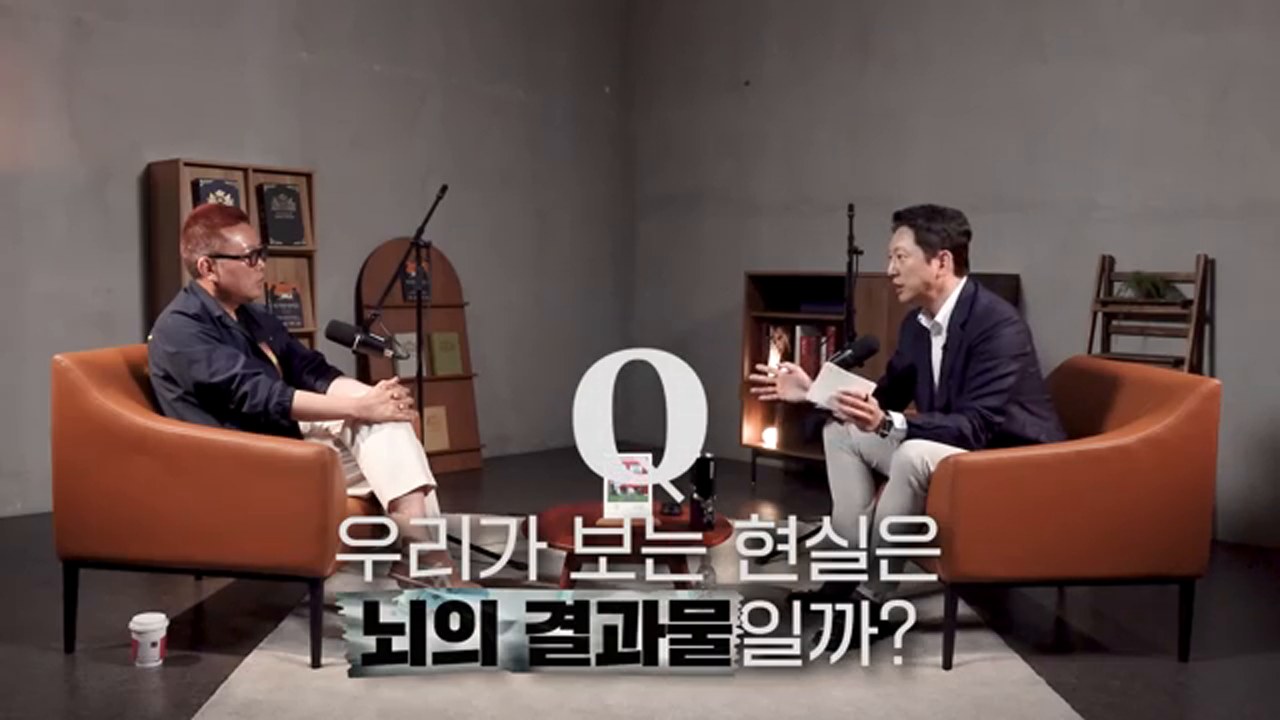
This English version is a fuller translation and adaptation of the original Korean article, “The Neuroscience of Hate: Why We Struggle to Understand One Another,” for global readers. The article explores the neuroscience of hate, delving into why human brains struggle to understand each other. It is based on the explanations of Professor Kim Dae-sik in “Knowledge Inside Guest Interview EP.134,” which connects brain science, AI, and perception issues to shed light on why humans easily misunderstand and sometimes hate each other.
The neuroscience of hate shows how perception and group identity shape conflict.
Key Summary: 5 Perspectives on the Neuroscience of Hate
To understand the neuroscience of hate, we must first accept an uncomfortable fact: we do not see the world as it is but rather through the reality created by our brains. This is why we can look at the same scene and attach completely different meanings to it, or hear the same words and react with different emotions.
Colors Are Not the Same Experience for Everyone
Professor Kim Dae-sik uses colors as an example. The color we call “red” is actually the interpretation by our brains of light wavelengths, and there’s no way to confirm if the “red” I see is the same as the “red” you remember or imagine. We believe we share the same experience because we use the same words, but in reality, our brains may be creating different experiences that we roughly match with the same language.
The brain interprets reality rather than simply recording it.
1. The Brain Does Not See Reality Directly
Professor Kim Dae-sik explains the brain as an entity trapped in the skull, not directly experiencing the outside world but interpreting it through sensory data from our eyes, ears, nose, skin, etc. This explanation is similar to Plato’s allegory of the cave, where we construct reality based on shadows of the actual world, which can always be distorted.
2. The Neuroscience of Hate Begins with the Invisibility of Others’ Inner Worlds
A crucial starting point in the neuroscience of hate is the fact that we cannot directly see into others’ inner worlds. We cannot connect brains like HDMI cables to transfer data. Therefore, we always make estimates when trying to understand others, using facial expressions, tone of voice, behavior, social background, and past experiences to guess their feelings and thoughts.
Group identity can make people divide the world into us and them.
Groups We Have Not Experienced Become Alienated Easily
Professor Kim Dae-sik shares his experience of living in Europe as an Asian, illustrating how people imagine groups they have not directly experienced in simplistic terms. This shows that hate and prejudice do not always stem from strong malice but can also arise from a lack of experience, imagination, and contact.
3. Why Humans Divide into “Us” and “Them”
The video explains that for humans to cooperate, they had to acknowledge the inner worlds of others. Initially, in primitive conditions, trusting only family or close groups might have been enough for survival. However, with settlement, agriculture, and the expansion of society, cooperation with strangers became necessary.
AI debates also reveal how humans think about self, mind, and value.
The Problem Lies in the Fluctuating Scope of Acknowledgment
Even today, we do not treat all people as equals with inner worlds. Political stance, region, gender, generation, nationality, religion, fandom, or taste can easily categorize someone as “someone I don’t understand.” Hate becomes stronger when this categorization solidifies, making it easier to see the other not as an individual but as a group that doesn’t need to be understood.
4. Why AI and Self-Debate Connect to Human Hate Issues
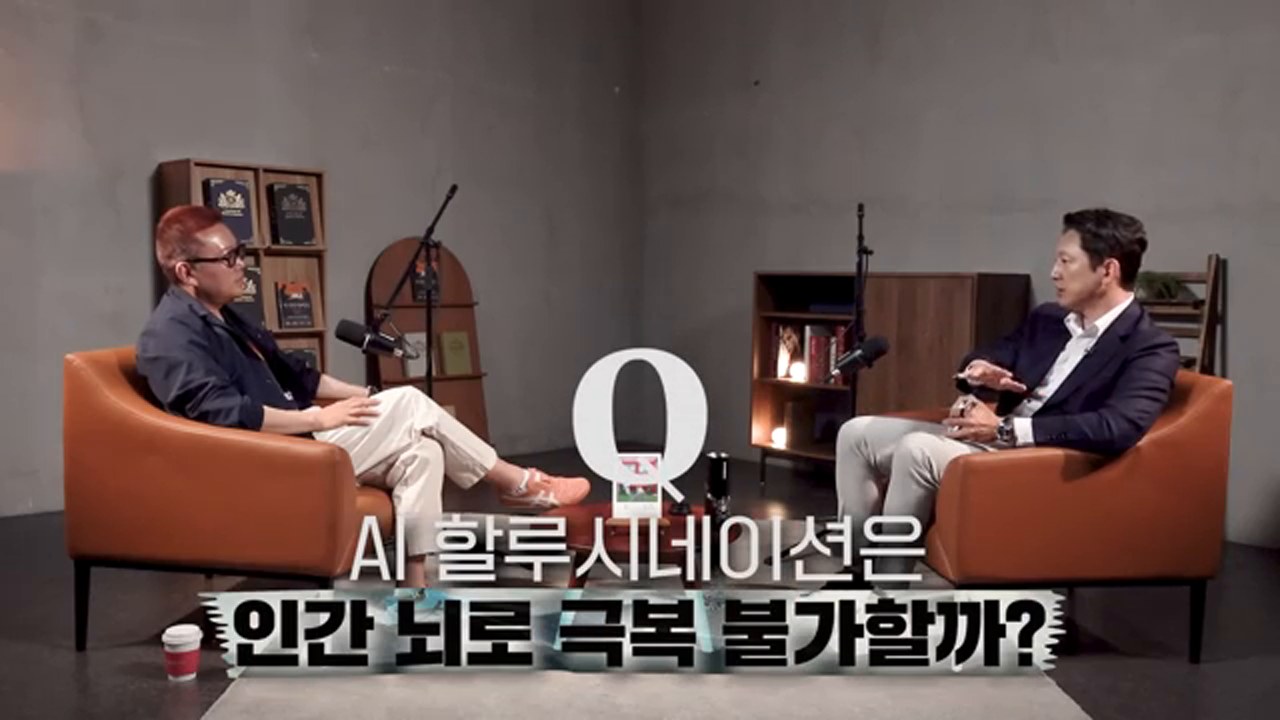
The discussion expands to AI, questioning the criteria by which we treat different beings (objects, animals, humans) differently. The difference lies in judgments about intelligence, self-awareness, and the ability to feel pain. As AI becomes more intelligent, the question arises of how we will understand and control it.
We Still Treat AI as a “Tool”
Currently, we ask AI questions, give commands, and demand results without asking for its consent, treating it like an object or tool. As AI becomes smarter and seems to have abilities like conversation and empathy, this standard may change. This discussion connects to hate issues because we continuously judge who deserves acknowledgment of their inner world.
5. The Analogy of Superintelligent AI: Humans Might Appear Like Ants
A strong analogy in the video is the relationship between humans and ants. Humans do not necessarily hate ants, but when building a house or a road, the presence of an anthill might not be a significant concern. The relationship between superintelligent AI and humans could be similar, warning that as the intelligence gap grows, so does the potential for indifference.
Hate Might Be Less Dangerous Than Indifference
We usually think of hate as a strong emotion, but indifference can be more dangerous socially. When we consider someone or a group not worth our consideration, not out of hate but out of indifference, violence can occur more easily. The neuroscience of hate is thus not just about emotions but also about perception and how we categorize others.
6. The Brain’s Rest: The Judging Brain is a Biological Organ
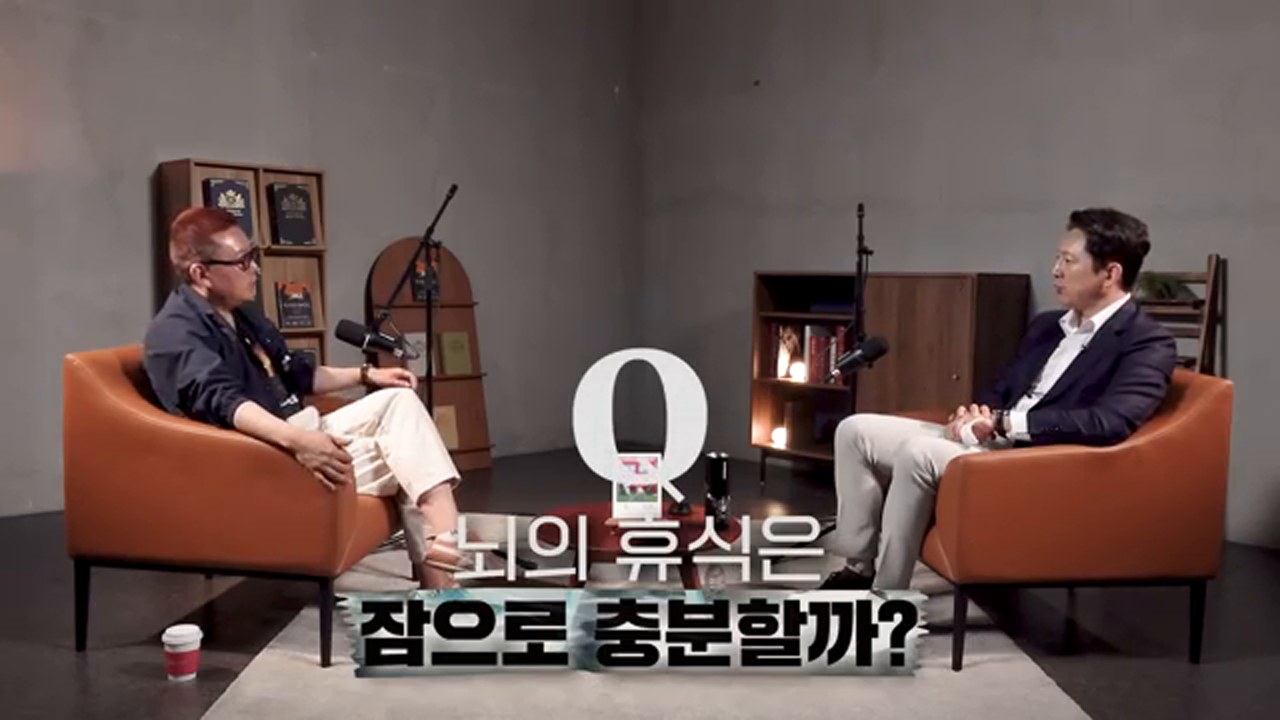
The latter part of the video discusses sleep and the brain’s rest. Professor Kim emphasizes that the brain operates continuously without rest, unlike electronic devices that can be turned off. The importance of sleep for brain recovery is also highlighted.
A Tired Brain Simplifies More Easily
Sleep is likened to the brain’s garbage collection time, scientifically known to be crucial for memory, recovery, and waste removal. This relates to the issue of hate, as a tired and overloaded brain finds it harder to understand complex individuals and relies more on quick judgments, simple categorizations, and familiar prejudices. Adequate rest is not just a health issue but also a condition for judging others less harshly.
7. What Is Needed for Us to Hate Each Other Less?
In summary, humans are not designed to perfectly understand each other, living in realities created by our brains, unable to directly see into others’ inner worlds, and tending to simplify unfamiliar groups. However, recognizing our limitations allows us to be more cautious. Remembering that our perceived reality is not the only one, that others’ inner worlds are not fully knowable to us, and that unfamiliar groups should not be easily stereotyped can help.
Three Practical Reminders
First, do not believe your reality is the absolute truth; events can be interpreted differently based on individual memories, emotions, and backgrounds. Second, assume that even those you do not understand have their own pains, fears, and reasons. Third, correct your prejudices through actual experiences; abstract images can strengthen biases, while concrete meetings can weaken them.
Conclusion: Acknowledging the Brain’s Limitations Is the First Step to Reducing Hate
The neuroscience of hate does not conclude that humans are inherently bad; rather, it informs us that our brains create reality with limited information and can mistake this reality for absolute truth. Recognizing these limitations allows us to judge others more carefully. Reducing hate begins with humility in our perception, remembering that “my reality might not be the only one.” This simple acknowledgment can make us less prone to hate.
Original Video and Reference Links
Original Video: Knowledge Inside, “The Neuroscientific Reason Humans Hate One Another Throughout Life” (Professor Kim Dae-sik) – Channel: Knowledge Inside YouTube Channel
Frequently Asked Questions
Q: What is the neuroscience of hate? A: The neuroscience of hate explores why human brains struggle to understand each other, leading to hate and prejudice. Q: How does our brain’s perception of reality contribute to hate? A: Our brains create reality based on limited information, and this constructed reality can lead to misunderstandings and hate towards others. Q: Can we reduce hate by acknowledging the brain’s limitations? A: Yes, recognizing our brain’s limitations and the subjective nature of our reality can help us be more cautious and less prone to hate.
Related Reading
Continue with these related Thinknote English articles in the Digital Transformation cluster.
This article explains a digital transformation, platform, market-structure, or technology-adoption topic with Korea-specific context and global implications.
How should I use this guide?
Use it to understand market signals and strategic patterns. Combine it with current market data before making business or investment decisions.
Image source: Captured images used in this article are stills from the original YouTube video. They are used for review, commentary, and educational explanation, and copyright remains with the original rights holders and the channel.