
When an era arrives in which AI can study on a child’s behalf, what should parents leave their children with? In an interview with Jisik Inside, Professor Jo Byeok raises this question quite directly. If parents hold only to good universities, high scores, and more private education, they may fall one step behind the changes of the AI era.
The point is not “let’s stop studying.” Basic knowledge is still necessary. But using all of a child’s time to chase correct answers is becoming increasingly risky. In an age when AI can find correct answers quickly, the ability to ask questions, build relationships, and interpret one’s own experiences becomes more important.
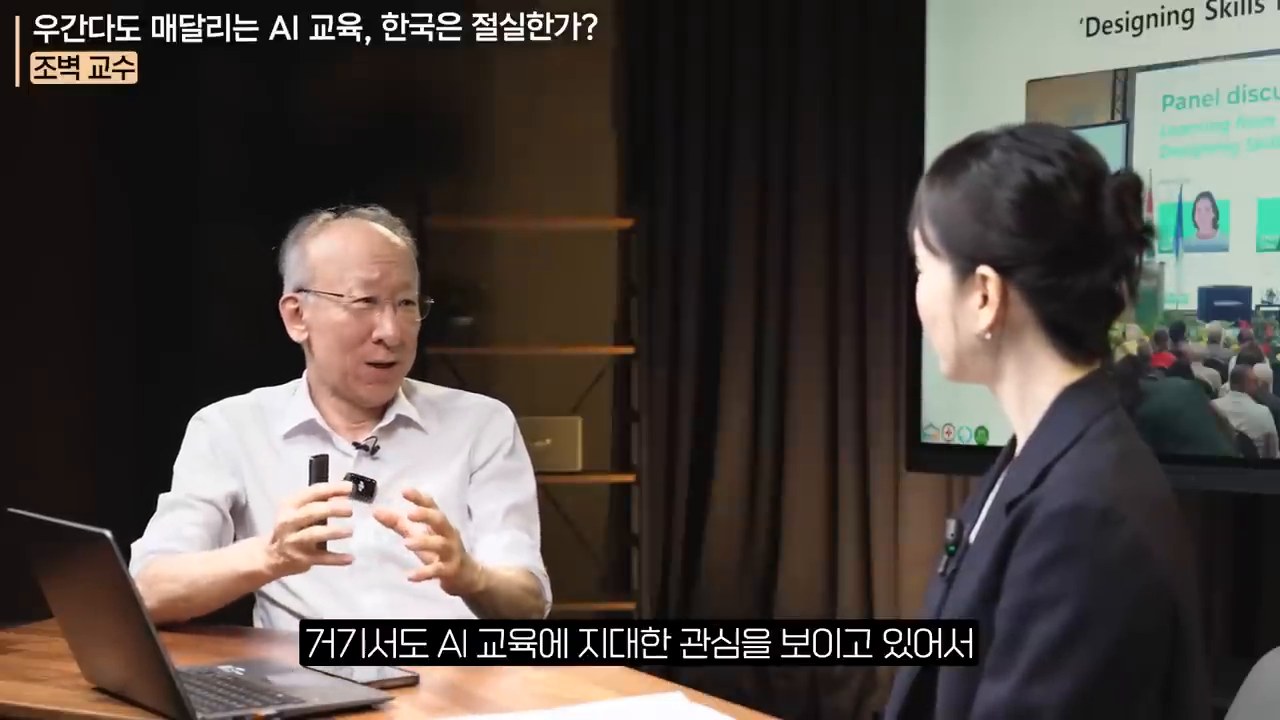
Why a good-university strategy is no longer enough
For Korean parents, the strategy for a child’s success has long been simple: get good grades, enter a good university, and secure a stable job. Professor Jo Byeok says this strategy was quite powerful in the past, but it may not work the same way in the AI era.
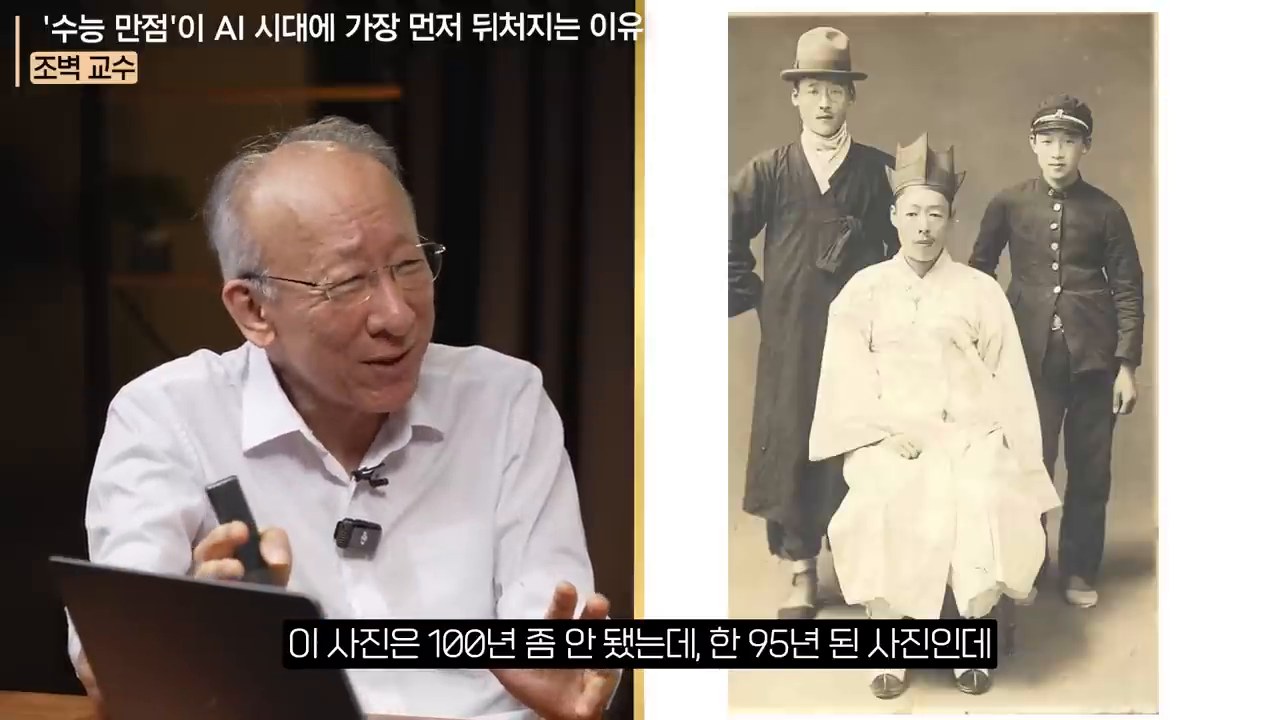
The video includes a striking analogy. In a family photograph taken about 100 years ago, three brothers are in the same place at the same time, yet they look as if they are living in completely different eras. One is holding on to old symbols of success, while another has moved toward the education of a new age. The scene asks today’s parents the same question: Is the “good path” we are holding on to really the path our children will live on?
1. Character is not etiquette; it is a capability in the AI era
The first message in the video is that “character is also a capability.” Here, character does not simply mean being kind and polite. Professor Jo describes character as a uniquely human quality: communication, empathy, collaboration, and resilience, all human strengths that AI has difficulty replacing.
In the past, when knowledge and skills came first, character was sometimes treated as an extra. But as AI increasingly handles knowledge processing and the search for correct answers, the situation changes. People still have to work with people and solve ambiguous problems together. That is why character is no longer merely “nice to have,” but a core competency that helps a child endure over the long term.
2. The ability to ask questions is deeper than prompt technique
As the AI era begins, many people say that we need to “ask good questions.” The ability to write good prompts is certainly necessary. But the questioning ability discussed in the video is broader than that. It is closer to a child taking ownership of their own learning.
Children naturally ask many questions. But as they grow older, the number of questions decreases. That ability is suppressed by phrases such as “Don’t think about useless things; just study,” “Hurry up and do your homework,” and “Solve this problem first.” What parents need to do is not give children more answers, but restore an atmosphere in which it is safe to ask questions.

3. Future literacy is not the ability to predict the future
Professor Jo does not describe “future literacy” as the ability to forecast the future. Instead, he describes it as the ability to create the future one wants to live in. This distinction is important.
AI may be better at prediction. Reading data and patterns and calculating possible scenarios are AI strengths. But deciding what future we want, what life we will choose, and what relationships we will protect is the human role. That is why parents should help children become not “children who guess the right answer,” but “children who design their own future.”
4. Unique matters more than best
Admissions competition keeps children comparing themselves with others. The standards become who scored higher, who entered a better school, and who got ahead faster. But in the AI era, competitiveness does not have to come only from beating others.
Professor Jo emphasizes “unique” over “best.” When a child has their own experiences, interests, questions, failures, and stories of recovery, they can become competitive without constantly competing. A person who quickly gives the same correct answer as everyone else will be compared with AI. But a person who sees problems from their own perspective and contributes through collaboration with others is not easily replaced.

5. A parent’s first question should be about feelings, not scores
The final advice in the video is the most practical. When a child comes home from school, parents who ask “What did you learn today?” or “What score did you get?” may be moving against the AI era. A parent who instead asks “Did you have fun at school today?” connects with the child’s emotions.
This does not mean giving up on study. It means restoring the child’s vitality and relationships first. The parent-child relationship is not a project that disappears once college admissions are over. It is a lifelong relationship. When that relationship feels safe, children ask more questions, explore farther, and stand up again even after failure.
Five questions parents can change today
Parenting in the AI era is not something that has to wait for sweeping institutional reform. Parents can begin by changing the questions they use at home.
- Instead of “What score did you get today?” ask “What was the most interesting moment today?”
- Instead of “Why don’t you even know that?” ask “Where did it start to feel confusing?”
- Instead of “That dream is unrealistic,” ask “What experience would help you get closer to that dream?”
- Instead of “Everyone else is doing it, so why aren’t you?” ask “What would you like to try in your own way?”
- Instead of “Hurry up and say the correct answer,” ask “What would happen if we changed it into a different question?”
When the question changes, the way a child brings out their own thoughts also begins to change little by little. It may feel awkward at first. As the video says, it is not so much difficult as unfamiliar.
Recommended reading
- In the AI era, what you need to learn before prompts is “your own language”
- Metacognition in the AI era: How to check your own thinking, beyond smart answers
- Future talent in the AI era according to Chey Tae-won: Thinking power and the AI nation strategy
- AI and the future of work: The meaning of work before disappearing jobs
FAQ
Will school study become less important in the AI era?
Basic knowledge is still important. However, spending all available time only on score competition is risky. On top of basic learning, children also need to develop questioning ability, AI literacy, empathy, collaboration, and resilience.
Does the character Professor Jo talks about mean only being nice?
No. In the video, character is closer to a uniquely human quality. It includes abilities that AI has difficulty replacing, such as communication, empathy, collaboration, and resilience.
How can parents support a child’s questions?
Rather than giving the correct answer immediately, first listen to what kind of thinking led to the child’s question. If you create an atmosphere that welcomes questions without judging them, children can gradually regain ownership of their own learning.
Is it wrong to aim for a good university?
The goal itself is not wrong. The problem is treating a good university as the only strategy for success. In the AI era, what matters more than the name of the university is what questions a child can create, how they interpret their experiences, and what contribution they can make.
References
- Jisik Inside, “Good universities will be discarded”: Conditions parents need to help children survive the AI era
- UNESCO, AI competency frameworks for students and teachers
Original Korean article: Parenting and education in the AI era with Jo Byeok
Image source: Captured images used in this article are stills from the original YouTube video. They are used for review, commentary, and educational explanation, and copyright remains with the original rights holders and the channel.