
Search for ways to build AI agents, and CrewAI, AutoGen, OpenAI Agents SDK, Google ADK, and LangGraph appear together. Familiar names do not make the choice easy. Tools for rapid prototyping are compared against tools for finely controlling recovery from failed tasks and waiting for human approval.
Nomad Coders’ video ‘The Best AI Agent Framework in 2025?’ explains strengths and weaknesses through the creator’s experience implementing the same stock analysis agent with several frameworks. This comparison guide distinguishes the 2025 video’s assessments from current official materials. In particular, changes in maintenance status and features are addressed using official materials checked on October 27, 2026.
First, distinguish personal experience from a performance ranking
The creator says the comparison used the same logic, prompts, and tools across frameworks. However, the video does not establish a controlled benchmark for model versions, repeated runs, costs, success rates, or evaluation criteria. Read statements such as ‘you can build it in 20 minutes’ or ‘the best’ as personal experience and preference.
References to the stock analysis agent’s investment returns do not prove a framework’s superiority either. Investment outcomes depend on other factors, including market conditions and strategy. This guide therefore does not use them as selection evidence.
For practical work, start with these questions.
- Task structure: Is the sequence fixed, or must it branch, loop, and resume depending on circumstances?
- Models and tools: Which models, search, file, and voice capabilities must you connect?
- Execution state: Do you need to save intermediate results, recover after interruptions, or obtain human approval?
- Operating environment: Does it fit your team’s programming languages, cloud, security, and deployment requirements?
- Maintenance: Is its support status clear enough for a new project?
These answers make it easier to select candidates for your project, rather than search for ‘the best framework.’
CrewAI: dividing work by roles and tasks
The video rates CrewAI as a good starting point for learning agents. It finds the structure intuitive: connect Tasks and tools to role-based agents, then combine them in a Crew. Consider it for prototyping work with clear roles and deliverables, such as research followed by writing.
However, ‘good for quick assembly’ is not the same as ‘only useful for demos.’ The current official repository covers both Crews and Flows. Alongside role-based collaboration, it explains event-driven control, state, branching, and integration with ordinary Python logic.
Treat the video’s claim that going beyond the framework’s structure is difficult as the creator’s usability assessment at that time. That one statement cannot define CrewAI’s current extensibility. Conversely, official guidance on production configurations does not mean your own Crew is ready for safe operation.
Start with a small task involving about two roles. Try explaining its inputs, outputs, and possible failure points. For concrete setup details, see the CrewAI beginner’s guide.
AutoGen: check current maintenance guidance before relying on a 2025 recommendation
The video introduces AutoGen’s conversational collaboration and its Studio, AgentChat, and Core components. It considers AutoGen a suitable option for .NET environments. This helps explain its characteristics at the time. For a new project today, however, the first thing to check has changed.
AutoGen’s current official README states that the project is no longer maintained and directs new users to Microsoft Agent Framework. It also warns that bug fixes, security fixes, and support are not provided. A migration guide for existing users is linked as well.
The evidence here is the maintenance notice in the official README. Do not confuse it with whether the GitHub repository is technically archived as read-only. The important question is what fixes and support you can expect for code a new service will depend on.
The video’s advice that ‘AutoGen is the only choice for C# developers’ should therefore not become a current recommendation unchanged. Microsoft Agent Framework supports .NET and Python. It describes sequential, concurrent, handoff, and group collaboration workflows. For a new Microsoft-ecosystem project, review this successor framework alongside the migration documentation.
Do not assume an existing AutoGen system can migrate immediately through a simple name change. Review its messaging, tools, state management, and deployment configuration. Then test compatibility and results on a small representative task.
OpenAI Agents SDK: connecting delegation, tools, and tracing with a compact approach
The video highlights integration with OpenAI models and tools, tracing, and the experience of developing voice agents. The current official repository also lists Agents, tools, guardrails, sessions, tracing, and human-in-the-loop capabilities.
In particular, distinguish calling other agents as tools from transferring control through handoffs. Both are forms of delegation, but their designs differ. Does the caller receive a result and keep coordinating, or does another agent take over the conversation?
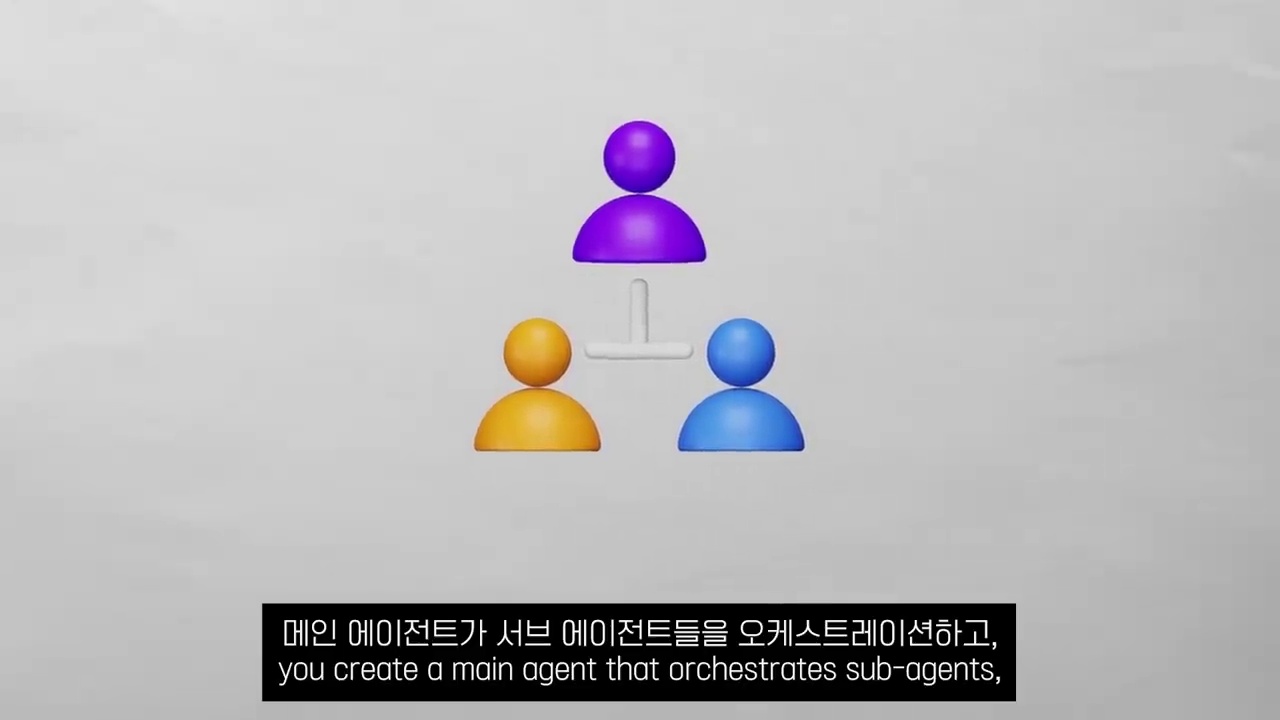
The current official README describes the SDK as provider-agnostic and covers integration with models beyond OpenAI. The video’s statement that support for other models is in beta cannot define the current status of the entire SDK. However, multiple-provider support does not mean every model can use a provider’s hosted tools, voice capabilities, and execution features identically.
Another point requiring care is the claim that it ‘has the features needed for deployment.’ Tracing and guardrails are useful components. They do not by themselves complete user login, authorization, secret protection, or data retention policies. Separately design who can execute which tools in your application.
Google ADK: considering development, evaluation, and Google integration together
The video praises Google ADK’s development UI, evaluation features, and Google ecosystem connections. The current Python repository also covers a development Web UI, evaluation runs, and deployment. It describes ADK as optimized for Gemini while remaining model-agnostic.
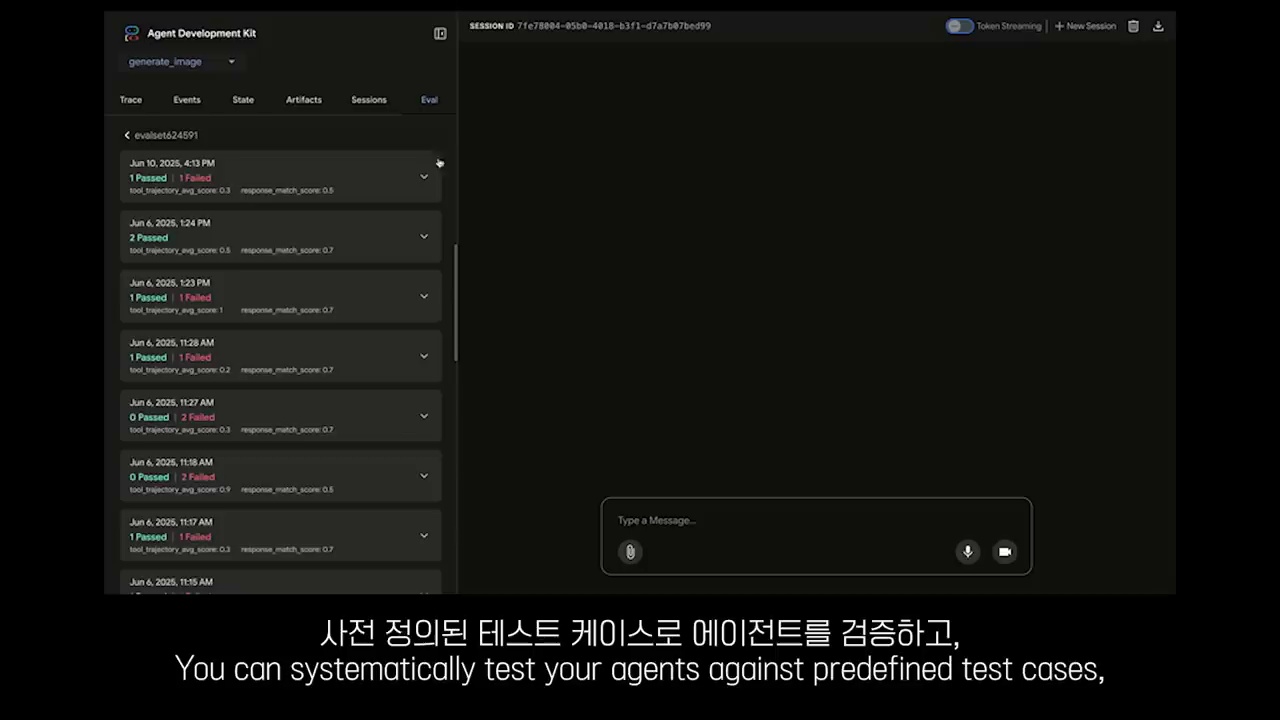
These capabilities matter to teams that want to inspect tool use and execution paths, not just model responses. However, the video’s claims of ‘the only framework with a UI’ and ‘the only framework with evaluation’ are difficult to adopt unchanged. UI and evaluation offerings vary by ecosystem and version. Check whether they fit your development process instead of making exclusive ranking claims.
Avoid limiting the architecture to a fixed description from 2025 as well. The current ADK repository introduces graph-based Workflows, branching, loops, and state management. Saying it ‘only supports a main agent and subagents’ misses the current guidance.
A development UI or the ability to run a REST API does not mean production deployment is complete. Check authentication, access controls, cost, quotas, observability, and incident response separately in the actual deployment environment.
LangGraph: explicitly designing state and control flow
LangGraph is the creator’s stated favorite. The video describes it as directly building nodes and edges in a graph, rather than assembling roles. This is a personal preference, but it helps explain the design distinction being considered.
The current official repository describes LangGraph as a low-level orchestration framework for long-running, stateful agents. Its highlighted capabilities include durable execution and recovery, human-in-the-loop interaction, memory, and state management.

This control approach matters when insufficient evidence must trigger more research or risky actions must wait for approval. It also matters when interrupted work must resume from its saved state. However, checkpoints cannot automatically undo every action in an external system. Separately consider how to prevent duplicate side effects, such as sending emails or making payments.
A ‘small API’ does not mean developing a real service is always easy. Developers may need to take more explicit responsibility for state structures, branching conditions, and error handling. Graph-based control benefits tasks that need it, but may overcomplicate a short, single task.
Which options should you consider first in different situations?
These starting points are reconstructed from current official guidance. They do not reproduce a fixed ranking from the video.
- You want to quickly test a role-based research and writing pipeline: Consider a small Crew in CrewAI. First check whether roles and deliverables are clearly distinct.
- You want an SDK-centered setup connecting tools, handoffs, sessions, and tracing: Consider OpenAI Agents SDK. Check compatibility for each model and feature you plan to use.
- Google ecosystem integration and development and evaluation tools matter: Consider Google ADK. Also check the services you need and their deployment requirements.
- Control over state, branching, recovery, and approval flows matters: Consider LangGraph. First define the boundary between ordinary code and agent judgment.
- You are starting in a Microsoft or .NET environment, or migrating from AutoGen: Review Microsoft Agent Framework alongside the official migration guidance.
These options are not mutually exclusive. Similar patterns can be implemented in several frameworks. The decisive difference is not whether a feature name appears, but how clearly your team can implement, verify, and maintain the behavior it needs.
Compare the same small task under the same operating conditions
Repeated tests with the same inputs are more useful than one impressive demo. Rather than moving an entire workflow at once, choose a small task such as research → evidence organization → review. Compare the following points.
- Under the same requirements, what sources and tool execution records does it retain?
- How does it stop when information cannot be found or a tool fails?
- Can it continue after a person makes corrections or gives approval?
- Can you identify execution cost, latency, and the number of retries?
- Can you limit external transmission and modification permissions to the necessary scope?
Even with the same model, frameworks may use different internal prompts or defaults. Treat this comparison as a suitability test for your work. It is not a universal performance ranking with every variable controlled.
You do not need to master every framework before starting work. Build a small task with one candidate. Consider another when you identify an unmet requirement. What should endure is more than a particular tool’s syntax. It is a design that explains roles, state, tool permissions, and verification criteria.
Related reading
- CrewAI Beginner’s Guide: Agent, Task, Crew, and Practical Examples
- Verifying Multi-Agent Deliverables Through the REA Case
- Kim Kyung-il on Using AI: Why Verification and Collaboration Matter More Than Speed
FAQ
Is learning just one AI agent framework enough?
You do not need to learn all of them deeply at the outset. Choose a representative task and start with one candidate. Learning shared concepts such as roles, tools, state, and verification also helps when moving to another tool.
Should AutoGen be recommended for new projects now?
The current official README announces the end of maintenance and directs users to Microsoft Agent Framework. For new adoption, check that guidance and the successor framework first. Existing systems require a separate review of dependencies and migration scope.
Is CrewAI only for demos, while LangGraph is the only production option?
That distinction does not hold. CrewAI also covers workflow execution and control through Crews and Flows. Whatever tool you choose, implement and test production requirements including authentication, permissions, source verification, and recovery from failures.
Does OpenAI Agents SDK work only with OpenAI models?
The current official README covers integration with multiple model providers. However, model integration differs from access to particular hosted tools. Check support requirements for each capability you need.
References
- Nomad Coders, source 2025 AI agent framework comparison video
- CrewAI official repository
- AutoGen official maintenance notice
- Microsoft Agent Framework official repository
- Official migration guide from AutoGen to Microsoft Agent Framework
- OpenAI Agents SDK official repository
- Google ADK Python official repository
- LangGraph official repository
The images are screenshots used to quote and critique explanations in the source video. The creator’s experiences and preferences are distinguished from current official feature and maintenance guidance and this guide’s practical suggestions. No independent performance benchmark was conducted.