
This English version of the article is a fuller translation and adaptation of the original Korean article, “AI 취업 공포가 던진 질문: 신입 채용 시장에서 무엇을 준비해야 할까”, for global readers. The article delves into the anxiety surrounding the job market due to the impact of Artificial Intelligence (AI) on employment, particularly for new graduates. It explores the changing landscape of job requirements, the need for adaptability, and the skills necessary to thrive in an AI-driven economy.
Original Korean article: AI 취업 공포가 던진 질문: 신입 채용 시장에서 무엇을 준비해야 할까
Background of Growing AI Job Market Anxiety
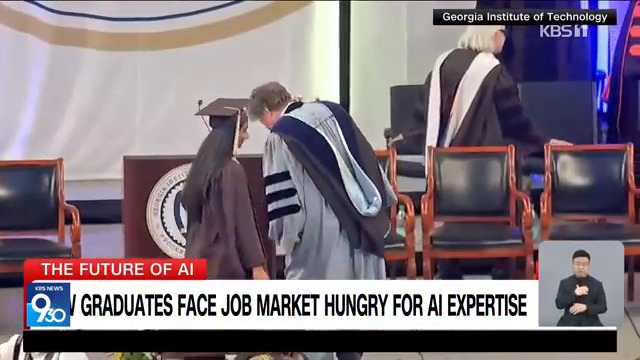
The article begins by citing a report from KBS News on May 29, 2026, which highlights the challenges faced by graduates from prestigious universities in the United States in securing jobs in the tech industry. This trend is not limited to the US, as it also affects students, job seekers, and educators in Korea, raising questions about the skills required to succeed in the job market.
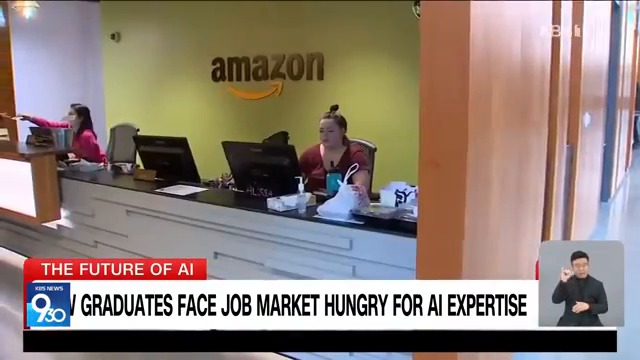
The shift in the job market is attributed to the increasing use of AI, which has led to structural changes, reduced hiring, and cost-cutting measures in the tech industry. While having a degree in computer science was once a strong signal for securing a job in the tech industry, the landscape has changed, and the ability to work with AI has become a crucial factor.
Change in Entry Barriers Rather Than Replacement
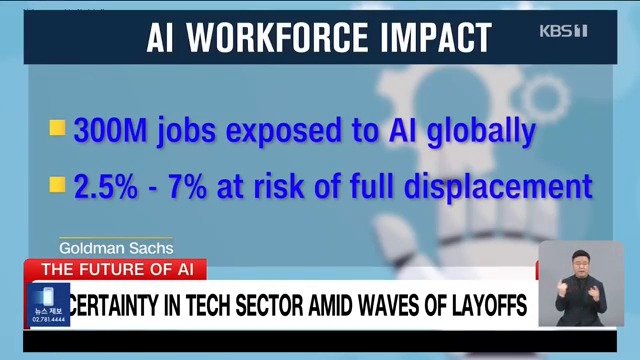
According to Goldman Sachs, generative AI could impact around 300 million jobs worldwide. However, this does not necessarily mean that all these jobs will disappear. Instead, many jobs will undergo changes, with some tasks being automated, and new ones emerging. The challenge lies in the fact that new graduates lack a proven track record, making it essential for them to demonstrate their ability to work with AI tools and produce results quickly.
The article emphasizes that the focus should be on the change in entry barriers rather than replacement. While experienced professionals can rely on their existing performance and domain knowledge, new graduates need to demonstrate their ability to work with AI tools and produce results quickly.

Combination of Skills Rather Than a Single Major
A student featured in a video mentions that they are double-majoring in computer science and accounting to connect technology with real-world business problems. This approach highlights the importance of combining skills and knowledge from different fields to succeed in the AI-driven economy.
The article suggests that having a single major is no longer sufficient; instead, the ability to combine skills and knowledge from different fields, such as accounting, manufacturing, education, healthcare, and public administration, is becoming increasingly important. The focus should be on understanding real-world problems and being able to structure them using AI.
Social Issue 1: Youth Anxiety is Not Just a Personal Problem
The article argues that viewing AI job market anxiety as a personal problem due to a lack of effort is misguided. The promise of a university degree leading to a stable job is weakening, and young people are being asked to acquire more skills and qualifications while companies demand more productivity with fewer employees.
This creates a social issue, as university education is still focused on imparting knowledge in a specific major, while the job market requires skills such as project execution and AI utilization. Shifting the burden solely to individuals will only exacerbate anxiety.

Social Issue 2: AI Gap Becomes an Employment Gap
The article highlights that the difference between those who can use AI tools effectively and those who cannot will result in a productivity gap. This gap can widen due to disparities in access to education, practice environments, and mentorship.
Therefore, AI education should go beyond just coding skills and include the ability to break down questions, verify data, critically revise results, and design automation that fits the work context.
Social Issue 3: Focusing Only on Disappearing Jobs Misses New Opportunities
The article notes that while AI may lead to job displacement in some areas, it also creates new opportunities in fields such as data centers, semiconductors, power, cooling, security, networks, education, consulting, and regulatory compliance.
Instead of focusing solely on whether to join an AI company, individuals should consider what new bottlenecks are emerging in their industry due to AI and position themselves to address these challenges.
5 Skills for Individuals to Prepare
The article outlines five essential skills for individuals to prepare for the AI-driven job market:
- AI tool utilization: applying tools such as search, summary, coding, documentation, and data cleaning to real-world tasks
- Domain understanding: connecting major knowledge to real-world problems
- Verification ability: checking AI results for errors, biases, and sources
- Work design ability: dividing repetitive tasks between AI and human roles
- Communication ability: explaining AI-generated outputs in the organization’s language
What Universities and Organizations Need to Change
Universities should not view AI utilization solely as a means of preventing academic misconduct. Instead, they should teach students how to use AI in their major courses, how to verify results, and how to take responsibility for their outputs.
Companies and public organizations should also change their approach to hiring and education. Rather than simply asking if a candidate has experience with AI, they should provide real-world data and ask them to define problems, design prompts, verify results, and write reports.
Conclusion: Transition Strategy Over Fear
The article concludes that while AI job market anxiety is real, it is essential to focus on developing a transition strategy rather than simply being fearful. The key question should be “What problems can I solve better with AI?” rather than “Will AI take my job?”
What young people need is not just a collection of specs, but a practical portfolio that demonstrates their ability to connect their major with AI and real-world problems. Universities and organizations also have a clear role to play in redesigning their approach to education and work.
Related Reading
Continue with these related Thinknote English articles in the Digital Transformation cluster.
- Thinknote English article
- Thinknote English article
- Thinknote English article
- Thinknote English article
- Thinknote English article
- Thinknote English article
FAQ
What is this article about?
This article explains a digital transformation, platform, market-structure, or technology-adoption topic with Korea-specific context and global implications.
How should I use this guide?
Use it to understand market signals and strategic patterns. Combine it with current market data before making business or investment decisions.
Where can I read the original Korean article?
The original Korean article is available here: AI Job Market Anxiety: What New Graduates Should Prepare For.