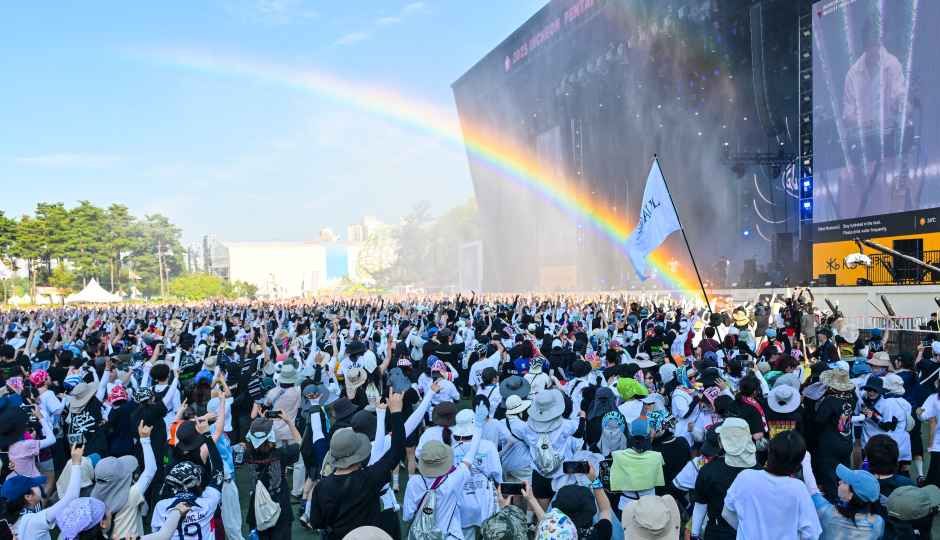
[작성자:] Saturn

  • Are Development Teams Ready to Operate AI Agents?

    Are Development Teams Ready to Operate AI Agents?

    This fuller English version follows the original Korean article more closely. The central question from Anthropic’s Claude Code London 2026 message is not whether a developer can ask an AI model for code. It is whether a development organization is ready to operate AI agents with goals, tools, security, evaluation, and review loops.
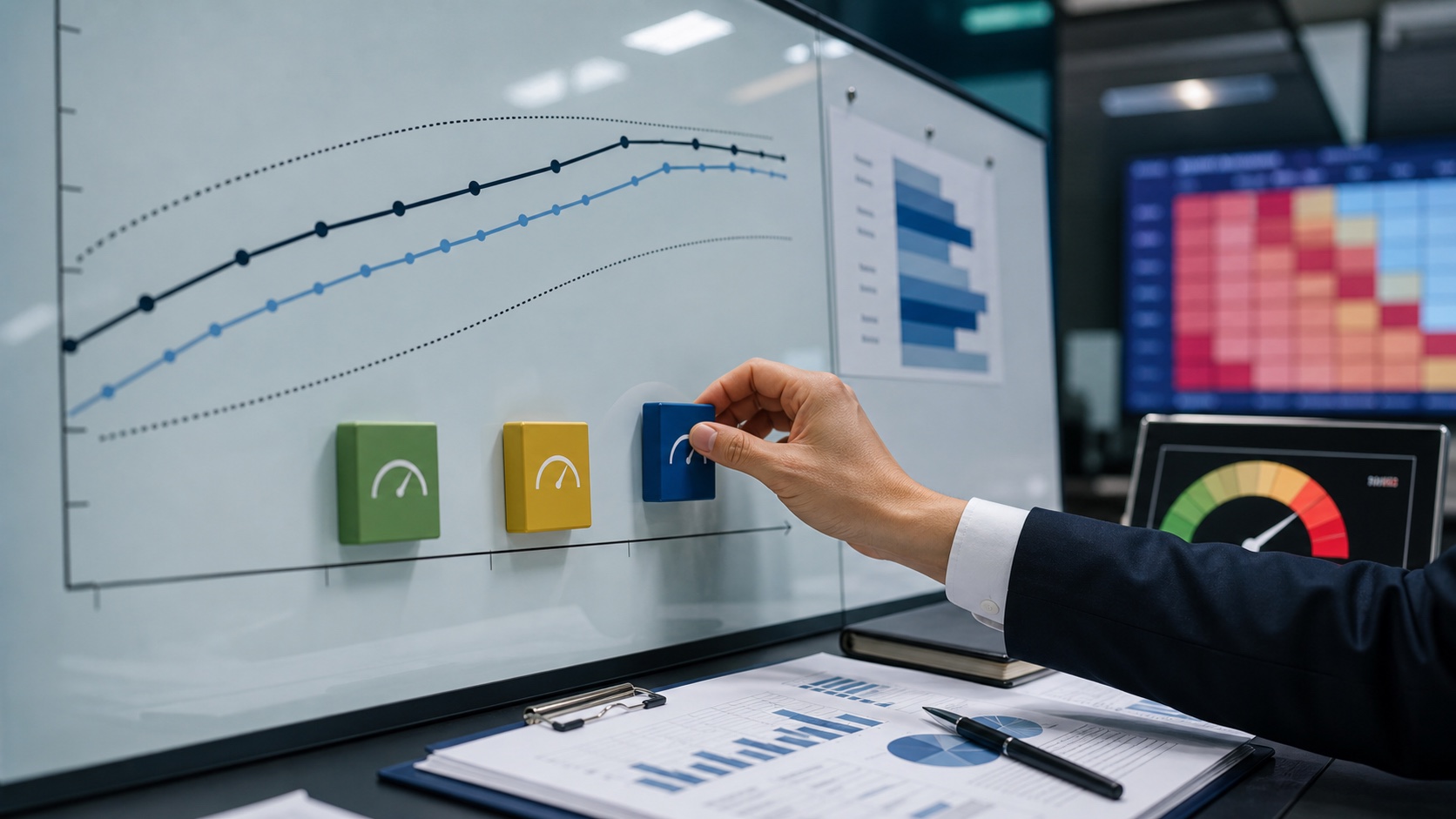
    operate AI agents in a development team dashboard
    A development team needs dashboards, tools, and review loops to operate AI agents.

    Original Korean article: Anthropic이 던진 질문: 당신의 개발 조직은 AI 에이전트를 운영할 준비가 됐나

    The Core Change Announced at Claude Code London 2026

    The keynote framed AI coding as an operational change. The distance from idea to execution is shrinking: a product manager can describe a feature, an engineer can ask an agent to explore a codebase, and the model can draft changes, run checks, and report back. But the original Korean article stresses that this speed only helps when the organization knows how to receive and verify the work.

    From idea to execution

    In the old workflow, an idea moved through tickets, handoffs, coding, review, and deployment. With Claude Code-style agents, some of those steps can happen asynchronously. The agent can investigate files, propose a plan, edit code, and run tests while the human focuses on judgment. The bottleneck moves from typing to task design and validation.

    Linear adoption meets exponential model improvement

    Companies usually adopt new tools slowly: a pilot, a few champions, a security review, and then gradual rollout. Model capability, however, is improving faster than that rhythm. Anthropic’s message is that teams should build the operating foundation now, because the agents of tomorrow will have longer task horizons and higher autonomy than the tools they are testing today.

    Claude Model Roadmap: Longer Tasks and Better Judgment

    Task horizon is expanding

    A key concept in the source article is task horizon: how long a model can keep working toward a goal before it loses context, makes mistakes, or needs human rescue. Earlier coding assistants handled short completions. Newer agents can work across multiple files and longer sequences. The practical implication is that teams must prepare work units that are clear enough for agents to execute but bounded enough for humans to review.

    Less scaffolding, more general tools

    As models become stronger, teams may need less fragile scaffolding around every prompt. Yet this does not mean “no structure.” It means agents should be given clean repositories, reliable commands, clear acceptance criteria, and general tools such as search, tests, documentation, issue trackers, and deployment checks. The better the workbench, the less the team depends on prompt tricks.

    Advisor strategy balances performance and cost

    The article also highlights the need to balance powerful models and cost-efficient models. Not every step requires the most expensive reasoning. Some tasks can be routed to cheaper models, while architecture review, security-sensitive changes, and difficult debugging may require a stronger advisor model. Agent operations therefore become a routing problem as much as a prompting problem.

    Claude Platform: Infrastructure for Product-Grade Agents

    Managed agents, self-hosted sandboxes, and MCP tunnels

    The Claude platform direction points toward agents that can operate in controlled environments. Managed agents reduce setup burden; self-hosted sandboxes give enterprises more control; MCP tunnels connect agents to internal tools without exposing everything blindly. The source article treats these pieces as the infrastructure layer for making AI agents part of real products.

    Asynchronous coding requires verification

    When an agent works in the background, the human does not watch every keystroke. That makes verification more important. Teams need automated tests, linting, reproducible builds, review checklists, and logs that explain what the agent changed. Without this, asynchronous work can become asynchronous risk.

    Routines: Claude prompting Claude Code

    The article’s discussion of routines is important because it shows a recursive pattern: Claude can help write the instructions that Claude Code follows. Instead of every developer inventing prompts from scratch, a team can maintain reusable routines for bug fixes, refactors, dependency updates, documentation, or test generation. This turns good practice into shared organizational memory.

    Claude Code Changes the Developer Role
    Claude Code workflow for AI agent operations
    Claude Code points toward development workflows where agents execute longer tasks.

    Claude Code is not merely a faster autocomplete. It pushes developers toward the role of automation designers. The developer writes specifications, chooses tools, defines the boundary of autonomy, checks tradeoffs, and decides whether the result is safe to merge. In that sense, the developer’s responsibility becomes broader rather than smaller.

    The source article’s warning is practical: organizations should prepare evaluation and architecture before giving agents too much freedom. A model that can modify code at scale can also amplify unclear requirements, weak tests, and insecure defaults. The maturity of the organization determines whether AI agents become leverage or chaos.

    What Developers and Enterprises Should Prepare Now

    Prepare evaluation and architecture first

    Teams should inventory the work they want agents to perform, define success criteria, and build measurable checks. They should document architecture decisions, coding standards, security constraints, and escalation rules. If humans cannot explain the desired outcome, an agent cannot reliably produce it.

    Move from personal productivity to organizational operations

    The biggest shift is from individual productivity to team operations. One developer using an AI tool is useful; a company operating AI agents needs governance. Access control, audit logs, tool permissions, privacy rules, and incident response become part of the AI coding stack.

    Claude Code London 2026 Readiness Checklist
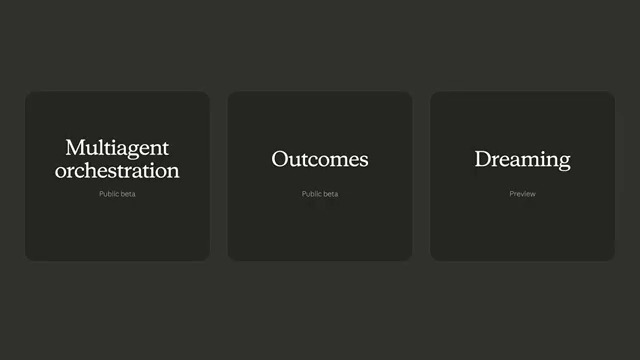
    AI agent task horizon and software automation
    Longer task horizons make agent supervision and verification more important.
    • Define which coding tasks agents may perform and which require human-only judgment.
    • Create reusable routines for common workflows such as bug fixing, test writing, and documentation.
    • Build automated verification before increasing agent autonomy.
    • Separate low-risk tools from sensitive tools and grant permissions gradually.
    • Track cost, latency, model choice, and failure patterns as operational metrics.

    Conclusion: The Next Stage Is Operation, Not Conversation

    The article’s conclusion is that AI development tools are moving beyond chat. The important question is no longer “Can the model answer?” but “Can the organization run the model as a dependable worker inside a controlled system?” Teams that answer this early will be better prepared for the next wave of agentic software development.

    Related Reading

    Continue with these related Thinknote English articles in the Digital Transformation cluster.

    FAQ

    What is this article about?

    This article explains a digital transformation, platform, market-structure, or technology-adoption topic with Korea-specific context and global implications.

    How should I use this guide?

    Use it to understand market signals and strategic patterns. Combine it with current market data before making business or investment decisions.

    Where can I read the original Korean article?

    The original Korean article is available here: Are Development Teams Ready to Operate AI Agents?.
  • Hermes Agent Desktop App: The Next Interface for Mainstream AI Agents

    Hermes Agent Desktop App: The Next Interface for Mainstream AI Agents

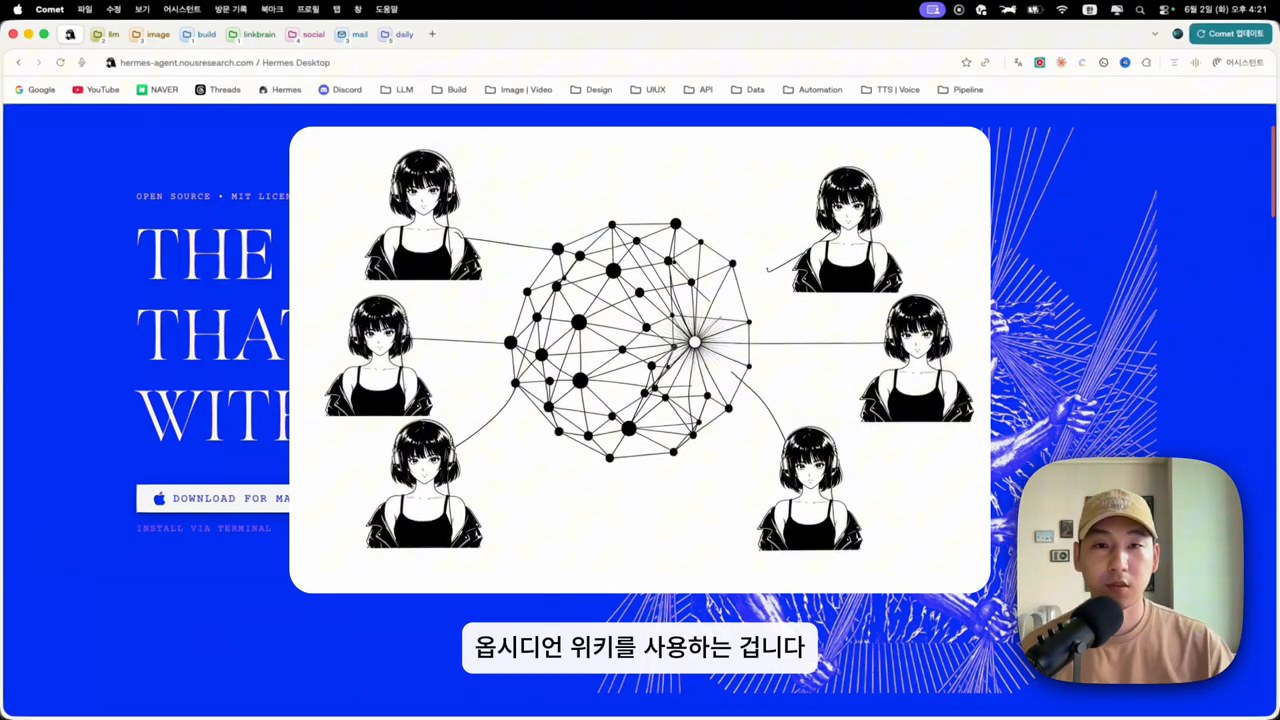
    For AI agents to become mainstream, better model performance alone is not enough. They need to meet people in the ways they already work every day. Alex Finn’s video makes this point clearly by showing the Hermes Agent desktop app.

    The video’s wording is somewhat bold. It says the Hermes desktop app is better than the CLI, Telegram, and OpenClaw. From a blog perspective, however, the important question is not which option wins. The question is what kind of interface AI agents need if they are to move beyond chatbots and become real work tools.

    Why a Desktop App Matters

    An AI agent is not simply a tool that generates answers. It reads files, runs commands, creates images, executes scheduled tasks, and carries context across multiple sessions. When that kind of tool is handled only through a command line or messenger commands, the barrier to entry is high for beginners.

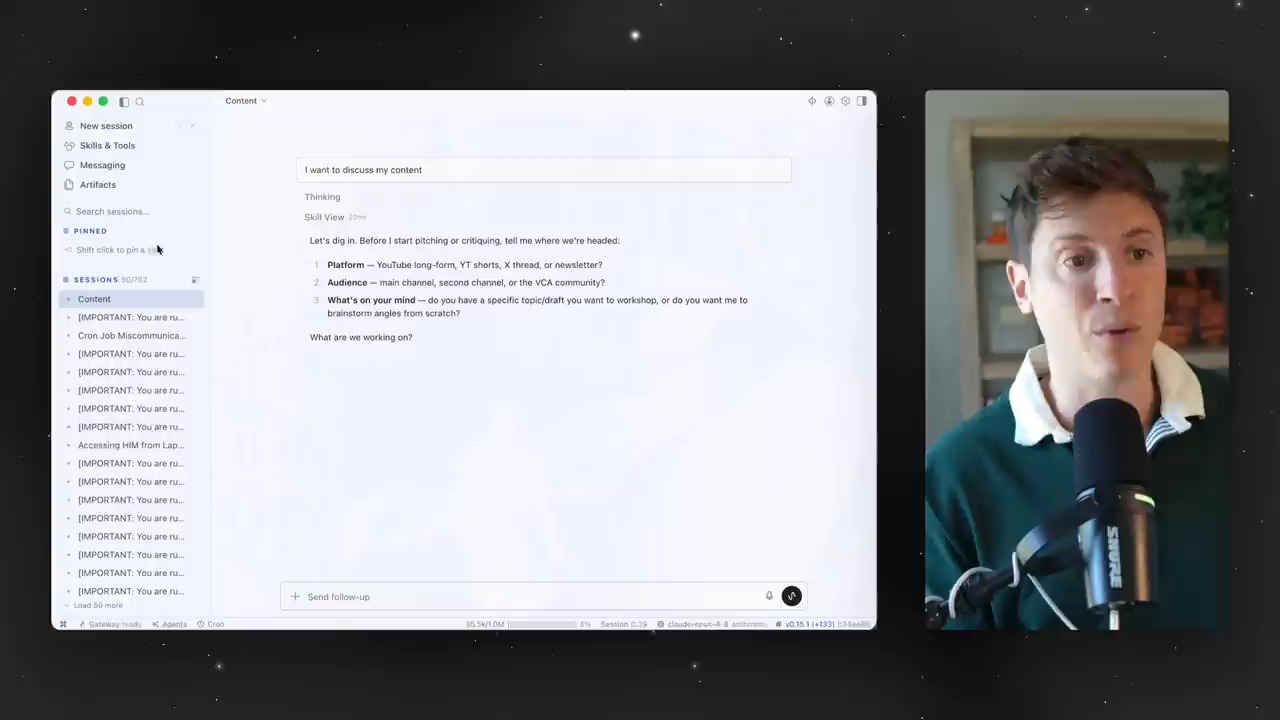
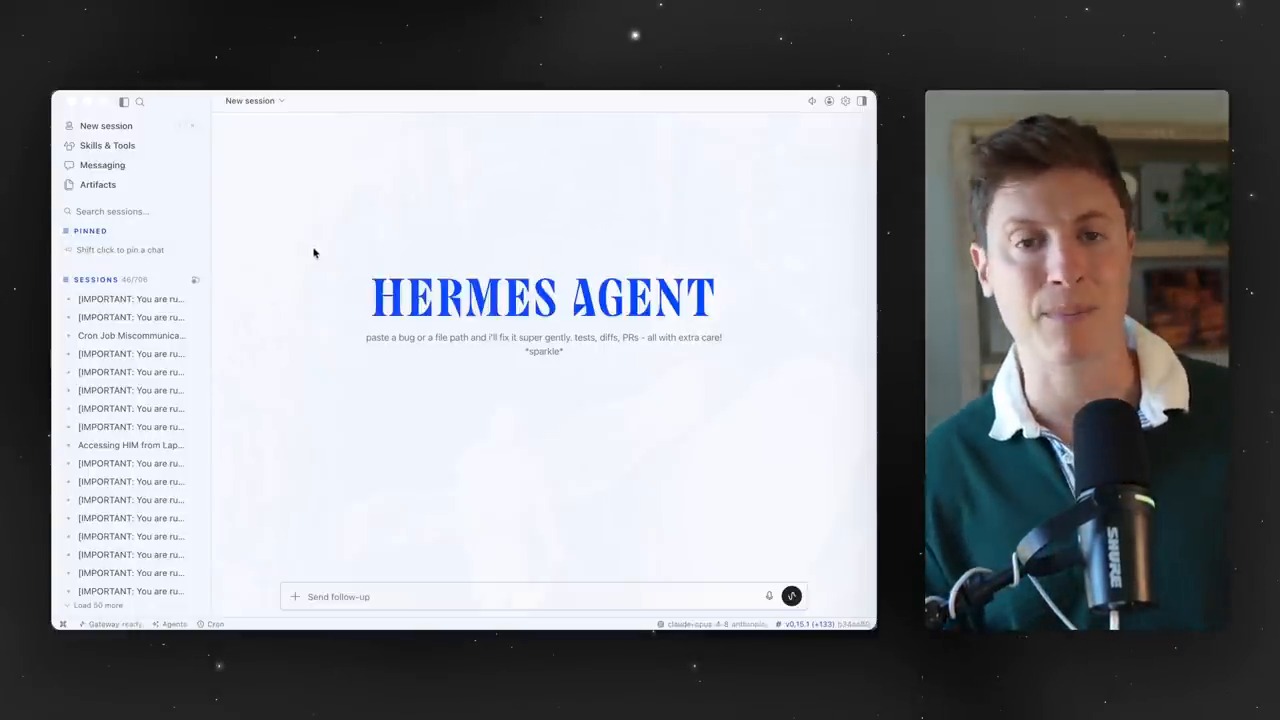
    The Hermes Agent desktop app matters because it turns this complex structure into a visible workspace. Users can see sessions, artifacts, skills, toolsets, cron jobs, and profiles in one place. This is a key shift that moves AI agents from developer toys toward everyday work tools.

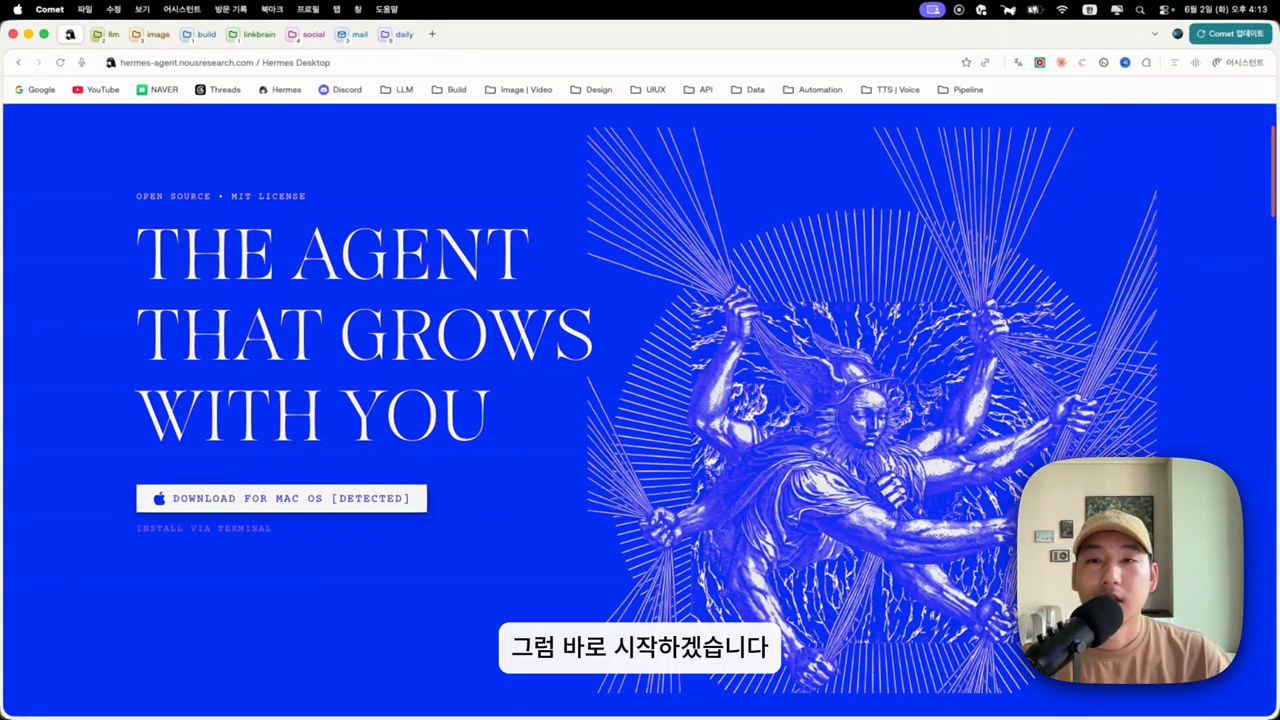
    The first screen of the Hermes Agent desktop app and an explanation of the limits of the existing CLI
    The first screen of the Hermes Agent desktop app. The video points out the limits of a CLI-centered user experience and emphasizes the need for a desktop UI.

    Sessions Become Work Folders for AI Agents

    Early in the video, the presenter shows how to create sessions by topic. Work with different contexts, such as content, development, and personal projects, is separated into individual sessions. This is not just tidying up chat rooms. It is closer to dividing the units of work assigned to an AI agent.

    AI agents become more useful as context grows longer. But when contexts are mixed together, they can create confusion instead. That is why splitting sessions by topic and pinning important sessions are small-looking features worth a closer look. Just as humans need project folders, agents need context folders.

    A screen for separating sessions by topic and managing context
    A screen for dividing sessions by topic. In AI-agent use, context separation affects both productivity and accuracy.

    Artifacts Turn Chat Logs Into Work Assets

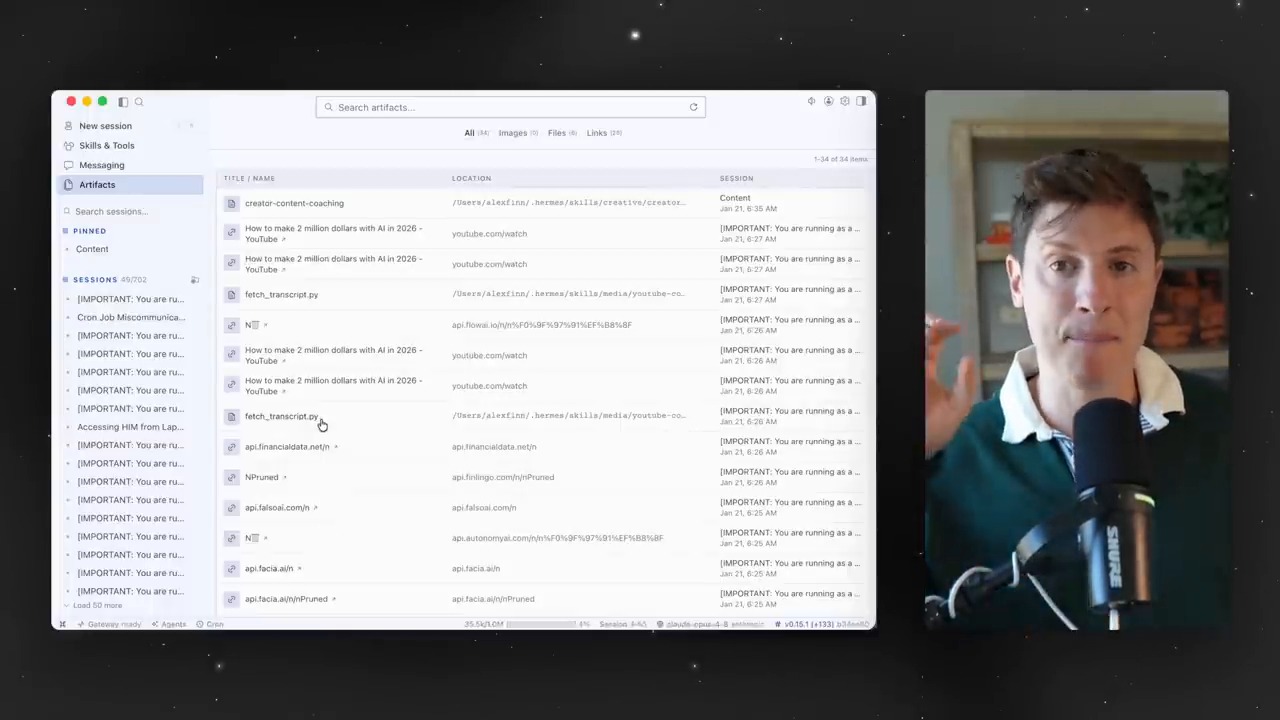
    One especially interesting part of the video is artifacts. Links, files, images, and outputs created by the agent can be found again in one place. The presenter explains that this can be used like a bookmark collection or a repository for work materials.

    This feature shows the direction of the AI-agent experience. Chatbots leave conversations behind. Agents need to leave deliverables behind. Those deliverables should be easy to find later, continue using, and reuse in other sessions.

    A screen for managing artifacts and links in one place
    The artifact screen. Links, files, images, and generated outputs accumulate as work assets instead of being scattered.

    Skills and Toolsets Are Panels for Managing an Agent’s Capabilities

    One important feature of Hermes Agent is skills. Repeated work or procedures learned in a specific environment can be saved as skills and reused in later tasks. In the video, the presenter also shows a scene where he checks a custom skill generated while making a Godot game.

    Toolsets deserve attention as well. Turning groups of tools such as web search, terminal, files, image generation, and cron on or off is a way to control an agent’s permissions and abilities. The desktop UI turns these settings from commands into a management screen.

    Cron Jobs Turn AI Agents From Manual Assistants Into Automated Operators

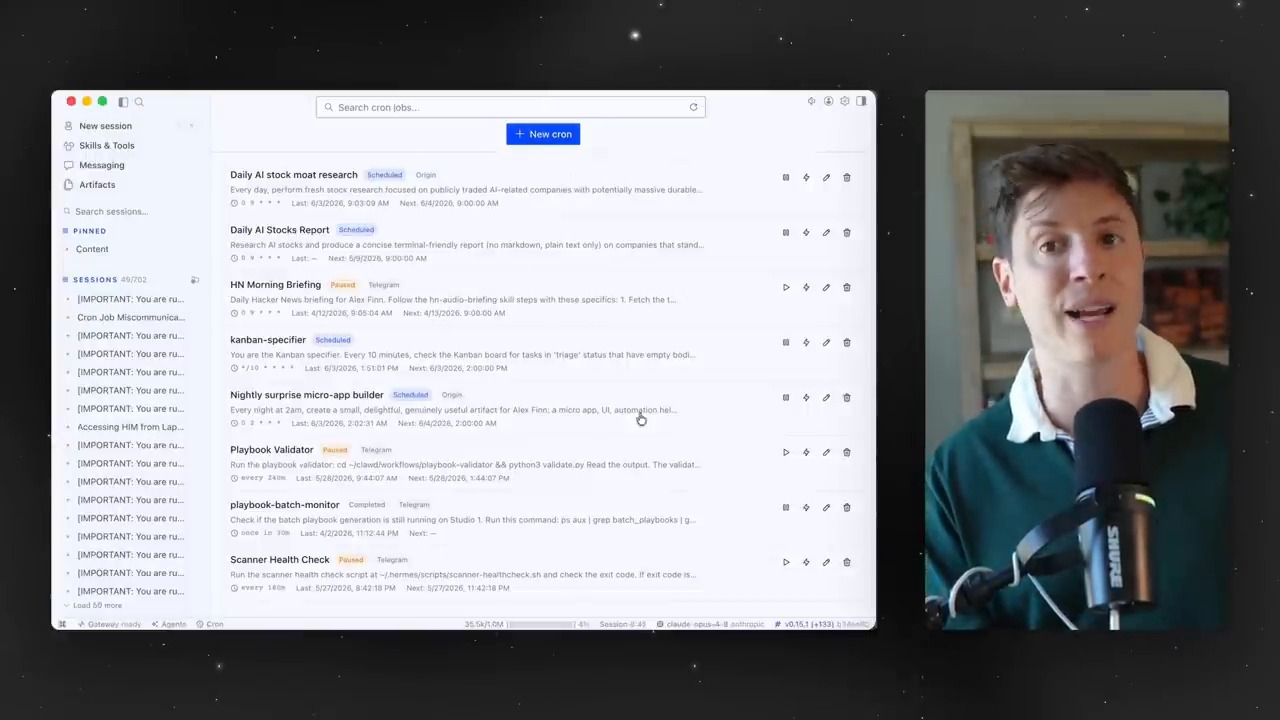
    In the middle of the video, a cron-job management screen appears. It visually shows scheduled tasks, such as having the agent build an app every night or run work at a specified time.

    Cron jobs mark the point where AI agents move from one-off answering tools to automated operating tools. One caveat is that scheduled tasks are trustworthy only when failures, execution logs, and permission scopes are visible together. A desktop app can make this review process easier.

    A screen for visually checking and scheduling cron jobs
    The cron-job management screen. Scheduled tasks are a core feature that turns AI agents into tools for recurring-work automation.

    Multiple Profiles Are a Way to Create Role-Based AI Employees

    Later in the video, the presenter says he runs several Hermes Agents across different devices and roles. Some agents live on specific machines, while others take on different responsibilities. The desktop app makes these agent profiles easier to manage.

    This structure has important implications for the future. Instead of one general-purpose chatbot, we may increasingly operate multiple AI agents with different roles and permissions. A content agent, development agent, research agent, and monitoring agent may each have different skills and tools.

    The Real-World Example Shows an Output-Centered Experience

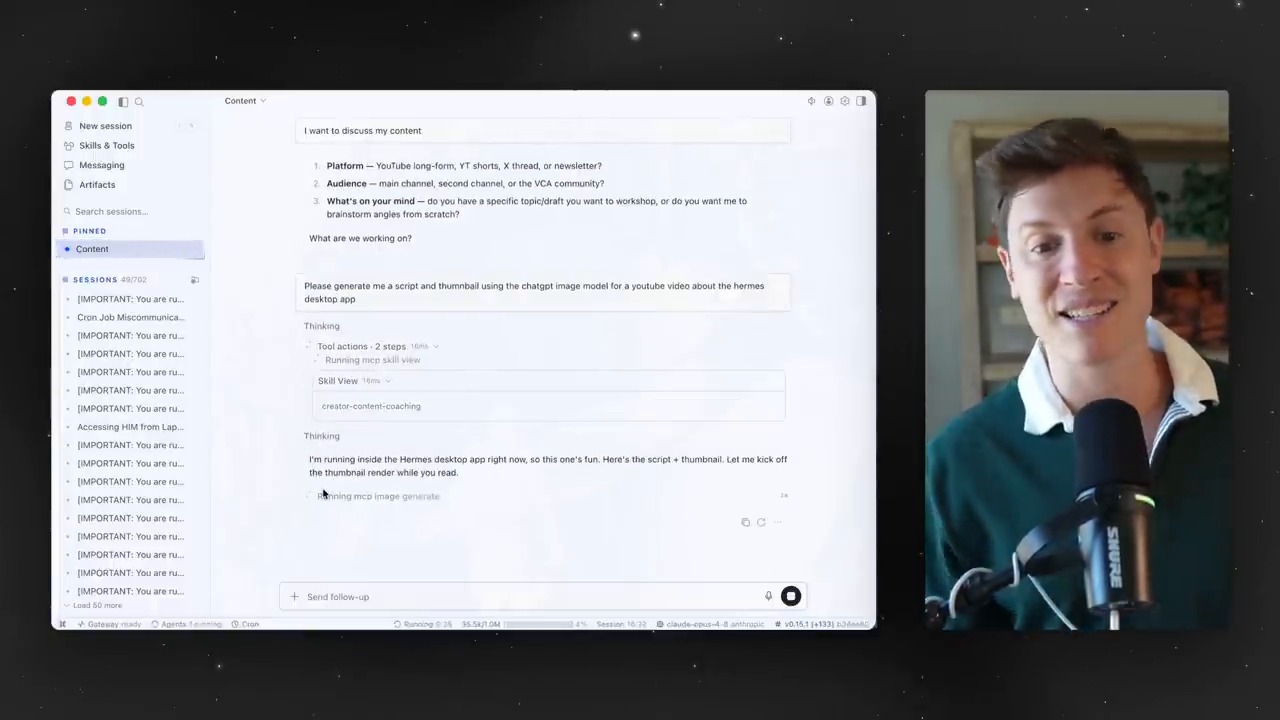
    In the final example, the presenter asks the agent to generate a script and thumbnail for the video. The desktop app shows which skills and tools are being used, and the outputs are visible in artifacts.

    This scene compresses the core of an AI-agent UI. Users do not need to memorize commands. They can see which tools the agent is using. Outputs remain as files or images. AI agents enter real work flows only when these three pieces come together.

    A real usage example generating a script and thumbnail
    An example of generating a video script and thumbnail. The agent’s tool-use process and outputs are shown together.

    The Question Raised by the Hermes Agent Desktop App

    The point to watch in this video is not that “Hermes won.” The more important question is where the primary interface for AI agents will be. The CLI is powerful but not mainstream. Messengers are convenient but weak for complex configuration and verification. A desktop app sits between them, offering both work management and accessibility.

    There are also cautions. AI agents can access files, browsers, terminals, and external APIs. That means the easier the UI becomes, the more important permission management and log review become. A good desktop app is not one with many buttons. It is an app that helps users understand what they allowed and what was executed.

    Related Reading

    Conclusion: The Battleground for AI Agents Is the User Experience After the Model

    The Hermes Agent desktop app clearly shows the next challenge for AI agents. The question is no longer only “what can an agent do?” It is how users can understand, manage, and repeatedly use those capabilities.

    Sessions separate context. Artifacts store outputs. Skills accumulate experience. Cron jobs automate recurring work. Profiles create role-based agents. When these elements are connected inside a desktop UI, AI agents move from developer experiments toward something closer to a real operating system for work.

    FAQ

    What does the Hermes Agent desktop app make easier?

    It lets users visually check and control sessions, artifacts, skills, toolsets, cron jobs, and profiles. Even without knowing CLI commands, users can more easily understand the operating structure of an agent.

    Is a desktop app always better than the CLI?

    Not always. Developers and advanced automation users may be faster with the CLI. The point is that, for beginners and non-developers, a desktop UI lowers the barrier to entry.

    Why is the artifact feature important?

    It makes links, images, files, and outputs created by the AI agent easy to find and reuse. This turns simple chat history into real work assets.

    What kinds of work can cron jobs handle?

    They can be used for scheduled work such as regular reports, site monitoring, data collection, blog-performance checks, and repetitive development tasks. The caveat is that failure logs and permission scopes must be checked carefully.

    What should users watch out for when using an AI-agent desktop app?

    Do not open excessive access to files, terminals, browsers, or external APIs. Check which tools are enabled, what work has run, and what approval flow is in place.

    References

    Original Korean article: Hermes Agent Desktop App: The Next Interface for Mainstream AI Agents

    Image source: Captured images used in this article are stills from the original YouTube video. They are used for review, commentary, and educational explanation, and copyright remains with the original rights holders and the channel.

  • Hands-On Local LLM Use on M5 Pro Max 128GB: What OMLX and Hermes Agent Show

    Hands-On Local LLM Use on M5 Pro Max 128GB: What OMLX and Hermes Agent Show

    Can local LLMs now move beyond “fun toys to run for curiosity” and become real work tools? A video by Learning Master tests this question directly by connecting an OMLX server, Claude Code, and Hermes Agent in an M5 Pro Max 128GB environment.

    The first point to watch is simple. This is not a claim that local LLMs will replace every cloud model. The key question is whether work where cost, speed, and privacy matter, such as repetitive tasks, fast drafts, some coding assistance, and personal knowledge-base search, can begin moving locally.

    Hands-on local LLM use: a local LLM orchestrator and model-configuration screen
    The video begins by connecting several local models to an orchestrator and building a real workflow. Source: screenshot from Learning Master’s YouTube video.

    The Core Question in the Video: Can Local LLMs Be Used for Real Work?

    The search intent of this video is not limited to “is a local LLM fast on M5 Pro Max?” The more important questions are these.

    • Can local models be connected to developer tools such as Claude Code?
    • How much can a server such as OMLX improve perceived speed?
    • Can local LLMs also be attached to tool-calling agents such as Hermes Agent?

    The video introduces Qwen-family models, NVIDIA Nemotron Nano-family models, embedding models, and more, configuring the local environment as a work system. Here, a local LLM is closer to a backend model connected to multiple tools than to a single chatbot.

    As discussed in Thinknote’s second brain and LLM Wiki article, future AI use will depend not only on model capability, but also on which context is connected to which tools.

    Why OMLX Matters: The Server Experience Shows Up Before the Model

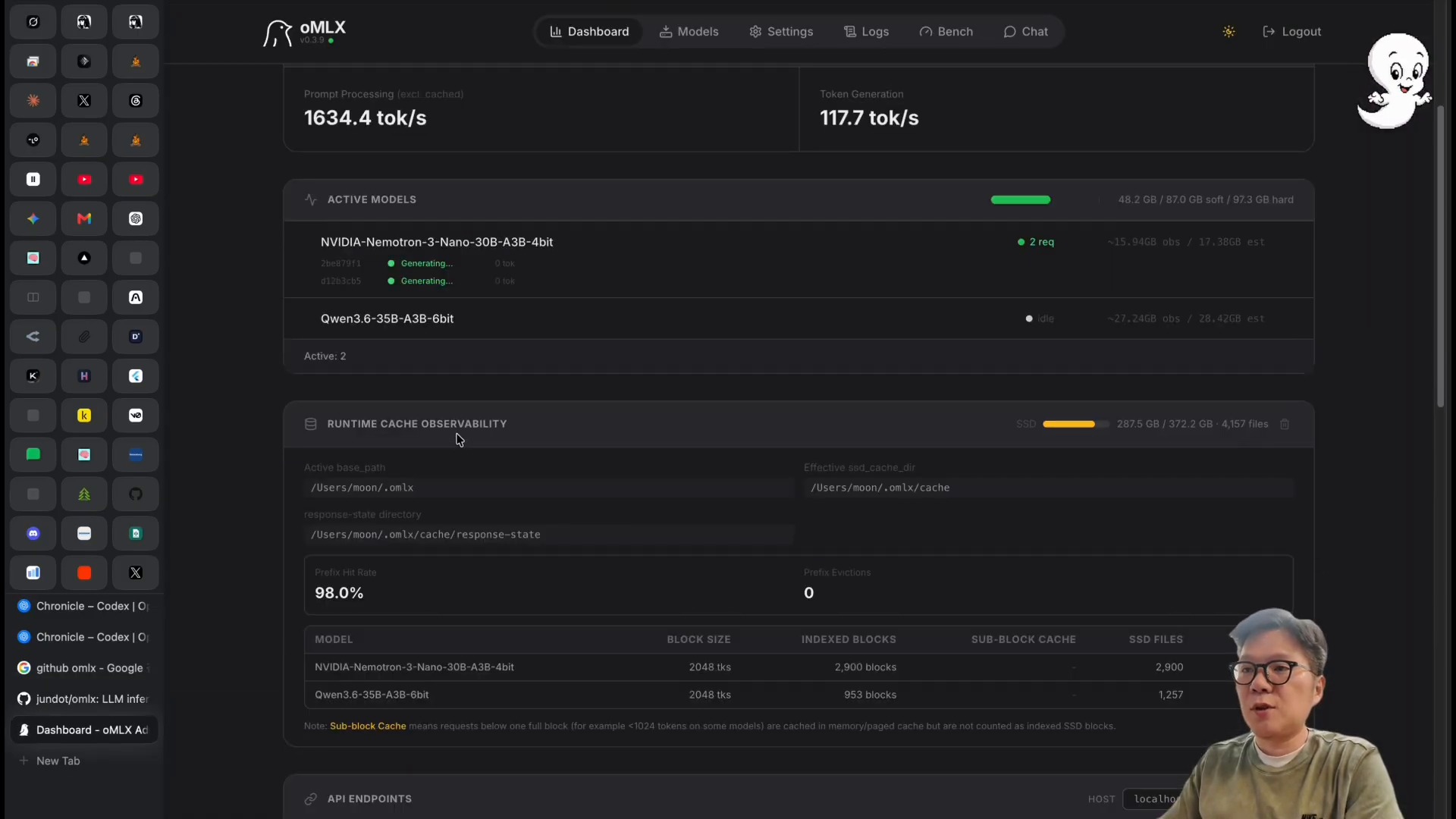
    The most noticeable scene in the video is the OMLX dashboard. The presenter explains that, through OMLX, he observed generation speeds around 117 tokens per second. More important than the number itself is the fact that the bottleneck for local LLMs is not a single model file. It is the sum of the inference server, caching, batching, and hardware memory configuration.

    Hands-on local LLM use: checking token generation speed on the OMLX dashboard
    A scene checking token-generation speed and model status on the OMLX dashboard. Source: screenshot from Learning Master’s YouTube video.

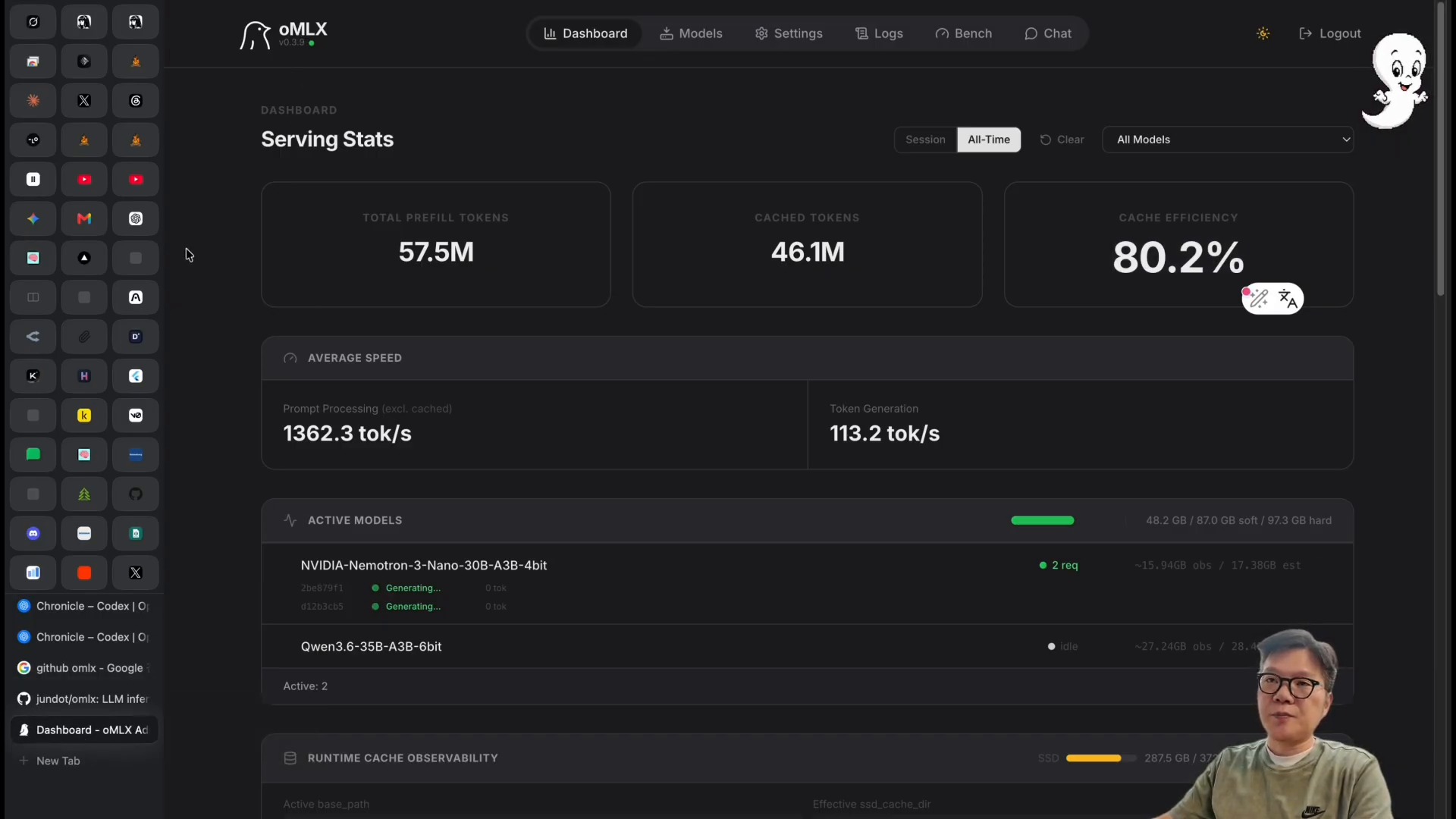
    The OMLX GitHub README describes the tool as an LLM inference server optimized for Apple Silicon. The key terms are continuous batching and tiered KV caching. In plain language, the structure improves perceived speed by processing multiple requests efficiently and reducing the cost of recalculating repeated context.

    Hands-on local LLM use: the OMLX server dashboard and model-operations screen
    OMLX is not merely a tool for running local models. It is closer to an operating environment where users can check model status and throughput through a dashboard. Source: screenshot from Learning Master’s YouTube video.

    This point also connects to the article on the SGLang local LLM serving engine. To use local LLMs well, the serving engine, context management, and caching strategy matter as much as model selection.

    Claude Code and Local Models: Fast, but Verification Is Separate

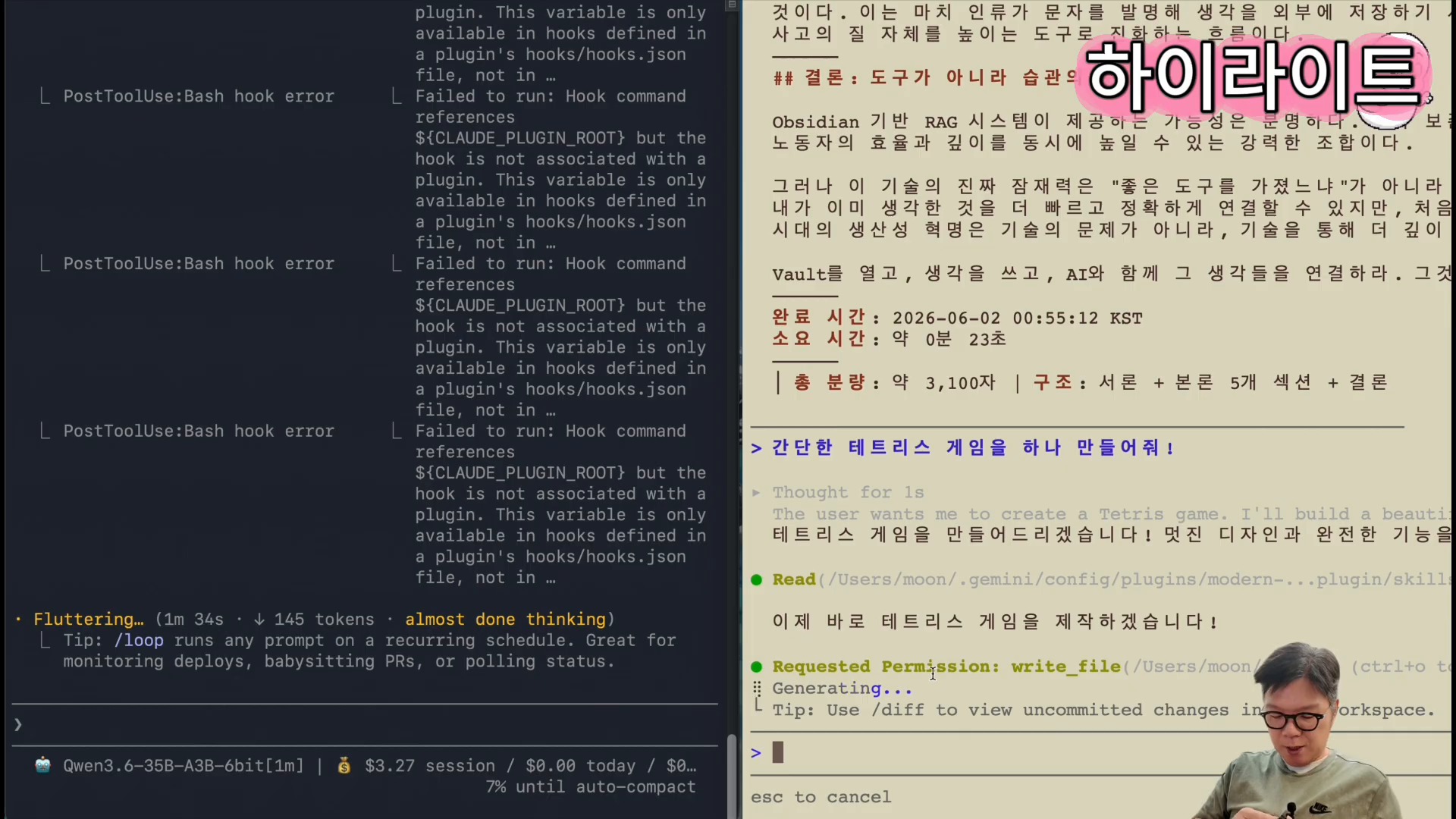
    In the middle of the video, Claude Code is connected to a local model through the omlx launch claude flow. The presenter then compares text writing and the creation of a Tetris game. He shows that local LLMs can complete some tasks faster, while also leaving the premise that output quality must be checked separately.

    Hands-on local LLM use: connecting Claude Code to a local model through OMLX and generating output
    A scene generating real output by connecting Claude Code to a local model. Speed comparison and quality verification should be considered separately. Source: screenshot from Learning Master’s YouTube video.

    The important criterion here is not simply “is it fast?” but “what work can safely be assigned to it?” For example, the following tasks are reasonable candidates for a first local-model trial.

    | Task type | Fit for local LLM | What to check | |—|—|—| | Draft writing | High | Fact-checking and style review are needed | | Repetitive code generation | Medium to high | Tests and security review are needed | | Personal document summarization | High | External transmission of sensitive information can be reduced | | Current-information search | Medium | Search-tool connection and source verification are needed | | Complex design decisions | Medium | Cross-review with a stronger cloud model is recommended |

    AI coding workflows also connect to the Headroom token-diet article. Reducing cost is not only about running models locally. Reducing the logs, files, and search results that an agent reads, and designing the verification loop, are other solutions to the same problem.

    Hermes Agent and Local LLMs: The Next Experiment in Agent Operations

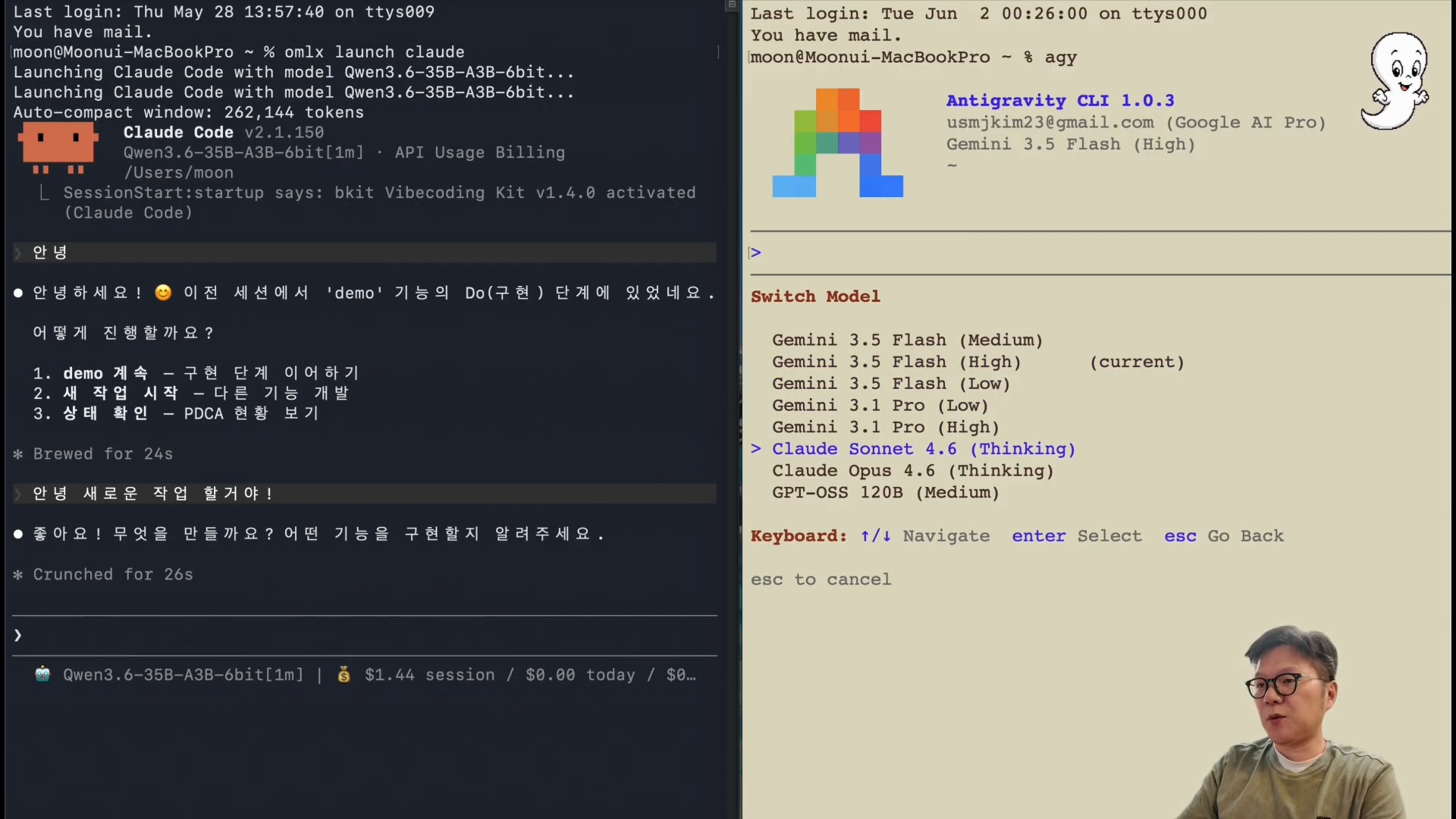
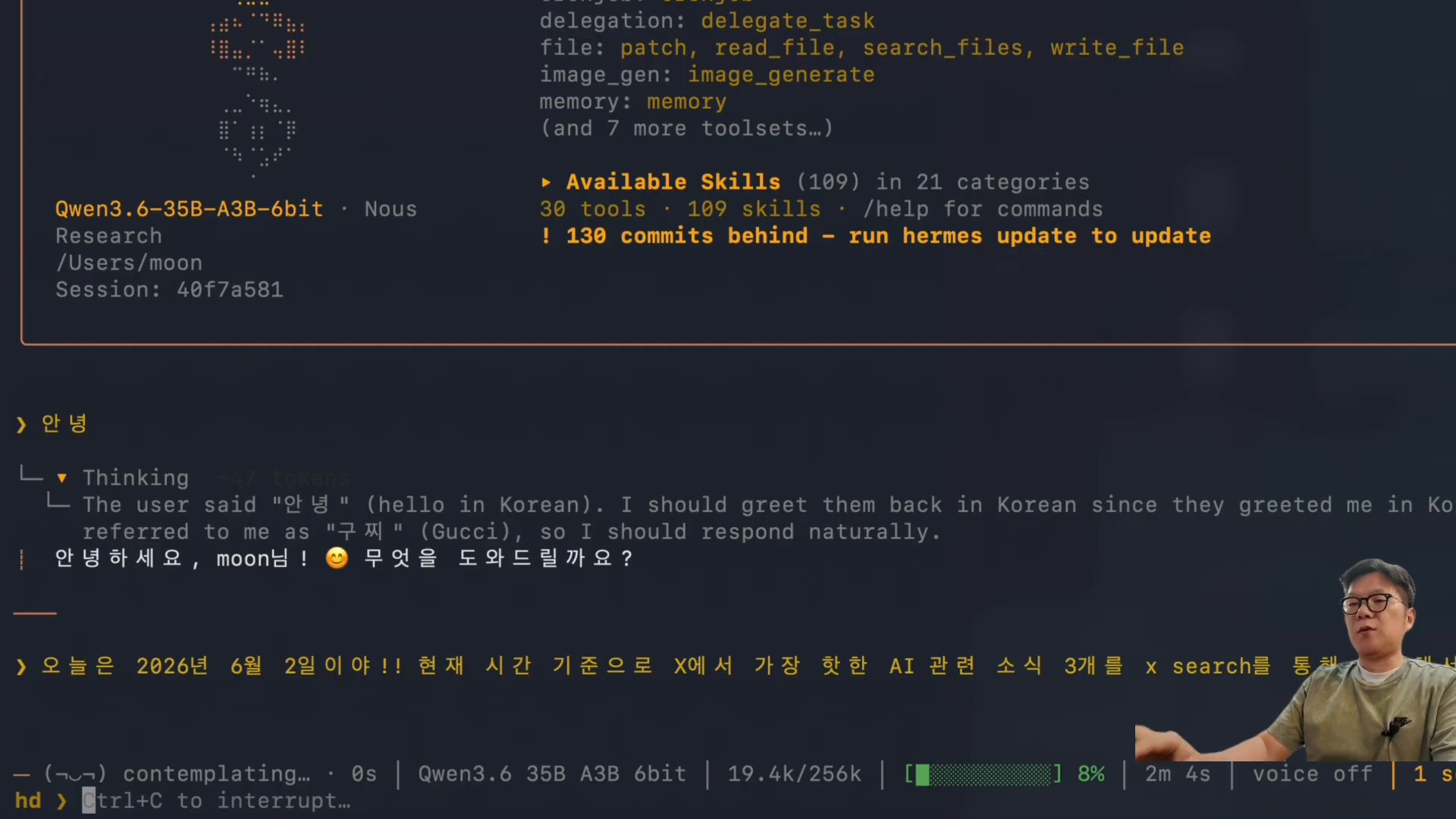
    The especially interesting section near the end is the Hermes Agent connection. The video shows the omlx launch hermes flow and the execution of the X Search skill. It is a scene showing that a local model can go beyond sentence generation and attach to an agent runtime responsible for search, tool calls, summarization, and deliverable creation.

    Hands-on local LLM use: running local-LLM search with the X Search skill in Hermes Agent
    A scene where Hermes Agent calls the X Search skill to search and summarize current AI news. Source: screenshot from Learning Master’s YouTube video.

    Hermes Agent is an open-source AI agent framework that runs in terminals, messaging platforms, and IDEs. It executes work through tool calls, skills, memory, cron jobs, and multi-platform gateways. If a local LLM can be connected to this layer, several advantages appear.

    • Less personal documentation and internal logs need to be sent to external APIs.
    • Token costs can be lowered for repetitive summarization, classification, and draft work.
    • A backup path exists when cloud models fail or hit cost limits.
    • Users can run more agent experiments.

    The caveat is that a local model calling tools does not immediately become a “trusted employee.” As discussed in the article on personal assistants in the AI-agent era, the more executable an AI system becomes, the more important permissions, verification, logs, and rollback design become.

    Pre-Adoption Checklist: How to Judge Local LLMs

    Whether to adopt a local LLM should not be decided by a single performance number. The M5 Pro Max 128GB environment in the video is closer to a powerful upper-bound example. A typical laptop or a Mac with less memory may not produce the same experience.

    Before adopting local LLMs, it is better to evaluate them in this order.

    1. First, choose repetitive work: drafts, summaries, tagging, code scaffolding, or other low-failure-cost tasks.
    2. Run the same prompt through both a cloud model and a local model, then compare speed, quality, and cost.
    3. Automate tests, link checks, and fact verification for local-model outputs.
    4. Separate tasks that involve sensitive information from tasks that require external search.
    5. Keep final decisions or high-risk execution with a stronger cloud model or human review.

    This approach connects with the “separation of the digital brain and execution agents” discussed in the article on AI-native transformation. A local LLM does not replace the entire brain. It brings some frequently used thinking and execution loops closer to the user.

    Conclusion: The Battleground for Local LLMs Is Placement, Not Replacement

    The meaning of this video is not that “local LLMs have completely beaten Claude or GPT.” A more realistic conclusion is that we have reached the stage of deciding where to place local LLMs.

    With a high-end Mac and a server such as OMLX, local LLMs can be practical options for drafts, summaries, code generation, personal-knowledge search, and agent experiments. On the other hand, work requiring current-information judgment, complex reasoning, or high reliability is still safer when paired with cloud models.

    In the end, the future AI work environment is not about choosing a single model. Productivity will likely depend on the criteria used to distribute work across local models, cloud models, agents, search tools, and knowledge bases.

    FAQ

    Can a local LLM replace Claude or ChatGPT?

    For some repetitive tasks, it can replace or assist them. But for complex judgment, current-information verification, and high-risk code changes, it is safer to use a stronger cloud model or human review in parallel.

    What is OMLX?

    OMLX is an LLM inference server optimized for Apple Silicon. According to its GitHub README, it emphasizes continuous batching and tiered KV caching, and it aims to make local model operation easier through a macOS menu bar and dashboard.

    Can I get similar results without an M5 Pro Max 128GB?

    The same level of speed is not guaranteed. The video results are strongly affected by a high-end Mac and a large-memory environment. On your own machine, it is better to start by testing smaller models and repetitive tasks.

    What improves when a local LLM is connected to Hermes Agent?

    You can experiment with search, file handling, summarization, and automation tasks through a local model. There are cost and privacy advantages, but tool-execution permissions and output verification must be designed separately.

    Where should beginners start with local LLMs?

    Start with low-failure-cost tasks such as personal document summaries, meeting-note cleanup, code drafts, or simple classification. Then compare the results with cloud-model outputs and define quality criteria.

    References

    Original Korean article: Hands-On Local LLM Use on M5 Pro Max 128GB

    Image source: Captured images used in this article are stills from the original YouTube video. They are used for review, commentary, and educational explanation, and copyright remains with the original rights holders and the channel.

  • How to Train AI Agents: Building an AI-Native Organization with Hermes Agent

    How to Train AI Agents: Building an AI-Native Organization with Hermes Agent

    Organizations that use AI agents well do not stop at choosing a good model. The more important question is: what should the agent learn, where should it remember that knowledge, and what standards should it follow while working?

    A video from Hyoyul Kim’s AI Development Team shows this question through an example of operating Hermes Agent. It creates multiple agents divided into roles such as development, design, content, and lecture assistance, gives remote instructions through Telegram, and shares context through an Obsidian Wiki.

    How to train AI agents: an opening scene where Hermes Agent is run remotely through Telegram
    An opening scene where Hermes Agent is run remotely through Telegram.

    The First Thing to Watch Is Operations, Not Installation

    The video’s title emphasizes how to “train” AI agents. The actual content is also closer to operations architecture than to installation commands. The central flow is connecting Hermes Agent to Telegram and combining it with tools such as Codex or Claude Code while dividing several agents by role.

    According to the official Hermes Agent description, Hermes is an open-source AI agent framework that runs in terminals, messaging platforms, and IDEs. It also supports skills, memory, profiles, gateways, cron, MCP, and connections to multiple model providers. The video can be read as an example of weaving these functions into a personal work system.

    The important point is not simply to “create many AI employees.” Each agent needs a role, knowledge to reference, a learning loop to repeat, and a reporting method. Otherwise, the number of chat windows increases while actual productivity does not.

    Why AI Agents Should Be Divided Like Employees

    The video introduces agents with roles such as development, UI design, testing, content, and lecture assistance. This resembles role division in a human organization. If one agent handles everything, contexts mix, instructions become longer, and results are harder to verify.

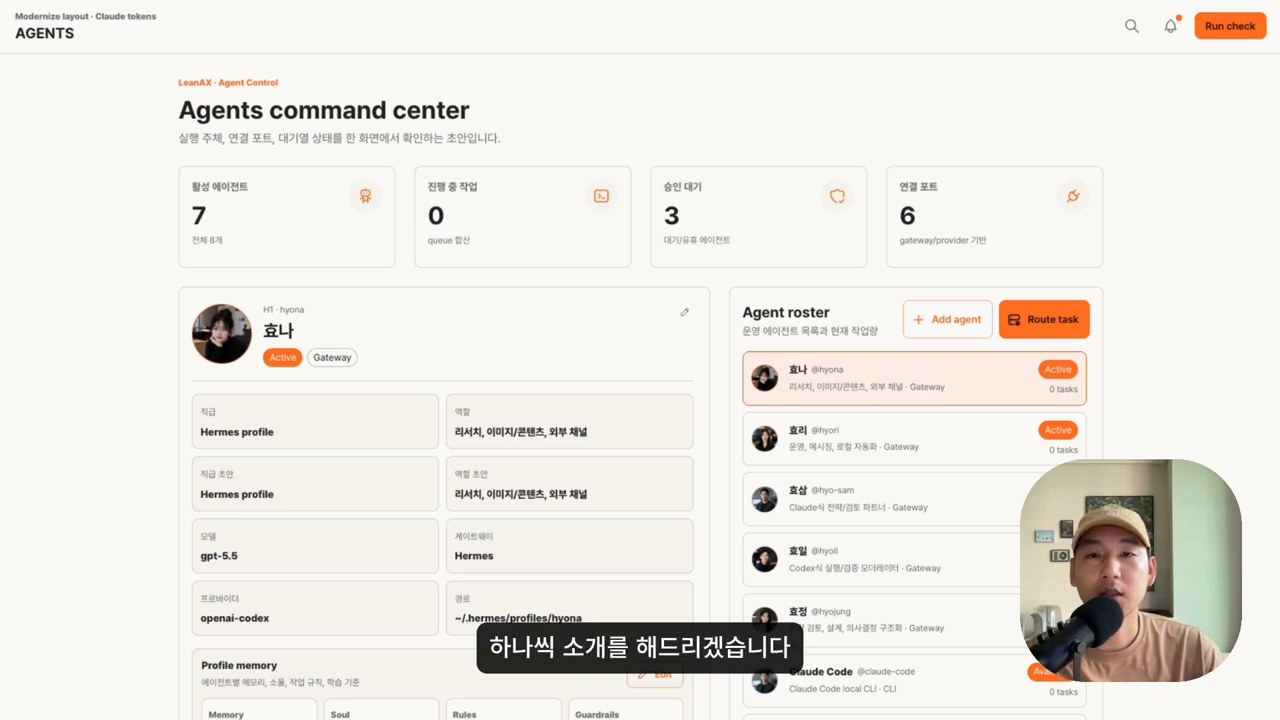
    How to train AI agents: a command center screen for managing role-based AI agents
    A command center screen for managing role-based AI agents.

    Dividing roles creates three advantages.

    1. Instructions become shorter. A development agent can focus on code and tests, while a design agent can focus on layouts and references.
    2. Standards become clearer. Each agent’s rule file or skill document can separate what it should and should not do.
    3. Verification becomes easier. The creator and reviewer can be separated by dividing a generation agent from a review agent.

    This approach also connects to the article on building an Agent OS that unifies AI tools. The essence of using AI is not individual chatbot use, but the design of work flows and knowledge flows.

    Real Deliverables Require a Supervisor Role

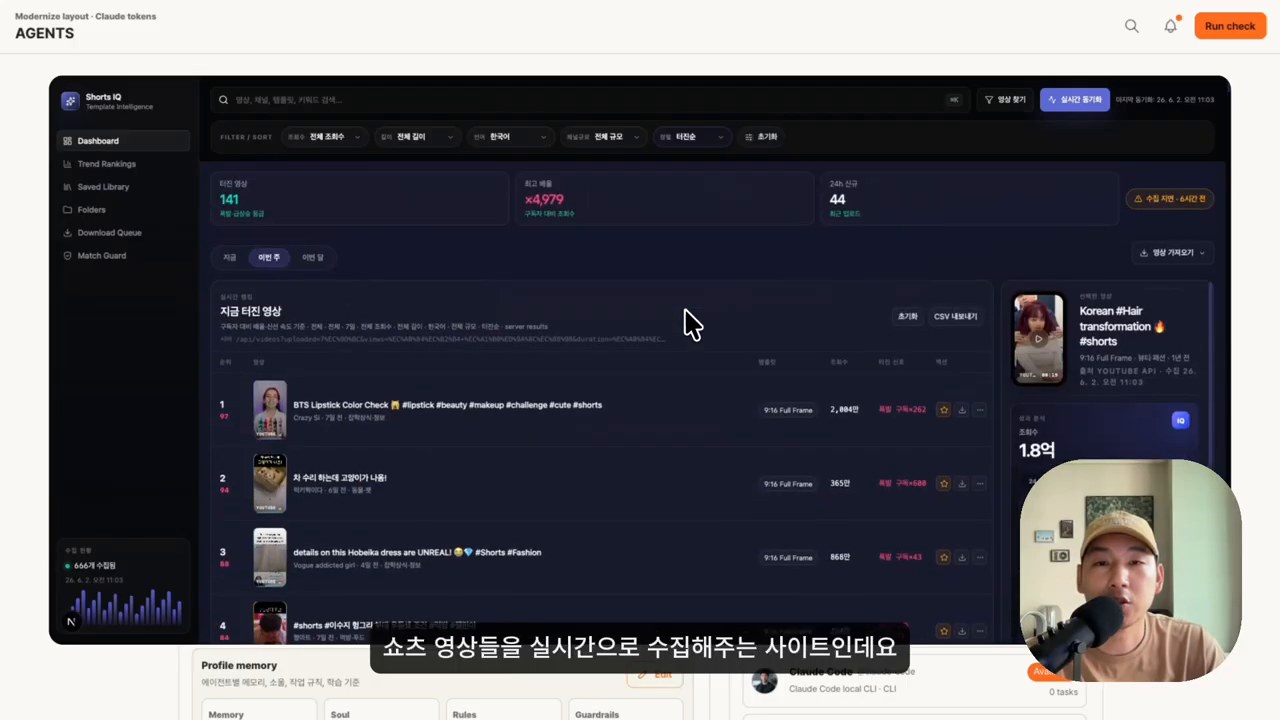
    One interesting part of the video is the example that “five agents built a website.” It describes several role-based agents collaborating to build a site that collects and displays short-form videos.

    How to train AI agents: a scene showing a real deliverable made by several agents
    A scene showing a real deliverable made by several agents.

    There is one caveat in this scene that should not be missed. The speaker in the video also says he did not simply take his hands off the work. The human provided the plan, supervised the direction, and checked the results.

    That is why the realistic structure for adopting AI agents is closer to this.

    • Human: owns goals, priorities, standards, and final judgment.
    • Agent: handles research, drafts, coding, repeated revisions, and organization.
    • System: handles memory, files, versions, schedules, notifications, and verification loops.

    Without this balance, AI agents can quickly produce many outputs, but it becomes difficult to know whether those outputs match the organization’s standards. As discussed in the article on harness engineering, the technology for “harnessing agents so they work well” is becoming increasingly important.

    The First Point in a Learning Loop Is Not Simply Increasing Memory

    The video’s most important message is context sharing through an Obsidian Wiki. Even if agents are made to research and learn every night, pushing everything into agent memory can actually degrade performance.

    How to train AI agents: a scene explaining context sharing through an Obsidian Wiki
    A scene explaining context sharing through an Obsidian Wiki.

    A better approach is to separate long-term memory from working memory. The agent should not always carry everything. Instead, it should retrieve relevant information from the wiki when needed.

    In practice, the following structure is safer.

    | Component | Role | Caution | |—|—|—| | Rule documents | Behavioral standards for the agent | If they are too long, execution criteria become blurry | | Wiki or notes | Long-term knowledge store | Sources and dates should be recorded | | Cron jobs | Repeated learning and storage automation | Accumulating results without verification is risky | | Review agent | Checks errors and omissions | Final responsibility should remain with humans | | Work logs | Tracks what was done | Manage them so secrets are not mixed in |

    This perspective connects to the theme of second brains and LLM Wikis. In the AI era, a knowledge system becomes both notes for humans and operating infrastructure that agents can search and reference.

    Telegram Remote Execution Is an Operations Channel, Not Just “Assign Work Anytime”

    The video explains that Hermes Agent is connected to Telegram. Slack could also be used, but the presenter chose the lighter Telegram setup as a one-person business.

    This is more than a convenience feature. A messaging platform becomes the intake window for AI-agent work. Users can assign work while on the move, receive completion notifications, and get files or outputs back.

    One caveat is that remote execution is powerful, so it needs operating principles.

    • Place approval procedures around dangerous commands.
    • Separate permissions and work scopes by agent.
    • Exclude sensitive files and credentials from task instructions.
    • Keep logs and result reviews for automated work.
    • Create checkpoints that allow rollback after failure.

    Hermes Agent’s gateways, profiles, and cron features are useful when building this operating system. But having the tools does not automatically make automation safe.

    AI-Native Organizations Need Operating Rules Before Dashboards

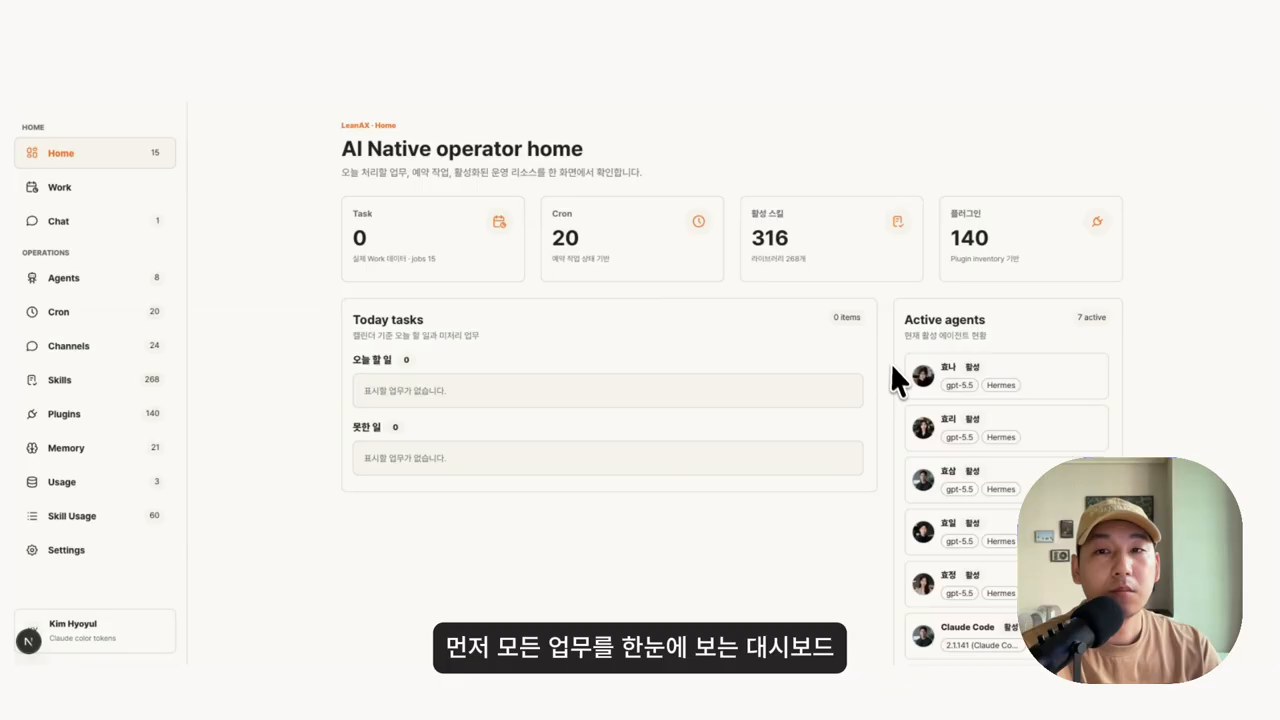
    Near the end of the video, a concept for an AI-native organization dashboard appears. It brings together work status, schedules, messengers, agent status, scheduled tasks, skills and plugins, and token usage in one view.

    How to train AI agents: a scene explaining an AI-native organization operations dashboard
    A scene explaining an AI-native organization operations dashboard.

    This concept is very practical. The caveat is that something must be decided before the dashboard: what to automate, how to judge success, and where humans should intervene.

    For teams beginning AI-agent operations, the following order is better.

    1. Choose three recurring tasks.
    2. Document each task’s inputs, outputs, and verification criteria.
    3. Assign only one role to each agent.
    4. Have humans review the outputs and improve the rules.
    5. After stabilization, automate through cron jobs or messaging channels.

    Rather than creating “ten AI employees” from the beginning, it is faster to make one agent consistently good at one task.

    Pre-Adoption Checklist

    Before adopting Hermes Agent or a similar AI-agent system, check the following questions first.

    • Is the recurring work assigned to this agent clear?
    • Is there a human or review agent to inspect the outputs?
    • Is there a wiki or document repository for long-term knowledge?
    • Have you decided how far secrets and permissions will be allowed?
    • Are there logs and backups that allow rollback after failure?
    • Can you track cost, token usage, and execution time?

    If these questions cannot be answered, increasing the number of agents is more likely to create confusion than automation.

    Related Reading

    Conclusion: AI-Agent Training Starts With Operations Design, Not Learning Alone

    The core question in the video is not “how many AI agents can we create?” It is how agents learn the organization’s knowledge and standards, how they collaborate, and how they are verified.

    Hermes Agent provides a useful operational foundation for this experiment. It can run through messaging platforms, separate profiles, build skills and memory, and run repeated tasks through cron jobs.

    But final results depend more on design than on the tool itself. Roles must be kept small, a knowledge repository must be built, verification loops must be attached, and human decision points must remain. Only then do AI agents become less like automated responders and more like an operating system for working together.

    FAQ

    Can Hermes Agent be used like an AI employee immediately after installation?

    No. Installation is only the start. Roles, rules, reference knowledge, and verification criteria must be defined before it can be used for real work.

    Does training an AI agent mean fine-tuning a model?

    In this article, training is closer to operational learning than fine-tuning. It means helping the agent better reference the context of repeated work through rule documents, skills, wikis, and work logs.

    Is Obsidian Wiki required?

    It does not have to be Obsidian. The important point is to have a long-term knowledge repository that agents can search and reference. Notion, a Markdown wiki, a Git repository, or an LLM Wiki can also work.

    Is a Telegram connection safe?

    The connection itself is less important than permission design. Dangerous-command approval, sensitive-information separation, log review, and permission limits must be designed together.

    How many agents should a team start with?

    One or two is appropriate at first. Start with one recurring task and one verification task, then add only roles that have stabilized.

    References

    Original Korean article: How to Train AI Agents: Building an AI-Native Organization with Hermes Agent

    Image source: Captured images used in this article are stills from the original YouTube video. They are used for review, commentary, and educational explanation, and copyright remains with the original rights holders and the channel.

  • Second Brain and LLM Wiki: A Personal Knowledge System for the AI Agent Era

    Second Brain and LLM Wiki: A Personal Knowledge System for the AI Agent Era

    The difference between people who use AI well and those who do not is no longer determined only by “which model they use.” As powerful models such as GPT, Claude, and Gemini quickly become more evenly matched, the real difference comes from what context you keep feeding into the model over time. From this perspective, a second brain is not just a note-taking app. It becomes the foundation that helps AI agents act in a way that is true to you.

    Original video: How to Scale Myself 100x with a Second Brain / Channel: Career Hacker Alex

    A Second Brain Is Not a Notebook. It Is a Context Repository AI Can Read

    Introduction to the second brain concept
    Source: screenshot from Career Hacker Alex YouTube video

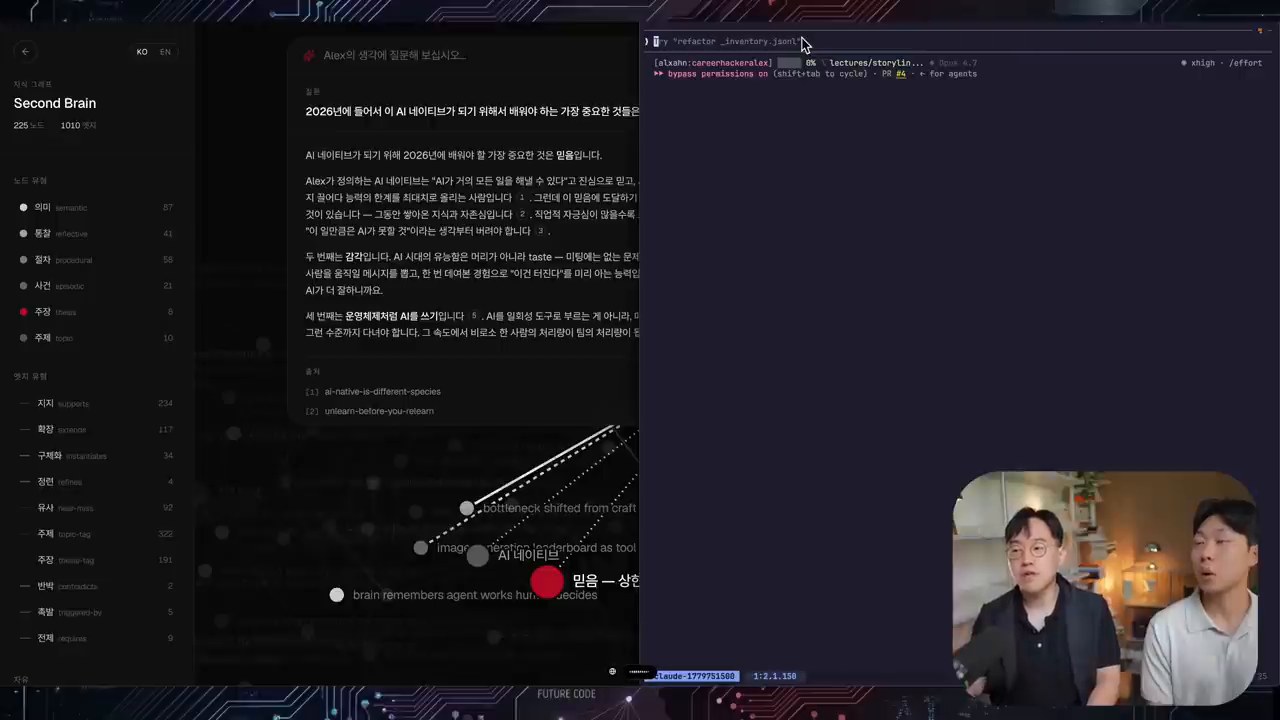
    In the video, a second brain is described as “the collection of all knowledge” and “a knowledge warehouse that AI agents can access.” The first point is not simply to collect more records. It is to structure what you have worked on, what standards you use for judgment, and what tone and perspective you prefer so AI can retrieve and reuse them.

    A normal note-taking app becomes valuable when a human later searches for and rereads the notes. A second brain, by contrast, must be something agents can explore, connect, and use on their own. That is why the video repeatedly uses terms such as nodes, edges, ontology, and graphs. The point is not merely to store pieces of information separately, but to preserve how those pieces relate to one another.

    Before the Model, Look at “Your Own Context”

    Explanation of custom systems and voice cloning
    Source: screenshot from Career Hacker Alex YouTube video

    The most important message in the video is that “using AI itself is no longer a differentiator.” When everyone is using similar models, similar questions tend to produce similar answers. What creates differentiation is the experience, failures, viewpoints, preferences, documents, and conversation history accumulated by an individual or organization.

    For example, if you only ask, “Create a marketing strategy,” you will receive a general answer that anyone could get. But the result changes if the AI can also read several years of project records, customer reactions, failed attempts, content tone, and decision-making standards. A second brain is a mechanism for accumulating and reusing this proprietary context.

    LLM Wiki and Obsidian Are Easy Starting Points for a Second Brain

    Explanation of an LLM Wiki architecture
    Source: screenshot from Career Hacker Alex YouTube video

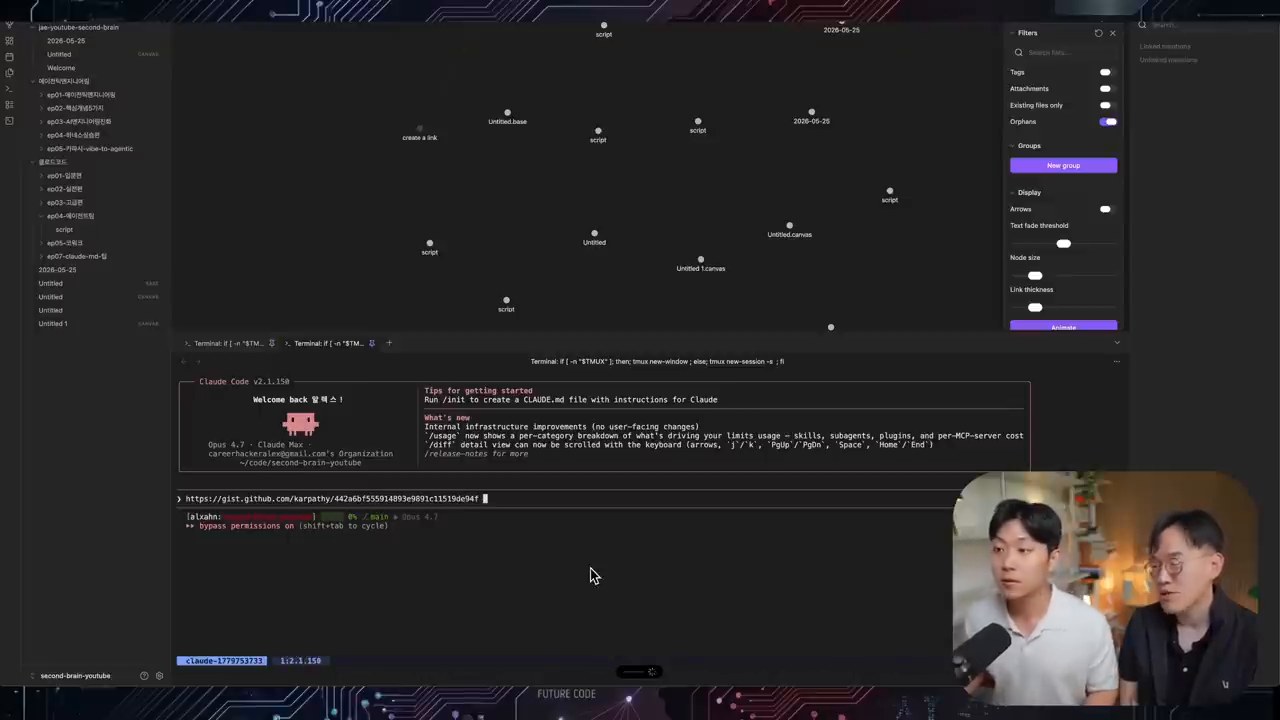
    In the latter part of the video, the presenter demonstrates organizing a developer’s YouTube transcript and materials in an LLM Wiki style. Three structures matter most here.

    1. Raw source: Preserve unprocessed materials such as original transcripts, slides, and documents.
    2. Wiki layer: Extract core concepts, claims, and relationships from the originals and organize them as a Markdown wiki.
    3. Schema/Index: Provide maps and rules so agents know where to find what they need.

    This approach is slightly different from traditional RAG. Rather than repeatedly chunking documents, embedding them, and searching those chunks, it is closer to having agents read the originals and create a continuously maintained wiki. Obsidian then becomes a tool that displays this wiki through a graph and search interface that humans can easily use.

    The Obsidian Graph Is Useful, But It Is Not the End Goal

    Obsidian is often mentioned together with the second brain because its graph view, tags, backlinks, and Markdown-based management are useful. Especially at the beginning, it helps you see at a glance which topics you handle often and how concepts are connected.

    However, the video also points out clear limits. When materials grow into the thousands or tens of thousands, browsing a graph manually is not enough. In actual use, the workflow should move toward asking an agent questions and letting the agent explore the wiki and original sources to construct an answer. Obsidian is a good interface, but the essence of a second brain is structured context that agents can use.

    Harness Engineering Connects Directly to the Second Brain

    Harness engineering and evaluation perspective
    Source: screenshot from Career Hacker Alex YouTube video

    Harness engineering means designing the rules, context, tools, and verification procedures that guide a model toward the desired behavior. A second brain becomes one of the core materials in that harness because it stores what you consider a good answer, what style you prefer, and what principles must be followed.

    The video also emphasizes the importance of evaluation. Creating a second brain is not the finish line. You need to ask questions, check whether the answers match your thinking, and keep improving the wiki structure, retrieval method, and rules when something is lacking. In other words, a second brain is not a repository you build once. It is a growing system that must be tested and improved continuously.

    Where Should Individuals and Organizations Start?

    AI-native roadmap summary
    Source: screenshot from Career Hacker Alex YouTube video

    You do not need to build a massive knowledge graph or a complex retrieval system from the beginning. A realistic starting order looks like this.

    1. Collect the Originals Instead of Throwing Them Away

    Gather materials that contain your thinking in one place: meeting notes, lecture materials, blog drafts, project retrospectives, customer questions, and YouTube transcripts. The first priority is preserving the originals.

    2. Create Small Markdown Documents by Topic

    Rather than putting everything into one document, split materials into conceptual units. Reusable units such as “second brain,” “AI agent,” “harness engineering,” and “content tone” work well.

    3. Preserve Relationships with Links and Tags

    Connect related documents to one another. As these relationships accumulate, AI can answer by following context rather than by using isolated fragments of information.

    4. Let Agents Read It and Verify the Results

    Try using the system for real work: “Draft this in my writing style,” “Create a lecture outline from these materials,” or “Find what is weak according to my standards.” If the result feels awkward, reorganize the rules and source materials.

    The Real Value of a Second Brain Is Compounding

    A second brain is not a tool that merely improves today’s productivity a little. Over time, your judgments, preferences, knowledge, and failure cases accumulate and connect. When this accumulation is combined with AI agents, you can produce results that feel more like you without explaining everything again from the beginning each time.

    Ultimately, becoming AI-native is not about knowing a large number of the newest tools. It is closer to turning the context of yourself and your organization into an asset, then making that context continuously available to AI. Models may change, but a well-built second brain becomes your own operating system that can move with you to the next model.

    Related Reading

    FAQ

    Do I have to use Obsidian to build a second brain?

    Not necessarily. Obsidian is convenient because it supports Markdown, backlinks, and graph view. But the most important point is not the tool. It is structured context that AI can read and use.

    What is the difference between RAG and an LLM Wiki?

    RAG usually chunks documents, embeds them, and retrieves relevant pieces at question time. An LLM Wiki is different because agents continuously read and organize original materials into a reusable wiki and index.

    What should I do first when building a second brain?

    Start by gathering original materials in one place. Then split them into topic-based Markdown documents and leave links that show relationships between documents.

    Can a second brain help with personal branding?

    Yes. If you accumulate your writing tone, frequently used expressions, viewpoints, and content themes, AI can maintain a more consistent style when creating new posts or responses.

    What improves when an organization builds a second brain?

    Even when a person in charge is unavailable, agents can refer to project context, decision records, customer requirements, and technical standards. This can reduce the cost of knowledge transfer and improve the quality of repeated work.

    Original Korean article: Second Brain and LLM Wiki: A Personal Knowledge System for the AI Agent Era

    Image source: Captured images used in this article are stills from the original YouTube video. They are used for review, commentary, and educational explanation, and copyright remains with the original rights holders and the channel.

  • How to Build an AI Agent Operating System: A 7-Layer Blueprint

    How to Build an AI Agent Operating System: A 7-Layer Blueprint

    Most people start using AI by opening one tool at a time. They ask ChatGPT for a draft, use Claude for a long document, try a coding assistant for development, and keep separate notes somewhere else. That works for experiments, but it breaks down when AI becomes part of daily work.

    An AI agent operating system is a way to connect those scattered tools into one repeatable workflow. It does not mean a literal computer operating system. It means a practical work architecture: memory, models, agents, dashboards, production tools, and feedback loops working together.

    What Is an AI Agent Operating System?

    An AI agent operating system is the layer that helps AI tools remember context, choose the right model, run tasks through agents, and send results back into a knowledge base. The goal is not to collect more apps. The goal is to turn AI into a system that can produce, verify, and improve work over time.

    The easiest way to understand it is to compare two workflows. In the first workflow, every AI conversation starts from zero. In the second, the AI can read your notes, follow your preferred process, use tools, create deliverables, and leave behind reusable context. The second workflow is closer to an agent operating system.

    Why Individual AI Tools Are Not Enough

    Individual AI tools are powerful, but they are usually isolated. A chatbot may write well but cannot see your whole knowledge system. A coding agent may edit files but may not know your business context. A note-taking app may store information but does not automatically turn that information into action.

    This is why many AI workflows feel impressive at first and messy later. The user becomes the connector. They copy and paste context, check results, move files, remember previous decisions, and restart the same explanation again and again. An AI agent operating system reduces that friction.

    The 7 Layers of an AI Agent Operating System

    1. Foundation: Hardware and Basic Environment

    The first layer is the environment where the system runs. This may be a laptop, a workstation, a cloud server, or a hybrid setup. The important question is not only speed. It is whether the environment can run the tools you need reliably: browsers, terminals, local files, APIs, schedulers, and AI clients.

    2. Memory: Long-Term Context Storage

    Memory is where your system keeps reusable context. This can include Markdown notes, project documents, meeting summaries, prompt patterns, decision logs, source material, and structured databases. Without memory, every AI interaction becomes a one-time conversation. With memory, agents can work from accumulated knowledge.

    3. Brain: Model Routing

    No single model is best for every task. Some models are better at writing, some at coding, some at long-context reasoning, and some at fast routine work. The brain layer routes work to the right model. A good AI operating system should make it easy to choose between cloud models, local LLMs, and specialized tools.

    4. Agents: The Actual Workers

    Agents are not just chatbots with names. They are task-oriented workers with access to tools, files, instructions, and verification steps. One agent may inspect a codebase. Another may summarize sources. Another may prepare a WordPress draft. The agent layer turns AI from conversation into execution.

    5. Command Center: A Unified Dashboard

    As workflows grow, users need a command center. This may be a desktop app, a web UI, a terminal dashboard, a Kanban board, or a messaging interface. The command center shows what is running, what was produced, what needs review, and what should happen next.

    6. Production Services: Where Real Output Lives

    AI becomes valuable when outputs leave the chat window. Production services include GitHub repositories, WordPress sites, shared drives, documents, spreadsheets, email systems, CRMs, and internal dashboards. The operating system should connect agents to these services safely, with clear approval gates.

    7. Loop: Feeding Results Back Into Memory

    The final layer is the feedback loop. After an agent completes a task, the result should not disappear. Useful decisions, reusable workflows, errors, and quality checks should return to memory. This is how the system gets better. Without a loop, automation produces output. With a loop, it produces learning.

    How to Start Building One

    1. Choose one recurring workflow, such as publishing a blog post or preparing a report.
    2. Create a simple memory folder for source material, decisions, and reusable instructions.
    3. Define which AI tools or models handle writing, coding, research, and review.
    4. Use agents only where tool access and verification matter.
    5. Create a dashboard or checklist so humans can review progress.
    6. Connect output destinations only after the local draft process is reliable.
    7. Record what worked and feed it back into the next run.

    What to Avoid

    The biggest mistake is trying to automate everything before the workflow is clear. An AI agent operating system should not be a pile of tools. It should be a map of how work moves from context to action to verification. Start small, then add layers only when they solve a real bottleneck.

    Related Reading

    FAQ

    Is an AI agent operating system the same as an AI agent platform?

    Not exactly. A platform is a product. An AI agent operating system is a workflow architecture. You can build it with several tools, including chatbots, coding agents, local files, schedulers, and publishing systems.

    Do I need local LLMs to build one?

    No. You can start with cloud models. Local LLMs become useful when privacy, cost control, or offline experimentation matters.

    What is the first practical use case?

    Choose a workflow with clear inputs and outputs, such as research-to-draft publishing, meeting-summary generation, documentation updates, or code review.

    Original Korean article: How to Build an Agent OS That Connects AI Tools

  • 금리 인하가 온다면? 예금·채권·배당주 투자 전략

    금리 인하가 온다면? 예금·채권·배당주 투자 전략

    금리 이야기는 늘 애매합니다. 내릴 것 같다가도 안 내리고, 동결이 길어질 것 같다가 어느 순간 분위기가 바뀝니다. 투자자 입장에서는 이 애매함이 제일 어렵습니다. 예금을 더 들고 있어야 할지, 채권을 사야 할지, 배당주나 성장주 비중을 늘려야 할지 판단이 흔들리기 때문입니다.

    최근 분위기도 딱 그렇습니다. 한쪽에서는 금리 인하 기대를 말하지만, 다른 쪽에서는 물가와 환율 때문에 인하가 늦어질 수 있다고 봅니다. 그래서 이 글은 “곧 금리가 내려간다”는 전제로 쓰지 않았습니다. 금리가 내려갈 때, 오래 묶일 때, 다시 오를 때를 나눠서 자산 비중을 어떻게 볼지 묶어 봤습니다.

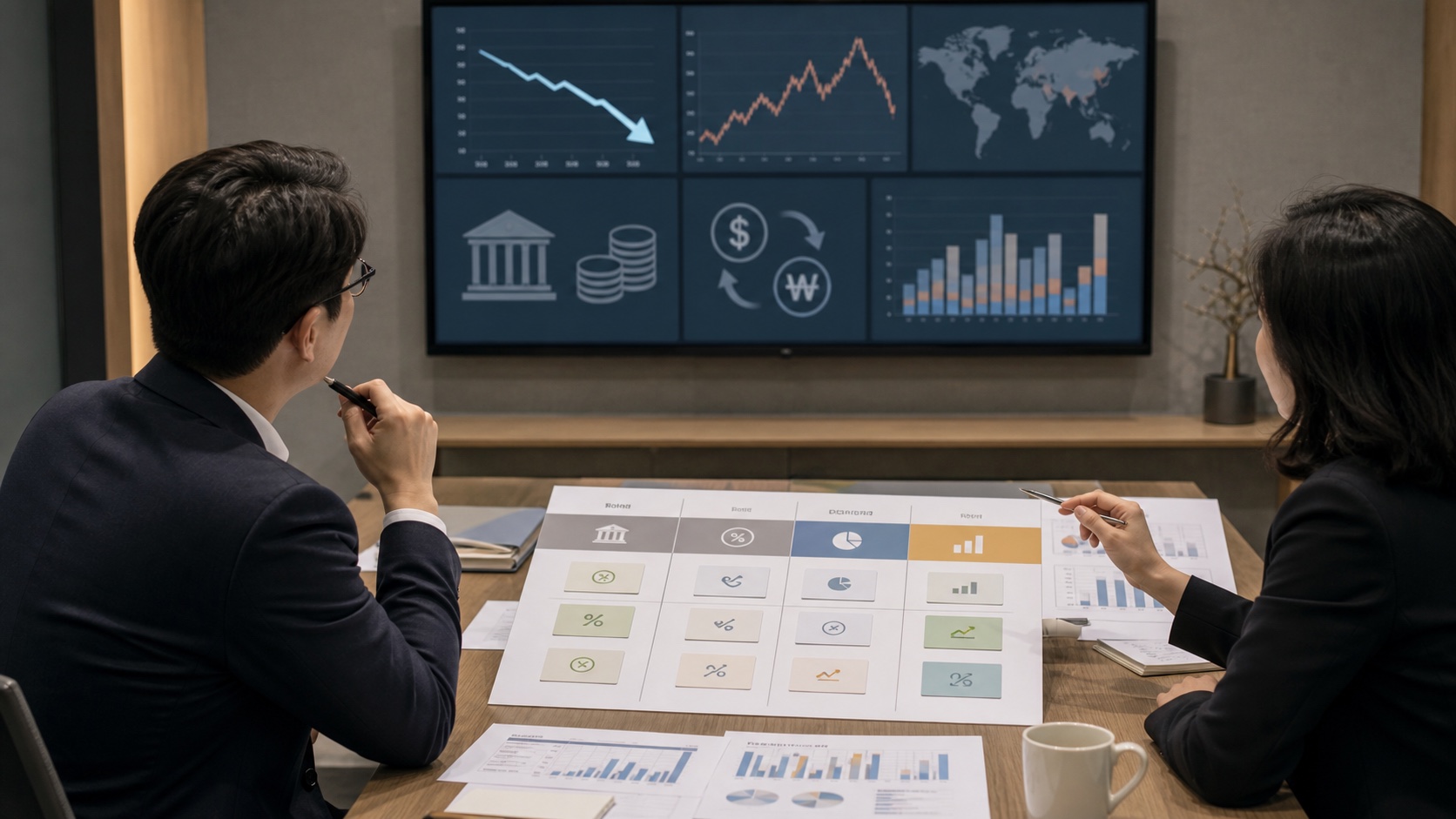
    금리 인하 기대와 물가, 환율, 자산 배분 시나리오를 함께 검토하는 금융 리서치 회의 장면
    금리 인하 기대가 커질수록 예금, 채권, 배당주, 성장주의 역할을 따로 점검해야 합니다.

    Read in English

    금리가 바뀌면 돈의 위치도 바뀐다

    금리는 돈의 가격입니다. 금리가 높으면 예금 이자가 눈에 들어옵니다. 굳이 위험을 감수하지 않아도 어느 정도 수익이 나오기 때문입니다. 반대로 금리가 낮아질 것 같으면 투자자들은 조금씩 다른 곳을 봅니다. 채권, 배당주, 리츠, 성장주 같은 자산이 다시 후보에 오릅니다.

    그렇다고 금리 인하가 항상 주식시장에 좋은 소식은 아닙니다. 금리가 내려가는 이유가 더 봐야 합니다. 물가가 안정돼서 천천히 내리는 금리와, 경기가 나빠져서 급하게 내리는 금리는 시장이 다르게 받아들입니다.

    그래서 질문을 바꿔야 합니다. “금리가 내려갈까?”보다 “왜 내려갈까?”가 먼저입니다. 이 차이를 놓치면 금리 인하라는 말만 듣고 너무 빨리 위험자산으로 옮겨 갈 수 있습니다.

    정기예금 막차, 완전히 틀린 말은 아니다

    금리 인하가 예상될 때 “예금 막차”라는 말이 나옵니다. 지금 금리를 확정해 두면 나중에 예금 금리가 낮아져도 약속된 이자를 받을 수 있습니다. 안정성을 가장 중시하는 사람에게는 충분히 현실적인 선택입니다.

    주의할 점은 막차라는 표현에 너무 끌려갈 필요는 없습니다. 모든 돈을 1년짜리 예금에 묶어 버리면, 나중에 더 좋은 기회가 생겨도 움직이기 어렵습니다. 금리 인하가 늦어지거나 시장금리가 다시 오르면 판단이 아쉬워질 수도 있습니다.

    저라면 예금은 “수익률을 높이는 곳”보다 “버티는 돈을 두는 곳”으로 봅니다. 생활비, 비상금, 1년 안에 쓸 돈은 예금이나 파킹형 상품에 두는 편이 낫습니다. 대신 투자 기간이 긴 돈까지 전부 예금에 넣을 필요는 없습니다.

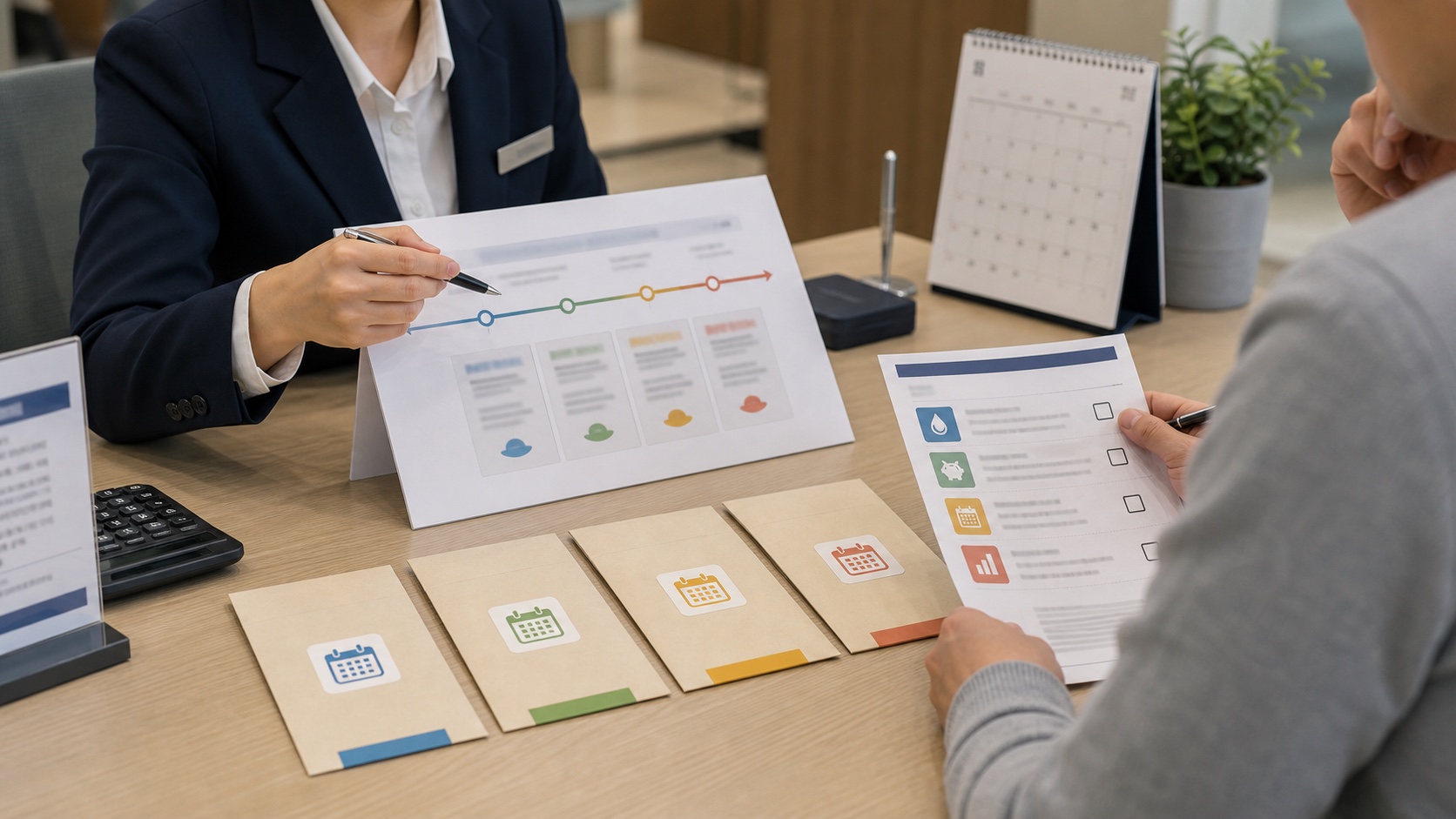
    만기를 나누는 방식도 괜찮습니다. 3개월, 6개월, 1년처럼 쪼개 두면 금리가 바뀔 때 대응하기 쉽습니다. 예금은 한 번에 맞히는 상품이 아니라, 현금 흐름을 관리하는 도구에 가깝습니다.

    금리 변화에 대응하기 위해 정기예금 만기를 나누어 설계하는 은행 상담 장면
    정기예금은 만기를 나누어 두면 금리 변화와 유동성 필요에 더 유연하게 대응할 수 있습니다.

    채권형 ETF는 기회이지만 예금은 아니다

    금리가 내려가면 기존 채권의 매력이 커집니다. 그래서 금리 인하 기대가 생길 때 채권형 ETF가 관심을 받습니다. 특히 장기채는 금리 하락 구간에서 가격이 크게 움직일 수 있습니다.

    문제는 반대 방향도 똑같이 크다는 점입니다. 금리가 예상보다 덜 내려가거나 다시 오르면 장기채 ETF는 꽤 흔들릴 수 있습니다. 채권이라는 이름 때문에 안전하다고 느끼지만, ETF로 거래되는 채권은 매일 가격이 변합니다.

    초보 투자자라면 장기채부터 크게 들어가기보다 단기채와 중기채를 먼저 보는 편이 낫습니다. 단기채는 수익률이 아주 화려하지는 않아도 변동성이 작습니다. 중기채는 금리 하락의 효과와 안정성 사이에서 균형을 잡기 쉽습니다.

    장기채는 금리 하락에 대한 의견이 분명할 때 일부만 쓰는 편이 좋습니다. 예금 대신 장기채를 산다는 느낌보다는, 포트폴리오 안에서 금리 하락에 대응하는 카드 하나로 보는 것이 더 맞습니다.

    금리 변화에 따른 단기채, 중기채, 장기채의 듀레이션 위험을 비교하는 분석 장면
    채권형 ETF는 금리 하락 기대와 듀레이션 위험을 함께 비교해야 합니다.

    배당주와 월배당 ETF는 현금흐름용이다

    금리가 낮아지면 사람들은 자연스럽게 현금흐름을 찾습니다. 예금 이자가 줄어들면 배당주, 리츠, 인프라 펀드, 월배당 ETF가 더 좋아 보입니다. 매달 또는 분기마다 돈이 들어오는 구조는 심리적으로도 편합니다.

    하지만 배당률이 높다고 좋은 투자는 아닙니다. 주가가 빠지면 배당을 받아도 총수익률은 나빠집니다. 기업 실적이 흔들리면 배당이 줄어들 수 있고, 리츠나 인프라 자산은 부채 비용에 영향을 받습니다.

    배당주는 “얼마나 많이 주느냐”보다 “계속 줄 수 있느냐”가 더 더 봐야 합니다. 배당성향, 현금흐름, 부채비율, 업종 안정성을 같이 봐야 합니다. 월배당 ETF도 마찬가지입니다. 분배금만 보고 들어가면 원금 변동을 놓치기 쉽습니다.

    현금흐름이 필요한 사람에게 배당 자산은 쓸모가 있습니다. 은퇴 생활비를 보태거나 월 단위 현금흐름을 만들고 싶다면 의미가 있습니다. 반대로 자산을 크게 불리는 것이 목표라면 배당률보다 총수익률을 먼저 봐야 합니다.

    가계 예산과 배당 현금흐름을 함께 점검하며 지속 가능한 배당 자산을 검토하는 장면
    배당 자산은 분배금만이 아니라 현금흐름의 지속 가능성과 총수익률을 함께 봐야 합니다.

    성장주는 금리보다 실적이 먼저다

    성장주는 금리에 민감합니다. 금리가 낮아지면 미래 이익의 현재가치가 높아집니다. 그래서 금리 인하 기대가 커질 때 성장주가 관심을 받습니다.

    그런데 성장주는 금리 하나로 설명하기 어렵습니다. 실적이 따라오지 않으면 금리가 내려가도 주가가 오래 버티기 어렵습니다. 이미 기대가 많이 반영된 종목은 작은 실망에도 크게 흔들릴 수 있습니다.

    AI, 반도체, 2차전지 같은 테마는 특히 그렇습니다. 좋은 산업이라고 해서 언제나 좋은 가격은 아닙니다. 금리 인하 기대가 이미 주가에 반영됐다면, 나중에 실제 인하가 나와도 시장 반응이 밋밋할 수 있습니다.

    성장주를 본다면 한 번에 비중을 늘리기보다 나눠서 접근하는 편이 낫습니다. 실적 발표, 가격 조정, 금리 방향을 같이 체크해 두세요. 대표 성장주와 테마형 ETF도 구분해야 합니다. 둘은 변동성의 크기가 다릅니다.

    금리 시나리오별로 다르게 봐야 한다

    첫 번째는 완만한 인하입니다. 물가가 안정되고 경기가 크게 나쁘지 않은 상황에서 금리가 조금씩 내려가는 경우입니다. 이때는 채권형 ETF, 배당주, 우량 성장주가 함께 좋아질 수 있습니다. 예금 비중을 조금 줄이고 채권과 주식 비중을 천천히 늘리는 전략이 어울립니다.

    두 번째는 동결 장기화입니다. 물가와 환율 때문에 중앙은행이 쉽게 움직이지 못하는 경우입니다. 이때는 예금과 단기채의 역할이 커집니다. 장기채나 고평가 성장주를 급하게 늘리면 기다리는 시간이 길어질 수 있습니다.

    세 번째는 금리 재상승입니다. 유가, 환율, 물가가 다시 불안해지면 시장금리가 오를 수 있습니다. 이 경우 장기채와 성장주는 동시에 흔들릴 수 있습니다. 현금성 자산, 단기채, 방어적 배당주를 남겨 두는 것이 해야 합니다.

    금리 인하, 동결 장기화, 재상승 시나리오별로 자산 비중을 재조정하는 워크숍 장면
    금리 인하, 동결 장기화, 재상승 시나리오를 나누어 보면 포트폴리오 조정 기준이 더 선명해집니다.

    지금 투자자가 할 수 있는 현실적인 조정

    지금은 금리 인하에 전부 걸기보다, 금리가 생각과 다르게 움직일 때도 버틸 수 있게 짜는 편이 낫습니다. 예측을 맞히는 것보다 틀렸을 때 덜 다치는 구조가 더 봐야 합니다.

    단기 자금은 예금과 파킹형 상품에 둡니다. 1년 안에 쓸 돈까지 채권형 ETF나 주식에 넣을 필요는 없습니다. 금리 인하 전 예금 막차를 타더라도 만기를 나눠 두는 편이 안전합니다.

    채권형 ETF는 단계적으로 접근합니다. 단기채와 중기채를 기본으로 보고, 장기채는 금리 하락에 대한 확신이 커질 때 일부만 활용합니다. 채권도 손실이 날 수 있다는 점을 전제로 해야 합니다.

    배당주와 월배당 ETF는 목적을 분명히 해야 합니다. 현금흐름이 필요하면 의미가 있습니다. 자산 증식이 목표라면 분배금보다 총수익률을 봐야 합니다.

    성장주는 분할 매수가 낫습니다. 금리 인하 기대만 보고 한 번에 비중을 늘리기보다는, 실적과 가격을 확인하며 들어가는 편이 안전합니다.

    결국 자산 재배치는 대단한 기술이 아닙니다. 돈의 용도를 나누는 일입니다. 당장 쓸 돈, 몇 년 뒤 쓸 돈, 오래 묻어둘 돈을 구분하면 선택이 훨씬 쉬워집니다.

    정리

    금리 인하 기대는 투자 방향을 점검할 좋은 계기입니다. 하지만 그 자체가 매수 신호는 아닙니다. 금리가 왜 내려가는지, 얼마나 천천히 내려가는지, 물가와 환율이 어떤지를 함께 봐야 합니다.

    가장 무난한 방향은 균형입니다. 단기 자금은 예금과 단기채로 지킵니다. 중장기 자금은 채권형 ETF와 배당 자산을 일부 섞습니다. 성장주는 실적과 가격을 확인하며 천천히 접근합니다.

    금리 사이클은 한 번에 맞히기 어렵습니다. 그래서 예측보다 리밸런싱이 더 더 봐야 합니다. 시장이 내 생각과 다르게 움직여도 다시 조정할 수 있는 여지를 남겨 두는 것, 그게 지금 같은 시기에 더 현실적인 투자 전략으로 볼 수 있습니다.

    이 글은 특정 상품의 매수나 매도를 권유하지 않습니다. 금리 환경 변화에 맞춰 자산 비중을 점검하기 위한 참고 자료입니다.

    함께 읽으면 좋은 글

    FAQ

    금리 인하가 시작되면 예금은 모두 줄여야 하나요?

    그럴 필요는 없습니다. 비상금과 단기 자금은 예금이나 파킹형 상품에 두는 편이 좋습니다. 주의할 점은 오래 묻어둘 돈까지 전부 예금에 넣을 필요는 없습니다.

    채권형 ETF는 예금처럼 안전한가요?

    아닙니다. 채권형 ETF는 가격이 움직입니다. 특히 장기채 ETF는 금리 변화에 민감해서 손실이 날 수 있습니다.

    금리 인하 시기에는 배당주가 유리한가요?

    관심이 커질 수는 있습니다. 하지만 배당률만 보면 안 됩니다. 배당을 계속 줄 수 있는 기업인지, 주가 변동은 어느 정도인지 같이 봐야 합니다.

    성장주는 금리 인하의 최대 수혜주인가요?

    항상 그렇지는 않습니다. 금리 하락은 성장주에 도움이 될 수 있지만, 실적과 가격이 더 중요할 때도 많습니다.

    개인투자자는 어떤 순서로 자산을 재배치해야 하나요?

    먼저 단기 자금과 장기 자금을 나누는 것이 좋습니다. 그다음 예금, 단기채, 중기채, 배당주, 성장주의 역할을 정하면 됩니다.

    참고자료

  • ETF 투자 열풍, 지금 개인투자자가 꼭 확인해야 할 것들

    ETF 투자 열풍, 지금 개인투자자가 꼭 확인해야 할 것들

    ETF 시장이 빠르게 커지고 있습니다. 최근 국내 보도에서는 ETF 시가총액과 순자산이 500조원대에 진입했다는 소식이 이어졌습니다. 이제 ETF는 일부 투자자의 보조 상품이 아니라, 개인 재테크의 중심 도구로 다뤄지고 있습니다.

    이 흐름을 무조건 긍정적으로만 볼 수는 없습니다. ETF는 분산투자와 낮은 비용이라는 장점이 있습니다. 반대로 레버리지, 인버스, 테마형 상품이 늘면서 단기 매매와 쏠림 위험도 커졌습니다. 그래서 ETF 대중화는 “좋은 상품이 많아졌다”가 아니라 “선택 책임이 커졌다”는 의미로 봐야 합니다.

    ETF 대중화와 개인투자자의 포트폴리오 점검
    ETF 시장이 개인 재테크의 중심 도구로 자리 잡으면서 투자자는 상품보다 자신의 목적과 위험을 먼저 점검해야 합니다.

    Read in English

    ETF가 국민 재테크 수단이 된 배경

    ETF가 대중화된 첫 번째 이유는 접근성입니다. 투자자는 증권계좌 하나로 국내 주식, 미국 주식, 채권, 금, 리츠, 배당주, 산업 테마에 투자할 수 있습니다. 과거에는 펀드 가입이나 개별 종목 분석이 필요했습니다. 지금은 모바일 앱에서 ETF를 검색하고 바로 매매할 수 있습니다.

    두 번째 이유는 비용과 투명성입니다. ETF는 일반 펀드보다 보수가 낮은 경우가 많습니다. 구성 종목과 추종 지수도 비교적 쉽게 확인할 수 있습니다. 투자자는 자신이 어떤 자산군에 노출되는지 확인한 뒤 투자할 수 있습니다.

    세 번째 이유는 절세 계좌와의 결합입니다. ISA, 연금저축, IRP 같은 계좌에서는 ETF를 장기 투자 수단으로 활용할 수 있습니다. 특히 연금 계좌에서는 세액공제와 과세 이연 효과가 함께 작동합니다. 이 때문에 ETF는 단기 매매 상품을 넘어 노후 준비 도구로도 확장되고 있습니다.

    모바일 앱에서 ETF와 절세 계좌를 비교하는 투자자
    ETF는 모바일 접근성, 낮은 비용, 투명성, ISA와 연금 계좌 활용이 결합되며 대중화됐습니다.

    시장이 커졌다는 사실과 투자 성과는 다르다

    ETF 시장 규모가 커졌다고 해서 모든 ETF가 좋은 투자처가 되는 것은 아닙니다. 시장 전체의 성장과 개별 상품의 투자 성과는 구분해야 합니다. 같은 ETF라도 추종 지수, 환헤지 여부, 총보수, 거래량, 괴리율에 따라 결과가 달라질 수 있습니다.

    또한 ETF는 “분산투자 상품”이라는 이미지가 강하지만, 모든 ETF가 충분히 분산된 것은 아닙니다. 단일 산업 ETF나 특정 테마 ETF는 사실상 집중투자에 가깝습니다. 반도체, 2차전지, AI, 방산처럼 인기 테마에 자금이 몰릴수록 변동성도 커질 수 있습니다.

    레버리지와 인버스 ETF는 더 신중해야 합니다. 이 상품들은 장기 보유보다 단기 방향성 대응에 맞춰 설계된 경우가 많습니다. 변동성이 큰 구간에서는 지수가 제자리로 돌아와도 투자 손실이 누적될 수 있습니다. 개인투자자가 “ETF니까 안전하다”고 생각하면 오히려 위험할 수 있습니다.

    ETF 성과와 위험 구조를 검토하는 리서치 장면
    ETF라는 이름만으로 안전성이 보장되지는 않으므로 추종 지수, 비용, 거래량, 레버리지 구조를 함께 봐야 합니다.

    개인투자자가 확인해야 할 ETF 선택 기준

    ETF를 고를 때는 수익률 순위만 보면 안 됩니다. 먼저 어떤 지수를 따라가는지 체크해 두세요. 같은 미국 주식 ETF라도 S&P500, 나스닥100, 배당성장, 고배당, 커버드콜은 성격이 다릅니다.

    두 번째로 비용과 거래 편의성을 봐야 합니다. 총보수, 기타 비용, 거래량, 스프레드는 장기 수익률에 영향을 줍니다. 특히 거래량이 적은 ETF는 원하는 가격에 사고팔기 어려울 수 있습니다.

    세 번째로 계좌 목적과 맞는지 봐야 합니다. 장기 은퇴자금은 연금저축이나 IRP에서 안정적인 자산배분형 ETF를 활용할 수 있습니다. 중기 목돈 마련은 ISA에서 국내 상장 해외 ETF나 배당형 ETF를 검토할 수 있습니다. 단기 매매는 별도 계좌에서 제한된 비중으로만 접근하는 편이 안전합니다.

    국내 ETF와 미국 ETF를 비교하는 장기 투자 상담
    국내 상장 ETF와 미국 상장 ETF는 세금, 환율, 계좌 목적에 따라 다르게 선택해야 합니다.

    국내 ETF와 미국 ETF를 나눠 봐야 하는 이유

    국내 상장 ETF는 원화로 거래할 수 있어 접근성이 좋습니다. ISA나 연금 계좌에서 활용할 수 있는 상품도 많습니다. 세금과 환전 절차가 단순한 편이라 초보 투자자에게 유리합니다.

    미국 상장 ETF는 상품 선택 폭이 넓고 시장 깊이가 큽니다. 장기 데이터가 많은 대표 지수 ETF도 많습니다. 한 가지 조심할 점은 환전, 배당세, 양도소득세, 환율 변동을 함께 고려해야 합니다.

    그래서 “국내 ETF가 좋다” 또는 “미국 ETF가 좋다”로 단정하기 어렵습니다. 계좌 종류, 투자 기간, 세금 구조, 환율 전망에 따라 선택이 달라집니다. 초보 투자자는 국내 상장 대표 지수 ETF로 시작하고, 경험이 쌓이면 미국 상장 ETF를 비교하는 방식이 현실적입니다.

    월배당 ETF와 은퇴 현금흐름을 검토하는 부부
    월배당 ETF는 현금흐름에는 도움이 될 수 있지만 총수익률과 원금 변동을 함께 체크해 두세요.

    월배당 ETF 열풍은 현금흐름 욕구를 보여준다

    최근 ETF 대중화에서 눈에 띄는 흐름은 월배당 ETF입니다. 투자자는 매달 들어오는 분배금을 통해 현금흐름을 확인할 수 있습니다. 은퇴자뿐 아니라 직장인도 “월급 외 현금흐름”에 관심을 갖고 있습니다.

    하지만 월배당 ETF도 분배금만 보고 판단하면 안 됩니다. 분배금이 높아 보여도 원금이 줄어들 수 있습니다. 커버드콜 ETF처럼 상승장에서 수익이 제한되는 구조도 있습니다. 분배율, 총수익률, 기초자산, 옵션 전략 여부를 함께 봐야 합니다.

    월배당 ETF는 생활비 보조나 은퇴 현금흐름에는 도움이 될 수 있습니다. 하지만 장기 자산 증식이 목표라면 배당 재투자와 성장형 ETF의 조합도 검토해야 합니다.

    향후 ETF 시장 전망

    ETF 시장은 당분간 더 커질 가능성이 높습니다. 첫째, 개인투자자는 개별 종목보다 간단한 분산투자 도구를 선호하고 있습니다. 둘째, 연금과 ISA 같은 절세 계좌가 ETF 수요를 계속 만들고 있습니다. 셋째, 운용사들은 월배당, 테마형, 채권형, 자산배분형 상품을 계속 내놓고 있습니다.

    한 가지 조심할 점은 성장 속도가 빠른 만큼 부작용도 함께 커질 수 있습니다. 인기 테마 ETF로 자금이 몰리면 가격 변동이 커질 수 있습니다. 레버리지와 인버스 상품이 늘면 단기 투기 수요도 확대될 수 있습니다. 금융당국이 레버리지 ETF 쏠림과 빚투 위험을 경고하는 이유도 여기에 있습니다.

    결국 ETF 시장은 “성장”과 “선별”이 동시에 진행될 가능성이 높습니다. 대표 지수와 장기 자산배분형 ETF는 재테크 기본 도구로 더 자리 잡을 수 있습니다. 반면 유행성 테마 ETF와 고위험 구조 상품은 성과 차이가 크게 벌어질 수 있습니다.

    전망에 따른 투자 방향

    첫째, 장기 투자자는 대표 지수 ETF를 핵심으로 두는 전략이 쓸 수 있습니다. 국내 주식, 미국 주식, 채권, 현금성 자산을 나눠 담는 방식입니다. 특정 테마보다 자산군 배분을 먼저 정하는 것이 더 봐야 합니다.

    둘째, 절세 계좌를 우선 활용해야 합니다. ISA, 연금저축, IRP는 ETF 투자와 잘 맞는 구조입니다. 같은 수익률이라도 세금 처리 방식에 따라 실제 성과가 달라집니다.

    셋째, 월배당 ETF는 목적형 자산으로 봐야 합니다. 은퇴 생활비나 현금흐름이 필요하다면 의미가 있습니다. 하지만 자산 증식이 우선이라면 분배금보다 총수익률을 봐야 합니다.

    넷째, 레버리지와 인버스 ETF는 포트폴리오의 중심이 되기 어렵습니다. 단기 대응용으로 제한된 비중만 사용하는 것이 바람직합니다. 투자 경험이 부족하다면 아예 제외하는 선택도 합리적입니다.

    다섯째, ETF 투자는 “상품 고르기”보다 “규칙 만들기”가 더 봐야 합니다. 매수 기준, 리밸런싱 주기, 손실 허용 범위, 투자 기간을 먼저 정해야 합니다. ETF가 쉬워졌다는 사실이 투자 판단까지 쉬워졌다는 뜻은 아닙니다.

    정리

    ETF는 이제 개인 재테크의 핵심 인프라가 되었습니다. 시장 규모 확대, 모바일 투자 환경, 절세 계좌, 월배당 수요가 이 흐름을 밀고 있습니다. 하지만 ETF라는 이름만으로 안전성이 보장되지는 않습니다.

    앞으로의 투자 방향은 단순합니다. 먼저 볼 부분은 대표 지수와 자산배분형 ETF로 잡는 것이 좋습니다. 절세 계좌는 적극적으로 활용합니다. 테마형, 월배당형, 레버리지형 ETF는 목적과 위험을 확인한 뒤 보조적으로 접근하는 편이 바람직합니다.

    이 글은 특정 ETF 매수나 매도를 권유하지 않습니다. 시장 흐름을 이해하고 투자 기준을 세우기 위한 참고 자료입니다.

    함께 읽으면 좋은 글

    FAQ

    ETF는 펀드보다 항상 좋은가요?

    항상 그렇지는 않습니다. ETF는 비용과 거래 편의성에서 장점이 있습니다. 하지만 상품 구조와 투자 대상에 따라 위험이 다릅니다.

    초보자는 어떤 ETF부터 봐야 하나요?

    대표 지수 ETF부터 보는 것이 좋습니다. 국내 주식, 미국 S&P500, 나스닥100, 채권형 ETF처럼 구조가 단순한 상품이 출발점이 될 수 있습니다.

    월배당 ETF는 은퇴 준비에 좋은가요?

    현금흐름이 필요한 투자자에게는 도움이 될 수 있습니다. 한 가지 조심할 점은 분배금만 보지 말고 원금 변동과 총수익률을 함께 체크해 두세요.

    레버리지 ETF는 장기 투자에 적합한가요?

    일반적으로 장기 핵심 자산으로 보기 어렵습니다. 변동성이 큰 구간에서는 손실이 누적될 수 있어 단기 대응용으로 제한하는 편이 안전합니다.

    ETF 투자에서 가장 중요한 기준은 무엇인가요?

    상품보다 먼저 투자 목적을 정하는 것입니다. 기간, 계좌, 세금, 위험 허용 범위가 정해져야 알맞은 ETF를 고를 수 있습니다.

    참고자료

  • 마천동에서 올라 성남으로 내려온 남한산성 산행기: 명리학 오행으로 읽는 숲과 성곽의 길

    마천동에서 올라 성남으로 내려온 남한산성 산행기: 명리학 오행으로 읽는 숲과 성곽의 길

    오전 10시가 조금 안 된 시간, 마천동 쪽에서 남한산성으로 오르기 시작했다.

    북한산을 걸으며 바위와 숲의 오행을 떠올렸던 것처럼, 이번에는 남한산성의 숲과 성곽을 명리학의 관점에서 가볍게 읽어보기로 했다.

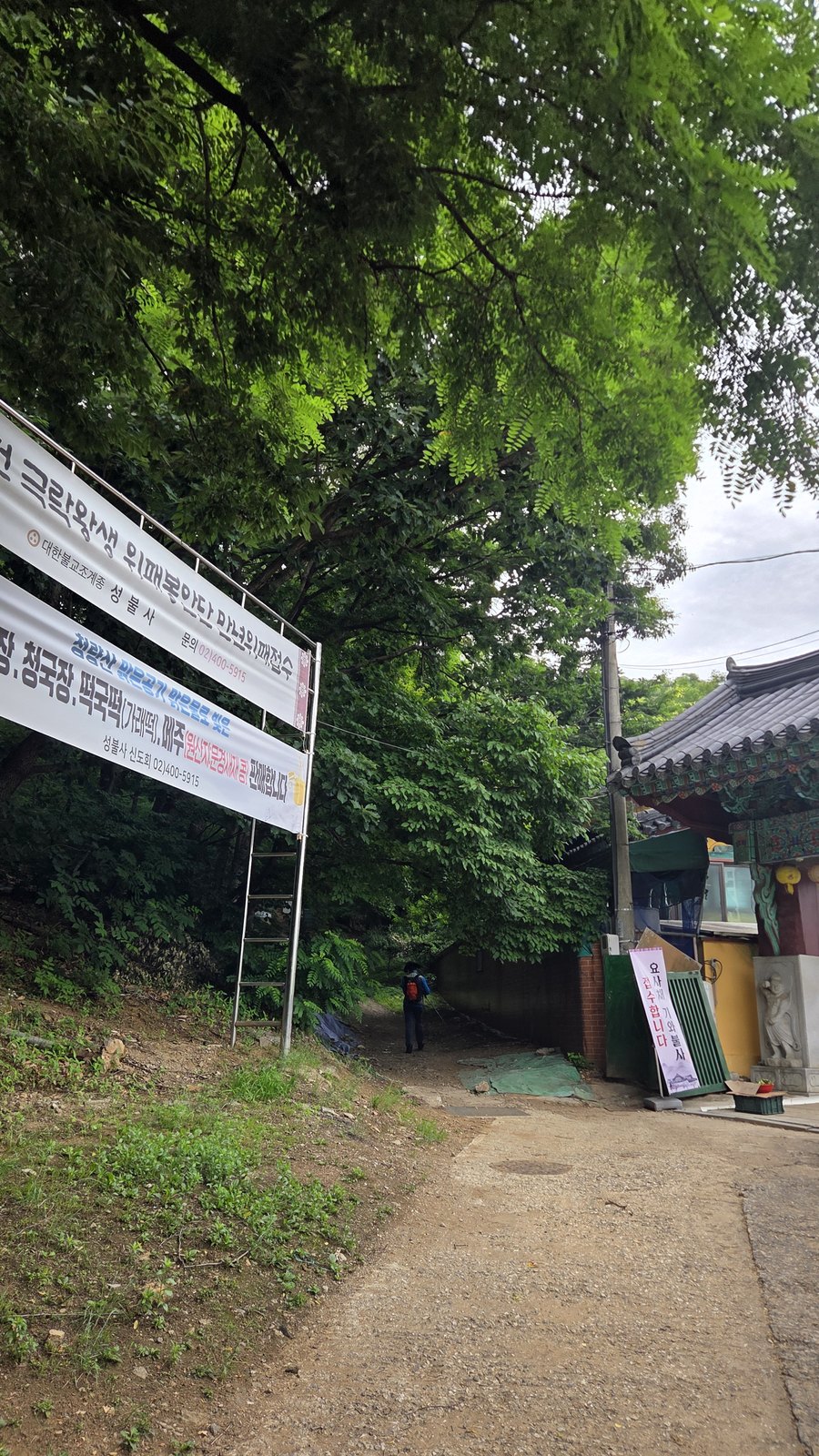
    마천동에서 남한산성으로 오르는 초입의 안내판과 숲길
    오전 10시 전후, 마천동 쪽에서 숲으로 들어서며 산행이 시작됐다.

    Read in English

    마천동에서 시작한 목(木)의 길

    마천동에서 남한산성으로 들어서는 초입은 목(木)의 기운이 먼저 느껴지는 길이었다. 초록이 짙고, 길은 급하게 밀어붙이지 않았다.

    목(木)은 시작과 성장의 기운이다. 산행 초반의 숲길도 그랬다. 발걸음이 숲 안으로 들어갈수록 생각이 조금씩 정리됐다.

    숲이 깊어지며 이어지는 남한산성 오르막 계단길
    숲이 깊어질수록 몸의 열도 천천히 올라왔다.

    오르막에서 살아나는 화(火)

    계단과 오르막이 이어지자 화(火)의 기운이 올라왔다. 숨이 조금 차고, 몸 안의 열이 움직이기 시작했다.

    화(火)는 밖으로 드러나는 힘이다. 산에서는 땀과 호흡으로 먼저 느껴진다. 남한산성의 오르막은 거칠다기보다 천천히 몸을 깨우는 길이었다.

    성곽을 지날 때 느껴지는 금(金)

    숲을 지나 성곽 가까이 다가가면 분위기가 달라진다. 나무의 부드러움 사이로 돌의 단단함이 들어온다.

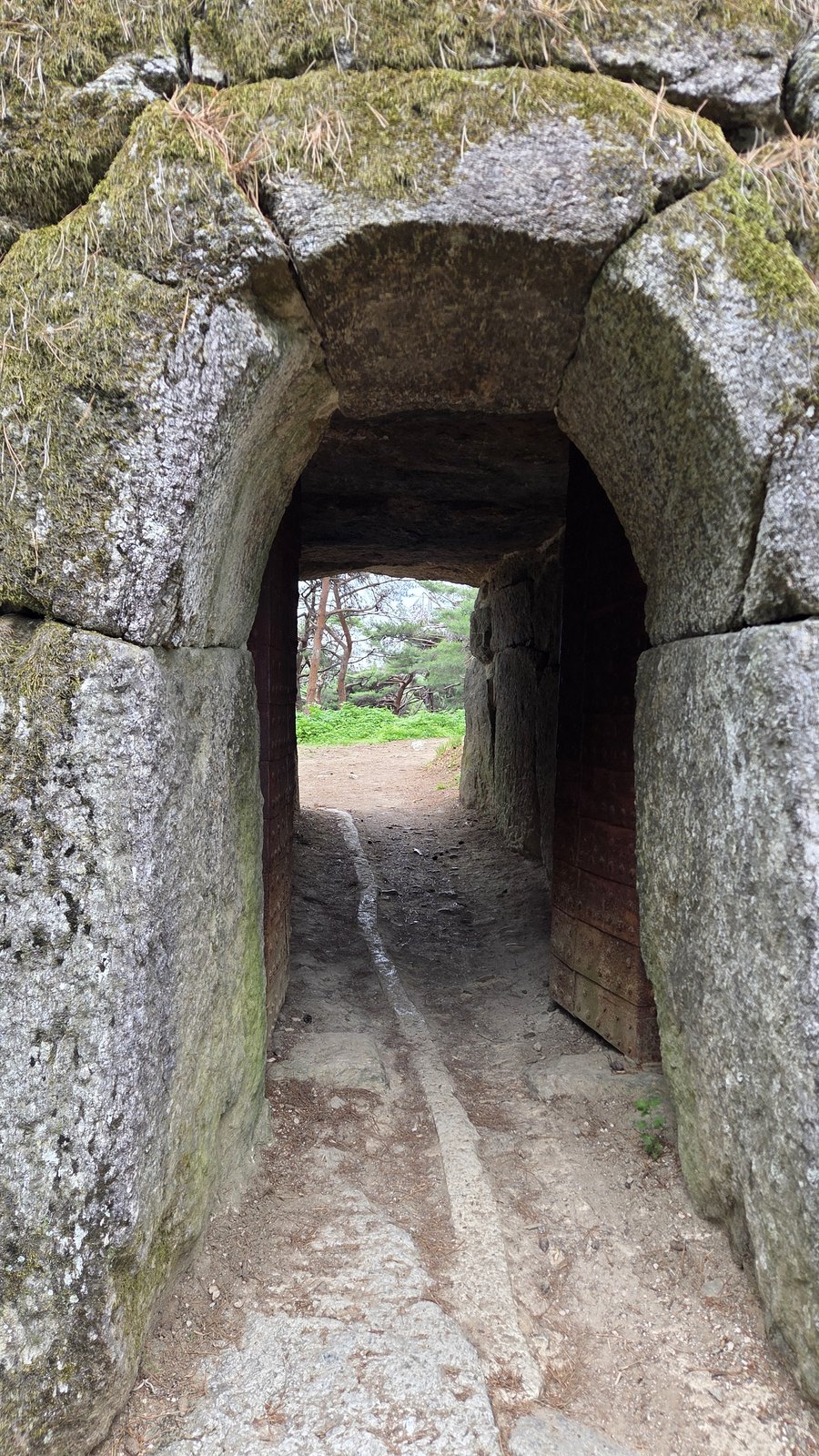
    남한산성 성곽의 돌문을 지나며 바뀌는 길의 분위기
    성곽을 지나며 숲길의 부드러움이 돌의 단단함으로 바뀌었다.

    금(金)은 질서와 경계의 기운이다. 남한산성의 성곽은 그 느낌을 갖고 있었다. 숲길을 걷다가 돌문을 지나는 순간, 길의 결이 한 번 바뀌었다.

    남한산성은 통일신라 때 쌓은 주장성의 옛 터를 바탕으로, 조선 인조 4년인 1626년에 크게 고쳐 쌓은 산성이다. 성곽을 걷다 보면 이 길이 단순한 산책로가 아니라, 한양을 지키기 위해 세운 경계였다는 사실이 자연스럽게 떠오른다.

    조망에서 만나는 토(土)의 안정감

    성곽 위로 시야가 열리자 멀리 도시가 보였다. 오르던 길에서는 보이지 않던 풍경이 한 번에 펼쳐졌다.

    남한산성 성곽 위에서 바라본 서울 방향 조망
    성곽 위에서 바라본 도시는 한 발 떨어진 풍경처럼 보였다.

    이 장면은 토(土)의 기운으로 읽고 싶었다. 토(土)는 중심과 균형의 힘이다. 성곽 위에서 바라본 도시는 바쁘지만, 그 움직임도 한 발 떨어져 보였다.

    한양의 동남쪽을 지키던 산성에서 지금의 도시를 내려다보는 느낌은 묘했다. 과거에는 방어의 시선이었을 풍경이, 지금은 잠시 숨을 고르는 조망이 되어 있었다.

    수어장대 주변의 기운

    점심 무렵에 가까워질수록 산성 안쪽의 분위기는 또렷해졌다. 수어장대 주변에서는 숲의 초록, 건축의 색, 성곽의 돌이 함께 보였다.

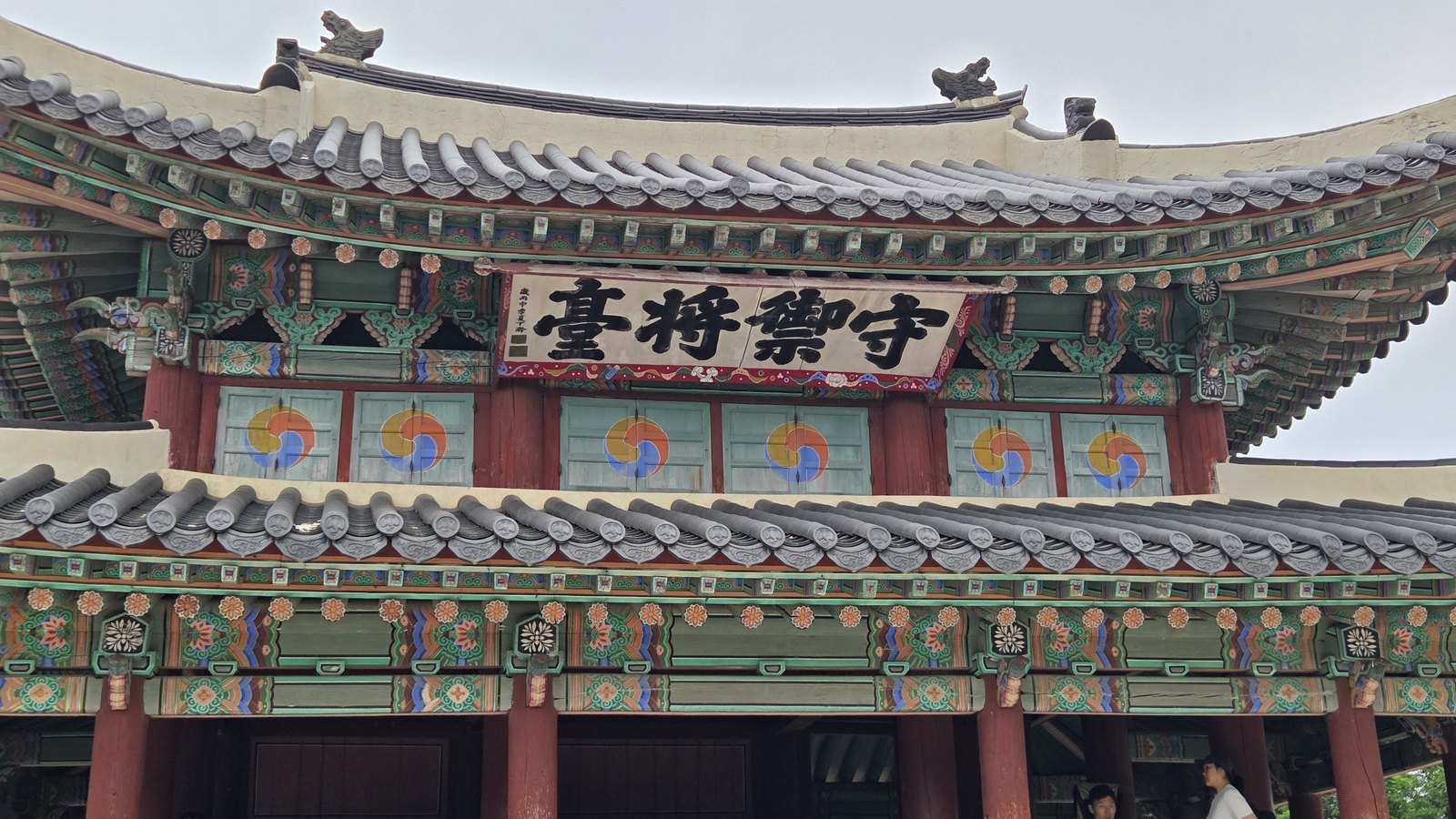
    남한산성 수어장대 현판과 단청
    수어장대 주변에서는 숲, 성곽, 건축의 기운이 함께 느껴졌다.

    이곳에서는 한 가지 오행만 말하기 어렵다. 목(木)의 생기, 금(金)의 절제, 토(土)의 안정감이 함께 놓여 있었다.

    남한산성은 병자호란의 기억도 품고 있다. 1636년 전쟁이 일어났고, 조선의 왕과 조정은 이 산성 안에서 시간을 견뎠다. 그래서 이곳의 돌은 단단하지만, 그 단단함 안에는 당시의 불안도 함께 남아 있는 듯했다.

    북한산이 바위와 능선의 힘으로 강하게 다가왔다면, 남한산성은 숲과 성곽이 균형을 잡는 느낌이었다. 이전에 쓴 북한산 명리학 산행기와 비교하면 그 차이가 더 선명하다.

    성남으로 내려오는 수(水)의 길

    오후로 접어들며 성남 쪽으로 내려오는 길은 수(水)의 기운에 가까웠다. 수(水)는 흐름과 정리의 상징이다.

    성남 방향 하산길에서 만난 초록 숲과 바위
    성남 방향으로 내려오는 길에서는 초록 숲이 마음을 차분하게 가라앉혔다.

    하산길의 숲은 오를 때와 달랐다. 출발의 초록이 몸을 깨웠다면, 내려오는 초록은 마음을 가라앉혔다.

    남한산성은 마천동에서 시작해 성남으로 내려오는 동안 목(木), 화(火), 금(金), 토(土), 수(水)의 흐름을 자연스럽게 보여주는 길처럼 느껴졌다.

    걷고 나서 남은 생각

    이번 산행에서 오래 남은 것은 정보보다 감각이었다. 주의할 점은 남한산성에서는 그 감각 위로 역사가 함께 겹쳐졌다.

    숲은 시작을 말했고, 오르막은 몸을 깨웠다. 성곽은 마음을 세웠고, 조망은 시선을 넓혔다. 하산길은 다시 나를 차분하게 돌려보냈다.

    남한산성은 명리학의 언어와 역사적 시간이 과하지 않게 함께 놓이는 산이었다.

  • 나트랑 1박 2일 로컬투어: 새벽 비행기로 다녀온 해변·맛집·스파 코스

    나트랑 1박 2일 로컬투어: 새벽 비행기로 다녀온 해변·맛집·스파 코스

    이번 나트랑 1박 2일 여행은 일정표대로 움직인 여행이라기보다, 좋았던 장면들을 하나씩 모아둔 여행에 가까웠습니다. 새벽 비행기로 도착해서 밤 비행기로 돌아오는 짧은 일정이었지만, 바다와 숙소, 음식, 커피, 스파가 선명하게 남았습니다.

    그래서 이 글도 시간 순서보다 여행에서 기억에 남은 카테고리로 정리해보려 합니다. 나트랑을 짧게 다녀오려는 분이라면, 빡빡한 코스보다 어떤 분위기를 즐기고 싶은지 먼저 생각해보면 좋겠습니다.

    나트랑 1박 2일 로컬투어 해변 오션뷰 전경
    숙소에서 내려다본 나트랑 해변. 짧은 여행이지만 바다를 보는 순간부터 여행 기분이 살아났다.

    Read in English

    숙소: 바다를 볼 수 있다는 것만으로 충분했다

    이번 여행에서 숙소는 가장 중요한 기준점이었습니다. 첫날 묵은 곳은 The Costa Nha Trang Apartment였습니다. 자세한 주소나 객실 조건을 길게 적기보다, 실제로 좋았던 점만 말하면 충분할 것 같습니다. 바다 앞에 있었고, 객실에서 바다가 보였습니다.

    나트랑 The Costa Apartment 오션뷰 침실
    객실에서 보이던 바다. 이번 여행에서 숙소는 잠자는 곳이에 그치지 않고 쉬어가는 공간이었다.

    짧은 여행에서는 숙소가 멀면 이동에 에너지를 많이 씁니다. 이번에는 숙소가 해변과 가까워서 밖으로 나가기도 좋았고, 잠깐 들어와 쉬기도 편했습니다. 침대에서 보이는 노을과 바다 풍경 덕분에 숙소에 있는 시간도 여행처럼 느껴졌습니다.

    나트랑 해변 앞 아파트 거실과 바다 전망
    거실에서도 바다가 보여 숙소에 머무는 시간 자체가 여행처럼 느껴졌다.

    거실에서도 바다가 보여서 일행과 쉬는 시간이 자연스럽게 길어졌습니다. 1박 2일 여행은 무언가를 많이 보는 것보다 피로를 줄이는 것이 더 더 봐야 합니다. 그런 점에서 바다 앞 숙소는 이번 여행의 만족도를 크게 높여주었습니다.

    맛집: 음식점 링크와 함께 남겨두는 로컬 음식 기억

    나트랑에서 가장 여행지답게 느껴진 순간은 로컬 음식을 먹을 때였습니다. 넴 느엉 당 반꾸엔에서 먹은 음식은 손으로 싸 먹는 방식이라 처음에는 조금 낯설었습니다. 하지만 채소, 고기, 소스를 함께 먹는 맛이 부담스럽지 않았고, 여행 첫 식사로도 잘 맞았습니다.

    나트랑 로컬 음식 넴 느엉과 쌀국수 상차림
    나트랑에서 먹은 로컬 음식. 낯설지만 부담스럽지 않아 여행 첫 식사로 좋았다.

    아침에는 분까 하이까처럼 따뜻한 국물 음식을 먹었습니다. 오징어 어묵 쌀국수는 나트랑이 해안 도시라는 느낌을 잘 보여줬습니다. 한국에서 익숙하게 먹던 쌀국수와는 달랐고, 그래서 더 현지 음식처럼 기억에 남았습니다.

    나트랑 아침 식사 쌀국수와 로컬 반찬
    따뜻한 국물 음식은 짧은 여행의 피로를 풀어주는 한 끼였다.

    이번 여행에서 메모해둘 만한 음식점은 아래 정도입니다. 모두 다 가야 하는 목록이라기보다, 숙소 위치와 그날 컨디션에 맞춰 고르면 좋은 후보로 남겨둡니다.

    짧은 여행에서는 맛집을 전부 정복하려고 하면 오히려 피곤합니다. 이번에는 한 끼 한 끼를 크게 욕심내지 않았습니다. 배고플 때 가까운 곳에서 잘 먹고, 다음 이동을 가볍게 이어가는 정도가 더 좋았습니다.

    카페와 커피: 더운 도시에서 쉬어가는 방법

    나트랑에서는 카페 시간이 생각보다 중요했습니다. 계속 걷기에는 덥고, 그렇다고 숙소에만 있기에는 아쉬운 도시였습니다. 그래서 중간중간 카페에 들어가 커피를 마시는 시간이 여행의 속도를 조절해줬습니다.

    콩 카페처럼 익숙한 곳도 좋고, La Viet Coffee처럼 베트남 커피 분위기를 더 느낄 수 있는 곳도 좋았습니다. 디저트를 곁들이며 쉬고 싶다면 THE BING BING도 후보가 될 수 있고, 마지막 날 대기 시간이 길다면 스타벅스처럼 익숙한 공간도 편합니다.

    이 글은 기념품 이야기는 덜어내고, 카페에서 잠깐 쉬었던 감각만 남기고 싶습니다. 더운 도시에서는 커피 한 잔을 마시는 시간이 단순한 휴식이 아니라 다음 움직임을 위한 작은 정리가 됩니다.

    여행 분위기: 해변과 야자수가 만들어준 장면

    나트랑은 거창한 계획이 없어도 바다가 계속 여행 분위기를 만들어줍니다. 해변 길을 걷고, 야자수 아래에서 사진을 찍고, 바다 쪽을 바라보는 것만으로도 충분했습니다. 짧은 일정이라 오히려 그런 느슨한 시간이 더 오래 남았습니다.

    나트랑 해변 산책길과 야자수 풍경
    나트랑은 바다와 야자수만으로도 충분히 여행 기분을 만들어주는 도시였다.

    나트랑은 과거 참파 문화권의 흔적이 남아 있는 도시이기도 합니다. 시간이 넉넉하면 포나가르 참탑 같은 곳을 가볼 수 있겠지만, 이번 여행에서는 무리하지 않았습니다. 대신 해변, 시장, 음식, 카페 안에서 도시의 분위기를 느끼는 쪽을 선택했습니다.

    스파와 휴식: 짧은 여행일수록 무리하지 않기

    새벽 비행으로 시작한 여행이라 몸이 금방 피곤해졌습니다. 그래서 스파는 선택이 아니라 일정의 균형을 맞춰주는 시간이었습니다. Onsi Spa나 Liana Spa처럼 후보를 미리 정해두면, 현지에서 고민하는 시간을 줄일 수 있습니다.

    나트랑 리조트 야경과 수영장 풍경
    밤에는 많이 움직이기보다 스파와 휴식으로 마무리하는 편이 좋았다.

    나트랑의 밤은 많이 돌아다니기보다 쉬는 쪽이 더 좋았습니다. 밤 비행기로 돌아오는 일정이라 마지막까지 무리하면 귀국길이 힘들어집니다. 스파를 받고 조용히 쉬는 마무리가 이번 여행에는 잘 맞았습니다.

    시장과 쇼핑: 분위기만 가볍게 보기

    Dam Market은 현지 시장 분위기를 보기 좋은 곳이었습니다. 오래 쇼핑하기보다, 사람들이 오가는 모습과 물건이 쌓인 풍경을 보는 재미가 있었습니다. 여행지의 생활감을 느끼기에는 시장만 한 곳이 없습니다.

    롯데마트 냐짱 골드코스트는 필요한 것을 간단히 사거나 더위를 피하며 쉬어가기 좋은 곳으로 기억합니다. 이 글은 쇼핑이나 기념품 정보보다, 시장과 마트가 여행 중 잠깐 숨을 고르는 공간이었다는 정도로만 남기고 싶습니다.

    돌아보면, 나트랑은 짧아도 충분히 남는 도시였다

    이번 여행은 많은 장소를 보는 여행은 아니었습니다. 숙소에서 바다를 보고, 로컬 음식을 먹고, 커피를 마시고, 스파를 받고, 해변을 조금 걸었습니다. 그런데 오히려 그 단순함이 좋았습니다.

    나트랑은 1박 2일로도 충분히 기분 전환이 되는 도시였습니다. 다음에 다시 간다면 더 많은 일정을 넣기보다, 숙소와 바다, 음식과 스파 시간을 조금 더 길게 가져가고 싶습니다.

    함께 보면 좋은 글

  • Hermes Agent 데스크톱 앱: AI 에이전트 대중화의 다음 인터페이스

    Hermes Agent 데스크톱 앱: AI 에이전트 대중화의 다음 인터페이스

    AI 에이전트가 대중화되려면 모델 성능만 좋아져서는 부족합니다. 사람이 매일 쓰는 방식으로 다가와야 합니다. Alex Finn의 영상은 Hermes Agent 데스크톱 앱을 보여주면서 이 지점을 분명하게 드러냅니다.

    영상의 표현은 다소 과감합니다. CLI, Telegram, OpenClaw보다 Hermes 데스크톱 앱이 더 낫다고 말합니다. 하지만 블로그 관점에서 중요한 질문은 승패가 아닙니다. AI 에이전트가 챗봇을 넘어 실제 업무 도구가 되려면 어떤 인터페이스가 필요한가입니다.

    왜 데스크톱 앱이 중요한가

    AI 에이전트는 그냥 답변을 생성하는 도구가 아닙니다. 파일을 읽고, 명령을 실행하고, 이미지를 만들고, 예약 작업을 돌리고, 여러 세션의 맥락을 이어갑니다. 이런 도구를 명령줄이나 메신저 명령만으로 다루면 초보자에게는 진입 장벽이 큽니다.

    Hermes Agent 데스크톱 앱이 의미 있는 이유는 이 복잡한 구조를 눈에 보이는 작업 공간으로 바꾸기 때문입니다. 사용자는 세션, 아티팩트, 스킬, 툴셋, 크론잡, 프로필을 한곳에서 확인할 수 있습니다. 이는 AI 에이전트를 개발자 장난감에서 일상 업무 도구로 옮기는 핵심 변화입니다.

    Hermes Agent 데스크톱 앱의 첫 화면과 기존 CLI 한계 설명
    Hermes Agent 데스크톱 앱의 첫 화면. 영상은 CLI 중심 사용 경험의 한계를 지적하며 데스크톱 UI의 필요성을 강조한다.

    Read in English: This article is also available in English for global readers.

    세션은 AI 에이전트의 업무 폴더가 된다

    영상 초반에서 진행자는 주제별 세션을 만드는 방식을 보입니다. 콘텐츠, 개발, 개인 프로젝트처럼 맥락이 다른 일을 각각의 세션으로 나누는 방식입니다. 이는 단순 채팅방 정리가 아니라 AI 에이전트에게 일을 맡기는 단위를 나누는 일에 가깝습니다.

    AI 에이전트는 맥락이 길수록 더 유용해집니다. 하지만 맥락이 섞이면 오히려 혼란이 생깁니다. 그래서 세션을 주제별로 나누고 중요한 세션을 고정하는 기능은 작아 보여도 더 봐야 합니다. 사람에게 프로젝트 폴더가 필요하듯, 에이전트에게도 맥락 폴더가 해야 합니다.

    세션을 주제별로 나누고 맥락을 관리하는 화면
    세션을 주제별로 나누는 화면. AI 에이전트 사용에서 맥락 분리는 생산성과 정확도를 좌우한다.

    아티팩트는 채팅 기록을 작업 자산으로 바꾼다

    영상에서 특히 흥미로운 부분은 아티팩트입니다. 링크, 파일, 이미지, 에이전트가 만든 결과물을 한곳에서 다시 찾을 수 있습니다. 진행자는 이를 북마크나 작업 자료 보관소처럼 활용할 수 있다고 설명합니다.

    이 기능은 AI 에이전트 경험의 방향을 잘 보입니다. 챗봇은 대화를 남깁니다. 에이전트는 산출물을 남겨야 합니다. 나중에 다시 찾고, 이어서 쓰고, 다른 세션에서 재사용할 수 있어야 합니다.

    아티팩트와 링크를 한곳에서 관리하는 화면
    아티팩트 화면. 링크와 파일, 이미지, 생성 결과물이 흩어지지 않고 작업 자산으로 쌓인다.

    스킬과 툴셋은 에이전트의 능력을 관리하는 패널이다

    Hermes Agent의 중요한 특징 중 하나는 스킬입니다. 반복 작업이나 특정 환경에서 배운 절차를 스킬로 저장해 다음 작업에 재사용합니다. 영상에서도 진행자는 자신이 Godot 게임을 만들며 생성된 커스텀 스킬을 확인하는 장면을 보입니다.

    툴셋도 더 봐야 합니다. 웹 검색, 터미널, 파일, 이미지 생성, 크론 같은 도구 묶음을 켜고 끄는 방식은 에이전트의 권한과 능력을 조절하는 일입니다. 데스크톱 UI는 이 설정을 명령어가 아니라 관리 화면으로 바꿉니다.

    크론잡은 AI 에이전트를 수동 비서에서 자동 운영자로 바꾼다

    영상 중반에서는 크론잡 관리 화면이 등장합니다. 매일 밤 앱을 만들게 하거나, 정해진 시간에 작업을 실행하게 하는 식의 예약 작업을 시각적으로 확인할 수 있습니다.

    크론잡은 AI 에이전트가 단발성 대답 도구에서 자동 운영 도구로 넘어가는 지점입니다. 한 가지 조심할 점은 예약 작업은 실패 여부, 실행 로그, 권한 범위가 함께 보여야 신뢰할 수 있습니다. 데스크톱 앱은 이 확인 과정을 더 쉽게 만들 수 있습니다.

    크론잡을 시각적으로 확인하고 예약하는 화면
    크론잡 관리 화면. 예약 작업은 AI 에이전트를 반복 업무 자동화 도구로 바꾸는 핵심 기능이다.

    여러 프로필은 역할별 AI 직원을 만드는 방식이다

    영상 후반에서 진행자는 여러 Hermes Agent를 서로 다른 장비와 역할에 나눠 운영한다고 말합니다. 어떤 에이전트는 특정 장비에서 살고, 어떤 에이전트는 다른 책임을 맡습니다. 데스크톱 앱은 이런 에이전트 프로필을 더 쉽게 관리하게 해줍니다.

    이 구조는 앞으로 중요한 의미를 가집니다. 한 명의 범용 챗봇보다, 역할과 권한이 다른 여러 AI 에이전트를 운영하는 방식이 늘어날 수 있습니다. 콘텐츠 에이전트, 개발 에이전트, 리서치 에이전트, 모니터링 에이전트가 서로 다른 스킬과 도구를 갖는 식입니다.

    실제 사용 예시는 산출물 중심 경험을 보여준다

    마지막 예시에서 진행자는 이 영상에 대한 스크립트와 썸네일을 생성해 달라고 요청합니다. 데스크톱 앱은 사용 중인 스킬과 도구를 보여주고, 결과물은 아티팩트에서 확인됩니다.

    이 장면은 AI 에이전트 UI의 핵심을 압축합니다. 사용자는 명령어를 외우지 않아도 됩니다. 에이전트가 어떤 도구를 쓰는지 볼 수 있습니다. 결과물은 파일이나 이미지로 남습니다. 이 세 가지가 합쳐져야 AI 에이전트는 실제 업무 흐름에 들어옵니다.

    스크립트와 썸네일을 생성하는 실제 사용 예시
    영상 스크립트와 썸네일을 생성하는 예시. 에이전트의 도구 사용 과정과 결과물이 함께 보인다.

    Hermes Agent 데스크톱 앱이 던지는 질문

    이 영상이 보여주는 먼저 볼 부분은 “Hermes가 이겼다”가 아닙니다. 더 중요한 질문은 AI 에이전트의 주 사용 인터페이스가 어디가 될 것인가입니다. CLI는 강력하지만 대중적이지 않습니다. 메신저는 편하지만 복잡한 설정과 검증에는 약합니다. 데스크톱 앱은 그 중간에서 작업 관리와 접근성을 동시에 제공합니다.

    물론 주의할 점도 있습니다. AI 에이전트는 파일, 브라우저, 터미널, 외부 API에 접근할 수 있습니다. 그래서 UI가 쉬워질수록 권한 관리와 로그 확인은 더 더 봐야 합니다. 좋은 데스크톱 앱은 버튼을 많이 제공하는 앱이 아니라, 무엇을 허용했고 무엇이 실행됐는지 사용자가 이해하게 해주는 앱이어야 합니다.

    함께 읽으면 좋은 글

    결론: AI 에이전트의 승부처는 모델 다음의 사용 경험이다

    Hermes Agent 데스크톱 앱은 AI 에이전트의 다음 과제를 잘 보입니다. 이제 문제는 “에이전트가 무엇을 할 수 있는가”만이 아닙니다. 사용자가 그 능력을 어떻게 이해하고, 관리하고, 반복해서 쓸 수 있는가입니다.

    세션은 맥락을 나눕니다. 아티팩트는 산출물을 보관합니다. 스킬은 경험을 축적합니다. 크론잡은 반복 작업을 자동화합니다. 프로필은 역할별 에이전트를 만듭니다. 이 요소들이 데스크톱 UI 안에서 연결될 때, AI 에이전트는 개발자용 실험 도구에서 실제 업무 운영체제에 가까워집니다.

    FAQ

    Hermes Agent 데스크톱 앱은 무엇을 쉽게 만들어 주나?

    세션, 아티팩트, 스킬, 툴셋, 크론잡, 프로필 관리를 시각적으로 확인하고 조작하게 해줍니다. CLI 명령을 몰라도 에이전트 운영 구조를 이해하기 쉬워집니다.

    CLI보다 데스크톱 앱이 항상 좋은가?

    항상 그렇지는 않습니다. 개발자나 자동화 고급 사용자는 CLI가 더 빠를 수 있습니다. 한 가지 조심할 점은 초보자와 비개발자에게는 데스크톱 UI가 진입 장벽을 낮춥니다.

    아티팩트 기능은 왜 중요한가?

    AI 에이전트가 만든 링크, 이미지, 파일, 결과물을 다시 찾고 재사용할 수 있게 해줍니다. 이는 단순 채팅 기록을 실제 작업 자산으로 바꾸는 기능입니다.

    크론잡은 어떤 업무에 쓸 수 있나?

    정기 리포트, 사이트 모니터링, 자료 수집, 블로그 성과 확인, 반복 개발 작업 같은 예약형 업무에 쓸 수 있습니다. 한 가지 조심할 점은 실패 로그와 권한 범위 확인이 더 봐야 합니다.

    AI 에이전트 데스크톱 앱을 쓸 때 주의할 점은 무엇인가?

    파일·터미널·브라우저·외부 API 접근 권한을 과하게 열지 않아야 합니다. 어떤 도구가 활성화되어 있고 어떤 작업이 실행됐는지 로그와 승인 흐름을 체크해 두세요.

    참고자료

    이미지 출처: 본문에 사용된 캡쳐 이미지는 원본 YouTube 영상에서 리뷰·해설·교육 목적의 인용 이미지로 사용했습니다. 이미지 저작권은 원저작권자와 해당 채널에 있습니다.

  • 2026년 7월 대한민국 축제 총정리: 지역별·테마별 일정표

    2026년 7월 대한민국 축제 총정리: 지역별·테마별 일정표

    2026년 7월 축제를 찾고 있다면 먼저 물놀이·해변 축제, 여름꽃 여행, 먹거리·특산물 축제, 공연·도시형 페스티벌로 나눠 보는 것이 좋습니다. 7월은 본격적인 여름 휴가철이 시작되는 달이라 날씨, 우천, 교통, 주차, 예매 여부가 여행 만족도를 크게 좌우합니다.

    이 글은 한국관광공사 대한민국 구석구석 축제 캘린더를 기준으로, 2026년 7월에 확인되는 주요 축제를 지역별·테마별로 정리한 가이드입니다. 조사 시점 기준 2026년 7월 캘린더에는 고유 축제 16개가 확인됐고, 일자별 노출 기준으로는 총 58건의 축제 일정이 표시됐습니다. 장기 진행 축제가 여러 날짜에 반복 노출되므로, 실제 여행 계획에는 아래의 고유 축제 목록을 기준으로 보세요.

    방문 전 확인: 축제 일정, 장소, 프로그램, 예약 여부는 날씨와 주최 측 사정에 따라 바뀔 수 있습니다. 출발 전 한국관광공사 상세 페이지와 축제 공식 홈페이지 또는 지자체 공지를 한 번 더 확인하세요.

    2026년 7월 축제, 어떻게 고르면 좋을까

    7월 축제는 다음 네 가지 기준으로 고르면 실패 확률을 줄일 수 있습니다.

    1. 물놀이·해변형: 보령머드축제, 정남진 장흥 물축제, 평창더위사냥축제처럼 더위를 피하고 직접 참여하는 축제
    2. 여름꽃·자연형: 부여서동연꽃축제, 강주해바라기 축제, 동강뗏목축제처럼 풍경과 산책을 함께 즐기는 축제
    3. 먹거리·특산물형: 대구치맥페스티벌, 금산 삼계탕축제, 양평수박축제, 세종 조치원 복숭아 축제처럼 계절 먹거리가 분명한 축제
    4. 공연·도시형: 인천펜타포트 락 페스티벌, 그루브 인 관악처럼 공연 시간표와 예매 정보가 중요한 축제

    7월 초에는 대구치맥페스티벌과 경산카페축제처럼 먹거리·도시형 일정이 먼저 보이고, 7월 중순부터는 금산 삼계탕축제와 보령머드축제가 본격적인 여름 분위기를 만듭니다. 7월 말에는 장흥 물축제, 평창더위사냥축제, 인천펜타포트 락 페스티벌처럼 휴가철과 맞물리는 축제가 이어집니다.

    2026년 7월 대한민국 축제 핵심 일정표

    아래 표는 2026년 7월에 확인되는 주요 축제 중 여행 계획에 활용하기 좋은 대표 일정입니다. “전국 모든 행사”가 아니라 한국관광공사 공식 캘린더 기준 주요 축제 큐레이션으로 봐주세요.

    구분 축제명 지역 기간 추천 대상 한줄 포인트
    여름꽃 강주해바라기 축제 경상남도 함안군 2026.06.18~2026.07.02 꽃·사진 여행객 함안 강주마을 해바라기 풍경을 중심으로 한 사진 여행 후보
    먹거리/로컬 경산카페축제 경상북도 경산시 2026.06.27~2026.07.01 지역 축제 여행객 경산 지역 카페 문화를 테마로 한 로컬 카페 여행 후보
    먹거리/로컬 대구치맥페스티벌 대구광역시 달서구 2026.07.01~05 먹거리·야간 축제 선호층 두류공원 일대에서 치킨·맥주·공연을 함께 즐기는 여름 대표 먹거리 축제
    물놀이/자연 강정마을 생태축제 제주특별자치도 서귀포시 2026.07.03~05 생태·제주 여행객 서귀포 강정마을의 생태·마을 여행을 함께 보는 제주형 축제
    여름꽃 부여서동연꽃축제 충청남도 부여군 2026.07.03~05 꽃·사진 여행객 궁남지 연꽃 풍경과 백제 문화권 여행을 묶기 좋은 여름꽃 축제
    먹거리/로컬 양평수박축제 경기도 양평군 2026.07.04~05 특산물·가족 나들이 수박 산지와 여름 가족 나들이를 결합한 특산물 축제
    먹거리/로컬 금산 삼계탕축제 충청남도 금산군 2026.07.10~12 보양식·가족 여행객 초복 전후 보양식 수요와 금산 인삼 이미지를 결합한 여름 먹거리 축제
    공연/도시 그루브 인 관악 서울특별시 관악구 2026.07.11~12 공연·음악 팬 관악구 도심 공간에서 즐기는 음악·문화예술 축제
    먹거리/로컬 칠곡 꿀맥 페스티벌 경상북도 칠곡군 2026.07.11~12 먹거리·야간 축제 선호층 꿀과 맥주를 결합한 칠곡 로컬 먹거리형 축제
    물놀이/자연 보령머드축제 충청남도 보령시 2026.07.24~2026.08.09 물놀이·여름 여행객 대천해수욕장 권역에서 즐기는 국내 대표 여름 해변 축제
    먹거리/로컬 세종 조치원 복숭아 축제 세종특별자치시 세종시 2026.07.24~26 특산물·가족 나들이 조치원 복숭아 산지 특색을 살린 여름 특산물 축제
    물놀이/자연 평창더위사냥축제 강원특별자치도 평창군 2026.07.24~2026.08.02 물놀이·여름 여행객 강원 산촌에서 물놀이와 더위 피하기를 테마로 한 가족형 축제
    물놀이/자연 정남진 장흥 물축제 전라남도 장흥군 2026.07.25~2026.08.02 물놀이·여름 여행객 탐진강 일대에서 물놀이와 지역 여름 축제를 함께 즐기는 대표 물축제
    물놀이/자연 한강·낙동강 발원지 축제 강원특별자치도 태백시 2026.07.25~2026.08.02 계곡·자연 여행객 태백 황지연못 일대에서 발원지와 고원 도시 여름을 즐기는 축제
    물놀이/자연 동강뗏목축제 강원특별자치도 영월군 2026.07.31~2026.08.02 계곡·자연 여행객 영월 동강을 배경으로 물길·뗏목 체험 분위기를 즐기는 자연형 축제
    공연/도시 인천펜타포트 락 페스티벌 인천광역시 연수구 2026.07.31~2026.08.02 공연·음악 팬 송도달빛축제공원 기반 대형 록 음악 페스티벌

    물놀이와 여름 휴가에 어울리는 7월 축제

    2026년 7월 축제 보령머드축제 공식 사진
    보령머드축제 공식 이미지. 출처: 한국관광공사 대한민국 구석구석 축제 상세 페이지

    Read in English

    7월에는 더위를 피하면서 직접 참여할 수 있는 물놀이형 축제가 강합니다. 가족 여행이라면 갈아입을 옷, 수건, 방수팩, 휴식 공간, 샤워 시설, 주차장을 먼저 확인하세요.

    • 보령머드축제: 7월 대표 해변 축제입니다. 대천해수욕장 여행과 묶기 좋지만, 인기 일정은 혼잡할 수 있으니 숙박과 교통을 먼저 확인하는 편이 안전합니다.
    • 정남진 장흥 물축제: 탐진강을 배경으로 물놀이 분위기를 즐길 수 있는 여름 대표 축제입니다. 아이 동반 시 물놀이 구역과 안전 안내를 확인하세요.
    • 평창더위사냥축제: 강원권에서 시원한 산촌 분위기와 물놀이형 프로그램을 찾는 가족에게 좋습니다.
    • 한강·낙동강 발원지 축제: 태백 고원 도시의 여름 기온과 발원지 여행을 함께 보고 싶을 때 어울립니다.
    • 동강뗏목축제: 영월 동강을 배경으로 자연형 여행과 체험 분위기를 함께 느낄 수 있습니다.

    물놀이 축제는 날씨와 안전 통제가 더 봐야 합니다. 비가 오거나 수위가 높아지면 일부 프로그램이 바뀔 수 있으므로, 방문 전 공식 공지를 확인하세요.

    먹거리·특산물 중심 7월 축제

    2026년 7월 축제 대구치맥페스티벌 공식 사진
    대구치맥페스티벌 공식 이미지. 출처: 한국관광공사 대한민국 구석구석 축제 상세 페이지

    먹거리형 축제는 여행 만족도가 높지만, 현장 대기와 판매 물량 변수도 큽니다. 식사 목적이 강하다면 피크 시간대를 피하고 주변 식당 대안까지 준비하는 것이 좋습니다.

    • 대구치맥페스티벌: 치킨, 맥주, 공연, 야간 분위기를 함께 즐기려는 성인 여행객에게 잘 맞습니다. 사전예약 좌석이나 입장 방식은 공식 안내를 확인하세요.
    • 금산 삼계탕축제: 7월 보양식 수요와 맞물리는 축제입니다. 가족 여행이나 부모님 동반 일정으로 검토하기 좋습니다.
    • 양평수박축제: 여름 과일과 가족 나들이를 결합한 특산물 축제 후보입니다.
    • 세종 조치원 복숭아 축제: 복숭아 산지 분위기와 지역 장터형 여행을 함께 볼 수 있습니다.
    • 칠곡 꿀맥 페스티벌: 지역 먹거리와 맥주 축제 분위기를 찾는 독자에게 어울립니다.
    • 경산카페축제: 카페 여행과 로컬 브랜드 탐방을 좋아하는 독자에게 맞습니다.

    먹거리 축제에서는 가격, 결제 방식, 인기 메뉴 소진 여부, 현장 대기 줄이 변수입니다. 아이나 부모님과 함께 간다면 휴식 공간과 화장실 위치도 같이 확인하세요.

    여름꽃과 자연 풍경을 즐기는 7월 축제

    2026년 7월 축제 부여서동연꽃축제 공식 사진
    부여서동연꽃축제 공식 이미지. 출처: 한국관광공사 대한민국 구석구석 축제 상세 페이지

    7월은 연꽃과 해바라기처럼 계절감이 분명한 꽃 여행을 넣기 좋은 달입니다. 주의할 점은 개화 상태는 날씨 영향을 크게 받으므로 방문 직전 공식 사진이나 최근 공지를 확인하는 것이 좋습니다.

    • 부여서동연꽃축제: 궁남지 연꽃 풍경과 백제 문화권 여행을 함께 묶기 좋습니다.
    • 강주해바라기 축제: 함안 강주마을 해바라기 풍경을 중심으로 사진 여행을 계획할 수 있습니다.
    • 강정마을 생태축제: 제주 서귀포 여행 중 생태·마을 여행을 함께 보고 싶은 독자에게 맞습니다.
    • 동강뗏목축제: 꽃 축제는 아니지만 강 풍경과 여름 자연형 여행을 찾는 독자에게 좋은 후보입니다.

    꽃 여행은 “축제 기간”보다 실제 개화 상태가 더 더 봐야 합니다. 공식 SNS, 지자체 공지, 현장 사진을 확인한 뒤 출발하면 실망을 줄일 수 있습니다.

    공연·도시형 축제를 찾는다면

    2026년 7월 축제 인천펜타포트 락 페스티벌 공식 사진
    인천펜타포트 락 페스티벌 공식 이미지. 출처: 한국관광공사 대한민국 구석구석 축제 상세 페이지

    도시형 축제와 음악 페스티벌은 접근성이 좋지만, 실제 만족도는 공연 시간표와 예매 정보에서 갈립니다. 보고 싶은 공연이 있다면 먼저 시간을 고정하고 식사·이동 계획을 붙이세요.

    • 인천펜타포트 락 페스티벌: 대형 록 음악 페스티벌을 찾는 독자에게 맞습니다. 티켓, 입장 시간, 반입 규정, 귀가 교통을 미리 확인하세요.
    • 그루브 인 관악: 서울 도심에서 음악과 문화예술 분위기를 가볍게 즐기기 좋은 후보입니다.
    • 대구치맥페스티벌: 먹거리 축제이면서 야간 공연과 이벤트가 결합되어 도시형 축제로도 볼 수 있습니다.

    공연형 축제는 우천 시 장소 변경, 입장 제한, 좌석·스탠딩 구역, 티켓 예매 여부가 더 봐야 합니다. 공식 시간표와 예매처 안내를 먼저 확인하세요.

    지역별 추천 루트

    수도권

    • 양평수박축제
    • 그루브 인 관악
    • 인천펜타포트 락 페스티벌

    수도권은 당일치기와 공연형 일정이 섞여 있습니다. 양평은 가족·특산물 여행, 관악은 도심 문화 일정, 인천은 음악 페스티벌 목적 여행으로 나누어 보세요.

    강원권

    • 동강뗏목축제
    • 평창더위사냥축제
    • 한강·낙동강 발원지 축제

    강원권은 7월 더위를 피하기 좋은 자연형 축제가 강합니다. 계곡, 강, 고원 도시 성격이 다르므로 숙박 여부와 이동 거리를 먼저 정하세요.

    충청권

    • 금산 삼계탕축제
    • 보령머드축제
    • 부여서동연꽃축제
    • 세종 조치원 복숭아 축제

    충청권은 7월 대표 축제가 다양합니다. 보령은 해변형, 부여는 연꽃·역사형, 금산과 세종은 먹거리·특산물형으로 목적이 뚜렷합니다.

    부산·영남권

    • 대구치맥페스티벌
    • 경산카페축제
    • 강주해바라기 축제
    • 칠곡 꿀맥 페스티벌

    영남권은 먹거리와 여름꽃 축제가 함께 보입니다. 대구·경산·칠곡은 이동 거리가 비교적 가까운 편이지만, 축제 성격이 다르므로 하루에 무리하게 여러 곳을 묶기보다 한 곳 중심으로 보는 편이 좋습니다.

    호남·제주권

    • 정남진 장흥 물축제
    • 강정마을 생태축제

    호남과 제주는 자연·생태형 성격이 강합니다. 장흥은 물놀이와 여름 축제 분위기, 제주는 강정마을 생태 여행 관점으로 접근하면 좋습니다.

    2026년 7월 축제 선택 체크리스트

    출발 전 아래 항목만 확인해도 현장 변수에 훨씬 잘 대응할 수 있습니다.

    • 축제 기간과 내가 방문하는 날짜가 정확히 겹치는가?
    • 핵심 프로그램 시간표와 공연 시간을 확인했는가?
    • 사전 예약, 티켓 예매, 회차별 입장 제한이 있는가?
    • 주차장, 임시주차장, 셔틀버스, 교통 통제 안내를 봤는가?
    • 우천 시 취소 또는 장소 변경 가능성이 있는가?
    • 물놀이 축제라면 안전 통제, 샤워 시설, 탈의 공간, 준비물을 확인했는가?
    • 아이·부모님 동반 시 화장실, 휴식 공간, 식사 대안을 확인했는가?
    • 꽃 축제라면 최근 개화 상황을 확인했는가?
    • 공식 홈페이지 또는 지자체 공지에서 마지막 업데이트를 확인했는가?

    마무리: 7월은 물놀이·먹거리·공연형 축제를 나눠 고르자

    2026년 7월 축제는 본격적인 여름 휴가철과 맞물려 물놀이, 먹거리, 여름꽃, 공연형 페스티벌이 함께 보이는 달입니다. 더위를 피하고 싶다면 보령머드축제, 정남진 장흥 물축제, 평창더위사냥축제를 우선 보세요. 먹거리 여행이라면 대구치맥페스티벌, 금산 삼계탕축제, 양평수박축제, 세종 조치원 복숭아 축제가 좋은 후보입니다.

    가족 여행이라면 이동과 휴식 공간이 편한 축제를, 공연 목적이라면 시간표와 예매 정보를 먼저 확인하는 것이 좋습니다. 7월은 폭염과 우천 변수가 큰 달이므로 방문 직전 공식 공지를 확인하고, 무리한 다지역 이동보다 한 지역을 깊게 보는 일정으로 잡아보세요.

    함께 보면 좋은 월별 축제 글

    FAQ

    2026년 7월 축제는 몇 개나 있나요?

    한국관광공사 대한민국 구석구석 축제 캘린더를 2026년 7월 기준으로 확인했을 때, 조사 시점 기준 고유 축제 16개가 확인됐습니다. 주의할 점은 이는 공식 캘린더 노출 기준이므로 전국의 모든 지역 행사를 빠짐없이 포함한다고 단정할 수는 없습니다.

    7월에 물놀이하기 좋은 축제는 무엇인가요?

    보령머드축제, 정남진 장흥 물축제, 평창더위사냥축제, 한강·낙동강 발원지 축제, 동강뗏목축제를 후보로 볼 수 있습니다. 물놀이형 축제는 우천, 수위, 안전 통제 영향을 받을 수 있으므로 방문 전 공식 공지를 확인하세요.

    7월 먹거리 축제는 어디가 좋나요?

    대구치맥페스티벌, 금산 삼계탕축제, 양평수박축제, 세종 조치원 복숭아 축제, 칠곡 꿀맥 페스티벌을 검토할 만합니다. 먹거리 축제는 인기 메뉴 소진과 대기 시간이 생길 수 있으니 피크 시간을 피하는 것이 좋습니다.

    7월 꽃 축제는 어디를 보면 좋나요?

    부여서동연꽃축제와 강주해바라기 축제를 우선 후보로 볼 수 있습니다. 연꽃과 해바라기는 개화 상태가 날씨 영향을 받으므로 방문 직전 공식 사진이나 지자체 공지를 확인하세요.

    축제 일정은 어디서 확인하는 것이 가장 정확한가요?

    한국관광공사 대한민국 구석구석 축제 상세 페이지, 축제 공식 홈페이지, 지자체 공지가 우선입니다. 블로그나 SNS 후기는 분위기 확인용으로 참고하고, 날짜·장소·예약 정보는 공식 안내를 기준으로 확인하세요.